What to Feed Wild Birds: 5 Essential Foods
Feeding wild birds can feel tricky if you’re not sure what they really need. You’re not alone—many people struggle to find the right foods that attract a variety of birds and keep them healthy. If you want to create a welcoming space for these feathered visitors, understanding the best foods to offer is key.
To feed wild birds well, offer a mix of sunflower, millet, and safflower seeds for year-round attraction. Add fresh fruits like berries and apples along with veggies such as peas and corn to mimic their natural diet. Include mealworms and live insects for essential protein and fats.
Don’t forget suet and fat treats to boost their energy, especially in cold weather. Follow basic safety tips to keep feeders clean and birds healthy; there’s much more to uncover about supporting your feathered friends.
Key Takeaways
- Provide a mix of sunflower, millet, and safflower seeds to attract diverse bird species year-round.
- Offer fresh fruits like berries and apples, and vegetables such as peas and corn for natural nutrition.
- Supply mealworms and live insects to support insectivorous birds with essential protein and fat.
- Include suet and fat treats to deliver high energy and warmth, especially during colder months.
- Maintain feeder hygiene, avoid overcrowding, and adjust food seasonally for bird health and safety.
Best Seeds to Attract Wild Birds Year-Round

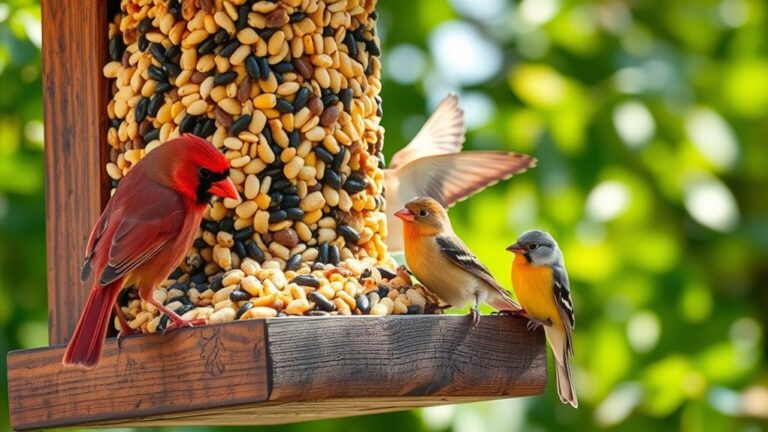
Although different bird species prefer various seeds, offering a mix of sunflower, millet, and safflower seeds will attract a wide range of wild birds throughout the year. You’ll find that bird seed blends designed to cater to seasonal feeding patterns make it easier to provide the right nutrients as birds’ needs change with the seasons.
For example, sunflower seeds are high in fat and perfect for colder months when birds need extra energy. Millet works well in spring and summer, appealing to smaller birds like sparrows and finches. Safflower seeds, which many birds enjoy but squirrels often avoid, offer a great option year-round.
Fresh Fruits and Vegetables Wild Birds Love
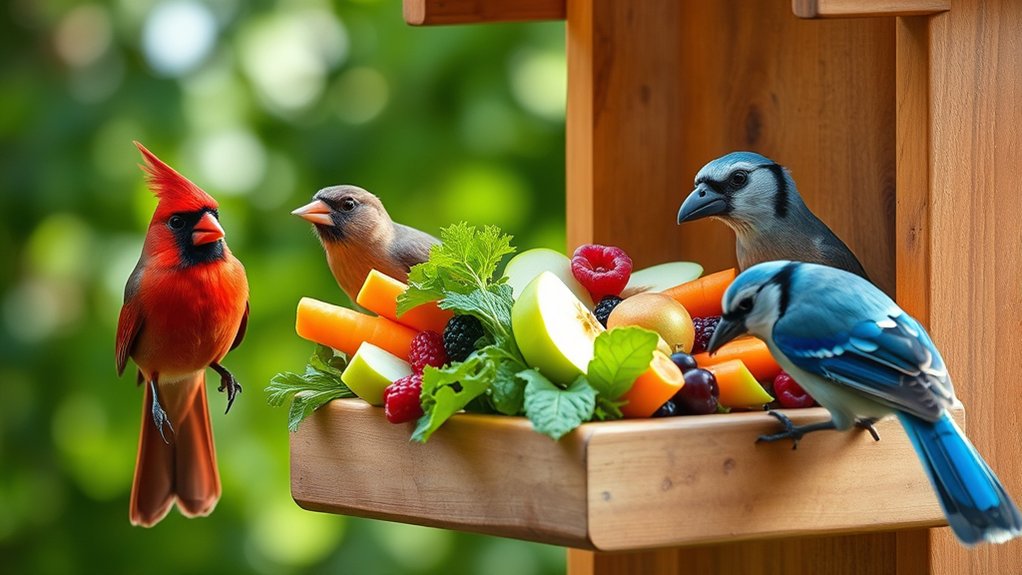
Along with offering a variety of seeds, including fresh fruits and vegetables can provide wild birds with valuable nutrients and hydration. You’ll find that many species enjoy berries, apples, and leafy greens, which mimic what they’d find in native plantings. Incorporating these into your bird feeding routine not only enriches their diet but also supports their health.
To create bird-friendly gardens, consider planting native fruit-bearing shrubs and vegetables that attract local birds naturally. Fruits like blueberries, raspberries, and small chunks of apple or pear are favorites. Vegetables such as peas and corn can also be appealing when offered fresh or slightly softened. Avoid processed or salted produce, as birds need clean, natural foods.
Mealworms and Insects Wild Birds Need

If you want to attract insect-eating birds, offering mealworms and other live insects is essential. These treats provide critical mealworm nutrition, packed with protein and fat that fuel birds during breeding and migration. You’ll notice species like bluebirds, wrens, and chickadees flocking to your feeder when you provide this natural food source.
Incorporating insect diversity into your bird feeding routine supports a wider range of species. Different birds prefer various insects, so mixing mealworms with crickets or beetles mimics their natural diet and encourages healthy foraging behavior. Live insects also supply essential amino acids and nutrients that processed foods lack.
Why Birds Love Suet and Fat Treats
Offering insects like mealworms provides wild birds with essential protein, but fats play an equally important role in their diet. You’ll notice birds flock to suet and fat treats because these high-energy foods help them stay warm and active, especially in colder months.
Understanding bird nutrition means recognizing that fats supply vital calories and nutrients birds need for survival.
Suet comes in many ingredient varieties, including seeds, nuts, berries, and even dried fruits. These varieties attract a wide range of species, making suet a versatile food source in your backyard.
| Suet Ingredient Varieties | Benefits to Birds |
|---|---|
| Seeds | Provide fiber and energy |
| Nuts | Offer protein and fats |
| Berries | Supply vitamins and sugars |
| Insects | Add protein and nutrients |
| Rendered animal fat | High-calorie energy source |
Essential Safety Tips for Feeding Wild Birds
Though feeding wild birds can be rewarding, you need to take certain precautions to keep both the birds and yourself safe. First, practice good bird feeding etiquette by regularly cleaning feeders and birdbaths to prevent disease. Moldy or spoiled food can harm birds, so replace food frequently and avoid overcrowding feeders.
Seasonal feeding tips are essential; for example, in warmer months, offer fresh fruits and avoid fatty foods that can spoil quickly. In winter, provide high-energy seeds and suet to help birds stay warm. Place feeders away from windows to reduce collision risks, and keep cats indoors to protect visiting birds.
Also, wash your hands before and after handling bird food or feeders to minimize cross-contamination. By following these safety guidelines and respecting bird feeding etiquette, you’ll create a safe, enjoyable environment for wild birds year-round.
Frequently Asked Questions
Can Feeding Wild Birds Affect Their Migration Patterns?
Yes, feeding wild birds can affect their migration patterns. When you regularly feed birds, they might develop bird habituation, relying on your food instead of natural sources. This can lead to migration disruption, as they may delay or skip migration altogether.
To avoid this, you should offer food seasonally and guarantee natural habitats remain available. This helps birds maintain their natural behaviors and migration schedules without becoming dependent on human-provided food.
How Do Seasonal Changes Impact Wild Bird Diets?
You’d think wild birds have it easy, but seasonal diet shifts show otherwise. When winter’s chill hits, they ditch juicy berries for high-energy seeds, thanks to weather impact making food scarce.
In warmer months, insects and fruits become their go-to meals. You can’t blame them—they adapt cleverly to whatever nature throws their way, ensuring survival.
What Are the Best Feeders for Different Bird Species?
You’ll want to match bird feeder materials to the species you’re attracting. Metal and sturdy plastic feeders work well for larger birds, while tube feeders with small perches suit finches and chickadees.
If squirrels are a problem, choose squirrel-proof designs with weight-sensitive perches or cages. Platform feeders attract a variety but aren’t squirrel-proof.
How Often Should I Clean Bird Feeders to Prevent Disease?
You might think cleaning bird feeders is a hassle, but it’s essential for disease prevention. You should clean feeders at least once every two weeks, and more often during wet or humid weather. This cleaning frequency stops mold, bacteria, and viruses from spreading among birds.
Use hot, soapy water or a diluted bleach solution to scrub feeders thoroughly. Staying on top of cleaning keeps birds healthy and coming back for more.
Can Feeding Wild Birds Attract Unwanted Pests or Predators?
Yes, feeding wild birds can lead to pest attraction and predator risks. When you leave out food, you might unintentionally invite rodents, raccoons, or insects that are drawn to the same feeders.
Predators like hawks or cats may also hang around, attracted by the birds. To minimize these risks, clean your feeders regularly, avoid overfeeding, and place feeders in safe, open areas where birds can spot danger quickly.
Conclusion
If you want to attract wild birds, feeding them the right foods is key. It’s no coincidence that seeds, fruits, insects, and suet all play a crucial role.
By offering these essentials, you’re not just feeding birds. You’re creating a lively backyard full of joyful chirps and colorful feathers.
Plus, following safety tips guarantees your feathered friends stay healthy. This makes your bird-feeding experience both rewarding and responsible.
Feeding wild birds the right foods is a win-win you’ll love!