How to Get Rid of Aphids on Plants in 3 Steps
Dealing with aphids on your plants can be incredibly frustrating, and you’re not alone if you’ve struggled to keep these tiny pests at bay. Many gardeners face the same challenge, watching as aphids quickly multiply and damage their beloved greenery. How to Get Rid of Aphids on Plants.
Luckily, there are simple, effective ways to tackle this problem and protect your plants for good.
First, blast aphids off your plants with a strong stream of water, especially on leaf undersides and new growth, then pinch or prune off the worst clusters.
Next, spray the plant with insecticidal soap or neem oil, following the label and testing a small area first.
Finally, stop them from coming back by checking weekly, removing weeds, and avoiding excess nitrogen.
Keep going, and you’ll spot a few easy ways to stay ahead of them.
Key Takeaways
- Blast aphids off plants with a strong water spray, especially on leaf undersides and new growth.
- Prune or pinch off heavily infested tips and discard them away from the garden.
- Use insecticidal soap or neem oil on remaining aphids, following label directions carefully.
- Protect beneficial insects by avoiding broad-spectrum chemicals. Plant flowers nearby to attract them.
- Inspect plants weekly and prevent future outbreaks by avoiding excess nitrogen and keeping plants healthy.
Remove Aphids From Plants Fast
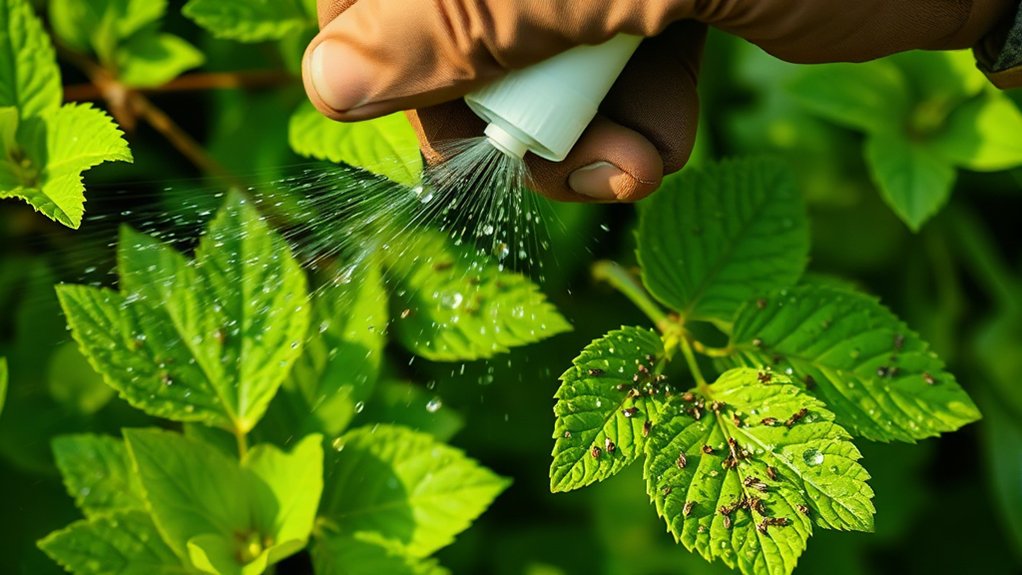
To get aphids off your plants fast, start by blasting them with a strong stream of water, focusing on the undersides of leaves and tender new growth. You’ll knock many off immediately, and you can repeat the rinse every day until the infestation drops.
Blast aphids off with a strong water stream, especially under leaves and on tender new growth.
Check stems, buds, and curled leaves, then pinch off the worst clusters if you see them. If you can identify aphid species, you’ll spot patterns in where they feed and move, which helps you target stubborn pockets more effectively.
Prune heavily infested tips and dispose of them away from the garden so the pests don’t crawl back. Keep an eye on nearby weeds, since they can harbor more aphids.
As you clean up, encourage beneficial insects like lady beetles and lacewings by avoiding broad-spectrum chemicals and leaving some flowering plants nearby. With quick action and steady monitoring, you can reduce damage before aphids spread.
Treat Plants With Safe Natural Sprays
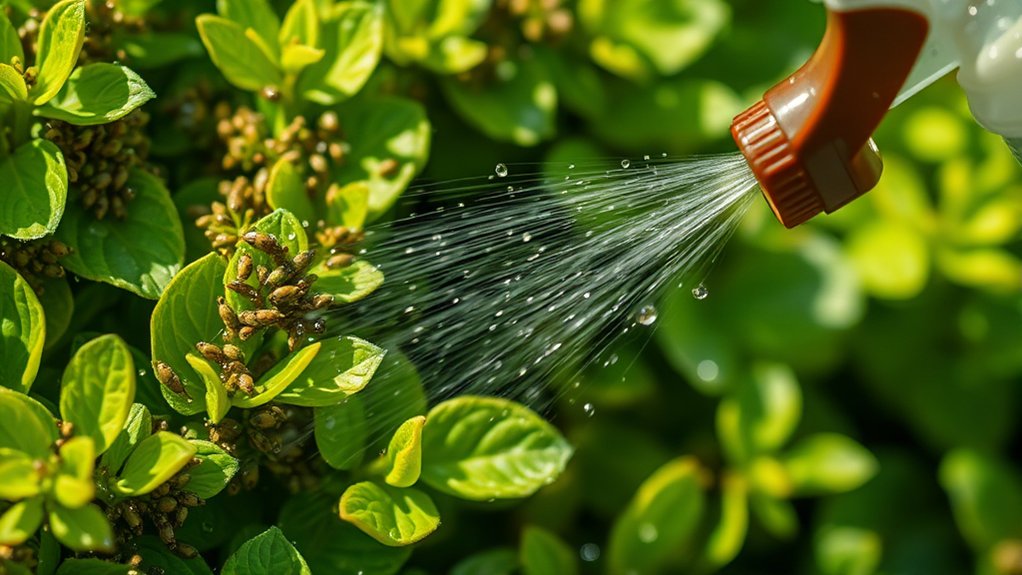
If rinsing alone doesn’t finish the job, spray the plants with a safe natural insecticide like insecticidal soap or neem oil, coating both the tops and undersides of leaves where aphids hide. Mix and apply according to the label, then test one small section first to make sure your plant reacts well.
Insecticidal soap works by breaking down the pests’ outer coating, so it’s effective when you hit them directly. Neem oil adds another layer of control and can help you manage light to moderate infestations.
You can also use a mild garlic spray for extra deterrence, especially on tender stems and new growth. If you make a homemade mix, use only a very small amount of dish soap because too much can burn leaves.
Reapply every few days until you stop seeing clusters. Spray in the early morning or evening to reduce leaf scorch and help the treatment stay on longer.
Prevent Aphids From Coming Back

Once you’ve cleared the infestation, keep aphids from returning by checking your plants regularly, especially new growth and leaf undersides. Catching a few early pests is easier than fighting a full outbreak later. Focus on prevention, not panic, and make your garden less inviting to aphids.
Check plants regularly, especially new growth and leaf undersides, to catch aphids early and prevent another outbreak.
- Inspect plants weekly and rub off any clusters you spot.
- Avoid excess nitrogen, which pushes soft, aphid-friendly growth.
- Use companion planting with marigolds, dill, or alyssum to confuse pests and support beneficial insects.
- Encourage beneficial insects like ladybugs, lacewings, and hoverflies by skipping broad-spectrum sprays.
Keep plants healthy with proper watering, spacing, and pruning since stressed plants attract aphids. Remove weeds that can harbor colonies, and watch nearby plants after you treat one area. If you stay consistent, you’ll build a garden that naturally resists repeat infestations.
Frequently Asked Questions
Can Aphids Transmit Plant Viruses?
Yes, aphids can transmit plant viruses, and you should treat them as a real risk in your garden. Their piercing mouthparts let them pick up and spread viruses fast during feeding.
Because the aphid life cycle moves quickly, populations can explode before you notice damage. You’ll reduce virus transmission by controlling aphids early, checking new growth often, and removing heavily infected plants so they don’t infect others nearby.
Which Plants Are Most Attractive to Aphids?
Aphids swarm like tiny vampires toward tender, juicy growth, and you’ll often find them on rose bushes, vegetable gardens, flowering plants, and ornamental shrubs. You’ll notice them especially on new shoots, buds, and undersides of leaves where sap flows easily.
Soft, lush plants attract them most because they’re easy to feed on. If you grow lots of fresh growth, you’re basically rolling out a welcome mat for aphids.
Do Ants Protect Aphids From Predators?
Yes, ants often protect aphids from predators because they feed on the honeydew aphids produce. You’ll see this ant behavior when ants patrol plants, chase off lady beetles, and move aphids to safer spots.
For pest management, you can disrupt the ants with sticky barriers, remove aphids with water, and encourage natural predators. If you cut the ant-aphid partnership, you’ll make it much easier to control both pests effectively.
How Quickly Do Aphids Reproduce?
Aphids can explode like a steam engine in a flower garden. You’ll see new nymphs in as little as 7 to 10 days, and some species can produce several generations in a month.
Their Aphid life cycle includes rapid asexual birth, so females clone themselves fast. Those reproductive strategies let populations surge quickly when conditions are warm and food is plentiful, especially if predators don’t slow them down.
Are Aphids Harmful to Indoor Houseplants?
Yes, aphids can harm your indoor houseplants by sucking sap, stunting growth, and leaving sticky honeydew that can attract mold. You’ll want to watch for curled leaves and weak stems.
Good aphid control methods include rinsing plants, wiping leaves, and using insecticidal soap. Act quickly to protect indoor plant health, since small infestations can spread fast and stress your plants more than you might expect.
Conclusion
Now you know how to get rid of aphids on plants in just three steps: remove them fast, treat your plants with safe natural sprays, and prevent them from coming back. You might worry that natural methods won’t work quickly enough, but they can stop infestations before they spread and protect your plants without harsh chemicals.
Stay consistent and check your plants often. You’ll keep aphids under control while helping your garden stay healthy and strong by knowing how to get rid of aphids on plants.