How to Grow Spinach in 10 Steps
Growing your own fresh spinach can be incredibly rewarding, but if you’ve ever struggled with seeds that won’t sprout or plants that bolt too quickly, you’re not alone. Many people find it tricky to get spinach growing just right.
Luckily, with the right approach, you can overcome these common challenges and enjoy a thriving crop.
To grow spinach in 10 steps, choose a bolt-resistant savoy, smooth, or semi-savoy variety, then sow in early spring or late summer.
Prepare loose, compost-rich soil with a pH of 6.0 to 7.0, and plant seeds half an inch deep.
Keep soil moist, thin seedlings, mulch, and feed lightly.
Protect plants from pests and bolting, then harvest outer leaves at 3 to 4 inches.
Keep going, and you’ll learn the finer details that boost your crop.
Key Takeaways
- Choose cool-weather spinach varieties, such as savoy, smooth-leaf, or semi-savoy, and plant in early spring or late summer.
- Prepare loose, fertile soil with compost, good drainage, and a pH between 6.0 and 7.0.
- Sow seeds about half an inch deep, 1 inch apart, in rows 12 to 18 inches apart. Keep the soil evenly moist.
- Thin seedlings, mulch, and feed lightly to support healthy growth and proper airflow.
- Protect plants from pests and bolting. Harvest outer leaves and resow every 2 to 3 weeks.
Choose the Best Spinach Variety

Choosing the right spinach variety can make a big difference in how well your crop grows. You should compare variety characteristics before you buy seeds, because leaf shape, texture, and bolt resistance affect your harvest.
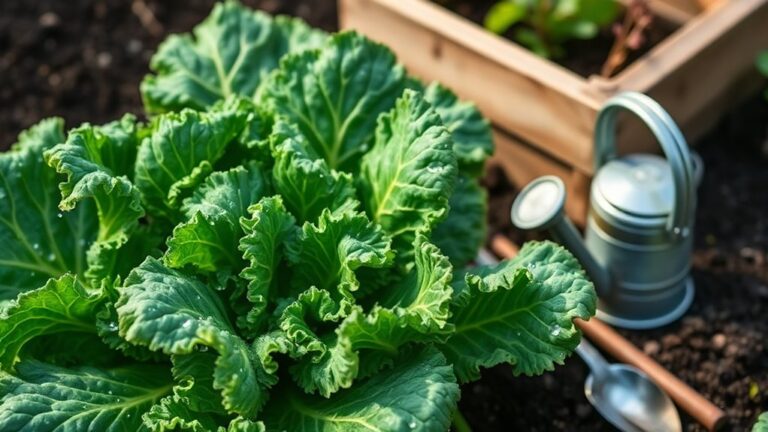
Savoy types give you crinkled leaves that hold up well in cool weather, while smooth-leaf varieties mature faster and’re easier to clean. Semi-savoy options split the difference, so you can choose based on your space and routine.
You’ll also want to think about flavor profiles. Some varieties taste mild and tender, which works well in salads, while others have a stronger, earthier bite for cooking.
If you want a longer picking window, select varieties bred for slow bolting and steady leaf production. Read seed packets carefully, then match the plant’s traits to how you like to harvest and eat spinach.
With the right choice, you’ll set yourself up for healthier plants and better-tasting leaves.
Pick the Right Time to Plant Spinach

You’ll get the best spinach when you plant it during the cool seasons, like early spring or fall. Spinach seeds germinate best when the soil temperature stays around 45 to 75°F. So, if you time your planting right, you’ll give your crop a strong start.
Ideal Planting Seasons
Spinach grows best in cool weather, so plant it in early spring or in late summer for a fall harvest. With spring planting, you can take advantage of the season’s gentle start, while fall planting lets you finish strong as days shorten. You’ll get the healthiest leaves when you time sowing around mild stretches, not summer heat.
Choose spring planting if your soil warms early. Use fall planting after intense summer heat fades. Aim for steady growth, not rushed growth. Sow again every two weeks for a longer harvest.
Temperature For Germination
For best germination, sow spinach when soil temperatures stay between 45°F and 75°F, with the sweet spot around 50°F to 60°F. You’ll get stronger germination rates when the soil temperature stays cool because spinach seeds lose vigor in heat.
Check seed viability before planting, and use fresh seed for the best stand. Give seeds only light requirements: cover them lightly at the proper planting depth, about half an inch.
Keep humidity levels even, but don’t soak the bed or the seeds may rot. Spinach handles frost tolerance well, so you can plant early.
You don’t need heavy nutrient needs at this stage; just a loose, moist seedbed lets roots emerge fast and evenly.
Prepare Loose, Rich Soil

Work the soil before planting so it’s loose, crumbly, and full of organic matter. You want spinach roots to move easily, so break up clods and remove rocks or debris. Mix in compost or well-rotted manure to boost fertility and improve texture.
Work the soil until it’s loose, crumbly, and rich, so spinach roots can grow freely.
If your bed feels heavy, add soil amendments like leaf mold or aged compost for better drainage improvement and air flow. Aim for a pH between 6.0 and 7.0, since spinach grows best in slightly acidic to neutral soil.
- Rake the surface smooth after loosening it.
- Work moisture into the bed, not soggy mud.
- Add a thin layer of compost across the top.
- Check that water drains away after rain.
Keep the soil evenly rich, because spinach feeds quickly and grows fast. A well-prepared bed gives you stronger plants, cleaner leaves, and a better harvest.
Sow Spinach Seeds the Right Way
Sow spinach seeds about half an inch deep so they can settle in well. Make sure to give each seed enough space to grow strong leaves without crowding. After planting, water the soil lightly. Keep the soil moist until the seeds sprout, but try not to let it get soggy.
Seed Depth Guidelines
Plant spinach seeds about half an inch deep in loose, moist soil so they can sprout evenly without being buried too far. This depth works well for most seed types, whether you choose smooth or savoyed varieties.
Keep your planting techniques simple: make a shallow furrow, drop seeds in, then cover them lightly with soil and firm it gently with your hand. Don’t press them down hard, or you could slow germination.
Check soil moisture before sowing. Use a ruler or finger to judge depth. Cover seeds with fine soil, not clumps. Mist the surface if it starts drying out.
When you plant at the right depth, you give spinach a strong start and help each seed break through with less strain.
Spacing For Growth
Give spinach seeds enough room to grow, but don’t space them too far apart if you want a dense, tender harvest. Aim to sow seeds about 1 inch apart in rows 12 to 18 inches apart. This setup lets you thin weak seedlings later while keeping plants close enough to shade soil and reduce crowding issues.
If you practice companion planting, place spinach beside crops with similar nutrient requirements, such as lettuce or radishes, so each plant can develop without heavy competition. For wider beds, scatter seeds in bands or blocks, then thin as plants emerge to maintain airflow and steady leaf production.
Proper spacing also helps you harvest baby leaves efficiently and supports stronger, more uniform plants throughout the season.
Moisture For Germination
After spacing your spinach seeds properly, keep the seedbed evenly moist so germination starts quickly and stays reliable. Water gently with a fine spray, and never let the top layer dry out. Consistent soil moisture helps soften the seed coat and supports even sprouting.
Check the bed daily for dampness, not sogginess. Use mulch lightly to slow evaporation. Water in the morning so leaves dry fast. Test seed viability before sowing if germination seems weak.
If the soil crusts, mist it again instead of flooding it. Too much water can drown seeds and encourage rot. Aim for steady moisture until seedlings emerge, then ease off and keep the surface just damp.
Water Spinach for Steady Growth
To keep spinach growing steadily, water it consistently so the soil stays evenly moist without becoming soggy. Check the top inch of soil often; when it starts to dry, give the bed a thorough soaking. Your water needs will vary with weather, soil type, and container size, but spinach usually prefers frequent, light watering over long dry spells.
Water at the base of the plants to keep foliage dry and reduce stress. If you use mulch, it’ll help hold moisture and moderate temperature swings.
Keep an eye on nutrient balance too, because steady moisture helps roots absorb minerals evenly. Too little water can stall growth, while too much can leach nutrients and weaken plants.
Aim for a rhythm that supports firm, tender leaves and steady expansion. In hot or windy conditions, you may need to water more often, especially in shallow soil.
Consistent moisture gives spinach the stable conditions it needs to grow quickly and stay productive.
Thin Spinach Seedlings Early
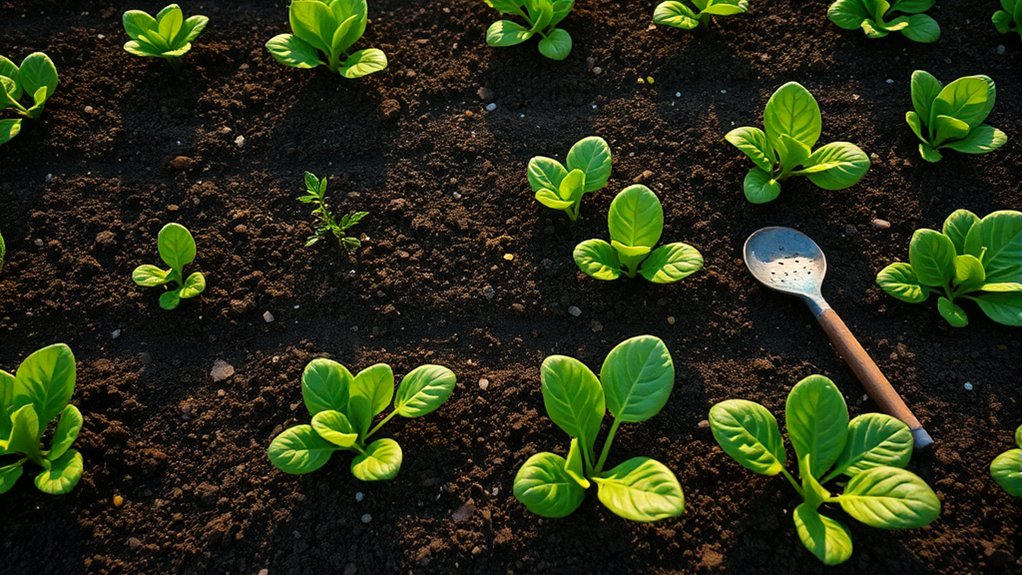
Thin your spinach seedlings early, once they’ve grown a couple of true leaves and are big enough to handle. You want to keep the strongest plants and make sure they’re spaced out properly. This way, each one has plenty of room to grow.
Good spacing really makes a difference—it helps the plants develop healthy leaves and keeps them from getting too crowded. So, don’t wait too long to thin them out!
When To Thin Seedlings
Once your spinach seedlings have their first true leaves, it’s time to thin them so the strongest plants have room to grow. You’ll protect seedling care by acting early, before roots tangle and weak sprouts steal light and moisture.
Use simple thinning techniques: snip extras at soil level or gently pull the weakest plants on a cool, damp morning. Keep the healthiest, most vigorous seedlings and avoid disturbing the rest.
- Watch for the first true leaves.
- Thin when seedlings still look delicate.
- Remove weak, crowded sprouts first.
- Check again a few days later.
Early thinning helps you guide energy into sturdy growth, so your spinach can develop into tender, productive plants without stress.
Space Plants Properly
Give each spinach plant enough elbow room by thinning seedlings early so they don’t crowd one another as they grow. Aim for 3 to 4 inches between plants for baby leaves, or 6 inches for full-size harvests. You’ll improve airflow, reduce disease, and help roots and leaves develop evenly.
Snip extra seedlings at soil level instead of pulling them, so you don’t disturb nearby roots. If your bed feels tight, use companion planting with quick crops like radishes or lettuce, but don’t let them shade spinach too much.
In small spaces, vertical gardening won’t suit spinach as well as taller crops, so keep your layout low and open. Proper spacing also makes watering, weeding, and harvesting easier, and your spinach will stay tender and productive longer.
Mulch and Feed Spinach Plants
To keep spinach growing fast and tender, mulch the soil with straw, shredded leaves, or grass clippings to hold moisture and suppress weeds. Choose organic mulch so it breaks down slowly and feeds the bed while you water less often.
When seedlings settle in, side-dress with compost or a balanced organic fertilizer for a gentle nutrient boost. Work it lightly into the top layer, then water well so roots can reach it.
Keep the mulch a few inches away from stems to prevent rot and let air move freely around the plants.
Reapply mulch after heavy rain or wind. Feed lightly every few weeks during active growth. Use compost tea for a quick, mild lift. Check soil moisture before adding more water.
This simple routine helps you harvest larger, sweeter leaves with less effort.
Keep Spinach Safe From Pests and Bolting
Healthy spinach still needs protection as it grows. Check plants often for aphids, flea beetles, and leaf miners, and remove damaged leaves before problems spread. You can dislodge small pests with a strong spray of water, then use row covers to block new insects while still letting light and moisture in.
Keep weeds down, since they shelter pests and compete for nutrients. For better pest management, rotate spinach to a new bed each season and avoid planting near heavily infested crops.
Bolting prevention matters just as much. Spinach rushes to seed when temperatures climb, so give it morning sun and afternoon shade if your climate warms quickly.
Water consistently to reduce stress, and choose bolt-resistant varieties when you can. Sow early in spring or again in fall, because cool weather helps leaves stay tender and delays flowering.
If a heat wave hits, shade cloth can buy you extra growing time.
Harvest Spinach Leaves at the Right Time
Start harvesting spinach once the outer leaves are large enough to eat, usually when they’re 3 to 4 inches long. That’s the ideal leaf size for tender, mild flavor. Check the plant’s signs of readiness before you cut: leaves should look full, deep green, and crisp, not limp or bitter.
Pick outer leaves first and leave the center growing so you can keep the plant productive. Use clean scissors or pinch the stems near the base to avoid tearing. Harvest in the morning, when leaves stay cool and firm, then rinse them gently and dry them well before storing or serving.
Choose leaves with smooth edges and good color. Avoid oversized leaves that feel tough. Harvest from the outside to the inside. Cut carefully to protect the crown.
Succession Sow for More Spinach
Want spinach all season long? Sow a small batch every 2 to 3 weeks instead of planting once. This succession sowing keeps fresh leaves coming as older plants bolt or slow down.
Choose cool windows in spring and fall, and shift to shade or containers when heat rises. You can also tuck spinach between slower crops using intercropping techniques, so you use space efficiently while new seedlings establish.
Keep each sowing in its own row or bed section, and mark dates clearly so you know what to thin and harvest next.
Plan around your seasonal rotations too. After one spinach crop finishes, replace it with beans, carrots, or another compatible vegetable, then return spinach later in the cycle.
Water evenly, thin promptly, and harvest young leaves often to encourage more growth. With staggered plantings, you’ll avoid feast-or-famine harvests and keep your kitchen stocked with tender spinach for weeks.
Frequently Asked Questions
Can Spinach Grow Well in Containers Indoors?
Yes, spinach can grow well in containers indoors if you give it enough light, cool temperatures, and steady moisture. For indoor gardening, choose a container size at least 6 to 8 inches deep with drainage holes.
You should use a rich, well-draining potting mix and place it near a sunny window or grow light. Keep the soil evenly moist, and you’ll enjoy fresh greens right from your kitchen.
How Long Does Spinach Take to Germinate?
You’ll usually see spinach sprout in 5 to 10 days, like a traveler waking at dawn if you give it the right path. Keep germination conditions cool, moist, and steady, and plant seeds at the proper seed depth, about half an inch.
If soil gets too warm or dry, you’ll wait longer. You can speed things up by soaking nothing; instead, keep the bed lightly damp and patient.
Which Spinach Varieties Resist Downy Mildew Best?
For downy mildew, you’ll get the best results from resistant varieties like ‘Tyee,’ ‘Carmel,’ ‘Space,’ and many modern hybrid baby spinach types. Focus on variety selection with strong disease resistance, and you’ll cut losses fast.
Choose organic options if you want a cleaner garden approach, and use smart planting techniques like spacing plants well, watering early, and improving airflow. You’ll still want to rotate crops and avoid overhead watering.
Can I Grow Spinach in Partial Shade?
Yes, you can grow spinach in partial shade. Think of it like a cool green umbrella that softens harsh sun. You’ll often get tender leaves and slower bolting when you balance spinach light and spinach moisture well.
Aim for 3 to 6 hours of sun, keep the soil evenly moist, and you’ll still harvest healthy spinach. Too much shade may reduce yield, but bright dappled light works nicely.
What Companion Plants Help Spinach Grow Better?
You can pair spinach with lettuce, radishes, strawberries, and peas to boost growth and save space. Lettuce companions help shade spinach roots, while peas add nitrogen that feeds leafy growth.
Beetroot benefits include similar watering needs and efficient bed sharing. Avoid planting spinach near potatoes, which compete for nutrients.
Keep soil moist, mulch lightly, and you’ll help your spinach stay tender, healthy, and productive all season long.
Conclusion
Growing spinach is easier than you might think, and with the right care, you can enjoy fresh leaves in no time. Since spinach can bolt quickly in warm weather, timing your planting well really matters.
In fact, spinach can be ready to harvest in as little as 6 weeks, so you won’t wait long for results. Keep sowing, watering, and picking regularly, and you’ll keep your garden productive and your salads full of flavor.
By following these tips, growing spinach can become a rewarding part of your gardening routine. With patience and the right approach, growing spinach will bring you fresh, tasty leaves season after season.