How to Grow Broccoli in 7 Steps
If you’ve ever tried growing broccoli and ended up with small, bitter heads or plants that just didn’t thrive, you’re not alone. Many people struggle to get this nutritious vegetable to grow well in their garden.
The good news is, with the right approach and a little patience, you can enjoy fresh, homegrown broccoli that’s crisp and delicious.
Grow broccoli in 7 steps by planting in cool weather, either in early spring or late summer. Choose a sunny spot with rich, loose, well-draining soil, then start seeds indoors or use healthy transplants.
Space plants properly, keep the soil evenly moist, and feed lightly as they grow. Protect them from pests and heat, then harvest firm heads before they open.
With a few more tips, you can get even better results and bigger harvests.
Key Takeaways
- Plant broccoli in cool weather, ideally early spring or late summer, to avoid bolting and loose heads.
- Choose a sunny spot with 6 to 8 hours of sunlight and rich, loose, well-draining soil.
- Start seeds indoors 6 to 8 weeks before the last frost, or buy healthy, hardened transplants.
- Space plants 18 inches apart and keep rows 24 to 36 inches apart. Make sure to maintain even moisture.
- Harvest firm, tight heads promptly, then cool them quickly. Keep an eye out for side shoots.
Choose the Best Time to Plant Broccoli
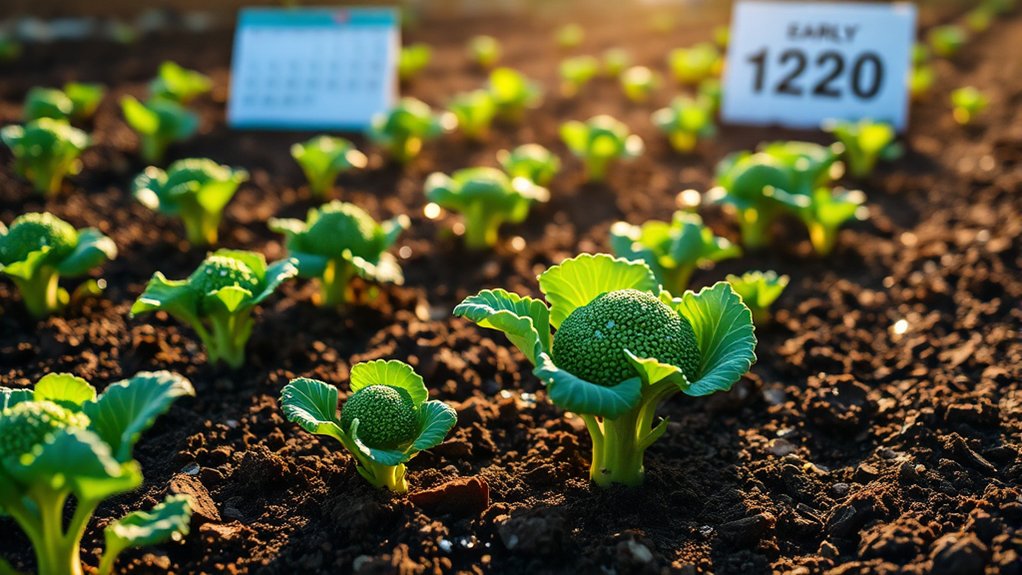
Broccoli grows best when you plant it during cool weather, so aim for early spring or late summer depending on your climate. You’ll get stronger heads if you time sowing so seedlings mature before heat sets in.
Check your local frost dates, then count back several weeks to find the right window for transplanting or direct seeding. If you live where winters stay mild, you can often plant in fall for a spring harvest.
In cooler regions, choose fast-maturing seed varieties to beat sudden warm spells. If your season is short, start seeds indoors to give them a head start, then move them outside when temperatures settle.
Avoid planting during hot stretches, because broccoli may bolt or form loose heads. By matching your planting date to your climate, you set yourself up for healthier plants and better harvests.
Pick a Sunny Spot With Rich Soil

You’ll want to pick a spot that gets full sun for most of the day because broccoli grows best with lots of light. It’s important to choose soil that’s rich in nutrients so your plants can build strong heads and healthy leaves. Also, make sure the ground drains well since soggy soil can slow growth and harm the roots.
Full Sun Exposure
Choose a spot that gets at least 6 to 8 hours of direct sunlight each day, and make sure the soil is rich, loose, and well-draining. Broccoli needs strong light to form sturdy plants and tight heads, so check the sunlight duration before you plant.
If your yard has partial shade, pick the brightest area and avoid spots blocked by trees, fences, or buildings. Broccoli has little shade tolerance, so even a few extra hours of sun can improve growth and flavor.
You should also watch how the light changes through the day since morning and afternoon sun both count. A sunny, open bed helps the plants dry faster after rain, which reduces stress and supports healthy development.
Nutrient-Rich Soil
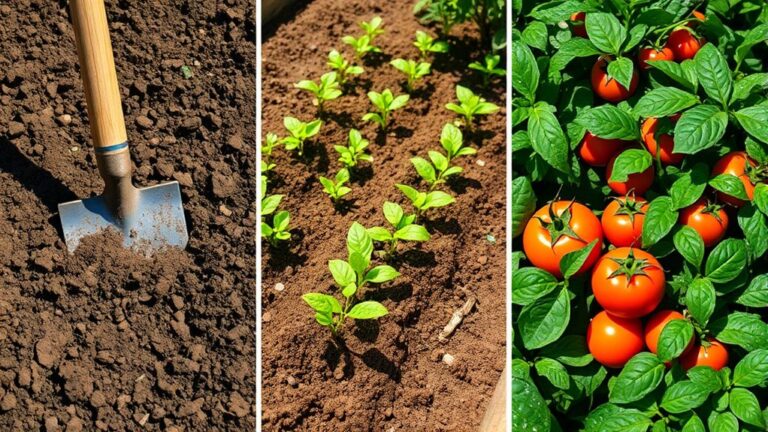
Even in a sunny spot, broccoli won’t thrive unless the soil can feed it well. Start with soil testing to check pH levels and guide your soil amendments. Aim for a slightly acidic nutrient balance, then mix in plenty of organic matter to improve compost benefits and support microbial activity.
Well-fed soil gives broccoli the steady nutrients it needs for tight heads and strong growth. You can enrich beds with aged compost, leaf mold, or balanced fertilizer, but don’t overdo it; too much nitrogen can cause leafy plants instead of firm crowns.
If your soil is thin, build it up before planting so roots can delve deeply and absorb food efficiently. Rich, biologically active soil sets the stage for healthy broccoli from the start.
Soil Drainage Matters
Good drainage is just as important as rich soil because broccoli roots can rot if they sit in soggy ground. You should choose a sunny spot where water moves away quickly after rain or watering.
If your soil stays wet, raise the bed or mix in compost and other soil amendments to improve structure. You can also use drainage techniques like creating shallow trenches, planting on a slight slope, or adding coarse organic matter.
Test the site by digging a hole, filling it with water, and seeing how fast it drains. Broccoli grows best when roots get moisture without drowning.
With bright sun, fertile soil, and proper drainage, you’ll give your plants the strong start they need for healthy heads.
Start Broccoli Seeds or Buy Transplants
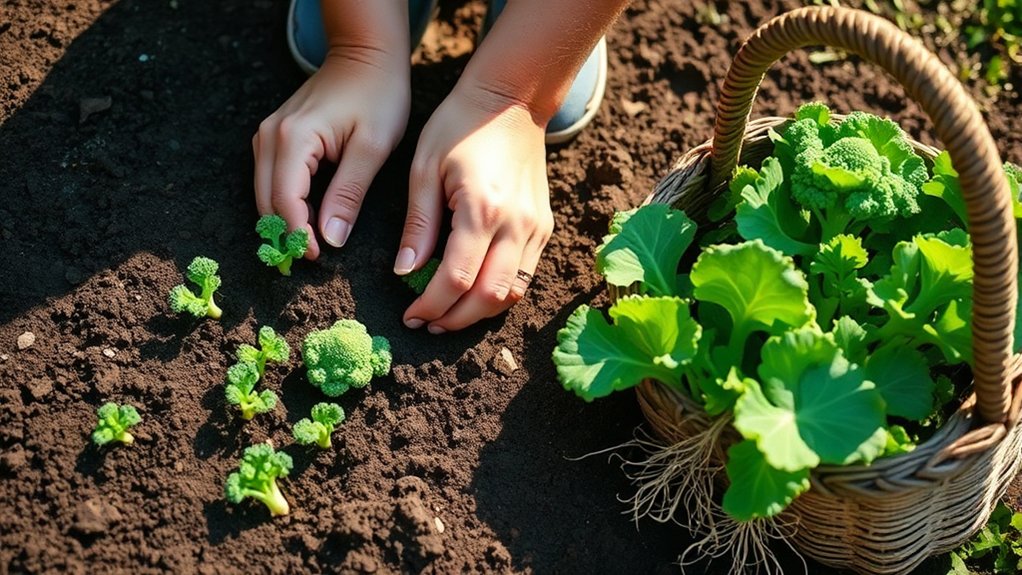
You can start broccoli from seed indoors if you want more control over timing and variety. It’s a great way to get exactly what you want. But if you’d rather save time, just pick up some healthy transplants instead. Look for ones with sturdy stems and deep green leaves—they’ll give you a head start. Either way, make sure to give your plants a strong start for the best harvest.
Starting Seeds Indoors
Starting broccoli indoors gives you a head start on the season, especially if your spring stays cool or short. You can sow seeds 6 to 8 weeks before your last frost. Use a sterile mix, keep it moist, and set the tray under indoor lighting so seedlings don’t stretch.
After sprouting, thin weak plants and give steady seedling care with airflow and even moisture.
| Task | Timing | Tip |
|---|---|---|
| Sow seeds | 6–8 weeks early | Plant 1/4 inch deep |
| Germinate | 4–7 days | Keep warm |
| Water | Daily check | Don’t soak |
| Light | After sprout | 14–16 hours |
| Harden off | 7 days | Gradual outdoor exposure |
This approach helps you grow sturdy starts for transplanting.
Choosing Healthy Transplants
Whether you start broccoli seeds indoors or buy transplants, choose plants that look sturdy and ready to settle in fast. Look for short, stocky stems, deep green leaves, and no yellowing, wilting, or pest damage.
Healthy seedlings should have several true leaves and a well-developed root system that holds the soil firmly without circling tightly. Avoid leggy plants, since they often struggle after planting.
Check transplant timing carefully: set them out only after the last hard frost, when daytime temperatures stay cool but not freezing. Before planting, harden off your transplants for several days by giving them increasing outdoor exposure.
This step reduces shock and helps them adjust quickly. When you select vigorous plants and time the move well, you give your broccoli a strong, productive start.
Plant Broccoli at the Right Spacing
Give broccoli enough room to grow strong heads by spacing transplants about 18 inches apart in rows 24 to 36 inches apart. This broccoli spacing helps each plant receive light and air without crowding its neighbors.
If you pack them too tightly, you raise plant density and small heads may form. Keep rows straight so you can weed and harvest with ease.
| Spacing | Result | Tip |
|---|---|---|
| 12 in. | Tight growth | Avoid for most gardens |
| 18 in. | Balanced heads | Best for standard beds |
| 24 in. | Larger plants | Use for fertile soil |
Measure from stem to stem, not leaf to leaf, because leaves spread fast. If you grow in raised beds, you can place plants slightly closer, but don’t sacrifice airflow.
Check each transplant before planting, then adjust gaps now so every broccoli plant has space to mature well.
Water and Feed Broccoli for Strong Growth
Keep broccoli evenly moist so roots stay active and heads grow steadily. You should check soil with your finger and water when the top inch feels dry. Your watering frequency depends on weather and soil, but deep, regular watering usually works best.
Aim to wet the root zone thoroughly, then let the surface dry slightly before watering again. This helps you grow firm, tender heads without stress.
Feed broccoli lightly after planting and again as plants begin forming heads. Choose fertilizer types with balanced nitrogen, phosphorus, and potassium, or use compost for a steady organic boost.
If you prefer liquid feed, apply it according to the label and avoid overdoing nitrogen, which can push leafy growth instead of strong heads. Keep fertilizer off the stems and water it in well.
Consistent moisture and measured feeding give you healthier plants, better flavor, and more reliable harvests.
Protect Broccoli From Pests and Hot Weather
Healthy broccoli still needs protection as it grows, especially when pests arrive or temperatures climb. Check leaves often for cabbage worms, aphids, and flea beetles, and act fast before they spread.
You can handpick larger insects, then use natural repellents like neem oil or insecticidal soap to discourage repeat damage. Keep weeds down since they shelter pests and compete for moisture and nutrients.
Hot spells can stress broccoli and trigger loose heads, so give plants afternoon relief when the sun beats down. Stretch shade cloth over hoops or stakes to reduce heat and protect tender growth without blocking all light.
Water the soil deeply in the morning so roots stay cool, and mulch lightly to slow evaporation. If you live in a windy area, secure covers well so they don’t rub the plants.
With steady monitoring and quick action, you’ll help your broccoli stay healthy through both insect pressure and summer heat.
Harvest Broccoli Before the Heads Open
Harvest broccoli when the heads are firm, tight, and still compact, before the florets start to loosen or yellow. Check plants daily once the central head reaches a usable size, because broccoli can open quickly in warm weather.
Use timing tips like harvesting in the cool morning, when stems are crisp and flavor is best. Cut the main stalk with a sharp knife about 5 to 7 inches below the head, leaving several leaves on the plant so side shoots can develop.
Don’t wait for oversized heads; if you do, the buds separate and the texture turns coarse. After cutting, cool the broccoli right away to preserve sweetness and color.
Keep watching the plant, since many varieties produce smaller side heads for weeks after the first harvest. Pick them young, while they’re still tight, and you’ll get the best taste and the longest harvest from your garden.
Frequently Asked Questions
Can Broccoli Be Grown in Containers?
Yes, you can grow broccoli in containers if you pick the right container size and soil type. You’ll want a pot at least 12 to 18 inches wide and deep so roots have room to spread.
Use rich, well-draining soil mixed with compost, and keep it consistently moist. Place the container in full sun, feed it regularly, and harvest heads before they flower for the best flavor and texture.
How Long Does Broccoli Take to Mature?
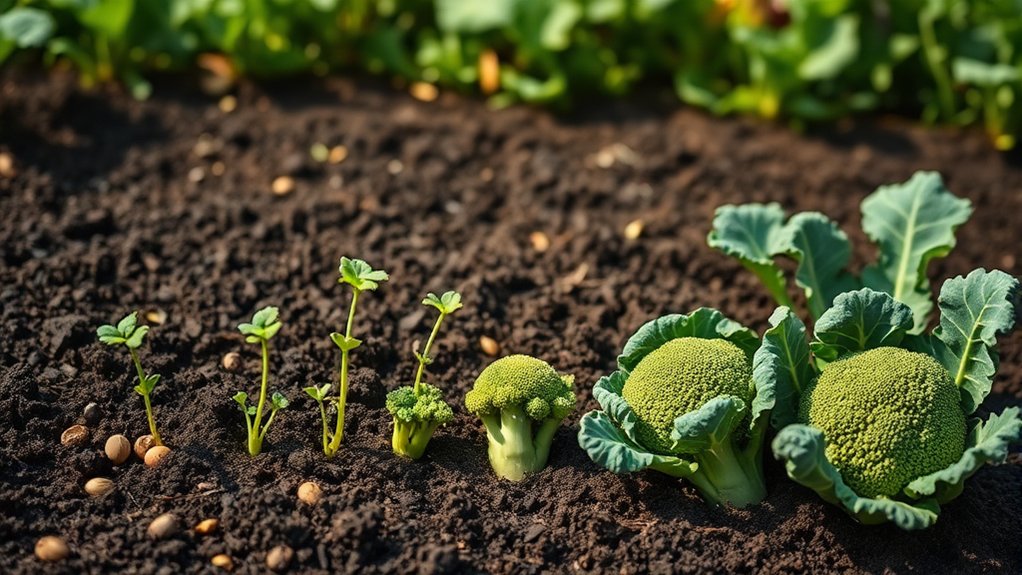
Broccoli usually takes 55 to 85 days to mature, depending on the variety and weather. You’ll see broccoli growth stages from seedling to leafy plant, then a tight central head forms.
Watch for the ideal harvesting time when the head is firm, dark green, and before the buds open. If you pick it promptly, you’ll often get side shoots too, extending your harvest for several more weeks.
Can I Save Broccoli Seeds for Next Year?
Yes, you can save broccoli seeds for next year if you let the plant bolt and form dry seed pods. For example, you might leave one healthy plant in your garden, then collect the pods once they brown.
Dry them well, then practice seed saving with airtight seed storage in a cool, dark place. You’ll get the best results if you keep seeds labeled and use them within a few years.
What Companion Plants Help Broccoli Grow?
You can boost broccoli by planting dill, nasturtiums, marigolds, and sweet alyssum nearby. These companion flowers attract beneficial insects that help control aphids and caterpillars, so your broccoli stays healthier.
You’ll also want herbs like chamomile and thyme, which can confuse pests and support pollinators. Keep spacing roomy so roots and leaves don’t compete, and avoid planting broccoli near strawberries or tomatoes, which can slow its growth and reduce yields.
Why Does Broccoli Form Loose Heads?
Loose heads usually mean you’re growing a broccoli variety that naturally stays looser, or your plants are stressed. Heat, poor watering, crowding, and nutrient deficiencies, especially low nitrogen or boron, can make florets stay open instead of tightening.
You should feed evenly, keep soil moist, and harvest promptly. Think of broccoli like a picky orchestra: if one section falls out of tune, the whole head won’t lock together.
Conclusion
Growing broccoli is easier than it looks when you give it the right start. Choose a cool season, plant in rich soil, and keep your spacing neat so each plant can breathe.
Water and feed regularly, then protect your crop from pests and heat. When the heads are tight and green, harvest right away.
With a little care, your broccoli patch will stand like a row of emerald crowns ready for your kitchen. Growing broccoli successfully is all about these simple steps.