How to Do and Make Bird Suet in 3 Easy Steps
If you’ve ever wanted to attract more birds to your yard but struggled with finding the right food, you’re not alone. Many people want to provide nutritious, homemade treats but don’t know where to start or worry about complicated recipes.
Luckily, making bird suet is simpler than you think, and it’s a great way to keep your feathered visitors happy and healthy.
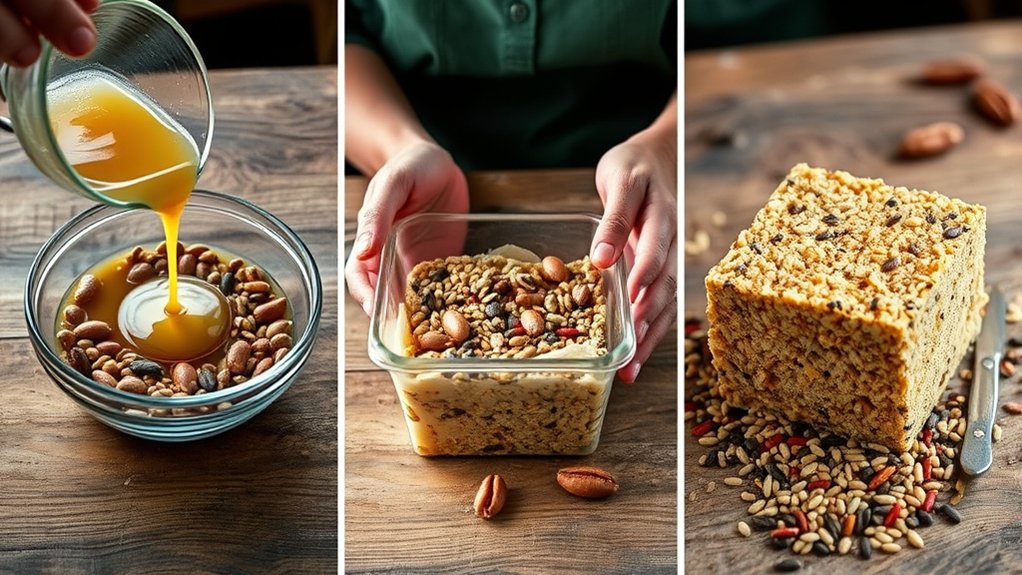
To make bird suet in 3 easy steps, start by gently melting a base fat like beef suet or lard. Next, stir in bird-friendly ingredients such as oats, seeds, and dried fruits for extra nutrition. Finally, pour the mixture into molds and let it cool until solid.
Use clean feeders and store unused suet in the fridge to keep it fresh. If you want to guarantee the best feeding practices and storage tips, there’s more helpful information ahead.
Key Takeaways
- Gently melt beef suet or lard until fully liquid for the base of your bird suet.
- Stir in bird-friendly ingredients like oats, cracked corn, seeds, nuts, or dried fruits.
- Pour the mixture into molds or containers suitable for shaping the suet.
- Let the suet cool completely until it solidifies before removing from molds.
- Store unused suet in airtight containers in the fridge or freezer to maintain freshness.
What You Need to Make Bird Suet
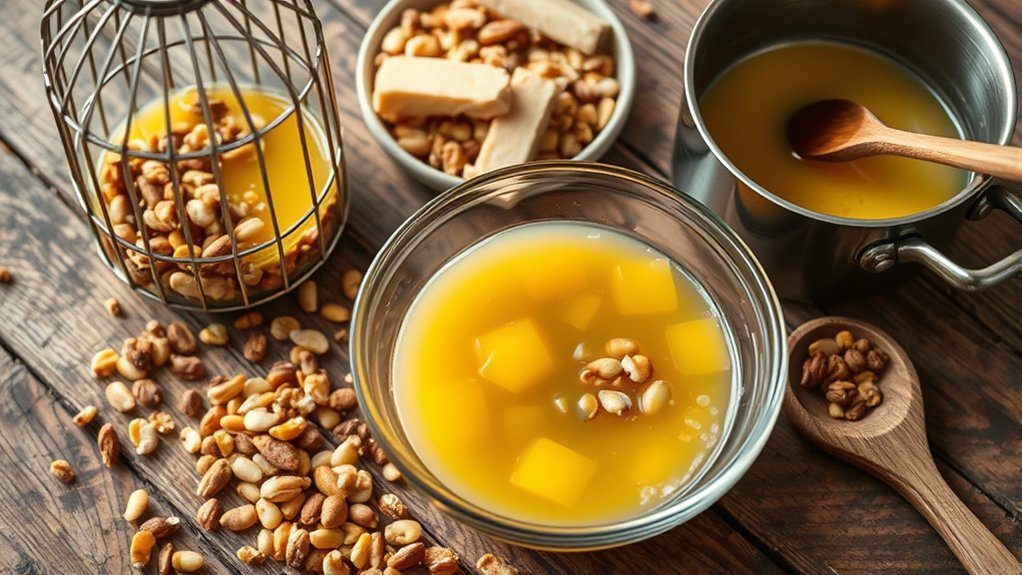
Before you start, gather a few essential ingredients and tools to make bird suet. Understanding bird nutrition helps you choose the right components for healthy, energy-packed suet recipes.
You’ll need a base of fat, usually beef suet or lard, since fat provides crucial energy for birds, especially in cold weather. Add bird-friendly ingredients like oats, cracked corn, and seeds to supply carbs and protein. You can also include dried fruits or nuts for variety and extra nutrients.
For tools, get a mixing bowl, spoon, and molds or containers to shape the suet. An old loaf pan or silicone molds work well. Avoid ingredients harmful to birds, like salt or processed sugars.
Make Bird Suet in 3 Simple Steps

Once you have your ingredients and tools ready, you can quickly mix the fat with your chosen bird-friendly additions to create a nutritious suet blend. Start by melting the fat slowly, then stir in seeds, nuts, or dried fruits to boost bird nutrition.
Pour the mixture into molds or containers and let it cool until solid. This simple process guarantees the suet benefits your local birds by providing essential energy, especially in colder months.
Here’s a quick guide to making suet in three easy steps:
| Step | Action |
|---|---|
| 1. Melt Fat | Gently heat fat until fully melted |
| 2. Mix Add-ins | Stir in seeds, nuts, or dried fruits |
| 3. Set Suet | Pour into molds; cool until firm |
| Bonus Tip | Use suet feeders for easy bird access |
| Remember | Keep ingredients bird-safe for best nutrition |
This method maximizes suet benefits, supporting bird health and activity year-round.
How to Feed and Store Bird Suet Safely

After crafting your suet, knowing how to feed and store it properly guarantees it stays fresh and attracts birds safely. Always use a clean suet feeder to minimize contamination and protect bird suet health.
Proper feeding and storage keep suet fresh and safe, attracting birds while preventing contamination.
Place the feeder in a shaded, sheltered area to prevent the suet from melting or spoiling quickly. Monitor the suet regularly, removing any moldy or rancid portions immediately to avoid harming birds.
For suet ingredient safety, store unused suet in an airtight container in the refrigerator or freezer. This prevents spoilage and keeps fats from going rancid. Avoid exposing suet to direct sunlight or high temperatures during storage.
When refilling feeders, wash your hands and utensils to maintain cleanliness.
Frequently Asked Questions
What Types of Birds Are Attracted to Suet Feeders?
You’ll attract woodpeckers, nuthatches, chickadees, and wrens to suet feeders, especially during colder months. Bird migration patterns influence which species visit, as some birds rely on suet when natural food becomes scarce.
Seasonal feeding preferences mean you’ll see more suet-loving birds in winter and early spring. By offering suet, you help these birds maintain energy through tough seasons, making your feeder an essential stop during their migratory journeys.
Can Suet Be Made for Specific Bird Species?
Yes, you can tailor suet customization to attract specific bird species by adjusting ingredient variations. For example, adding peanuts and sunflower seeds appeals to woodpeckers, while mixing in berries attracts orioles.
If you want to draw smaller birds like chickadees, use finely chopped nuts and dried fruit. By experimenting with different ingredient variations, you’ll create suet recipes that cater to the unique dietary preferences of your favorite birds.
How Does Bird Suet Benefit Wild Birds in Winter?
Bird suet benefits wild birds in winter like a warm blanket shielding them from harsh cold. You’ll provide essential natural preservation by offering high-energy fats that help birds survive seasonal variations when food is scarce.
Suet’s rich calories boost their metabolism and keep them active despite dropping temperatures. By supplying this reliable food source, you help maintain healthy bird populations through tough winter months, supporting their survival and importance.
Are There Any Safety Concerns for Birds Eating Suet?
Yes, you should be cautious about nut safety and contamination risks when offering suet to birds. Avoid suet with moldy or rancid nuts, as they can harm birds.
Make sure to keep suet feeders clean and dry to prevent bacterial growth and contamination. Also, be mindful of suet placement to reduce exposure to predators.
Can Suet Feeders Be Used Year-Round?
Yes, you can use suet feeders year-round, but you’ll need to adjust for seasonal variations. In warmer months, suet can melt quickly. So, opt for suet storage in the fridge or freezer until you’re ready to use it.
Consider suet cakes with added seeds or nuts to attract different birds. In colder seasons, suet is a great energy source, so keep feeders stocked regularly to support local wildlife effectively.
Conclusion
Now that you know how to make bird suet in just three easy steps, you’re ready to attract feathered friends to your yard. Imagine Mrs. Thompson, who noticed her garden buzzing with colorful birds after hanging her homemade suet cakes last winter.
Not only did she enjoy the cheerful visits, but she also helped local wildlife stay nourished. Give it a try—you’ll love seeing your backyard come alive with happy birds ready to enjoy your bird suet!