7 Best Fruit Trees for Container Gardening
Finding space to grow fruit trees can be a real challenge, especially if you don’t have a big yard. You’re not alone—many people want fresh fruit but struggle with limited outdoor space or poor soil.
The good news? Container gardening offers a perfect solution for small areas like patios or balconies.
The 7 best fruit trees for container gardening are citrus, dwarf apples, figs, peaches, nectarines, calamondin, and key lime. You can grow them in pots on a patio, balcony, or small yard if you choose true dwarf varieties and give them plenty of sun, drainage, and regular water.
Citrus and figs are especially reliable, while apples and stone fruits need more pruning and care.
Keep going, and you’ll see which ones fit your space best.
Key Takeaways
- Dwarf apples, especially on true dwarf rootstock, are excellent container choices with large pots and full sun.
- Citrus trees like Meyer lemon, Key lime, and Calamondin thrive in containers with 6 to 8 hours of sunlight.
- Fig trees adapt well to pots, need fast-draining soil, and perform best in 18-24 inch containers.
- Peach and nectarine trees can grow in containers when you choose dwarf varieties and provide rich, well-draining soil.
- Strawberries and dwarf berries are ideal for small spaces, offering productive fruit in compact containers.
Best Fruit Trees for Container Gardening
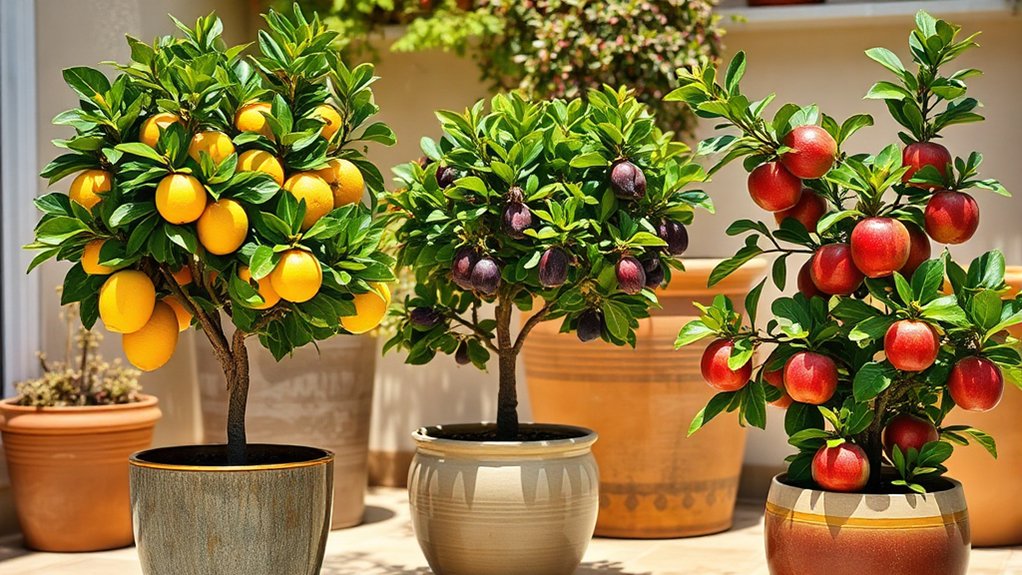
If you want fresh fruit without a big yard, container gardening gives you plenty of options. You can grow compact apples, figs, citrus, and peaches in roomy pots, then move them to catch sun or shelter them from wind.
Choose well-draining soil, water consistently, and feed lightly during the growing season so roots stay healthy. You’ll also enjoy smaller crops like strawberries and dwarf berry bushes, which fit neatly on patios, balconies, and sunny steps.
Choose well-draining soil, water regularly, and enjoy strawberries and dwarf berries that thrive in small spaces.
If your climate stays warm, you can try tropical fruit such as pineapple or calamondin for a colorful edible display. Pick containers with drainage holes, and use mulch to slow moisture loss.
With regular pruning, you’ll keep plants manageable and encourage better airflow and fruiting. By matching each tree to your space, light, and weather, you can harvest flavorful fruit without sacrificing your outdoor area.
How to Choose the Best Dwarf Fruit Tree for Pots
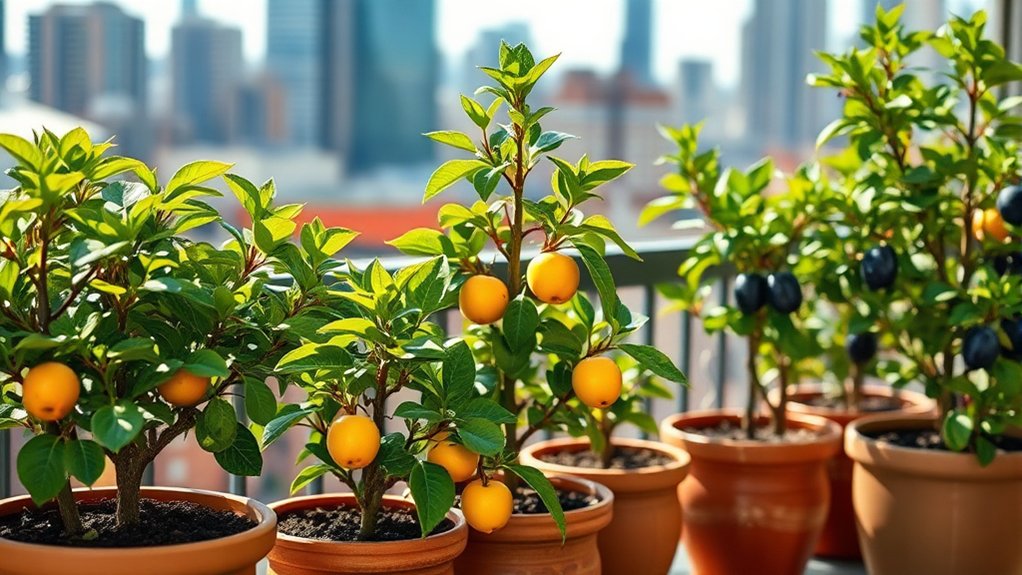
Choosing the right dwarf fruit tree for a pot starts with matching the tree to your space, climate, and sunlight. You should pick container varieties that stay compact, set fruit reliably, and fit your hardiness zone.
Look for dwarf fruit trees on true dwarf rootstock, not just small young plants, because they’ll manage height better long term. Check whether the tree needs full sun, afternoon shade, or protection from wind, since pot-grown roots heat up and dry out faster than ground soil.
Choose a pot with good drainage and enough room for root growth, then confirm the mature size before you buy. You’ll also want a variety that suits your taste, whether you prefer sweet, tart, or crisp fruit.
A healthy graft union, sturdy branches, and disease resistance can save you trouble later and help your tree thrive in a container.
Grow Citrus Trees in Containers
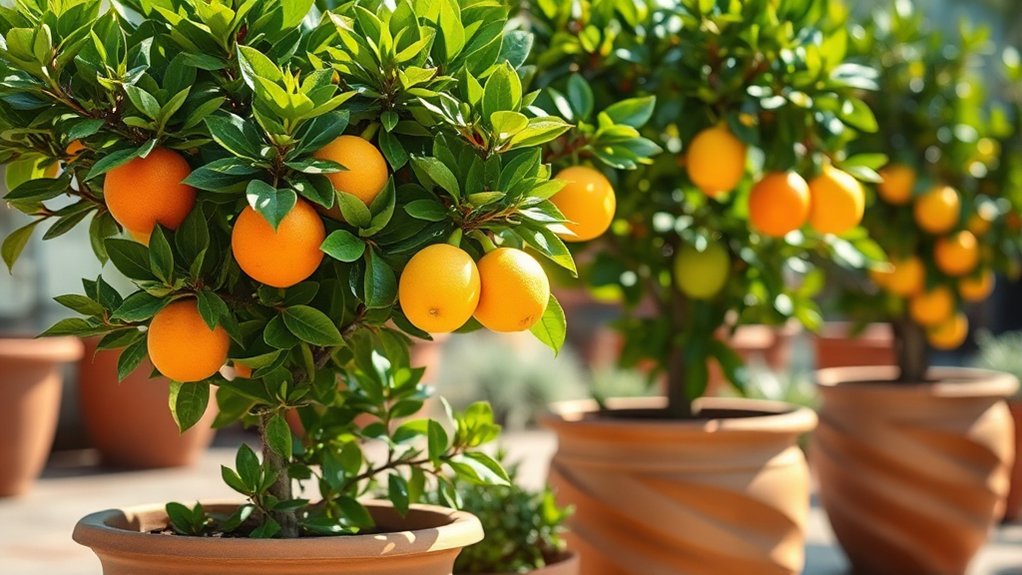
Citrus trees are some of the easiest fruit trees to grow in containers because they stay manageable, look attractive year-round, and can produce fragrant blossoms and fresh fruit on patios, balconies, or sunny decks. Choose compact citrus varieties and give them at least 6 to 8 hours of sun daily. Use a pot with drainage, and follow smart container tips to keep roots healthy and moisture steady.
| Variety | Flavor | Container Size |
|---|---|---|
| Meyer lemon | Sweet-tart | 15-20 gal |
| Key lime | Bright | 10-15 gal |
| Calamondin | Tangy | 10-15 gal |
Use a well-draining potting mix, water when the top inch feels dry, and feed during the growing season with a citrus fertilizer. Rotate the pot for even growth, and move it indoors or under shelter before frost. With steady care, you’ll enjoy glossy leaves, white blooms, and harvests that feel surprisingly generous.
Plant Dwarf Apple Trees in Containers
When you’re planting dwarf apple trees in containers, it’s important to pick a variety that suits your space and climate. Some great options include ‘Columnar,’ ‘Honeycrisp,’ or ‘Gala’ on dwarf rootstock.
You’ll also want to make sure you have a large pot with excellent drainage. This helps keep the roots healthy and happy.
With regular watering, plenty of sunlight, and seasonal feeding, you’ll be able to grow crisp, delicious apples right on your patio. It’s pretty rewarding to enjoy fresh fruit just steps from your door!
Choosing Dwarf Apple Varieties
To get the best results with container-grown apples, start by picking true dwarf varieties that stay compact and fruit well in pots, such as ‘Honeycrisp,’ ‘Fuji,’ ‘Gala,’ or ‘Golden Delicious’ on a dwarf rootstock. You’ll enjoy dwarf apple benefits like earlier fruiting, easier pruning, and simpler harvesting in tight spaces.
Compare container apple varieties for chill needs, flavor, and disease resistance so you choose trees that suit your climate and taste. Look for labels that mention a dwarf rootstock, since seedling apples grow too large for pots.
You should also favor cultivars that set fruit reliably without needing excessive room. When you match a compact tree to your goals, you’ll maximize production and keep your container orchard manageable, attractive, and productive year after year.
Container Care Essentials
Once you’ve picked a dwarf apple variety, give it the right home in a large container with plenty of drainage. Healthy root growth depends on good airflow and moisture control. Choose a high-quality potting mix for soil selection; don’t use heavy garden soil, which compacts and suffocates roots.
Place the tree where it gets at least six hours of sun each day. Use watering techniques that keep the mix evenly moist, not soggy. Check the top inch of soil before you water again.
Feed your tree with a balanced, slow-release fertilizer during the growing season, and prune lightly to maintain shape and airflow. In winter, protect the container from hard freezes by moving it to a sheltered spot or insulating the pot.
Grow Fig Trees in Containers
Fig trees are one of the best fruit trees to grow in containers because they stay manageable, adapt well to pot culture, and still produce sweet, rich fruit with the right care. Choose a young fig tree and start with a pot at least 18 to 24 inches wide so roots have room to expand.
Use fast-draining potting mix that meets fig tree soil requirements, and place the container where sunlight needs are met with six to eight hours daily. Follow a steady watering schedule: water deeply when the top inch feels dry, but never let the pot stay soggy.
Shape growth with simple pruning techniques each winter to keep the canopy compact and productive. Feed with balanced fertilizer options in spring and midsummer, and inspect leaves often for pest management so problems stay minor.
With consistent care, you’ll enjoy healthy growth and a generous harvest year after year.
Plant Peach and Nectarine Trees in Pots
You can definitely grow peach and nectarine trees in pots, especially if you pick dwarf varieties. These types stay compact but still produce plenty of fruit. Just make sure to choose a large container that has good drainage.
Next, use rich, well-draining soil to give the roots plenty of room to grow. Water your tree regularly and feed it during the growing season to keep it healthy. And don’t forget—keeping your tree in full sun is key to getting the best fruit.
Choosing Dwarf Varieties
Choosing the right dwarf peach or nectarine variety makes container growing much easier, since compact trees stay manageable while still producing full-sized fruit. You’ll see the biggest dwarf tree benefits in smaller spaces, where a restrained canopy fits balconies, patios, and decks without crowding them.
Look for naturally small cultivars or those grafted onto dwarfing rootstocks, because they’re bred to stay shorter and fruit earlier. Match the container size to the mature tree, not the nursery pot, so roots have room without excess soil staying wet.
Choose varieties with reliable flavor, self-fertility when possible, and cold hardiness suited to your climate. When you start with the right tree, you give yourself a strong foundation for healthy growth and easier harvests later.
Potting And Care
Start your peach or nectarine tree in a large, well-draining pot with plenty of room for roots to spread. Ideally, choose one that holds at least 15 to 20 gallons. Use a quality potting mix, not garden soil, and set the tree so the graft sits above the surface.
Water deeply whenever the top inch dries out. Place the pot where it gets full sun.
| Task | Timing | Tip |
|---|---|---|
| Watering | Weekly | Soak thoroughly |
| Fertilizing | Spring to midsummer | Use balanced fertilizer options |
| Pruning | Late winter | Follow simple pruning techniques |
Feed lightly during active growth, then stop by late summer. Protect roots from hard freezes by moving the container or insulating it. Check for pests often, and repot every two to three years.
How to Care for Potted Fruit Trees Year-Round
Caring for potted fruit trees year-round means staying ahead of their changing needs as the seasons shift. You’ll adjust watering frequency with heat, rain, and dormancy, and you’ll check sunlight requirements so leaves and fruit keep growing strongly. Choose smart soil selection and a generous container size to support roots, then follow a steady fertilizer schedule during active growth.
Use pruning techniques in late winter or after harvest to shape the canopy, improve airflow, and boost fruiting. Stay alert with pest management by inspecting undersides of leaves, sticky traps, and early treatment.
- Spring: repot, feed, and watch for new growth.
- Summer: water deeply, mulch the surface, and shield pots from scorching decks.
- Fall and winter: reduce feeding, remove weak branches, and add winter protection.
With consistent care, your container trees can thrive, flower, and fruit for years.
Frequently Asked Questions
How Often Should Container Fruit Trees Be Repotted?
You should repot container fruit trees every 2 to 3 years, or sooner if roots crowd the pot, growth slows, or water drains too fast. Your repotting frequency also depends on container size; smaller pots need attention more often than larger ones.
Check roots each spring and move the tree up one pot size when needed. Don’t wait until it becomes rootbound because that can stress the tree and reduce fruiting.
What Soil Mix Works Best for Potted Fruit Trees?
You’ll get the best results with a light, well-draining mix made for containers: equal parts high-quality potting soil, compost, and perlite or pine bark. This blend holds moisture without staying soggy, and it gives your tree steady soil nutrients.
Match the mix to your container size, so roots have room but don’t sit in excess wet soil. Avoid garden dirt, which compacts and can suffocate roots.
Can Fruit Trees Survive Winter Outdoors in Containers?
Yes, you can leave fruit trees outdoors in containers, but you’ll need winter protection. You should insulate the container with mulch, blankets, or bubble wrap so roots don’t freeze as fast.
Place the pot near a sheltered wall and lift it off cold ground. You’ll also want to water sparingly when soil isn’t frozen.
Hardy varieties cope better, but tender trees may need extra shelter or temporary indoor storage.
How Do You Prevent Pests on Patio Fruit Trees?
You prevent pests by inspecting your patio fruit trees weekly, then removing damaged leaves and fruit. You can spray natural repellents like neem or insecticidal soap, place pest traps nearby, and encourage companion planting with herbs that deter insects.
If infestations grow, use organic pesticides sparingly and follow label directions. Keep containers clean, prune for airflow, and avoid overwatering, since stressed trees attract more pests.
Which Containers Drain Best for Fruit Trees?
Like a sieve, the best containers drain fast and keep roots breathing. You’ll want pots with several large holes, plus raised feet or a stand so water can escape freely.
Terra cotta, wood, and lightweight fabric pots usually work well. Add drainage materials like coarse gravel or mesh over the holes, and choose container sizes that match the tree’s root ball without trapping excess moisture around it.
Conclusion
So, if you’ve been wondering whether fruit trees can really thrive in pots, the answer is yes if you choose wisely and care for them well. Dwarf citrus, apples, figs, peaches, and nectarines can all reward you with fresh fruit in tight spaces.
The old theory that container fruit trees are only a temporary novelty doesn’t hold up. With the right pot, soil, and pruning, you can grow a productive mini orchard on your patio. Fruit trees for container gardening are a great way to enjoy fresh harvests even with limited space.