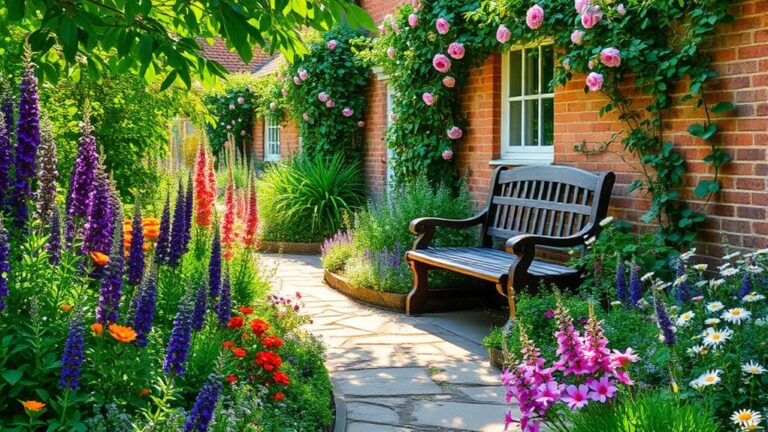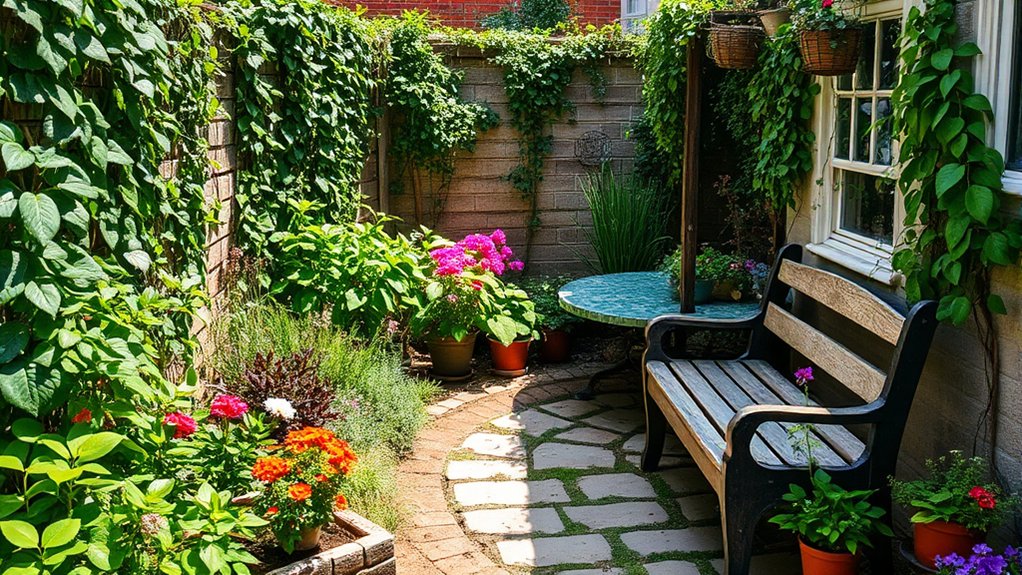
Small Backyard Garden Ideas for a Beautiful Space
Struggling to make the most of your small backyard? You’re not alone. Many people find it tough to create a beautiful, functional outdoor space when every inch counts.
Luckily, with the right ideas and a bit of planning, you can transform your small backyard into a charming retreat that feels spacious and inviting. Small Backyard Garden Ideas.
You can turn a small backyard into a beautiful space by planning a simple layout with clear zones for planting, seating, and storage.
Use raised beds, narrow paths, and vertical planters to save room while adding depth.
Choose native plants and a few containers for flexible color.
Curved edges, light accents, and soft lighting can make the space feel bigger and more inviting, and there’s plenty more you can do to make it shine.
Key Takeaways
- Organize the backyard into clear zones for planting, seating, and storage to keep the space functional and uncluttered.
- Use raised beds and narrow pathways to maximize growing space while maintaining easy access and smooth movement.
- Add vertical planters and native plants to save ground space, reduce maintenance, and support local wildlife.
- Create a cozy seating area with weatherproof furniture, soft lighting, and an open layout for comfort and conversation.
- Use containers, borders, and layered textures to add flexible color, define edges, and make the garden feel larger.
Start With a Small Backyard Layout
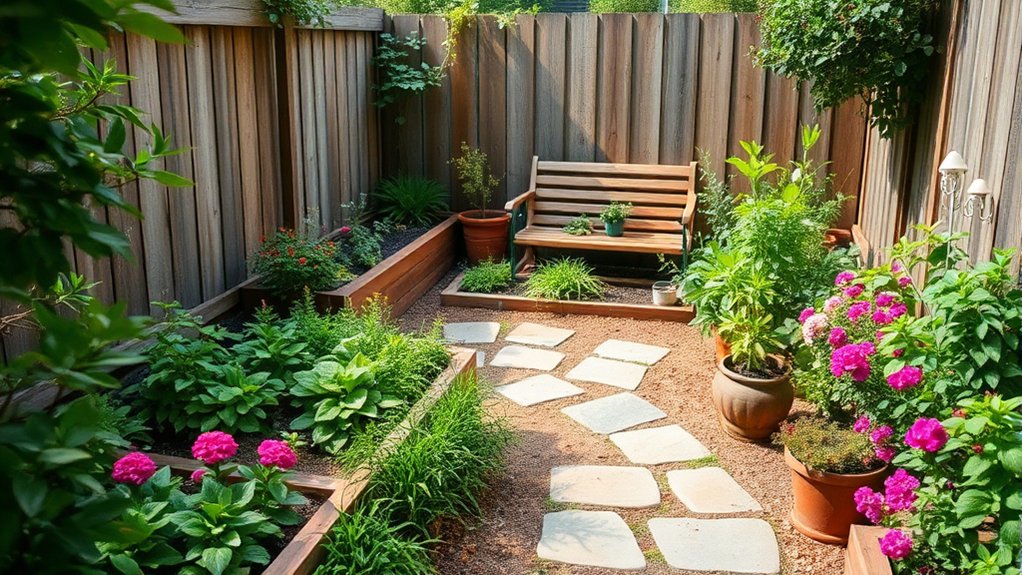
Start with a small backyard layout so you can make the space feel organized and manageable from the beginning. You’ll create flow faster when you map paths, focal points, and open space before adding anything else.
Use garden zoning to separate lounging, planting, and storage areas, so each part of the yard has a clear purpose. Keep the design simple and leave room to move comfortably through the space.
If your yard gets uneven light, plan for seasonal planting so you can match crops and flowers to changing conditions throughout the year. Sketch your layout on paper or use markers in the yard to test proportions.
You don’t need a large plan to make a strong impact; you just need a smart one. When you define the structure early, you’ll avoid clutter and make every square foot work harder.
Plan Small Backyard Garden Beds
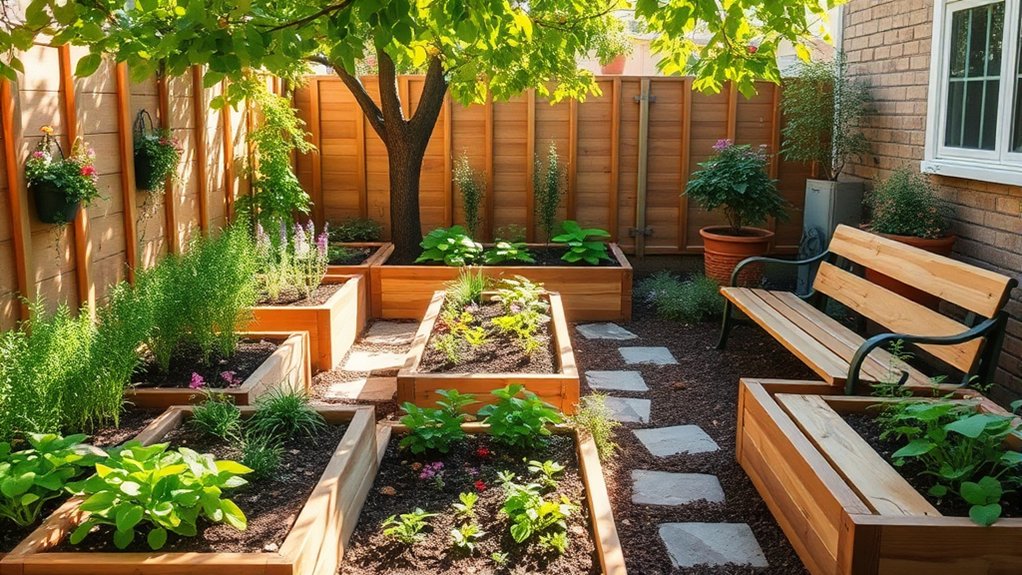
When you’re planning small backyard garden beds, think about placing them where they’ll get the best sun and fit naturally into your layout. It’s all about making the most of the space you have.
Then, pick raised bed sizes that match your area and make planting easy. You want beds that feel just right for your garden.
Also, be sure to leave enough room for pathways. This way, you can move around comfortably, water your plants, and harvest without feeling cramped or crowding your beds. It just makes the whole gardening experience more enjoyable.
Bed Placement
When you’re planning small backyard garden beds, placement can make or break your harvest. Put beds where they’ll catch the most sun, avoid tree roots, and leave room to move comfortably between them.
Smart bed orientation helps you balance light, airflow, and easy watering while also supporting strong growth. You can also align beds to improve garden aesthetics, creating clean lines that make the space feel intentional and calm.
| Factor | Why it matters | Your move |
|---|---|---|
| Sunlight | Boosts growth | Place beds in the brightest spot |
| Access | Simplifies care | Keep paths clear |
| Style | Improves look | Repeat straight, tidy lines |
Choose a layout that fits your yard, then adjust as seasons shift.
Raised Bed Sizes
For a small backyard garden, a few well-sized raised beds can give you more growing space without crowding the yard. Aim for beds that are 3 to 4 feet wide so you can reach the center easily, and choose lengths that fit your layout, such as 6 to 8 feet.
Keep the height around 12 to 24 inches, depending on your soil and plants. When you plan with the right raised bed materials, like cedar, composite, or galvanized steel, you can match durability to your budget and style.
The raised bed benefits include better drainage, richer soil control, and easier planting. You’ll also make better use of limited space when each bed has a clear purpose, whether you’re growing herbs, greens, or compact vegetables.
Pathway Access
Pathways make or break a small backyard garden, so give yourself enough room to move comfortably between beds. Aim for at least 24 to 36 inches where you’ll walk, turn, and carry tools or harvest baskets.
If your space is tight, you can narrow side paths, but keep main routes easy to pass through. Choose pathway materials that fit your climate and style, like gravel, mulch, pavers, or stepping stones.
Smooth, stable surfaces improve garden accessibility, especially if you use a wheelbarrow or need safer footing after rain. You should also keep edges clean so plants don’t spill into the walkways.
Well-planned access helps you weed, water, and harvest faster, and it makes your garden feel larger and more inviting overall.
Add Vertical Planters and Wall Gardens
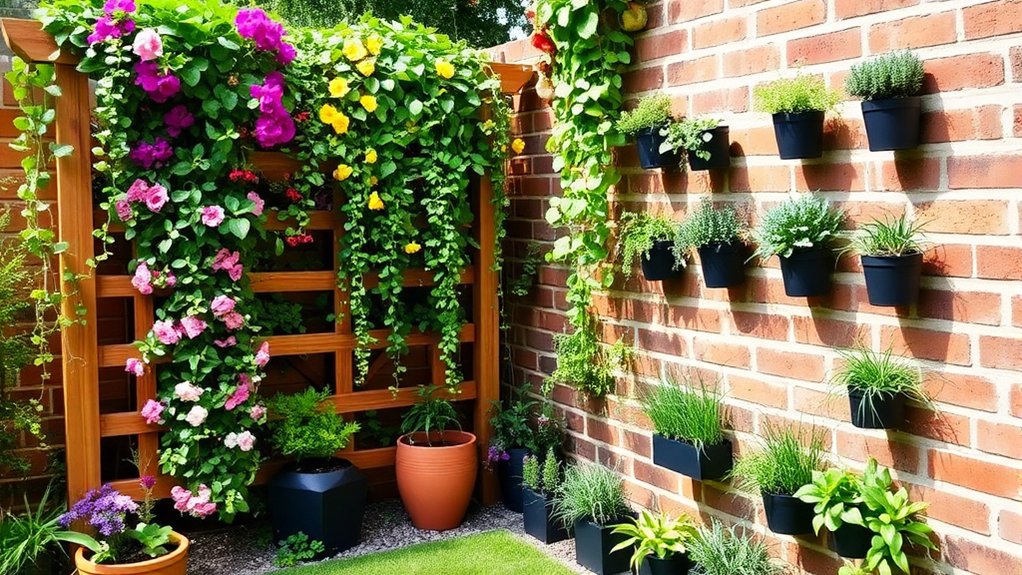
If your backyard feels too small for the garden you want, vertical planters and wall gardens can help you grow more without taking up valuable ground space. You can mount containers on fences, stack pockets on a wall, or use trellises for herbs and flowers.
Choose vertical planter styles that match your space and watering routine, then group plants by sun needs. The wall garden benefits include easier harvesting, better airflow, and a lively backdrop for seating areas.
| Option | Best Use |
|---|---|
| Pocket panels | Herbs and lettuces |
| Hanging pots | Trailing flowers |
| Trellises | Beans and vines |
| Shelf systems | Mixed small plants |
| Wall boxes | Compact blooms |
You’ll also keep plants at eye level, which makes care simpler. With thoughtful placement, your walls become productive, attractive features that add color, texture, and fresh growth without crowding the rest of your backyard.
Use Design Tricks to Make the Space Feel Bigger
You can make your backyard feel larger by layering plants at different heights. This draws the eye upward and adds depth. Plus, curved paths work wonders—they soften the layout and create the illusion of more space as you move through the garden. To top it all off, use light-colored accents. They reflect light and keep the area feeling open and airy.
Vertical Garden Layers
Think in layers to make a small backyard feel larger and more dynamic. You can stack greenery upward, so your eye moves across heights instead of stopping at one flat plane. Choose vertical plant types like climbers, trailing herbs, and compact ferns to build depth without crowding the ground.
Vertical garden benefits include better airflow, easier watering access, and a fuller look in less square footage.
- Mount planters on fences
- Use wall pockets for herbs
- Add trellises for vines
- Place tall pots at corners
- Mix textures for contrast
You’ll create a richer scene that feels intentional, airy, and spacious. Keep each layer balanced, and let light pass through for a brighter, open feel.
Curved Path Illusion
A curved path can make a small backyard feel wider by guiding the eye on a gentle journey instead of a straight line to the edge. You can soften the layout with curved edges that bend around beds, planters, or a seating nook.
This flow breaks up tight angles and creates visual depth, so the space feels layered instead of cramped. Keep the path just wide enough for easy walking, and let it shift direction slightly as it moves through the garden.
You’ll draw attention past the nearest corner, which helps the yard seem longer and more open. Add low plants along both sides to frame the route without blocking the view, and your backyard will feel inviting, balanced, and spacious.
Light Color Accents
Light color accents can amplify the open feel you’ve created with a curved path. You can keep your color palette airy with potted flowers in whites, pale pinks, and soft yellows. Use light fixtures with slender frames, and choose decorative stones in cream or blush tones to reflect sunlight.
Add garden art that feels delicate, not busy, so your small yard stays balanced.
Mix plant combinations with seasonal blooms for gentle contrast. Pick accent furniture in whitewashed or light wood finishes. Lay outdoor rugs in muted patterns to define zones.
Keep minimalist design choices clean and uncluttered. Repeat soft tones across beds, pots, and edging for unity.
Pick Plants for Small Backyard Gardens
When your backyard is short on space, the right plants can make it feel fuller, brighter, and easier to maintain. Choose compact varieties that stay neat without constant pruning, like dwarf shrubs, herbs, and compact perennials.
You can layer heights to add depth by placing taller plants at the back and low growers along the edges. Mix foliage textures and colors so every corner feels intentional, not crowded.
If you want more function from each bed, use companion planting to pair plants that support one another and help maximize harvests. Add seasonal blooms so your garden stays lively throughout the year, even when one flower cycle ends.
Native plants also work well because they usually handle local weather better and need less watering. By selecting plants with similar light and water needs, you’ll keep your small garden healthy, balanced, and easy to enjoy.
Create a Cozy Seating Area
You can easily turn your backyard into a cozy retreat by picking out comfortable furniture that just makes you want to stay awhile. Then, add some soft lighting to give off a warm, welcoming glow once the sun goes down. Don’t forget to finish things off with weatherproof cushions so your space stays inviting no matter what the weather throws at it.
Choose Comfortable Furniture
Comfort starts with the right seating, so choose outdoor furniture that invites people to linger. You can make your small backyard feel welcoming by picking pieces that fit your space and your daily routine.
Focus on sturdy furniture materials that handle weather well and feel good to use. Arrange seats so guests can talk easily and still enjoy the garden view.
- Choose a compact loveseat or two chairs
- Add cushions for extra comfort
- Use lightweight pieces you can move easily
- Keep seating arrangements open and flexible
- Match colors to your plants and patio
A small bench or foldable chair can also work well. When you balance comfort, scale, and style, you create a cozy spot that feels natural and useful every day.
Add Soft Lighting
Soft lighting turns a simple seating area into a warm evening retreat. You can drape string lights overhead, set lantern accents beside chairs, and tuck fairy lights into nearby planters for a gentle ambient glow. Choose decorative fixtures with warm tones so the space feels inviting, not harsh.
Use solar stakes along borders for subtle pathway illumination that guides guests after dark.
| Light Type | Best Placement | Effect |
|---|---|---|
| String lights | Overhead | Cozy canopy |
| Lantern accents | Tables | Soft focus |
| Fairy lights | Planters | Sparkling detail |
| Solar stakes | Edges | Safe guidance |
Mixing these layers helps you create depth without crowding the area. Keep the layout simple, and let the glow highlight your cozy seating area naturally.
Use Weatherproof Cushions
Weatherproof cushions instantly make your garden seating feel more inviting, while also standing up to sun, moisture, and everyday use. You can choose weather resistant fabrics that stay bright, dry quickly, and resist mildew, so your space always looks fresh.
Add a mix of seat pads and back cushions to boost outdoor comfort without crowding your small backyard. Pick neutral tones for easy styling, use ties to keep cushions secure, and store them in a deck box. Match textures with nearby planters and refresh them with a quick wipe.
When you layer soft cushions on benches or chairs, you turn a simple corner into a cozy retreat. This small upgrade helps you linger outside longer, relax more easily, and enjoy your garden every day.
Use Containers for Flexible Color
Containers give you an easy way to add flexible color to your backyard garden, since you can move them around to refresh a tired corner, highlight a seating area, or follow the sun. Choose pots in different heights and finishes, then group them for colorful combinations that feel layered but not crowded.
You can also change the mood quickly with seasonal swaps, replacing spring blooms with summer herbs or autumn mums as the weather shifts. Because containers stay portable, you can test placements before committing to a look.
Set a bright planter beside a bench, cluster matching pots near a doorway, or tuck a single bold container into an empty spot. Keep the palette tight so your space feels intentional, and repeat one or two colors for balance.
With a few well-chosen planters, you’ll make your small yard feel lively, adaptable, and easy to update all year.
Add Paths, Borders, and Texture
Paths, borders, and texture help your backyard garden feel organized and inviting at the same time. You can define movement with simple path materials like gravel, stone, or stepping pavers, then soften edges with border plants that frame beds naturally.
Try gentle path shapes to guide the eye and make a small space feel larger. Mix border designs for a tidy look, such as low bricks, wood edging, or clipped herbs.
Choose texture variety with glossy leaves, feathery grasses, and bold blooms. Layer heights to create texture layers that keep the view interesting.
Match border colors to pots, fences, or flowers for harmony. Keep paths narrow enough to save space but wide enough for easy walking.
Repeat materials and plants so your garden feels calm and connected. This balance gives your yard structure without making it feel stiff, and it invites you to investigate every corner.
Add Lighting for Evening Charm
As daylight fades, soft garden lighting can make your backyard feel warm, safe, and inviting. You can drape string lights along a fence, trellis, or pergola to create instant charm, then mix in fairy lights for a gentle shimmer around shrubs or planters.
Soft garden lighting turns your backyard into a warm, inviting retreat as daylight fades.
Place solar lanterns on tables, steps, or tucked corners to add an easy ambient glow without extra wiring. Use garden sconces near seating areas to highlight textures and help define the space after dark.
Pathway lighting can guide you through the garden and make narrow routes feel polished and welcoming. For a softer touch, add candle accents on a patio table or within sheltered holders.
Hang bulbs overhead to frame your outdoor room and give the garden a cozy, festive feel. With a few layered choices, you’ll turn your small backyard into a peaceful evening retreat.
Keep Maintenance Simple in a Small Backyard Garden
When you keep a small backyard garden low-maintenance, you’ll spend less time working and more time enjoying it. Choose low maintenance options that suit your climate and let your space thrive with less effort. You can build a garden that looks polished without constant pruning, watering, or replanting.
Pick drought tolerant plants that handle heat and dry spells well. Use mulch to hold moisture and block weeds. Group plants with similar water needs together. Install drip irrigation for targeted, efficient watering. Choose slow-growing shrubs and perennials instead of high-care annuals.
You’ll also save time by limiting the number of plant varieties and keeping pathways clear for easy access. Simple edging, sturdy containers, and a few statement plants can create structure without extra upkeep. By planning for ease from the start, you’ll enjoy a beautiful backyard garden that stays manageable, tidy, and inviting all season long.
Frequently Asked Questions
How Much Should I Budget for a Small Backyard Garden?
You should budget about $200 to $1,500 for a small backyard garden, depending on plants, soil, and upgrades. You can keep costs down with cost-effective solutions like seeds, recycled containers, and mulch.
Plan for essential gardening tools such as a trowel, gloves, pruners, and a watering can. If you want raised beds, lighting, or irrigation, expect to spend more.
Start small, then expand as you learn.
Which Garden Style Works Best in Shaded Backyards?
What’s right for you is a woodland-style garden with layered garden design. You’ll get the best results by using shade-loving plants like hostas, ferns, and astilbes. This style works because it mimics nature and thrives with less direct sun.
As the saying goes, “Don’t judge a book by its cover.” You can create beauty in dim corners by mixing textures, heights, and paths that invite you in.
How Do I Protect Plants From Pets and Children?
You can protect your plants by using plant barriers like low fences, edging, or decorative mesh around beds. Keep breakable pots out of reach and place fragile plants in raised containers.
Choose pet friendly plants so curious noses won’t cause harm if they get in. Teach children clear boundaries, and use mulch paths to guide traffic.
You’ll also want to secure tools, fertilizers, and watering cans safely nearby.
What Permits Are Needed for Backyard Garden Structures?
You’ll usually need to check local building permits, especially for sheds, greenhouses, pergolas, and taller fences. Raised beds often don’t need permits, but zoning regulations can limit size, placement, and height.
Call your city or county planning office before you build since rules vary by location. You’ll also want to confirm setbacks, utility easements, and HOA rules so you don’t run into fines or delays later.
How Can I Attract Butterflies and Bees to My Garden?
Plant nectar-rich flowers, and you’ll quickly invite butterflies and bees. Choose nectar plants like coneflowers, zinnias, and lavender, and group them so blooms seem to meet by chance, creating a lively rhythm.
Add shallow butterfly feeders with sugar water, and skip pesticides. Build pollinator habitats with native shrubs, mulch, and water. With consistent garden maintenance, you’ll keep the space blooming, welcoming, and buzzing all season long.
Conclusion
With a smart layout, your small backyard can bloom into a cozy retreat that feels bigger than it is. You’ve learned how to shape beds, build upward, and use color, texture, and light to stretch the space.
Keep it simple, choose plants you love, and let every container and pathway work hard for you. Soon, your garden will feel like a pocket-sized paradise where every corner whispers beauty and calm.
Embrace these small backyard garden ideas to create a beautiful space that brings joy and peace to your everyday life.