How to Add Nitrogen to Soil Naturally in 7 Steps
Struggling to keep your garden vibrant and healthy? You’re not alone. Many gardeners find it tough to maintain nutrient-rich soil, especially when it comes to nitrogen, a key element for lush, green plants.
But don’t worry—adding nitrogen naturally to your soil is easier than you think.
You can add nitrogen to soil naturally by building it in seven simple steps. First, understand that nitrogen helps plants grow leafy and green. How to Add Nitrogen to Soil Naturally.
Next, mix in compost and organic fertilizer to feed the soil. Add grass clippings, kitchen scraps, and dry leaves in balanced layers.
Plant legumes as cover crops, use manure carefully, and rotate crops like beans after heavy feeders.
Finish by testing your soil so you can keep nitrogen steady and learn what works best next.
Key Takeaways
- Add compost and organic fertilizers to supply nitrogen while improving soil structure and overall fertility.
- Use green waste like grass clippings and kitchen scraps to boost nitrogen as they decompose.
- Plant legumes or cover crops to naturally fix atmospheric nitrogen into the soil.
- Rotate crops with nitrogen-fixing plants to restore nutrients and reduce pest and disease buildup.
- Test soil regularly to monitor nitrogen levels and adjust amendments for healthy plant growth.
How Nitrogen Supports Plant Growth
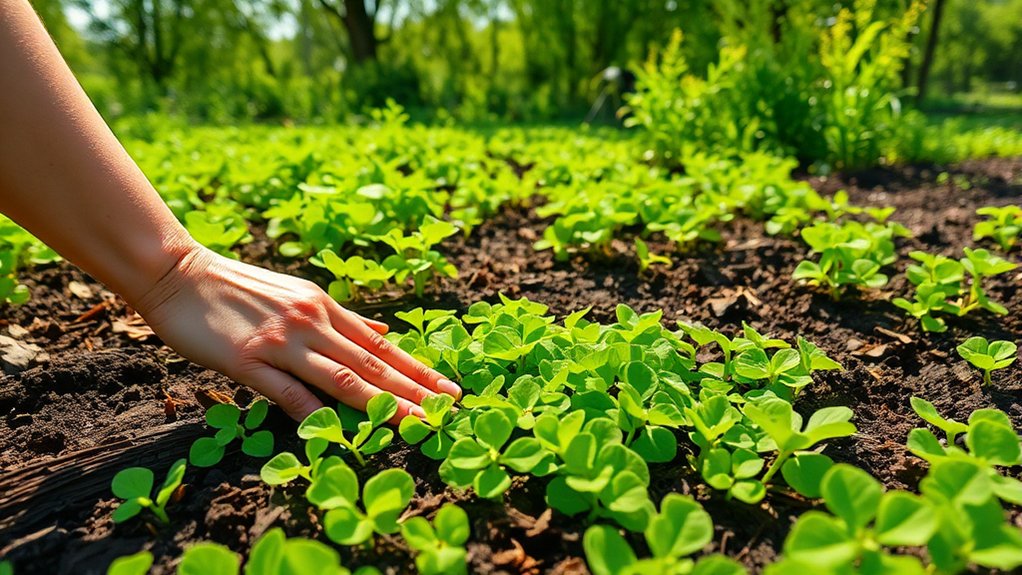
Nitrogen plays a key role in plant growth because it helps plants build chlorophyll, the compound they use to turn sunlight into energy. You rely on this nutrient to drive strong leaf development, rich green color, and steady energy production.
When your soil has enough nitrogen, your plants can make proteins and enzymes that support new tissues, root activity, and overall vigor. That’s why nitrogen importance shows up quickly in fast-growing crops and leafy vegetables.
You’ll often notice better plant health when nitrogen levels stay balanced, since deficiency can slow growth, pale foliage, and reduce yields. Too little nitrogen weakens your plants, but too much can push weak, leafy growth and stress blooms or fruiting.
Add Nitrogen With Compost

Compost can add nitrogen to your soil while also balancing other nutrients your plants need. You can boost its nitrogen content by mixing in green waste like grass clippings, kitchen scraps, and fresh plant matter. As the compost breaks down, it feeds soil microbes that help release nutrients in a form your plants can use.
Compost Nutrient Balance
A balanced compost pile can do more than feed your soil. It can also help restore nitrogen without synthetic inputs. You get the best results when you blend compost types and watch nutrient ratios closely.
Aim for a mix that turns scraps into steady fertility, not a soggy heap or a dry mat.
| Compost type | Nitrogen effect | Best use |
|---|---|---|
| Kitchen scraps | High | Fast feeding |
| Leaf mold | Low | Soil structure |
| Manure compost | Moderate | Broad enrichment |
When you layer materials well, microbes break them down and release nitrogen your plants can use. Keep moisture like a wrung sponge, turn the pile often, and let it mature fully.
Finished compost adds gentle nitrogen while improving texture, drainage, and long-term soil health.
Green Waste Inputs
Fresh grass clippings, pulled weeds, and vegetable trimmings can boost your compost’s nitrogen content fast. You can turn these green waste materials into reliable nitrogen sources by layering them with browns. This mix helps balance moisture, speeds the decomposition process, and builds rich organic matter for a stronger soil amendment.
As the pile breaks down, you’ll support soil health and improve compost benefits without synthetic inputs. Keep adding kitchen scraps, garden trimmings, and other fresh plant material in small batches to avoid odor and compaction.
With steady feeding, you’ll encourage nutrient cycling and follow sustainable practices that lower environmental impact. Used well, green waste turns everyday cleanup into a practical compost system that returns nitrogen to your garden naturally.
Soil Microbe Support
Healthy compost does more than feed your soil. It also supports the microbes that release nitrogen in plant-available forms. When you add compost, you boost microbial diversity and strengthen soil health so your garden can cycle nutrients more efficiently.
You’ll see better results when you:
- Spread a thin layer around plants.
- Mix finished compost into beds before planting.
- Keep compost moist, but not soggy.
- Reapply regularly to feed microbes.
These tiny workers break down organic matter, free nutrients, and help roots access nitrogen over time. Unlike quick fixes, compost improves structure and biology at once, giving you a richer, more resilient soil.
If you want steady nitrogen without synthetic fertilizer, compost gives you a natural, long-lasting route.
Use Grass Clippings and Leaves

You can spread a thin layer of fresh grass clippings over your soil to give it a quick nitrogen boost. Just be sure to mix in some dry leaves as well. This helps balance moisture and keeps the clippings from matting down.
If you compost both the grass clippings and leaves first, you’ll end up with an even richer nitrogen source. That way, your garden gets fed even better. It’s a simple trick that really makes a difference!
Grass Clippings Layer
Grass clippings can add nitrogen back into your soil quickly when you spread them in a thin layer as mulch or mix them with dry leaves to balance the carbon-to-nitrogen ratio. You’ll get strong grass benefits because the clipping layer protects moisture and feeds microbes as the decomposition process begins.
Use it like this:
- Mow when grass is dry.
- Scatter clippings no thicker than 1 inch.
- Rake them lightly around beds.
- Refresh the layer after each mowing.
You’ll notice the soil stays cooler and greener as nutrients return. If you keep the layer loose, it won’t mat down or block air. This simple habit helps you recycle yard waste and support healthier plants without chemical fertilizer.
Leaf Mulch Balance
To keep that nutrient boost working, mix grass clippings with dry leaves instead of piling either one alone. You’ll get a balanced layer that feeds soil life while helping moisture stay put. Grass adds nitrogen, while leaves slow the breakdown and improve airflow, so leaf decomposition happens without a sour, slimy mess.
Spread the mix in a thin, even blanket around plants, then refresh it as it settles. Keep mulch a few inches from stems and trunks so you don’t trap excess moisture there.
This simple balance gives you steady mulch benefits: fewer weeds, cooler roots, and richer soil over time. If the layer mats down, fluff it with a rake so air can move through it and decomposition stays healthy.
Composting Nitrogen Boost
Composting with grass clippings and dry leaves gives you a simple, natural way to add nitrogen while keeping the pile healthy and balanced. You can layer fresh clippings with shredded leaves to feed microbes and speed decomposition. Grass supplies quick nitrogen, while leaves add carbon and airflow.
For best results, mix your nitrogen sources well and keep the pile damp, not soggy.
- Add a thin layer of grass.
- Cover it with dry leaves.
- Turn the pile weekly.
- Use finished compost on beds.
Different compost types break down at different speeds, so watch heat and moisture. When you balance green and brown materials, you’ll build richer soil, reduce waste, and support stronger plant growth without synthetic fertilizer.
Plant Cover Crops That Fix Nitrogen
Planting cover crops is one of the easiest ways to add nitrogen to your soil naturally, especially when you choose legumes like clover, vetch, peas, or beans. These nitrogen-fixing legumes work with soil microbes to capture nitrogen from the air and store it in their roots.
When you cut them down and leave the residue in place, that nitrogen becomes available to your next crop. You’ll also get soil health benefits, including better structure, less erosion, and improved moisture retention.
Sow cover crops after harvest or between rows, then let them grow until flowering for the strongest payoff. Choose a species that fits your climate and planting schedule, and don’t let it set seed unless you want volunteers later.
Use Manure and Organic Fertilizers
Manure and organic fertilizers can give your soil a quick nitrogen boost while also improving its overall fertility. You can choose from several manure types, but always use well-rotted material so you don’t burn roots or spread pathogens. Mix it into beds, topdress established plants, or blend it into compost for steadier feeding.
Organic sources like alfalfa meal, blood meal, fish emulsion, and feather meal work fast or slow, depending on what you need.
- Pick aged manure for vegetables.
- Apply composted poultry manure sparingly.
- Use fish emulsion for a fast boost.
- Add meal-based fertilizers for longer release.
You’ll get the best results when you follow label rates, water after applying, and keep fertilizers off stems and leaves. By relying on these organic sources, you feed soil life and build a stronger, more productive garden over time.
Rotate Crops to Balance Nitrogen
If you want to keep nitrogen levels steady over time, don’t rely only on inputs like manure and organic fertilizers. Plan your planting schedule too. You can use crop rotation to balance nitrogen by alternating heavy feeders with legumes and other soil-building plants.
After corn, tomatoes, or leafy greens, grow beans, peas, clover, or alfalfa so the soil gets a natural boost instead of getting drained again. This approach helps you reduce nitrogen deficiency because different crops use and return nutrients in different ways.
After corn, tomatoes, or leafy greens, follow with beans or clover to naturally boost nitrogen levels.
You’ll also break pest and disease cycles, which keeps your beds healthier and more productive. If you keep planting the same crop in the same spot, you’ll often see weaker growth and lower yields.
Rotate annual crops each season, and give legumes time to do their work. Over time, your soil will stay richer, your plants will grow stronger, and you’ll need fewer outside fixes.
Test Your Soil and Keep Nitrogen Steady
To keep nitrogen levels steady, test your soil regularly so you know what your plants actually need. Soil testing takes the guesswork out of feeding your garden, and it helps you avoid overapplying amendments that can wash away or burn roots.
When you check pH, organic matter, and nutrient balance, you can adjust before plants show stress. That means healthier growth, fewer yellow leaves, and better yields.
- Sample the same spots each season for reliable results.
- Follow the lab’s instructions so your reading stays accurate.
- Add compost, mulch, or legume residues when nitrogen levels run low.
- Retest after changes so you can track progress.
If you’re growing food, treat soil testing like a routine tune-up. It keeps your fertilizer choices targeted, your soil biology active, and your garden steady all year.
Frequently Asked Questions
How Quickly Does Natural Nitrogen Improve Soil Fertility?
Natural nitrogen can improve your soil fertility in weeks or months, depending on the source. Fast-release organic amendments, like composted manure, can feed plants quickly, while nitrogen fixation from cover crops takes longer as roots and microbes work.
You’ll usually see gradual gains in soil structure and fertility over a season, with bigger improvements after repeated applications. Soil temperature, moisture, and microbial activity all affect how fast results show up.
Can Too Much Nitrogen Harm Beneficial Soil Organisms?
Yes, too much nitrogen can harm beneficial soil organisms. You can upset the nitrogen balance, and that stress can slow microbes, reduce fungal activity, and weaken overall soil health.
If you overfeed, you’ll often favor fast-growing species while crowding out helpful ones. You should add nitrogen carefully, test your soil, and mix in compost to keep life thriving.
Balanced feeding helps your soil stay rich, resilient, and productive.
Which Plants Need the Least Added Nitrogen?
You’ll give the least added nitrogen to nitrogen fixing plants and low nitrogen crops. Beans, peas, clover, and other legumes make their own nitrogen, so you usually don’t need much fertilizer.
Root crops like carrots, beets, and radishes also do best with modest nitrogen. Leafy greens and heavy feeders want more. If you overfeed these plants, you’ll get weak roots, fewer flowers, and extra leafy growth instead.
Are Coffee Grounds a Reliable Nitrogen Source for Gardens?
Not really. You can use coffee grounds, but you shouldn’t count on them as a steady nitrogen source. They’re a helpful addition to garden composting, and their coffee benefits include feeding microbes and improving soil texture.
However, they break down slowly and vary in nitrogen content, so you’ll want to mix them with other organic materials. Use them as a supplement, not your main fertilizer, and you’ll get better, more balanced results.
How Do I Tell if My Soil Is Nitrogen Deficient?
You can spot nitrogen deficiency by watching for pale green or yellowing leaves, especially on older growth, and stunted, weak plants. These nitrogen indicators often appear when growth slows and lower leaves drop early.
For the clearest answer, use soil testing. It tells you whether nitrogen is actually low or if another problem’s causing the symptoms. Don’t guess from looks alone because other nutrient issues can mimic it.
Conclusion
By following these steps, you can naturally give your soil the nitrogen it needs and help your plants thrive. Add compost, mulch with grass clippings and leaves, plant cover crops, use manure wisely, and rotate your crops to keep nutrients in balance.
Test your soil often so you can stay ahead of problems. With a little care, your garden will hum like a busy beehive, rich, healthy, and ready to grow. Adding nitrogen to soil naturally is the key to creating a thriving garden that lasts.