What Kind of Soil Do Hydrangeas Need?
Struggling to grow vibrant hydrangeas that truly thrive? You’re not alone. Many gardeners wrestle with finding the right soil to give their hydrangeas the best chance at flourishing.
Getting the soil conditions right is key to unlocking those lush, colorful blooms you desire.
Hydrangeas do best in moist, well-draining soil that’s rich in organic matter and slightly acidic, with a pH around 5.5 to 6.5. What Kind of Soil Do Hydrangeas Need.
You should aim for loose, loamy soil that holds moisture without staying soggy, since poor drainage can cause root rot. If your soil is heavy clay or too sandy, mix in compost or other organic amendments.
Get the basics right, and you’ll set your hydrangeas up for healthier growth and better blooms.
Key Takeaways
- Hydrangeas need consistently moist but well-draining soil to avoid wilting and root rot.
- A rich, loamy soil with plenty of organic matter is ideal for healthy root growth.
- Slightly acidic soil, around pH 5.5 to 6.5, supports the best nutrient uptake and growth.
- Soil pH affects bloom color: lower pH favors blue flowers, while higher pH encourages pink flowers.
- Improve heavy clay or sandy soil with compost, and test pH regularly for best results.
What Kind of Soil Do Hydrangeas Need?
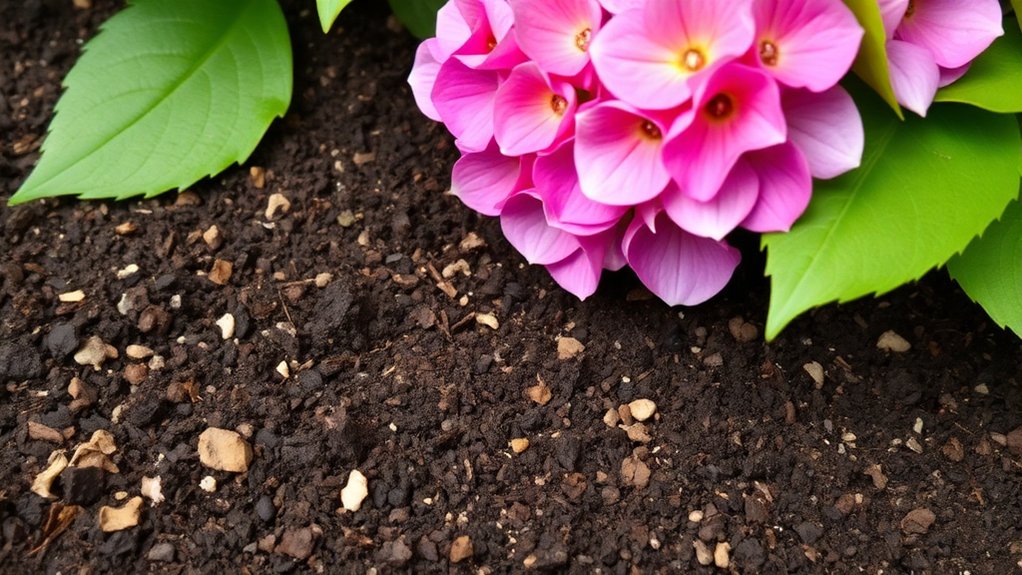
Hydrangeas need soil that stays consistently moist but drains well, with plenty of organic matter to keep roots healthy. You should aim for a rich, slightly acidic mix that supports strong growth and steady blooms.
Good soil helps your hydrangea roots absorb moisture and nutrients efficiently, so the plant can stay vigorous through warm weather. If your garden soil is poor, you can improve it with compost, leaf mold, or well-rotted manure.
These additions boost fertility and help the soil hold the right amount of water without suffocating roots. You should also avoid soil that dries out too quickly because hydrangeas wilt fast when moisture drops.
Test your soil if you’re unsure and adjust it before planting. When you give your hydrangeas a nutrient-rich foundation, you set them up for healthy foliage, reliable flowering, and better overall performance.
Best Soil Texture for Hydrangeas

You’ll want a loamy soil texture for hydrangeas because it gives roots the right mix of air, water, and support. This balance helps the soil drain well without drying out too fast. That way, you can keep moisture steady while avoiding soggy roots. It’s really about finding that perfect middle ground where your hydrangeas can thrive.
Ideal Loamy Texture
Loamy soil gives hydrangeas the best balance of moisture, drainage, and air flow around the roots. You’ll notice loamy benefits right away because it feels crumbly, rich, and easy to work with.
This texture holds enough nutrients for steady growth while keeping roots from sitting in dense, compacted ground. It also supports soil aeration, so oxygen can reach the root zone and help your plant stay vigorous.
When you choose loam, you create a welcoming home for new roots and better overall growth. Aim for soil that breaks apart easily in your hand and doesn’t clump like clay or sift away like sand.
That balanced structure lets your hydrangea settle in and develop strong stems, healthy leaves, and fuller blooms season after season.
Balancing Drainage And Moisture
The best soil for hydrangeas keeps roots evenly moist without staying waterlogged. You want a texture that drains excess water fast, yet still holds enough moisture between waterings. Loam usually does this well, especially when you mix in compost to improve water retention and support nutrient balance.
If your soil feels heavy and sticky, add pine bark, leaf mold, or coarse sand to loosen it. If it feels too gritty, work in organic matter so it can keep hydration longer. Aim for soil that crumbles in your hand and never forms a soggy lump.
This balance helps roots breathe, absorb nutrients, and grow strong, so your hydrangeas can produce fuller foliage and better blooms through the season.
Why Good Drainage Matters

Even though hydrangeas like consistently moist soil, their roots won’t tolerate standing water for long. Good drainage lets excess water move away after rain or irrigation, so you protect roots from rot and stress.
When soil drains well, oxygen reaches the root zone, and that soil aeration helps roots absorb nutrients and grow steadily. You’ll also avoid muddy, compacted beds that invite fungus and weaken new shoots.
The drainage importance shows up most in heavy clay or low spots, where water lingers and leaves yellow, limp foliage behind. To improve drainage, mix in compost, pine bark, or coarse material, and raise the planting bed if needed.
You should water deeply, then let the top layer dry slightly before watering again. That balance keeps hydrangeas healthy without suffocating their roots, so they can focus on strong stems and full blooms.
What pH Is Best for Hydrangeas?
For most hydrangeas, a slightly acidic to neutral soil pH, about 5.5 to 6.5, works best because it keeps key nutrients available and supports healthy growth. When you keep the soil in this range, your plant can take up iron, magnesium, and other soil nutrients without stress. That means you’ll usually see stronger stems, fuller leaves, and steadier blooming from many hydrangea varieties.
- Test your soil before you plant.
- Aim for consistent moisture, not soggy ground.
- Choose a rich, well-amended planting bed.
- Recheck pH each season if growth slows.
If your soil drifts too far from this range, your hydrangea may struggle to absorb what it needs. You don’t need perfect numbers, just a close match and regular monitoring. Different hydrangea varieties can tolerate slight shifts, but this pH window gives you the safest starting point for reliable performance in your garden.
How Soil pH Changes Hydrangea Flower Color
Soil pH can actually change the color of your hydrangea blooms. When the soil is acidic, you’ll often notice blue flowers popping up. On the other hand, if the soil is more alkaline, the flowers usually turn pink. So, by tweaking the pH level, you can really influence the shade your hydrangeas show off. It’s a neat way to customize your garden’s look!
Acidic Soil, Blue Blooms
If you want blue hydrangea blooms, you need acidic soil, because pH helps control how the plant absorbs aluminum. When your soil stays below about 6.0, your hydrangea can take up more of this metal, and the flowers often shift toward blue.
You’ll get the best color when you match the soil to the right hydrangea varieties and keep soil nutrients balanced, not overloaded. Test your garden soil first, then adjust it with care.
- Dark, rich earth around the roots
- Cool, misty petals in morning light
- Mulch holding moisture after watering
- Bloom clusters changing from lavender to blue
Keep roots evenly moist, because stress can mute color. With steady acidity and good care, you’ll help your hydrangeas show their deepest blue.
Alkaline Soil, Pink Blooms
When your soil leans alkaline, hydrangea blooms often shift toward pink because the plant can’t absorb as much aluminum. In alkaline conditions, the roots take up less of this metal, and that changes the pigments in the petals.
You can encourage pink flowers by keeping pH higher, usually above 6.0, with careful soil amendments like lime. Test your soil first so you don’t overshoot, because extreme alkalinity can stress the plant and reduce blooming.
If you want stronger color, avoid aluminum sulfate and choose fertilizers that won’t acidify the bed. Water consistently, mulch well, and give your hydrangea bright morning sun with afternoon shade.
These steps help you maintain healthy growth while supporting the pink tones you want.
Best Compost and Amendments for Hydrangeas
For hydrangeas, the best compost is one that adds organic matter without making the soil too heavy or soggy. Mix in well-rotted compost, leaf mold, or aged manure to improve texture and feed the plant gradually.
Choose compost types that break down fully because unfinished material can steal nutrients and stress roots. You should also think about organic amendments like pine bark fines or worm castings to support microbial health and steady nutrient balance.
Choose fully broken-down compost and organic amendments to nourish roots, support microbes, and keep hydrangeas growing steadily.
A quick soil testing check helps you match inputs to what your hydrangea actually needs, especially if growth looks pale or weak. Add a thin layer of mulch for moisture retention and mulch benefits, then refresh it as the season shifts.
Seasonal adjustments keep your soil working with changing weather, not against it.
- Leaf mold for a soft, airy finish
- Aged manure for gentle feeding
- Worm castings for alive, active soil
- Pine bark fines for structure
How to Fix Clay or Sandy Soil
Clay soil holds water and compacts easily, so you’ll want to loosen it with plenty of organic matter like compost, leaf mold, or pine bark fines. Work these clay amendments into the top 8 to 12 inches, and repeat each season until the ground drains better.
Avoid adding sand to heavy clay, because it can harden the mix instead of refining it. If your soil stays soggy, plant hydrangeas on a slight mound so roots sit above standing water.
Sandy soil drains fast, so you need to help it hold moisture and nutrients. Blend in compost, aged manure, and coco coir as sandy improvements to boost water retention.
Mulch 2 to 3 inches deep to slow evaporation, and water deeply so roots grow downward. In both soil types, keep the pH slightly acidic and test it before adding anything else.
Good structure gives hydrangeas steady moisture, stronger roots, and better blooms.
Potting Mix Tips for Container Hydrangeas
Container hydrangeas do best in a potting mix that drains well but still holds steady moisture. Choose a blend with peat moss or coco coir, compost, and perlite or pine bark fines. You should match the mix to your container size because larger pots hold moisture longer and smaller ones dry out fast.
When you plant, leave enough room for roots to spread without packing the soil too tightly. This setup helps you maintain an even watering frequency and reduces stress during hot spells.
- Use a pot with drainage holes.
- Fill the bottom with airy mix, not gravel.
- Keep the surface lightly mulched to slow drying.
- Refresh the mix each season if it breaks down.
Check moisture with your finger before you water, and soak the pot until excess runs out. If the mix feels dense or stays soggy, repot with a lighter blend.
How to Test and Adjust Soil pH
To figure out whether your hydrangea soil is too acidic or too alkaline, test the pH with a simple home kit or a digital meter before you make any changes. Use reliable testing kits or a pH meter, and sample several spots so you understand the soil composition.
Keep the soil slightly moist, not soggy, when you test, because soil moisture can affect readings. Aim for a pH that supports nutrient balance and steady plant health.
Keep the soil slightly moist when testing, and aim for a pH that supports healthy nutrient uptake.
If you need to lower pH, work in acidifying soil amendments like elemental sulfur or peat. If you need to raise it, use garden lime sparingly. Mix amendments into the top layer, then water well and retest after a few weeks.
Your gardening tools make this easier, and seasonal adjustments help you respond to weather and changing soil conditions. Repeat soil testing each season so you can fine-tune pH and keep hydrangeas growing vigorously and blooming well throughout the year.
Common Hydrangea Soil Mistakes to Avoid
Even when you get the basics right, a few common soil mistakes can still hold hydrangeas back. You might plant them in heavy clay that traps water, or in sandy soil that dries out too fast. Both hurt roots and limit growth. You also shouldn’t overfeed; too much fertilizer can upset nutrient balance and push leafy growth instead of blooms.
Watch your soil drainage closely, because soggy beds invite root rot, while compacted ground keeps roots from breathing. Puddles lingering after rain mean trouble. Crumbly, rich soil supports steady root spread. Yellowing leaves can signal poor nutrition. A mulch layer helps hold moisture without suffocating roots.
Avoid piling mulch against stems, and don’t let pH corrections distract you from texture and moisture. When you give hydrangeas loose, evenly moist soil with good airflow, you set them up for stronger stems, fuller leaves, and better flowers.
Frequently Asked Questions
How Often Should Hydrangeas Be Watered?
You should water hydrangeas deeply about once or twice a week, but adjust for heat, rain, and pot size. You’ll want the soil to stay evenly moist, not soggy, so check soil drainage often.
Good water quality helps prevent stress and leaf spotting. In hot weather, you may need to water more frequently. If the top inch feels dry, it’s time to water again.
Can Hydrangeas Grow in Full Sun?
Yes, you can grow hydrangeas in full sun, but you’ll need to choose the right hydrangea varieties and watch their sunlight exposure carefully. You’ll get the best results in morning sun with afternoon shade, especially in hot climates.
Panicle hydrangeas usually handle more direct sun than bigleaf types. If your site gets intense heat, you should water deeply and mulch well to keep plants from wilting.
When Is the Best Time to Plant Hydrangeas?
You’ll usually get the best results with spring planting or fall planting. In cool climates, plant hydrangeas in spring after the last frost so roots can settle before summer heat.
In milder areas, fall planting works well because cooler weather and rain help them establish. Avoid planting during extreme heat or hard freezes.
Water them deeply, mulch around the base, and give them time to root before stressing them.
Do Hydrangeas Need Fertilizer Every Year?
Yes, you should fertilize hydrangeas yearly, but don’t overdo it. Think of fertilizer as fuel, not a feast. You can use balanced fertilizer types in early spring to support growth and blooms.
Always check your soil pH first since it affects how well your plants absorb nutrients. If your soil is rich, you may need less fertilizer. Too much can cause leafy growth and fewer flowers.
Should I Mulch Around Hydrangea Plants?
Yes, you should mulch around hydrangea plants. Mulch benefits your shrubs by keeping soil moisture steady, cooling roots, and suppressing weeds.
You can spread 2 to 3 inches of organic mulch, like bark or compost, around the base, but keep it a few inches away from stems. That helps prevent rot and gives your hydrangeas a healthier, more even growing environment through hot, dry spells.
Conclusion
Hydrangeas do best in rich, moist, well-drained soil that holds enough water without staying soggy. Aim for slightly acidic soil if you want blue blooms, or more neutral soil for pink flowers.
If your soil is too heavy or too sandy, you can improve it with compost and the right amendments. Don’t let poor soil keep you from growing beautiful hydrangeas. You can fix it, and your blooms will thank you for providing the right kind of soil hydrangeas need.