What Do Mallards Eat and How to Feed Them
If you love watching mallards but worry about what to feed them, you’re not alone. Many people struggle with choosing the right foods that keep these beautiful birds healthy without harming their natural habits. Finding the perfect balance between enjoyment and responsibility can feel tricky, but it’s easier than you think.
Mallards naturally eat aquatic plants, seeds, insects, and small invertebrates.
When you feed them, choose healthy options like chopped greens, peas, corn, or oats, and avoid bread or processed snacks that can harm their health.
Feed small amounts near calm, shallow water during their active times to support natural behaviors.
Proper feeding helps keep mallards strong and healthy, but there’s more to know about how feeding affects their behavior and habitat.
Key Takeaways
- Mallards eat aquatic plants, seeds, insects, and small invertebrates. Their diet changes with the seasons and where they live.
- Feed mallards natural foods like chopped lettuce, peas, corn, oats, and vegetables in moderation to mimic what they usually eat.
- Avoid feeding bread, processed snacks, salty or sugary foods, and human junk food. These can cause health problems for the birds.
- Offer food in shallow water or grassy spots during the late afternoon, which is when mallards naturally feed.
- Keep portions small and feed them 2-3 times a day. Use eco-friendly practices to protect the water and their habitat.
What Do Mallards Eat Naturally in the Wild?

Although mallards are often seen dabbling in ponds and lakes, they actually have a diverse diet that changes with the seasons and availability. When you watch mallards during their migration, you’ll notice they adapt their feeding habits to what’s accessible along their route.
They eat a mix of aquatic plants, seeds, insects, and small invertebrates, which provide the energy needed for long flights. During their nesting habits, female mallards focus on high-protein foods like insects and larvae to fuel egg production and care for ducklings.
You’ll also find mallards grazing on grasses and grains near wetlands. Their flexible diet helps them thrive in various environments throughout the year. So when you observe mallards in the wild, remember their eating patterns shift with migration and nesting cycles, ensuring they get the nutrients necessary for survival and reproduction.
Why Feeding Mallards the Wrong Food Can Hurt Them
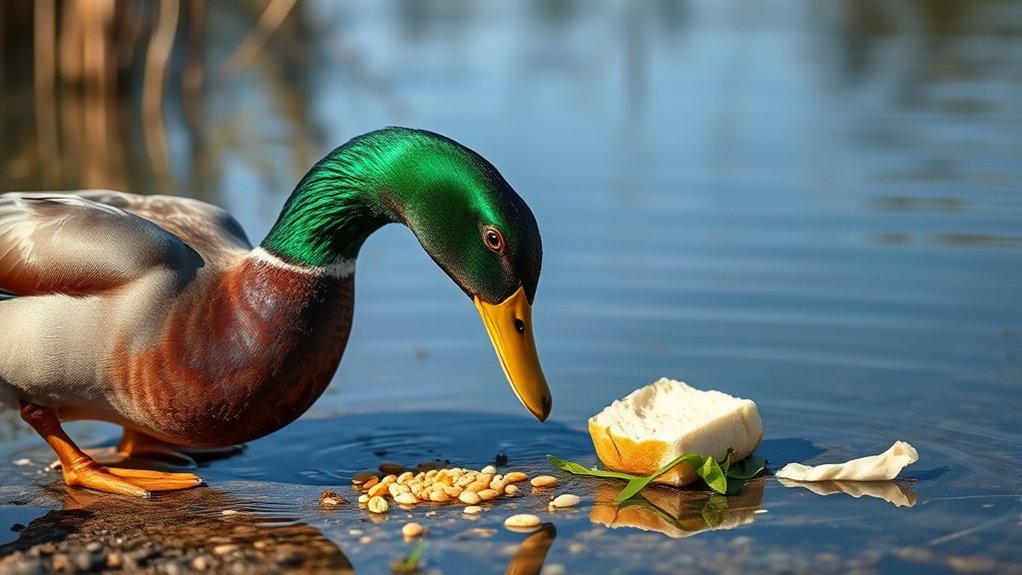
If you feed mallards the wrong food, you could unintentionally harm their health and disrupt their natural behaviors. Feeding bread or junk food can lead to malnutrition, which weakens mallards during critical times like migration and nesting. Poor diet affects their energy levels and ability to fly long distances, putting their migration at risk.
Improper food can also interfere with their nesting habits, reducing their chances of reproductive success.
Here’s a quick look at how wrong foods impact mallards:
| Food Type | Impact on Health | Effect on Behavior |
|---|---|---|
| Bread | Causes malnutrition | Reduces flight stamina |
| Junk food | Leads to obesity | Disrupts natural foraging |
| Human snacks | Toxicity risk | Alters nesting and migration |
| Processed food | Weakens immune system | Hinders natural feeding habits |
Avoiding harmful foods helps mallards keep their natural rhythms and thrive during migration and nesting seasons.
Safe Human Foods to Feed Mallards
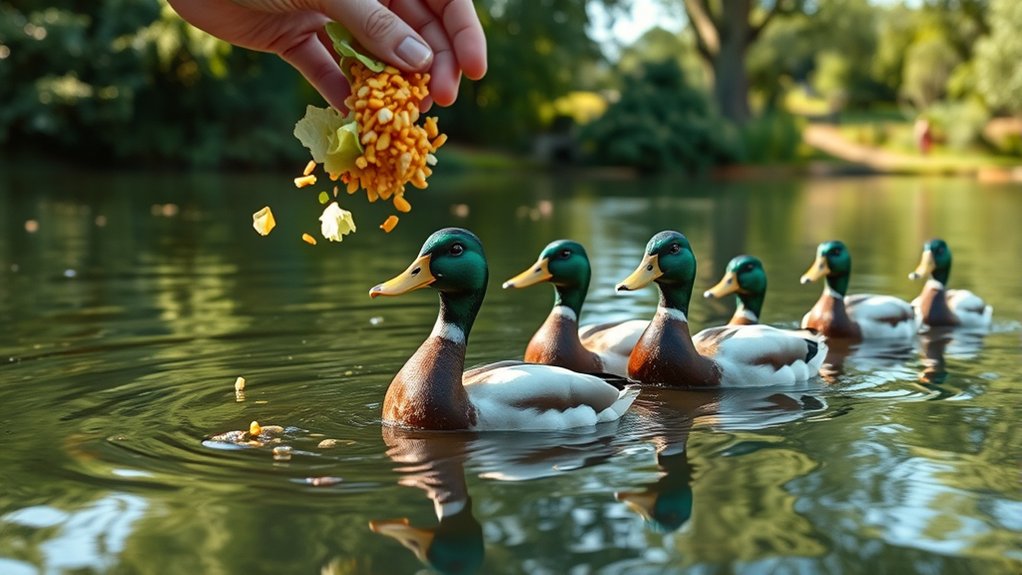
You can offer mallards some safe, healthy snacks that mimic what they’d naturally eat. Foods like cracked corn, oats, and chopped vegetables work really well and won’t cause them any harm. Just make sure to avoid anything processed or salty, since those can actually be bad for their health.
Healthy Snacks For Mallards
When feeding mallards, choosing healthy snacks is essential to support their well-being and natural diet. In their wild habitat, mallards rely on a variety of nutritious foods like aquatic plants, insects, and seeds.
You can mimic this by offering them safe, human foods such as chopped lettuce, peas, corn, and oats. These options provide crucial nutrients and energy, which is especially important during their migration patterns when they need extra fuel.
Avoid processed or salty foods, and always feed in moderation to prevent disrupting their natural foraging behavior. By providing healthy snacks, you help mallards maintain their strength and thrive in the wild.
Avoid Harmful Human Foods
Although feeding mallards can be enjoyable, steering clear of harmful human foods is essential to protect their health. Avoid bread, chips, and processed snacks, as these offer little nutrition and can cause malnutrition or illness.
Instead, focus on safe human foods like cracked corn, oats, or chopped vegetables that support their natural diet. By doing this, you contribute to bird conservation efforts and help maintain the balance of their ecosystem.
Feeding mallards responsibly also promotes habitat preservation by reducing pollution and preventing unnatural food dependence. Remember, your choices impact the environment and the well-being of these ducks.
Foods You Should Never Feed Mallards
You might think feeding mallards bread or snacks is harmless, but actually, a lot of human foods can be pretty bad for them. Processed snacks and bread don’t give them much nutrition at all and can even lead to some serious health problems. So, let’s take a look at which foods you should avoid if you want to keep those mallards safe and healthy.
Harmful Human Foods
Since mallards rely on natural diets to stay healthy, feeding them harmful human foods can cause serious health problems. During seasonal migration and nesting habits, mallards need proper nutrition to maintain energy and support reproduction.
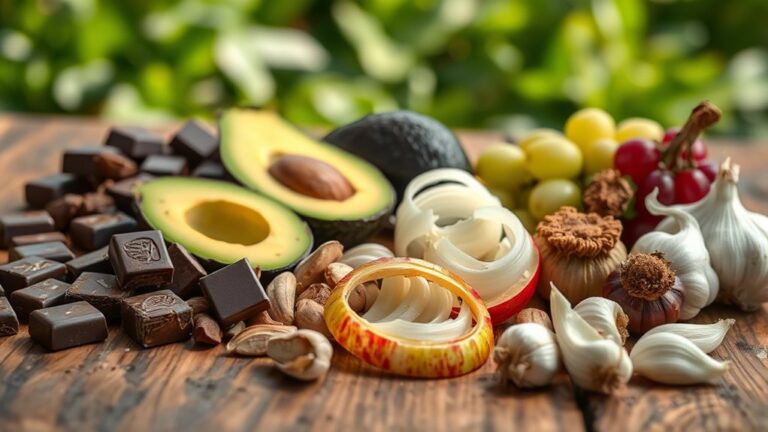
Foods like bread, chips, or sugary snacks lack essential nutrients and can disrupt their digestive systems. You should never feed them salty, fatty, or processed items, as these can lead to malnutrition or illness. Also, avoid giving them dairy products or raw meat, which their bodies can’t handle.
Processed Snack Dangers
When mallards consume processed snacks like chips, crackers, or candy, their bodies struggle to digest the artificial ingredients and excessive salts. Feeding mallards these items can cause dehydration, malnutrition, and even organ damage.
Instead, consider alternative feeding methods that support their natural diet and well-being. By doing so, you help with mallard habitat preservation and promote healthier environments.
Avoid giving mallards:
- Salty or sugary snacks that disrupt their electrolyte balance
- Foods with preservatives or artificial flavors toxic to their system
- Items that encourage aggressive behavior or dependency on humans
Stick to natural foods like seeds, aquatic plants, and insects. This approach protects their health and preserves the delicate balance of their habitat.
Toxic Bread Effects
Although feeding bread to mallards might seem harmless, it poses serious health risks that can harm or even kill them. Bread lacks proper nutrients, disrupting mallard migration by weakening their energy reserves.
It also interferes with their nesting habits, making it harder for females to care for eggs and ducklings. Feeding bread can lead to malnutrition, obesity, and a condition called “angel wing,” which deforms their wings and prevents flight.
| Effect on Mallards | Explanation |
|---|---|
| Malnutrition | Bread lacks essential vitamins and minerals |
| Obesity | High carbohydrates cause unhealthy weight |
| Angel Wing | Wing deformity from poor diet |
| Weakened Migration Energy | Insufficient nutrients impair long flights |
| Nesting Difficulties | Poor nutrition affects egg care and survival |
Avoid bread to support healthy mallard migration and nesting habits.
How to Prepare Healthy Snacks for Mallards
If you want to offer mallards healthy snacks, focus on natural, nutrient-rich foods that mimic their diet in the wild. When preparing snacks, use feeding techniques that encourage natural foraging behavior, like scattering food in shallow water or on grassy areas. Your snack presentation should avoid overcrowding, allowing mallards to feed comfortably without stress.
Offer mallards natural, nutrient-rich snacks scattered to encourage foraging and avoid overcrowding for stress-free feeding.
Here are some healthy snack ideas to prepare:
- Chopped leafy greens such as kale or spinach
- Cooked, unsalted peas and corn kernels
- Small amounts of oats or barley
Make sure to chop larger items into bite-sized pieces to prevent choking and promote easy digestion. Avoid processed foods or anything with added salt or sugar. By carefully preparing and presenting these snacks, you’ll support the mallards’ health and encourage natural feeding behaviors, making your feeding sessions enjoyable and safe for the birds.
Best Times and Places to Feed Mallards
To make the most of your feeding sessions, you should choose times and places where mallards are naturally active and comfortable. Early mornings and late afternoons are ideal since mallards are most active during these cooler hours. Feeding near calm, shallow waters like ponds or slow-moving streams works best, as these spots align with their feeding and resting habits.
Keep mallard migration patterns in mind. During migration, mallards tend to gather in larger groups at stopover points, offering you a great chance to feed many at once. However, outside migration season, focus on areas near nesting habitats, such as reed beds or grassy shorelines, where females and ducklings spend much of their time.
How Much Food to Feed Mallards at Once
When feeding mallards, you should keep portions small to prevent overfeeding and water pollution. Controlling the amount you give at once helps maintain a healthy environment and avoids waste. Mallards don’t need large amounts of food regularly, so focusing on portion control is essential.
Smaller, more frequent feedings align better with their natural feeding habits.
Here are some tips to help with portion control and feeding frequency:
- Offer no more than a handful of food per feeding to avoid leftover waste.
- Feed mallards 2-3 times a day rather than a single large meal.
- Adjust portions based on the number of ducks to ensure everyone gets enough without overfeeding.
How Feeding Mallards Changes Their Behavior and Health
Controlling how much and how often you feed mallards not only protects their environment but also influences their behavior and health. When you provide food regularly, mallards may become dependent on handouts, which can disrupt their natural foraging instincts. This dependence can negatively affect their mallard migration patterns, as they might delay or alter migration timing due to easy food access.
Furthermore, feeding mallards unhealthy or excessive food can lead to poor nutrition, impacting their overall health and weakening their immune systems.
Feeding also impacts nesting habits. If mallards rely too much on human-provided food, they might choose nesting sites closer to human activity, increasing stress and vulnerability to predators.
How to Feed Mallards Without Polluting the Environment
You can help protect the environment by choosing eco-friendly foods and avoiding harmful items like bread. It’s best to feed mallards in designated areas to prevent pollution and overcrowding. By taking these simple steps, you’re keeping both the ducks and their habitat healthy.
Eco-Friendly Feeding Practices
Although feeding mallards can be a rewarding experience, it’s important to do so in ways that protect their natural habitats and water quality. Practicing proper feeding etiquette helps maintain the delicate balance of the ecosystem and supports habitat preservation.
You can enjoy feeding mallards responsibly by following a few simple guidelines: Offer natural, nutritious foods like cracked corn or oats instead of processed items. Feed in moderation to prevent overfeeding and pollution from leftover food. Choose feeding spots away from fragile vegetation and nesting areas to avoid disturbing wildlife.
Avoiding Harmful Food Items
Why should you avoid feeding mallards harmful foods? When mallards consume unsuitable items like bread or processed snacks, it disrupts their natural diet and can cause health problems.
During mallard migration, they rely on nutritious food to maintain energy for long flights. Poor diet can weaken them, reducing survival rates.
Also, feeding harmful foods near nesting sites interferes with their nesting habits, potentially harming ducklings and affecting breeding success.
You can help by offering natural, safe foods like cracked corn, oats, or birdseed instead. Avoid anything moldy, salty, or sugary, as these pollute water sources and harm both mallards and other wildlife.
Proper Feeding Locations
When feeding mallards, choosing the right location plays a crucial role in preventing environmental pollution. Respecting feeding etiquette means picking spots that support natural mallard habitats without disrupting their ecosystem. You’ll want to avoid crowded or sensitive areas where leftover food can cause water contamination or attract pests.
Consider these tips for proper feeding locations:
- Feed mallards near open water, away from fragile vegetation.
- Choose areas with good water flow to prevent food buildup.
- Avoid spots close to human activity to reduce trash and disturbance.
What to Do If You See a Sick Mallard
If you spot a mallard that looks sick or injured, it’s important to act carefully to avoid causing it more stress. Mallards are resilient birds, but during their migration or nesting habits, they can become vulnerable to illness or injury.
First, observe the bird from a distance without trying to touch or feed it. Disturbing a sick mallard might worsen its condition or disrupt its natural behaviors. Next, contact a local wildlife rehabilitation center or animal control for guidance. They’re trained to handle such situations safely.
Avoid giving human food, as it can harm the bird or interfere with its natural diet. If the mallard is in immediate danger, such as near traffic or predators, try to gently encourage it to a safer spot without direct contact.
Frequently Asked Questions
How Long Do Mallards Typically Live in the Wild?
Mallards typically live around 5 to 10 years in the wild, though some can survive longer. During mallard migration, you might notice their stamina and adaptability, which help extend their lifespan.
Their nesting habits also play a role. Choosing safe, concealed spots protects their young and boosts survival rates. If you’re observing mallards, understanding these behaviors can give you insight into their life expectancy and how they thrive in the wild.
What Are Common Predators of Mallards?
You’ll find that common predators of mallards include foxes, raccoons, snapping turtles, and birds of prey like hawks and eagles. Predator behavior often involves stalking or ambushing, especially near water or nesting sites.
Nesting threats come from animals raiding eggs or attacking ducklings, so you should be aware that these predators actively seek out vulnerable mallards during breeding season. Staying vigilant helps protect them from these natural dangers.
How Do Mallards Attract Mates During Breeding Season?
You’ll notice mallards attract mates during breeding season through elaborate courtship displays, like head bobbing and tail shaking. The males show off their vibrant plumage to catch a female’s eye.
Once paired, you’ll see nesting behaviors where the female selects a hidden spot and builds a nest. These actions help guarantee their bond and successful reproduction, so you can appreciate how mallards work hard to find and keep a mate.
Can Mallards Swim Immediately After Hatching?
Yes, mallard ducklings can swim almost immediately after hatching. Their development equips them with waterproof down feathers that keep them buoyant and warm.
You’ll notice they instinctively follow their mother into the water, where she teaches them essential survival skills linked to mallard feeding habits. Watching this early independence is fascinating, as they quickly learn to forage for food on their own while staying close for protection.
What Is the Average Wingspan of a Mallard?
The average wingspan of a mallard ranges from 32 to 39 inches. When you observe mallards in their habitat, you’ll notice how their broad wings help them navigate wetlands and lakes.
During mallard migration, their wingspan plays a vital role, allowing them to fly long distances efficiently. If you’re watching them soar, you’ll appreciate how their wings adapt for both short flights within their habitat and extended migratory journeys.
Conclusion
Feeding mallards can be a joyful experience, but have you ever wondered what happens when they rely too much on our snacks? By choosing safe foods and feeding them in moderation, you’re helping these beautiful birds stay healthy and wild.
Remember, your care shapes their behavior and the environment around them. So next time you visit the pond, ask yourself, are you feeding nature or changing it? Choose wisely, and let the mallards thrive by understanding what do mallards eat and how to feed them.