Are All Mallards Male: How to Identify Male Vs Female Mallards
Trying to tell if a mallard is male or female can be confusing, and you’re not alone. Many people struggle with identifying them because their appearances can be tricky, especially during certain times of the year. If you want to get better at spotting the differences, understanding key features will make it much easier.
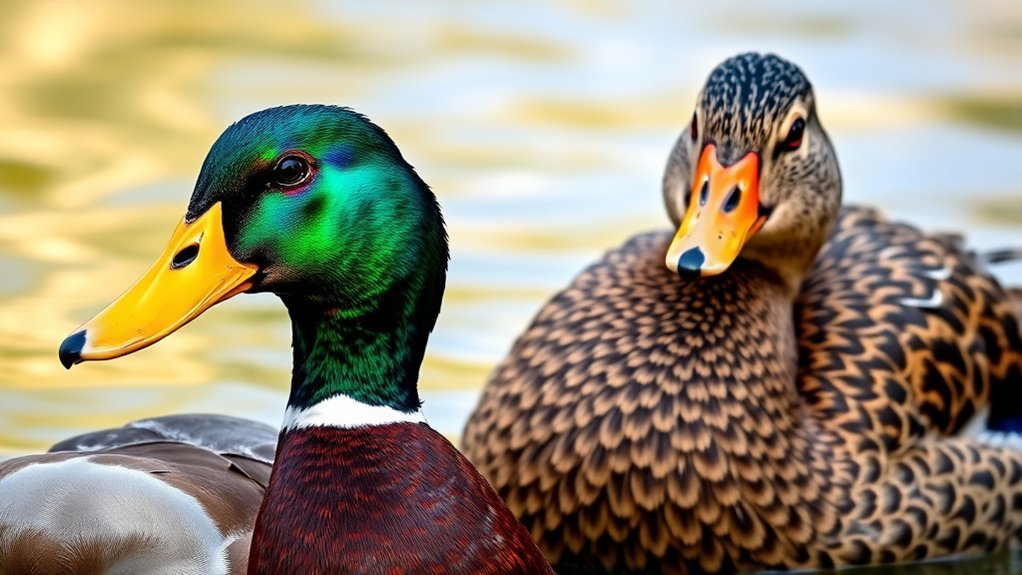
No, not all mallards are male—you can spot the difference by looking at their colors and behavior. Males flaunt bright green heads, yellow bills, and a bold white neck ring, while females wear camouflaged brown feathers and darker, mottled bills.
Size helps too, as males are usually bigger, but this isn’t always reliable. Seasonal molt can make males look duller, mimicking females. Keep exploring to find clear ways to confidently tell them apart.
Key Takeaways
- Male mallards have bright iridescent green heads and yellow bills, while females display mottled brown feathers and orange or brown beaks.
- Females are generally smaller with more camouflaged plumage, which helps with nesting. Males, on the other hand, are larger and more colorful during the breeding season.
- Outside breeding season, males molt into dull eclipse plumage that looks like females, making them harder to tell apart visually.
- Females tend to be louder and more vocal, while males produce softer calls and aggressively defend their territory during breeding.
- To identify mallards accurately, it’s best to consider size, plumage, behavior, and the time of year instead of relying on just one characteristic.
How To Tell Male And Female Mallards Apart
How can you quickly tell a male mallard from a female? One way is by observing their behaviors and feather maintenance routines. Female mallards tend to be more focused on nesting behaviors, often seen gathering materials and staying close to their nests.
They carefully maintain their feathers to stay camouflaged and protected while incubating eggs. On the other hand, males also engage in feather maintenance but are less involved in nesting duties.
You’ll notice females fluffing and preening their feathers meticulously to blend into their surroundings, especially during breeding season. Paying attention to these traits helps you differentiate them beyond just looks.
Spotting Male Mallards By Their Colorful Plumage

Although female mallards rely on subtle behaviors and muted colors, male mallards stand out with their vibrant, colorful plumage. When you spot a male, you’ll notice a brilliant iridescent green head that shines with a distinct feather sheen, especially under sunlight. This glossy look makes them easy to distinguish from females. Their chestnut-brown chest contrasts sharply with a white neck ring, adding to their striking appearance.
Pay attention to these features to confidently identify a male mallard:
- Iridescent green head with noticeable feather sheen
- Bright yellow bill, unlike the duller female bill
- Distinct white neck ring separating head and chest
- Blue speculum feathers bordered by white on their wings
Besides plumage, male mallards have unique vocal patterns, often softer and raspier quacks compared to females. This helps you tell them apart by sound as well as sight.
Identifying Female Mallards: Subtle Colors And Patterns
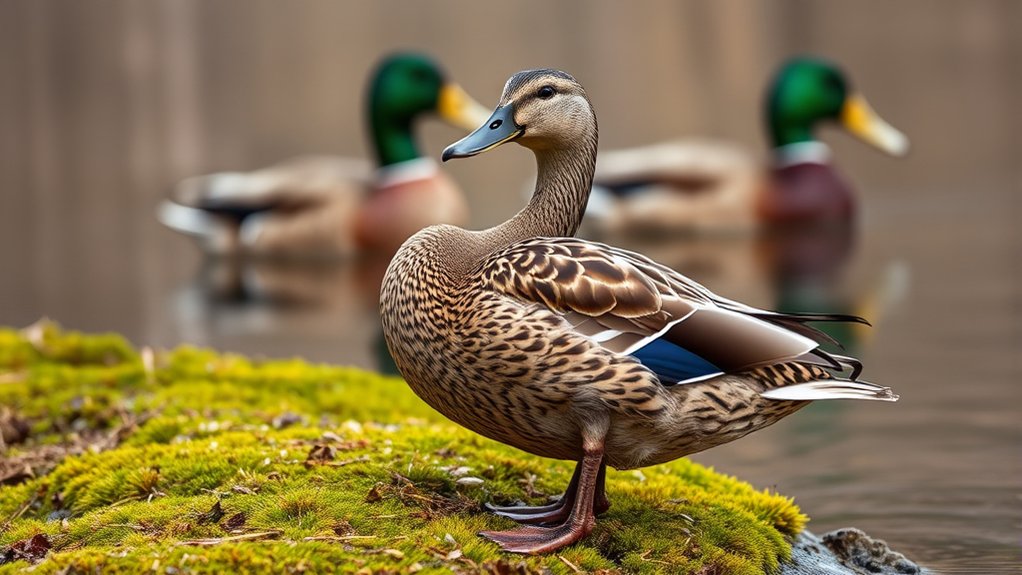
When you’re looking for female mallards, you’ll notice their plumage is more muted, blending browns and tans. It’s not as flashy as the males, but that’s what makes them interesting.
You’ll want to pay close attention to the patterns too, like the intricate streaks and spots that set them apart. These subtle details really help you spot a female in a crowd of brighter males.
Plumage Color Variations
Because female mallards rely on camouflage for protection, their plumage features subtle colors and intricate patterns that blend seamlessly with their natural surroundings. When you observe a female mallard, you’ll notice her feather sheen is generally muted, lacking the iridescent glow seen in males.
Her beak coloration tends to be more subdued, often displaying orange or brown tones with dark markings. Key plumage color variations to look for include:
- Mottled brown and tan feathers for excellent concealment
- Soft, earth-toned feather sheen without bright highlights
- Beak coloration blending orange, brown, or black hues
- Slightly lighter underparts contrasting with darker back feathers
These subtle traits help female mallards stay hidden while nesting or resting near water.
Distinctive Pattern Features
The subtle colors of female mallards go hand in hand with their distinctive pattern features, which help you tell them apart from males. Look closely at the intricate mottled brown and tan feathers, designed to blend with their environment, matching their habitat preferences in marshes and wooded wetlands.
These patterns aren’t just for show; they provide camouflage while nesting. Unlike males, females lack the bright iridescent patches but have a subtle, yet noticeable, speculum bordered by white lines.
Their diet variations also influence feather condition. Females often consume more seeds and aquatic plants, impacting their feather’s muted tones. By focusing on these nuanced pattern details and considering where you spot them, you’ll quickly identify female mallards despite their understated coloring.
Size And Shape Differences Between Male And Female Mallards
Although male and female mallards share many features, you can often tell them apart by their size and shape. When observing these ducks in their mallard habitat, you’ll notice that males generally appear larger and more robust. This difference plays a role in their nesting behaviors, where females need to be more agile and compact to protect their nests effectively.
Male mallards are larger and robust, while females are agile and compact for nest protection.
Here’s what to look for:
- Males have broader bodies and longer necks than females.
- Females tend to be slightly smaller and have a more streamlined shape.
- The female’s shape supports better camouflage and nesting mobility.
- Male mallards often stand taller and have a more upright posture.
Why Male Mallards Look Different During Breeding Season
When you spot a male mallard during breeding season, you’ll notice his vibrant colors and striking plumage stand out more than usual. This dramatic change happens because males molt into their brightest feathers to attract females and assert dominance.
During this time, mallard migration patterns influence when and where you see these colorful displays. Males often time their molt to coincide with settling in breeding grounds. Furthermore, urban feeding habits can affect the intensity of their colors. Mallards feeding on nutrient-rich food in cities may show even more vivid plumage.
This seasonal transformation isn’t just about looks; it’s a survival strategy to maximize mating success. Outside breeding season, males adopt a duller “eclipse” plumage to blend in and avoid predators.
Understanding these shifts helps you identify males accurately during breeding season, especially when observing them in various environments influenced by migration and urban settings.
How Seasonal Changes Affect Mallard Identification
You’ll notice that mallard plumage changes with the seasons, which can make identification a bit trickier sometimes. For example, males often lose their bright colors when it’s not breeding season. Plus, their behaviors—like feeding and courtship—shift as well. So, getting to know these seasonal patterns really helps you spot the differences more easily.
Plumage Variations Through Seasons
Since mallards undergo noticeable changes in their plumage throughout the year, recognizing them can be tricky if you don’t know what to look for. Their feather texture shifts between seasons, affecting how vibrant or muted their colors appear.
During breeding season, males flaunt glossy, iridescent feathers, while females maintain more camouflaged, mottled tones year-round. You’ll also notice subtle shifts in vocalization patterns that sometimes coincide with plumage changes.
Keep these seasonal plumage variations in mind:
- Bright, shiny feathers in males during mating season
- Duller, softer feather texture in males during eclipse phase
- Consistent, camouflaged feather patterns in females
- Seasonal molting that temporarily alters feather appearance
Recognizing these changes helps you identify mallards accurately no matter the season.
Behavioral Changes Impacting Identification
Seasonal shifts don’t just change how mallards look. They also influence their behavior in ways that affect how you identify them. During mallard migration, males often display more vibrant courtship behaviors to attract females, making them easier to spot.
Meanwhile, females focus on nesting habits, becoming more secretive and less visible as they incubate eggs. These behavioral changes can complicate your identification efforts depending on the season.
| Season | Male Behavior | Female Behavior |
|---|---|---|
| Spring | Displays bright plumage, courtship | Nest building, incubating eggs |
| Summer | Molting, less colorful | Rearing ducklings |
| Fall | Gathering in flocks for migration | Joining migration groups |
| Winter | Duller plumage, resting | Staying hidden |
Keep these shifts in mind to spot differences during each stage.
Behavior Differences Between Male And Female Mallards
Although male and female mallards share many habits, their behaviors often differ in ways that help you tell them apart. You’ll notice their diet habits vary slightly because females tend to forage more intensely to build energy for egg-laying.
Nesting behaviors also set them apart. Females are responsible for selecting and preparing the nest site, while males stay nearby to guard territory.
Here are key behavior differences to watch for:
- Diet habits: Females focus on nutrient-rich plants and insects during breeding season.
- Nesting behaviors: Females incubate eggs and care for ducklings, males do not.
- Vocalizations: Females are louder and more frequent in quacking; males have softer calls.
- Territoriality: Males defend their territory aggressively during mating season, females less so.
Common Mistakes When Identifying Male And Female Mallards
You might mix up the colors of male and female mallards, especially during certain seasons when their feathers change. It’s easy to miss these seasonal shifts—they can make males look a lot like females and the other way around. Plus, if you only go by size, you could get tricked since males and females often overlap in how big they are.
Color Confusion Between Sexes
When trying to tell male and female mallards apart, color differences often cause confusion because females can sometimes display surprisingly bright or unusual hues. You might expect males to always have vibrant feather sheen, but females occasionally show subtle iridescence that catches your eye.
Beak coloration also misleads many observers since females’ beaks can vary widely, sometimes resembling the males’ orange tones.
To avoid mistakes, keep these points in mind:
- Females usually have mottled brown feathers, but brightness varies.
- Males display a consistent green head sheen, unlike females.
- Female beak colors range from orange to dark brown.
- Both sexes have a distinctive blue speculum bordered with white.
Paying attention to these details helps you confidently identify each sex despite color confusion.
Overlooking Seasonal Plumage Changes
Since mallards undergo noticeable seasonal plumage changes, many people mistakenly identify males and females based on the wrong appearance. During seasonal migration, male mallards molt into an eclipse plumage that looks similar to females, which can easily confuse you if you don’t consider the timing.
If you spot a dull-looking duck during migration, it might actually be a male in eclipse instead of a female. Also, habitat preferences shift subtly with seasons, so you might find males and females in slightly different spots, further complicating identification.
To avoid this mistake, pay attention to the time of year and be aware that plumage varies seasonally. Recognizing these changes helps you correctly distinguish males from females, even when their feathers deceive at first glance.
Misinterpreting Size Differences
Although size differences between male and female mallards can seem like an easy way to tell them apart, relying solely on this trait often leads to mistakes. You might assume the larger bird is always male, but that’s not always true. Size difference varies individually and overlaps considerably.
Plus, behavior confusion often adds to the challenge since both sexes exhibit similar actions, especially outside breeding seasons.
Common pitfalls include:
- Mistaking a small male for a female due to overlapping size ranges
- Ignoring that females can appear larger during certain life stages
- Assuming aggressive behavior always indicates a male
- Overlooking other identification markers like plumage and vocalizations
To avoid errors, combine size cues with behavior and appearance for accurate identification.
Where To Find Male And Female Mallards In The Wild
If you want to spot male and female mallards in the wild, you’ll need to know where they like to hang out. Understanding their habitat preferences and migration patterns helps you find them easily. Both males and females prefer wetlands, ponds, and lakes but may separate slightly during breeding season.
During migration, they travel to warmer regions where water remains unfrozen.
Here’s a quick guide on where to find them:
| Season | Habitat Preferences | Location Tips |
|---|---|---|
| Spring | Freshwater wetlands | Look near nesting areas |
| Summer | Lakes and ponds with vegetation | Search shaded, secluded spots |
| Fall | Open water bodies | Watch feeding in shallow waters |
| Winter | Coastal bays and unfrozen lakes | Focus on sheltered water edges |
Tips For Confidently Identifying Male Vs Female Mallards On Your Next Walk
When you’re out walking near water, spotting the difference between male and female mallards becomes easier once you know what key features to look for. Understanding mallard migration patterns helps since you’ll notice seasonal color changes, especially in males during breeding season. Also, consider urban vs rural habitats, as mallards might behave and appear slightly different based on their environment.
Spotting male and female mallards is easier when you know their seasonal colors and habitat differences.
Here are tips to confidently identify males versus females:
- Look for the vibrant emerald green head. Males flaunt this, females don’t.
- Notice the body color. Females have mottled brown feathers for camouflage.
- Check the bill color. Males often have bright yellow bills, females’ bills are duller or orange-brown.
- Watch their behavior. Males tend to be more territorial, especially during migration peaks.
With these pointers, you’ll quickly distinguish mallards on your next walk, making birdwatching more rewarding.
Frequently Asked Questions
Do Male Mallards Have Different Calls Than Females?
Yes, male mallards have different calls than females. You’ll notice that their mallard vocalizations serve distinct purposes in bird communication.
Males typically produce quieter, raspy sounds or whistles, while females have louder, more familiar quacking calls. This difference helps you tell them apart in the wild and plays a key role in their communication during mating and territorial behaviors. So, listening closely can reveal who’s who among mallards.
Can Mallards Change Sex During Their Lifetime?
Changing sex is not on the menu for mallards. They stick to the role they’re born with, like a songbird sticking to its tune.
During mallard courtship, males show off vibrant plumage, while females focus on nesting habits, building cozy nests and caring for eggs.
You won’t see a mallard switch sexes to fit the bill; their roles are fixed, helping maintain balance in their duck society.
How Long Do Mallards Typically Live in the Wild?
Mallards typically live around 5 to 10 years in the wild, though some may reach 15 years. Their survival depends a lot on factors like Mallard migration and nesting habits.
During migration, they face hazards like predators and harsh weather. Their nesting habits, which involve creating nests near water, help protect their young but also expose them to risks.
Are Mallards Protected by Any Wildlife Laws?
Yes, mallards are protected by wildlife laws to preserve their habitat and nesting sites. When you visit wetlands or parks, you’ll find regulations that prevent disturbing these areas. This helps ensure mallards have safe places to live and breed.
Hunting seasons and limits also exist to maintain healthy populations. By respecting these rules, you help sustain mallard habitat and support their nesting success. This keeps these ducks thriving in the wild.
What Do Mallards Eat During Winter Months?
During winter feeding, mallards adjust their seasonal diet to survive colder months. You’ll find them eating seeds, aquatic plants, and small invertebrates like insects and crustaceans.
Since natural food sources can be scarce, they also feed on grains from agricultural fields and leftover bread in parks, though it’s better to offer healthier options. You can help by providing safe, nutritious foods, supporting their energy needs throughout winter’s chill.
Conclusion
Now that you know how to spot the brilliant emerald head of a male mallard or the subtle earth tones of a female, you’ll see these ducks in a whole new light. Like uncovering hidden brushstrokes in a painting, identifying their differences brings the wild canvas to life.
Next time you stroll by a pond, let your eyes dance between colors and shapes. You’ll confidently read the story of mallards, one feather at a time. Understanding how to identify male vs female mallards makes every encounter more meaningful.