7 Good Foods to Feed Ducks
Feeding ducks can be tricky, especially when you want to keep them healthy and happy. You’re not alone—many people struggle with choosing the right foods that nourish ducks without harming the environment. Finding good options that ducks actually enjoy can make all the difference in caring for these charming birds.
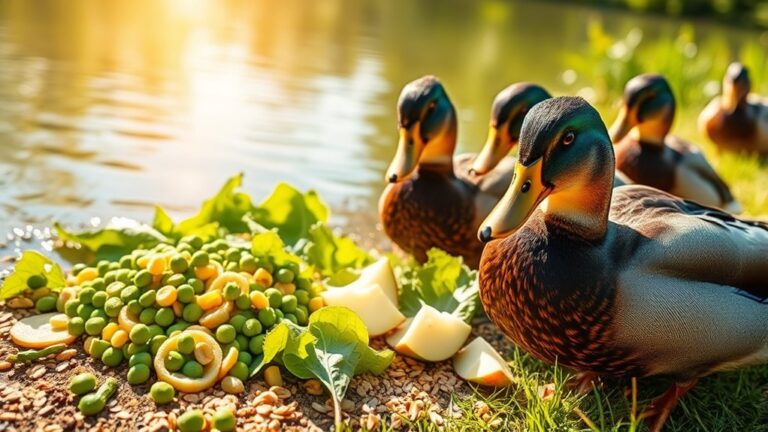
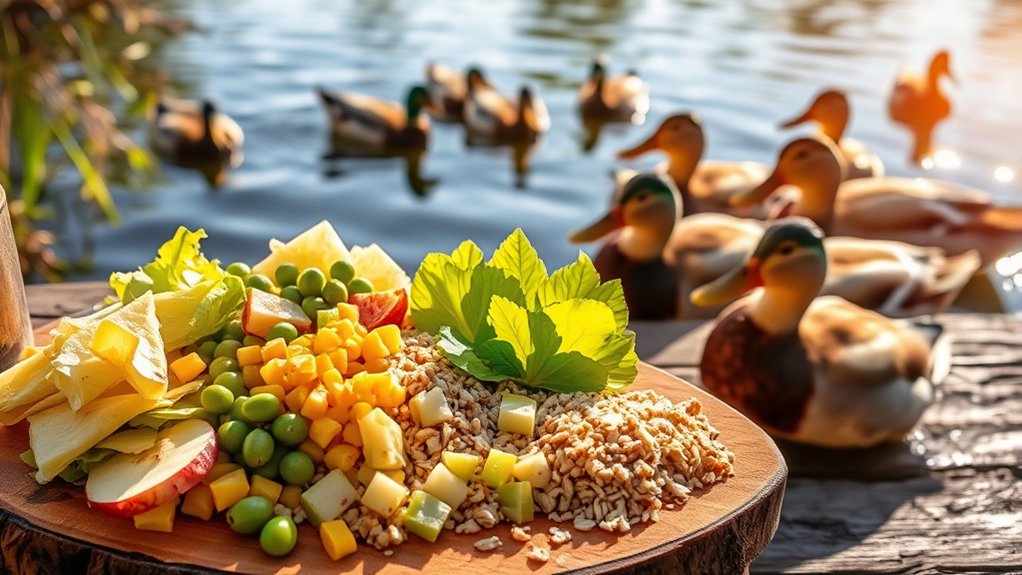
To feed ducks well, avoid bread and processed foods that harm their health and environment. Instead, offer fresh peas, corn, cucumbers, and zucchini for nutrition and hydration. Leafy greens like kale, romaine, spinach, and dandelion provide essential vitamins and minerals.
Add grains such as cracked corn and oats to boost energy, plus fruits like apples, berries, and melon for tasty, healthy treats. If you keep going, you’ll uncover even more ways to care for ducks responsibly.
Key Takeaways
- Feed ducks fresh vegetables like peas, cooked corn, cucumbers, and zucchini. These help with hydration and provide essential nutrients.
- Provide leafy greens such as kale, romaine lettuce, spinach (in moderation), and dandelion greens. They offer vitamins and support digestion.
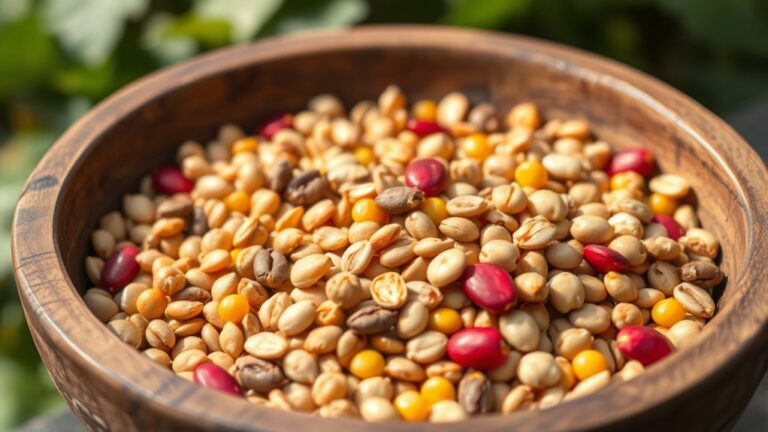
- Offer grains and seeds like cracked corn, barley, oats, and unsalted birdseed mixes. These meet ducks’ energy and nutritional needs.
- Include fruits like apple pieces (without seeds), berries, halved grapes, and melon slices. They give antioxidants and help with hydration.
- Avoid bread, processed foods, moldy grains, and starchy vegetables. These can harm duck health and damage pond ecosystems.
Why You Should Avoid Feeding Ducks Bread
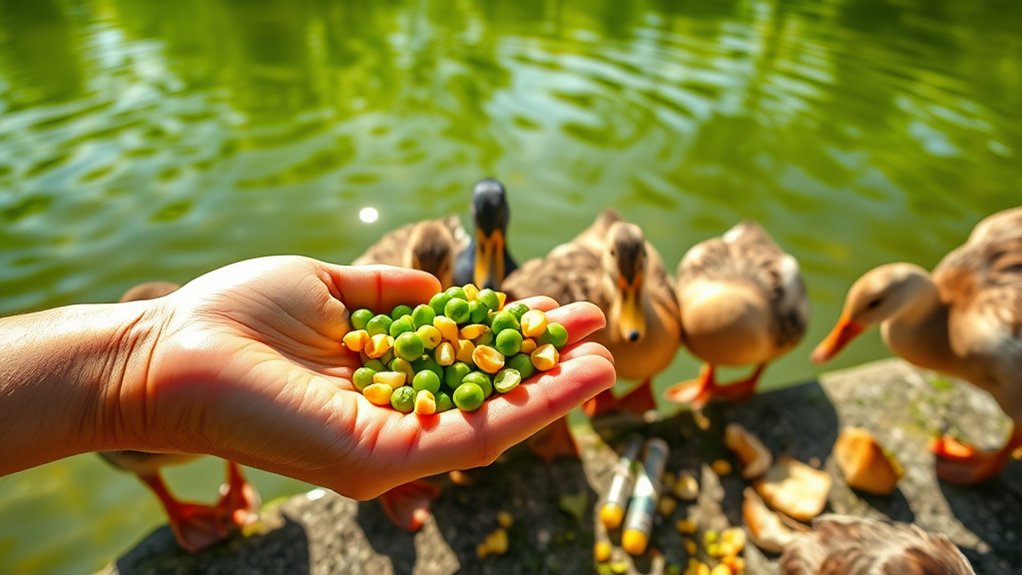
Although feeding ducks bread might seem harmless and even fun, you should avoid it because bread offers little nutritional value and can harm their health. When ducks rely on bread, they miss out on the nutrients essential for their energy, especially during duck migration.
This lack of proper nourishment can weaken them, making their long journeys more difficult. Furthermore, leftover bread pollutes the pond ecosystem by promoting algae growth and attracting pests, which disrupts the natural balance.
You might not realize that feeding bread encourages ducks to gather in large numbers, increasing competition and spreading disease. Instead of helping, you could unintentionally harm these birds and their environment.
Fresh Vegetables Safe to Feed Ducks
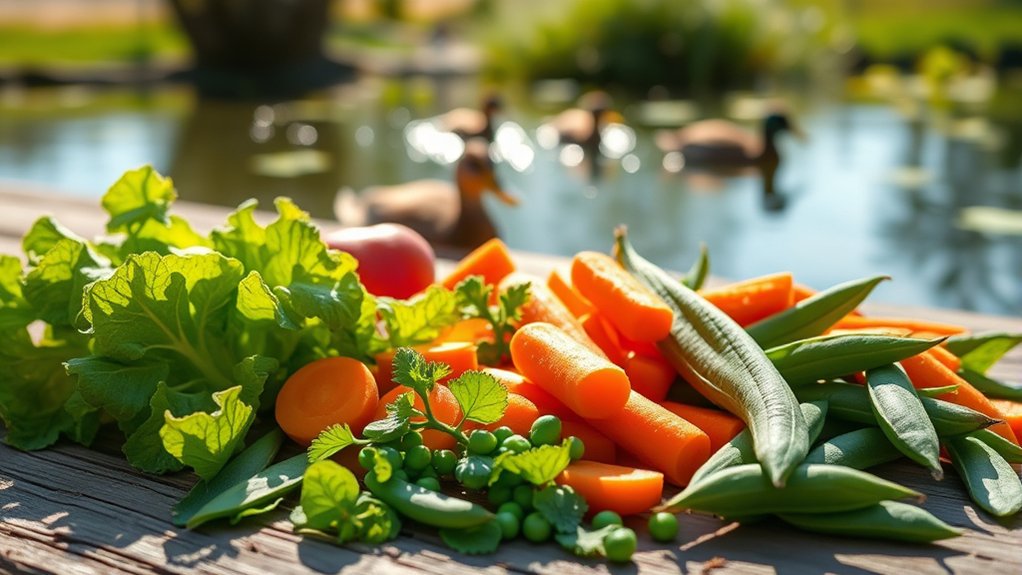
Instead of feeding ducks bread, you can offer fresh vegetables that provide the nutrients they need to stay healthy and energetic. Feeding wild ducks with the right vegetables supports their duck dietary needs without harming their digestion or water quality. Fresh veggies supply vitamins, minerals, and fiber that ducks naturally seek.
Here’s a quick guide to fresh vegetables safe for ducks:
| Vegetable | Nutritional Benefit | Preparation Tip |
|---|---|---|
| Peas | Protein, fiber | Serve thawed if frozen |
| Corn (cooked) | Carbohydrates | Cut into small pieces |
| Cucumbers | Hydration, fiber | Slice thinly |
| Zucchini | Vitamins A & C | Chop into small bits |
You’ll notice these veggies align well with duck dietary needs, making feeding wild ducks both safe and nutritious. Avoid processed or starchy vegetables, as they can upset their digestive systems.
Best Leafy Greens to Feed Ducks
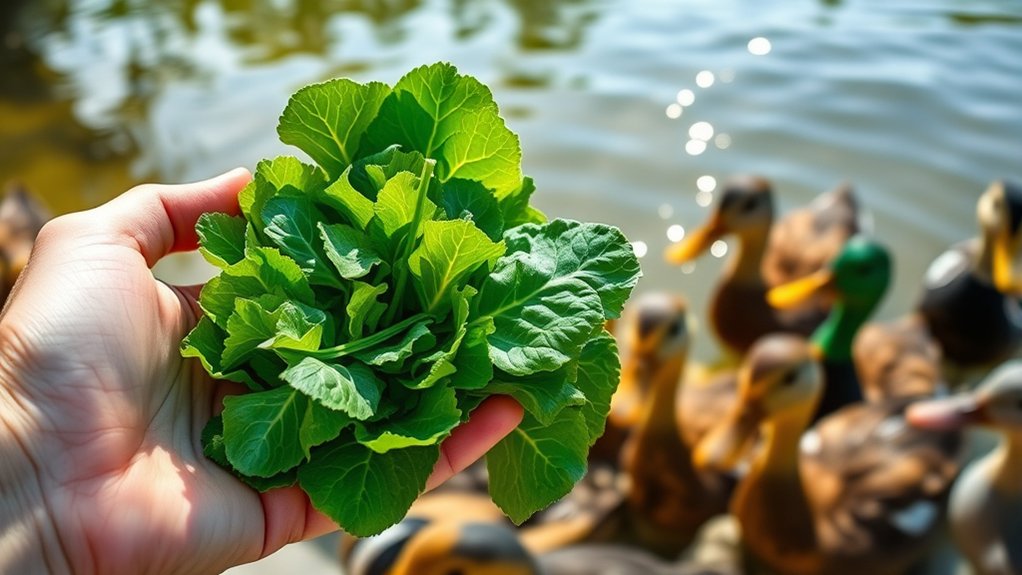
When you feed ducks leafy greens, you provide essential nutrients that support their overall health and digestion. Choosing the best leafy greens helps maintain nutritional balance while promoting wildlife conservation by encouraging natural, healthy diets.
Here are some of the best leafy greens to offer ducks:
Kale: Rich in vitamins A, C, and K, it boosts immunity and supports strong bones.
Romaine Lettuce: Offers hydration and fiber without harmful pesticides.
Spinach: Packed with iron and antioxidants, but feed in moderation due to oxalates.
Dandelion Greens: A natural, wild food source that aids digestion and provides calcium.
Grains and Seeds to Feed Ducks Safely
If you want to keep ducks healthy and happy, offering the right grains and seeds is essential. Ducks naturally eat a variety of seeds and grains during duck migration, which provides them with energy for their long journeys.
You can safely feed ducks cracked corn, barley, oats, and birdseed mixes that don’t contain additives or salt. These grains help support their energy needs without disrupting their natural diet.
When feeding ducks, consider their nesting habits too. During nesting season, female ducks need nutrient-rich foods to maintain their strength and care for their young.
Providing wholesome grains can contribute to their overall health and reproductive success. Avoid processed or moldy grains, which can harm ducks.
Fruits That Make Healthy Duck Treats
Although ducks primarily eat grains and seeds, including fruits in their diet can provide essential vitamins and natural sugars that boost their energy and overall health. You should offer a fruit variety to keep their meals interesting and balanced, respecting their duck dietary preferences. Not all fruits are similarly safe or appealing, so picking the right ones matters.
Here are some healthy fruit treats you can feed ducks:
- Apples (cut into small pieces, without seeds)
- Berries like strawberries, blueberries, and raspberries
- Grapes (halved to prevent choking)
- Melon slices (watermelon or cantaloupe, seeds removed)
These fruits are easy for ducks to digest and offer hydration plus nutrients. Remember to introduce fruits gradually and in moderation so you don’t upset their digestive system. By mixing in these natural treats, you support their well-being while adding variety to their usual grain-based diet.
Feeding Protein-Rich Foods to Ducks
You’ll want to include protein-rich foods in your duck’s diet to support their growth and energy. Foods like mealworms, cooked eggs, and legumes are excellent sources of protein. So, why do these options work well? And how can you offer them safely? Let’s dive in and find out.
Benefits of Protein Sources
Because protein plays an essential role in a duck’s growth and health, feeding them protein-rich foods helps support strong muscles, feathers, and overall energy. When you provide ducks with adequate protein, you promote nutritional balance. This ensures they get essential amino acids for proper development.
Protein absorption is critical, as it allows ducks to utilize nutrients efficiently. This boosts their immune system and recovery.
Here are key benefits of protein sources for ducks:
- Improves muscle growth and repair
- Supports vibrant, healthy feathers
- Increases energy levels for daily activities
- Strengthens immune response against diseases
Best Protein-Rich Foods
When feeding ducks, selecting protein-rich foods that are both nutritious and safe is essential to their health. You want to offer options like mealworms, cooked eggs, and peas, which provide the protein ducks need, especially during duck migration and nesting habits when their energy demands increase.
High-protein foods support muscle development and feather growth, vital for long flights and protecting ducklings. Avoid feeding processed meats or anything salty, as these can harm ducks.
You can also offer chopped earthworms or small fish, mimicking their natural diet. By providing these protein-rich foods, you help ducks maintain strength for migration and successfully raise their young during nesting season.
Always feed in moderation and choose fresh, clean foods to keep the ducks healthy and thriving.
How to Feed Ducks Safely and Responsibly
Although feeding ducks can be a delightful experience, it’s important to do so safely and responsibly to protect their health and the environment. You should always consider ducks’ natural diet and feeding habits when offering food. Feeding them inappropriate items or too much food can disrupt their digestion and local ecosystems.
Here’s how you can feed ducks responsibly:
Offer foods that mimic their natural diet, like cracked corn or oats, avoiding bread and processed snacks. Feed ducks in moderation to prevent dependency and overpopulation around feeding spots.
Scatter food on the water or shore to encourage natural foraging behaviors. Clean up leftover food to prevent pollution and deter pests.
Frequently Asked Questions
How Often Should I Feed Ducks in a Natural Pond?
You should feed ducks at a natural pond no more than once or twice a week to follow proper feeding etiquette. Overfeeding can harm their natural foraging habits and disrupt the pond’s ecosystem.
Focus on offering small amounts that support their nutritional balance without making them dependent on you. Remember, ducks get most of their nutrition from the pond itself, so keep your feedings moderate and respectful to maintain their health and environment.
Can Feeding Ducks Affect Their Migration Patterns?
Yes, feeding ducks can cause migration disruption if you feed them too often. When you increase feeding frequency, ducks might rely on the easy food source and delay their natural migration.
This can lead to overcrowding and health problems. To avoid this, you should limit how often you feed them and let their natural instincts guide their movements.
Keeping feeding frequency low helps prevent migration disruption and supports their natural behavior.
What Time of Day Is Best to Feed Ducks?
You should feed ducks early in the morning or late afternoon, as these times align with their natural feeding habits. Following proper feeding etiquette, avoid overfeeding and don’t feed them too close to sunset, which can disrupt their routines.
Keep seasonal variations in mind; during colder months, ducks may need more energy, so feeding earlier helps. Sticking to these guidelines guarantees you respect their natural behaviors and support their health.
Are There Any Health Risks to Humans From Feeding Ducks?
Yes, you can face health risks from feeding ducks if you don’t follow safe feeding habits. Ducks can carry bacteria like salmonella, which might transfer to you through direct contact or contaminated water.
To guarantee health safety, always wash your hands thoroughly after feeding and avoid touching your face. Also, don’t feed ducks in areas where water quality is poor, as this increases the risk of illness for both you and the ducks.
How Can I Attract Different Duck Species to My Yard?
You can attract different duck species to your yard by enhancing their habitat and practicing thoughtful bird feeding. Did you know there are over 120 duck species worldwide, each with unique preferences?
Create a diverse environment with native plants, shallow water areas, and safe nesting spots. Offer varied foods like cracked corn or seeds to appeal to different ducks.
Conclusion
Feeding ducks thoughtfully transforms their time together into a treasured treat. Skip stale snacks like bread and serve fresh, fabulous foods instead: crisp carrots, leafy lettuce, golden grains, juicy berries, and protein-packed peas.
This simple, smart selection supports their health and happiness while safeguarding their natural surroundings. So, step up, serve safely, and savor the sweet satisfaction of seeing ducks delight in delicious, dependable dishes you provide!
Remember, feeding ducks with good foods is the best way to keep them healthy and happy.