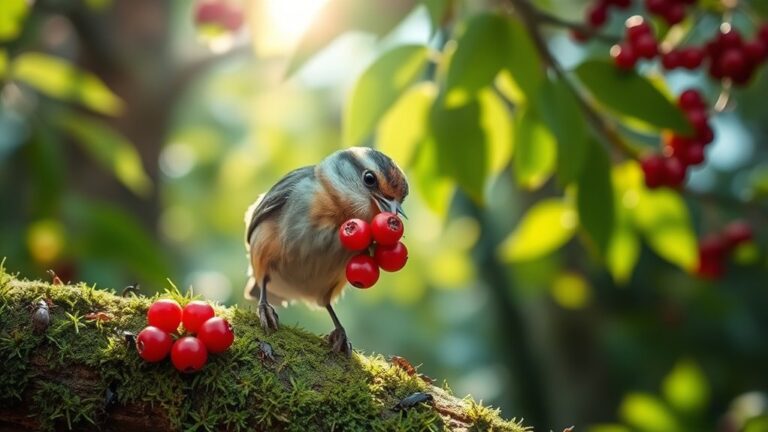
What Does Wild Birds Eat in Different Seasons?
If you’ve ever wanted to attract wild birds to your garden but struggle to keep them coming year-round, you’re not alone. Many people find it tricky to understand what wild birds eat in different seasons and how to provide the right food to support them.
Knowing these seasonal changes can make all the difference in creating a bird-friendly space that thrives throughout the year.
Wild birds eat different foods each season to meet their changing energy and nutrition needs. In spring, they focus on insects and fresh shoots to fuel breeding and chick growth.
Summer brings more berries, seeds, and fruits for stamina.
In fall, energy-rich seeds and berries help prepare for migration.
Winter diets rely heavily on seeds and nuts to stay warm.
Understanding these shifts lets you better support wild birds throughout the year and uncover their fascinating feeding habits.
Key Takeaways
- In spring, wild birds primarily eat insects, worms, and fresh plant shoots to fuel breeding and chick growth.
- Summer diets shift to berries, seeds, and fruits, supporting nesting and maintaining stamina.
- In fall, birds increase consumption of berries, insects, seeds, and grains to build energy reserves for migration.
- In winter, birds rely heavily on seeds, nuts, and high-fat foods to survive cold temperatures.
- Seasonal food availability and bird behaviors drive adaptive feeding strategies to meet nutritional needs year-round.
What Do Wild Birds Eat in Spring and Why?
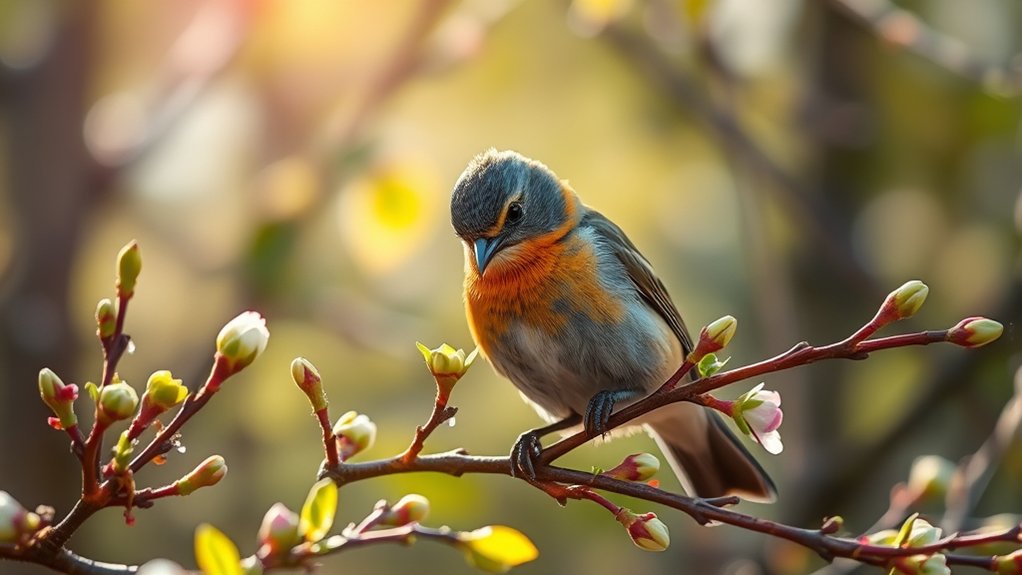
Although wild birds adjust their diets throughout the year, in spring, they primarily eat insects, worms, and fresh plant shoots to meet their increased energy needs for nesting and raising chicks.
You’ll notice that many birds time their migration patterns to arrive just as food sources like insects become abundant. This synchronization guarantees they have enough fuel to support their nesting habits, which demand extra nutrition.
When you watch birds in spring, you’ll see them actively foraging for protein-rich insects and worms, indispensable for chick growth. Fresh plant shoots also provide essential vitamins and minerals.
By focusing on these food types, birds maximize their energy intake during this critical breeding season. Understanding these dietary shifts helps you appreciate how birds adapt to seasonal changes and prioritize resources to support their young.
How Summer Diets Help Wild Birds Thrive

As spring’s abundance of insects and fresh shoots starts to wane, wild birds shift their focus to the summer diet that keeps them strong and active. During this time, you’ll notice birds eating more berries, seeds, and fruits, which provide essential nutrients and energy.
These foods support their increased activity levels linked to nesting behaviors, such as building nests and feeding hatchlings. You’ll also see birds adjusting their feeding habits according to bird migration patterns. Some species bulk up on summer foods to prepare for long journeys ahead.
By consuming nutrient-rich summer diets, birds maintain their stamina and reproductive success. This seasonal shift guarantees they have enough energy to protect their young and, for migratory birds, to fuel their upcoming travels.
Understanding how summer diets influence wild birds helps you appreciate their resilience and adaptability throughout the year.
What Do Birds Eat in Fall?

When temperatures drop and daylight shortens, wild birds switch their diets to prepare for the challenges of fall. You’ll notice many birds increasing their intake of energy-rich foods to fuel bird migration or to store fat for colder months ahead. Their nesting habits also influence eating patterns since some species may still care for fledglings and need extra nutrition.
During fall, you’ll find birds focusing on:
During fall, birds prioritize foods like berries, insects, and seeds to fuel their changing needs.
- Berries and fruits: These provide essential sugars and antioxidants.
- Insects and larvae: Still available in cooler weather, they offer protein to support energy needs.
- Grains and small seeds: Birds start including these as they prepare for seasonal changes.
Why Wild Birds Shift to Seeds and Nuts in Winter
Because winter brings colder temperatures and scarce food sources, wild birds rely heavily on seeds and nuts to survive. You’ll notice that as bird migration patterns shift, many species either leave for warmer areas or stay and adjust their diets.
Seeds and nuts offer concentrated energy and are more abundant in winter than insects or fruits, which become rare or hidden under snow. When nesting behaviors slow down during winter, birds don’t need extra protein for raising young, so their dietary needs change.
Instead, they focus on high-fat, calorie-rich seeds and nuts to maintain body heat and energy levels. If you watch closely, you’ll see birds like chickadees, nuthatches, and woodpeckers actively foraging these foods.
Understanding why wild birds shift their diet helps you support them better, especially if you feed birds in your backyard during the colder months. Offering seeds and nuts aligns with their natural winter eating habits, boosting their survival chances.
How Weather Changes Affect Wild Birds’ Food Availability
Although wild birds adapt their diets throughout the year, sudden weather changes can drastically affect the availability of their food sources. When temperatures drop unexpectedly or storms hit, you’ll notice shifts in what birds can find and eat. These changes influence their migration patterns and nesting behaviors.
Birds often move to areas where food is more accessible or adjust their breeding times. You should consider how these factors come into play:
- Harsh cold fronts reduce insect activity and seed availability, forcing birds to seek alternative nourishment.
- Heavy rains or droughts impact plant growth and fruit production, altering food abundance.
- Unpredictable weather can delay or accelerate migration, affecting the timing of when birds forage or nest.
Why Insects Are Crucial in Wild Birds’ Seasonal Diets
Since insects provide a rich source of protein and essential nutrients, they play a vital role in the diets of many wild birds throughout the year. You’ll notice that during spring and summer, when insect behavior is most active, birds rely heavily on them to fuel breeding and growth.
Insects become abundant, making it easier for birds to find high-energy meals. However, you also need to take into account predator threats that influence when and where birds forage. Birds often time their feeding to avoid predators, snatching insects during safer periods.
In colder months, insect availability drops, but birds still seek out larvae or overwintering insects hidden in bark or leaf litter. Understanding insect behavior and predator threats helps you appreciate how wild birds adapt their diet seasonally.
Best Seeds and Berries for Wild Birds Year-Round
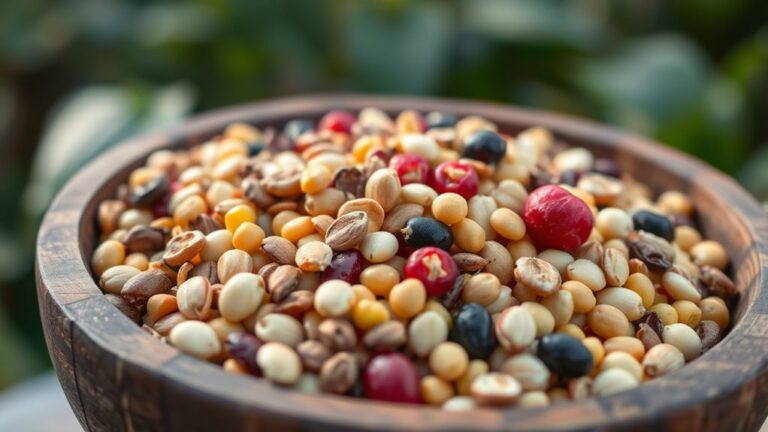
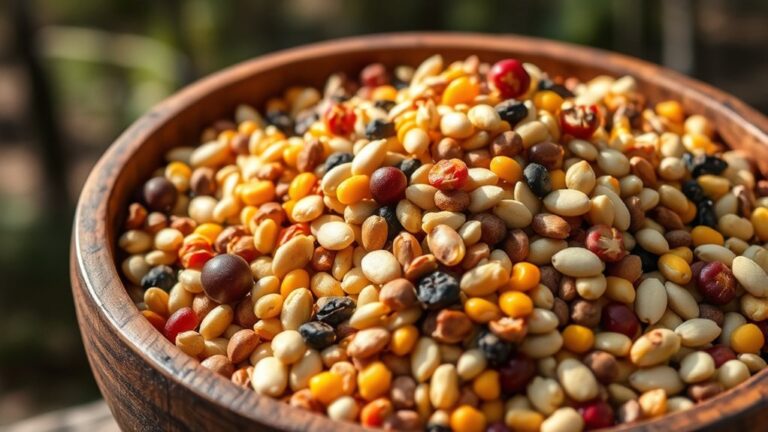
When you want to attract wild birds throughout the year, offering a variety of seeds and berries is essential. Different species adjust their feeding habits based on migration patterns and nesting habits, so providing diverse food sources helps support them in every season. During nesting, birds need high-energy seeds, while migrating birds require nutrient-dense options to fuel long journeys.
Here are the best seeds and berries to keep available year-round:
- Black oil sunflower seeds: High-fat content supports energy needs during nesting and migration.
- Millet: Small, easy to digest, perfect for ground-feeders especially in colder months.
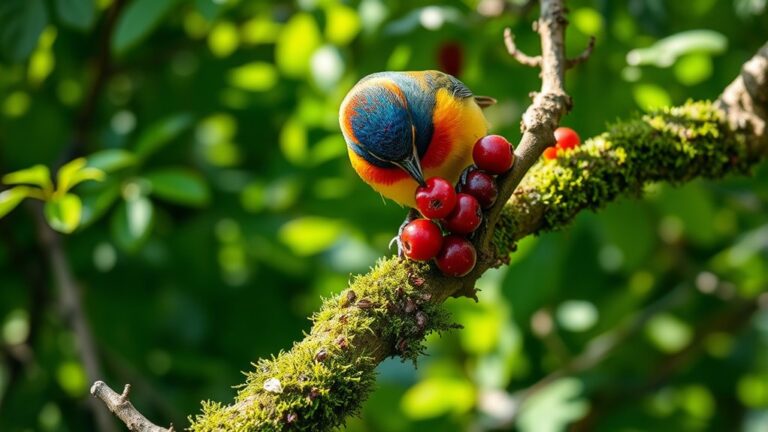
- Elderberries: Rich in antioxidants, these berries sustain birds when insects are scarce.
The Role of Fruits and Nuts in Wild Birds’ Diets
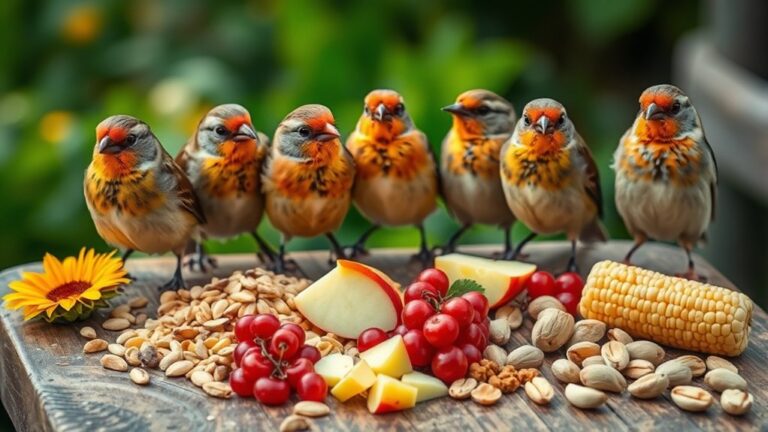
If you want to attract a wider variety of wild birds, offering fruits and nuts can make a big difference. These foods provide essential energy and nutrients, especially during critical times influenced by migratory patterns.
Offering fruits and nuts attracts more wild birds by meeting their energy and nutrient needs during migration.
As birds prepare for long flights, they need high-calorie options like nuts to build fat reserves. Fruits, rich in vitamins and water content, help keep birds hydrated and healthy during seasonal changes.
You’ll also notice that fruits and nuts play an essential role in nesting habits. Many bird species rely on these foods to nourish themselves and their young during breeding seasons.
Providing these natural food sources supports their reproductive success and overall wellbeing. By understanding how fruits and nuts fit into wild birds’ diets throughout the year, you can better appreciate their feeding behavior and seasonal needs.
This insight helps you create a welcoming environment that matches their natural diet and life cycle.
Tips for Supporting Wild Birds With Seasonal Feeding
Offering fruits and nuts throughout the year can greatly benefit wild birds, but tailoring your feeding approach to the seasons will make your efforts even more effective. Understanding migration patterns helps you provide the right types of food when birds pass through or settle in your area.
Habitat preservation also plays a vital role, so feeding should complement natural food sources rather than replace them.
Here are some tips to support wild birds with seasonal feeding:
- In spring and summer, offer high-protein foods like mealworms and sunflower seeds to help birds during breeding and nesting.
- During fall, provide energy-rich foods such as suet and nuts to prepare birds for migration.
- In winter, supply high-fat foods like peanuts and dried fruits to help birds survive colder temperatures.
Common Mistakes to Avoid When Feeding Wild Birds Year-Round
Although feeding wild birds can be rewarding, you might unintentionally harm them by making common mistakes. One big error is neglecting seasonal changes. Feeding the same food year-round can disrupt bird migration patterns and nesting behaviors. Birds need different nutrients in spring to support nesting and different energy sources in winter to fuel migration.
Avoid offering spoiled or moldy food because it can cause illness. Also, don’t overcrowd feeders or forget to clean them regularly since this spreads disease. Be mindful of feeder placement. Too close to windows increases collision risks, and near predators can scare birds away.
Finally, don’t stop feeding abruptly during migration seasons. Birds rely on consistent food to build energy reserves. By adjusting your feeding habits according to the season and understanding birds’ natural behaviors, you’ll support their health and survival throughout the year.
Frequently Asked Questions
How Do Wild Birds Find Water During Different Seasons?
You’ll notice wild birds find water by relying on seasonal water sources that change throughout the year. In spring and summer, they drink from streams, ponds, and rain puddles.
During colder months, bird hydration depends on melting snow or ice and natural springs that don’t freeze. You can help by providing fresh water year-round, ensuring birds stay hydrated no matter the season or weather conditions.
Do Wild Birds Migrate Based on Food Availability?
Yes, wild birds often migrate based on food availability. You’ll notice that migration triggers include the decline of seasonal food sources like insects, seeds, and fruits.
When these resources become scarce in one area, birds move to places where food is abundant. Understanding this helps you see how their survival depends on following reliable food supplies throughout the year, prompting their seasonal journeys to thrive.
How Does Urbanization Impact Wild Birds’ Seasonal Diets?
Imagine wild birds darting through an urban habitat, where green patches are scarce and food resources are unpredictable. You’ll notice urbanization forces birds to adapt their seasonal diets, often relying on human scraps or non-native plants.
This shift can reduce their natural foraging skills and nutritional variety. So, when you stroll through the city, you’re witnessing how concrete jungles reshape what wild birds eat throughout the year.
What Are Signs of Malnutrition in Wild Birds?
You’ll notice signs of malnutrition in wild birds through poor bird health like dull feathers, lethargy, and weight loss. Nutritional deficiencies often cause weak muscles, slow movements, and an increased vulnerability to disease.
If a bird struggles to fly or shows abnormal behavior, it’s likely suffering from a lack of essential nutrients. Observing these symptoms helps you understand their health challenges and the need for proper nutrition.
Can Feeding Wild Birds Affect Their Natural Foraging Behavior?
If you start feeding birds regularly, like a gardener who provided sunflower seeds year-round, you might notice they rely less on natural sources. This can reduce their bird diet diversity and alter seasonal feeding habits.
It makes them less adaptable when feeders disappear. You’ll want to feed sparingly to avoid disrupting their natural foraging instincts, ensuring they keep searching for varied foods throughout changing seasons.
Conclusion
As you watch wild birds adapt their diets through the seasons, remember you’re helping them weather nature’s ever-changing menu. Like a well-tuned orchestra, their meals shift from insects to seeds, fruits, and nuts to stay strong and vibrant.
By offering the right foods at the right times, you become an essential part of their survival story. So, keep feeding thoughtfully. You’re not just filling bellies; you’re nurturing life’s beautiful rhythm and supporting what wild birds eat in different seasons.