7 Common Foods Birds Eat
If you’re eager to attract more birds to your backyard but aren’t sure what to feed them, you’re not alone. Many people struggle with choosing the right foods that keep birds healthy and coming back for more. Understanding what birds eat can make all the difference in creating a lively, feathered visitor hotspot.
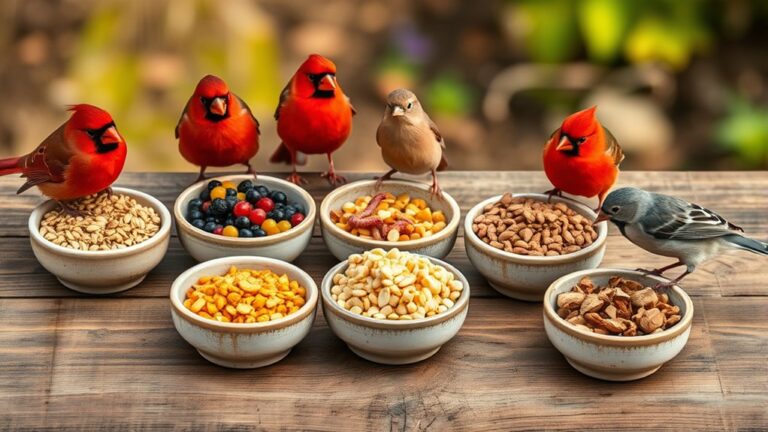
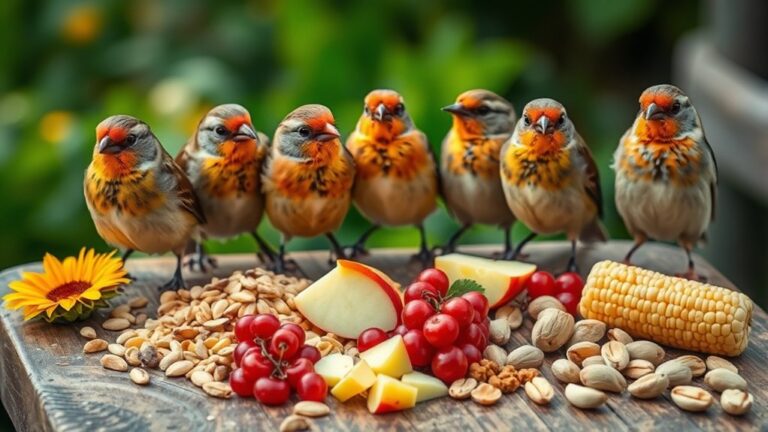
You’ll find birds enjoy a variety of foods like seeds and grains, which offer energy and attract many species. Fruits provide vitamins and hydration, while nuts supply protein and healthy fats. Insects are essential for protein during breeding, and nectar fuels hummingbirds with quick energy.
Suet keeps birds nourished year-round, especially in winter. Avoid feeding bread as it lacks nutrients. Keep exploring to uncover how these foods support diverse bird populations and their habits.
Key Takeaways
- Birds commonly eat seeds and grains like sunflower, millet, and cracked corn for energy and migration support.
- Fruits such as berries, apples, and grapes provide essential vitamins, minerals, and hydration for birds.
- Nuts like peanuts, walnuts, and almonds supply dense protein, healthy fats, and vital nutrients for growth and energy.
- Insects including caterpillars, beetles, flies, ants, and spiders are high-protein food sources crucial during breeding and migration.
- Nectar offers quick energy from natural sugars, attracting hummingbirds and supporting their high metabolism and pollination activities.
Seeds and Grains: Favorite Foods for Birds

Although birds enjoy a variety of foods, seeds and grains remain their top choice. When you observe a bird habitat, you’ll notice many species flock to areas rich in these foods.
Seeds provide essential energy, especially during colder months or when birds prepare for migration. You’ll find that migration patterns often depend on the availability of seeds and grains along their routes.
Seeds supply vital energy, especially in cold seasons and crucial migration periods.
These foods offer the calories birds need to sustain long flights and maintain body heat. If you want to attract birds to your backyard, providing a mix of seeds like sunflower, millet, and cracked corn can be highly effective.
Since different species have preferences, offering variety ensures you support a diverse bird community. Paying attention to local bird habitats and their migration schedules can help you supply the right seeds at the right time, making your space a crucial stop for these travelers.
Fruits That Provide Key Nutrients for Birds

Why do many birds enthusiastically seek out fruits throughout the year? Fruits offer essential vitamins, minerals, and hydration, making them a vital part of bird dietary diversity. Depending on the season, birds adjust their fruit choices to meet their nutritional needs, reflecting their seasonal fruit preferences.
You’ll notice birds favoring different fruits as the year progresses, ensuring they get a variety of nutrients. Here are some fruits that provide key nutrients for birds:
- Berries like blueberries and blackberries, rich in antioxidants
- Apples, a good source of fiber and vitamin C
- Grapes, offering hydration and natural sugars
- Figs, packed with calcium and energy
- Mulberries, supplying iron and vitamin A
Nuts: A Protein-Rich Food Birds Enjoy

You’ll find that nuts offer birds a great source of protein and healthy fats, which are essential for their energy and growth. Common favorites include peanuts, walnuts, and almonds. Many bird species enthusiastically seek these out. By offering these nuts, you’re helping support their nutritional needs all year round.
Nutritional Benefits of Nuts
How do nuts provide such a valuable food source for birds? When you consider bird dietary habits, nuts stand out because they offer a dense source of essential nutrients. Understanding nut consumption patterns, you’ll notice many birds rely on nuts for sustained energy and overall health.
Nuts are packed with protein, healthy fats, vitamins, and minerals that help birds thrive.
Here’s why nuts are so beneficial for birds:
- Provide high protein to support muscle maintenance and growth
- Offer healthy fats for energy and insulation
- Contain vitamins like E and B-complex vital for metabolism
- Supply minerals such as calcium and magnesium for bone strength
- Promote longer-lasting satiety, important during migration or cold seasons
You’ll see that including nuts in a bird’s diet boosts their nutrition markedly.
Popular Nut Varieties
Which nuts do birds prefer when it concerns fueling their high-energy needs? Birds often go for peanuts, walnuts, and almonds because these nuts pack a protein punch.
When offering nuts, follow proper bird feeding etiquette. Avoid salted or flavored varieties, as these can harm birds. You should also break larger nuts into smaller pieces to make eating easier.
If you’re harvesting nuts yourself, keep in mind nut harvesting tips like choosing ripe, undamaged nuts and storing them properly to avoid mold. Offering a variety ensures different bird species benefit.
Insects Birds Eat and Why They Matter
Because insects provide essential nutrients, many birds rely on them as a primary food source. When you observe birds hunting insects, you’re seeing a crucial interaction influenced by insect behavior and bird migration patterns.
Birds track insect activity to time their feeding and breeding, ensuring they get enough protein and energy. Insects like caterpillars, beetles, and flies offer birds a rich diet, especially during migration when energy demands peak.
Here are common insects birds eat and why they matter:
- Caterpillars: High in protein, essential during nesting season
- Beetles: Provide fats and nutrients for long flights
- Flies: Abundant, easy prey for many small birds
- Ants: Offer both nutrients and help control pest populations
- Spiders: Supplement protein and are found in many habitats
Why Nectar Is a Favorite Food for Hummingbirds
You’ll notice hummingbirds are drawn to nectar because it gives them quick energy from natural sugars. Plus, its sweet scent and bright colors make it super easy for them to find. So, let’s take a closer look at why nectar ends up being their top choice for fuel.
Nutritional Benefits of Nectar
Although nectar may seem simple, it provides hummingbirds with the essential energy they need to sustain their rapid wing beats and high metabolism. The nectar composition, primarily sugars like sucrose, glucose, and fructose, offers a quick energy boost. This makes nectar a crucial food source for these tiny birds.
You’ll also find that nectar consumption plays a significant role in pollination benefits, as hummingbirds transfer pollen from flower to flower while feeding.
Here’s why nectar is so beneficial nutritionally:
- High sugar content fuels intense activity
- Easily digestible carbohydrates
- Offers hydration along with energy
- Supports fast metabolism demands
- Improves pollination, benefiting plants and birds alike
Attraction Factors for Hummingbirds
When you watch hummingbirds hover near flowers, you’ll notice they’re drawn not just by color but by the promise of energy-rich nectar. Nectar fuels their intense bird migration and supports their high metabolism.
During nest building habits, hummingbirds also rely on this sugary resource to maintain energy for gathering materials and caring for their young.
| Attraction Factor | Explanation |
|---|---|
| Energy Content | Nectar provides quick calories for long flights |
| Flower Color & Shape | Bright colors and tubular shapes signal nectar availability |
| Availability | Consistent nectar sources support migration and nesting |
You’ll see why nectar’s sweetness makes it a favorite. It’s essential for hummingbirds’ survival during demanding periods like migration and nest building.
Why Bread Is Bad for Birds and Safer Snacks
Because bread lacks the nutrients birds need, feeding it to them can do more harm than good. When you toss bread, especially white or processed types, you risk upsetting bird feeding etiquette by offering harmful food additives and empty calories. These additives may cause health problems or attract pests. Instead, you can choose safer snacks that nourish birds properly.
Here are five better options to contemplate:
- Unsalted nuts, like peanuts or almonds, chopped for smaller birds
- Plain cooked rice or oats, which provide energy without additives
- Fresh fruits such as apple slices, berries, or melon pieces
- Birdseed mixes tailored to local species’ dietary needs
- Small amounts of unsweetened corn or peas
How Suet Attracts Birds All Year
If you want to attract birds throughout the year, suet is one of the most effective foods you can offer. Suet benefits birds by providing a high-energy source packed with fat. This is essential especially during cold months but valuable even in warmer seasons.
Its dense calories help birds maintain warmth in winter and support energy needs during breeding or migration times. You’ll notice that suet attracts a wide variety of species, from woodpeckers to chickadees, making it a versatile choice for year round feeding.
Because suet doesn’t spoil quickly in cooler temperatures, it stays fresh longer, reducing waste. In summer, suet mixed with seeds or fruits continues to draw insect-eating birds, offering balanced nutrition.
Frequently Asked Questions
How Do Birds Find Food in Urban Environments?
You find that birds in urban environments use urban foraging to locate food efficiently. They rely on food source diversity, exploring parks, trash bins, and bird feeders to satisfy their needs.
You’ll notice they adapt quickly, spotting crumbs on sidewalks or insects on plants. Their keen eyesight and memory help them remember reliable spots.
What Time of Day Do Birds Usually Eat?
Back in the days of telegrams, you’d notice birds usually eat at dawn and dusk. Their feeding schedules revolve around these times because bird foraging is most effective when insects and seeds are abundant and predators are less active.
You can observe that early morning offers fresh food sources, while evening meals help them fuel up before nightfall. So, if you want to spot feeding birds, focus on those twilight hours.
How Much Food Do Birds Need Daily?
You’ll find that birds need to eat roughly 10-20% of their body weight daily, depending on their size and bird diet preferences. Smaller birds require more frequent feeding because they burn energy fast, so their feeding frequency might be every hour or two.
Larger birds can go longer between meals. To support their energy needs, you should offer food several times a day, matching their natural feeding habits for the best care.
Do Birds Prefer Fresh or Dried Foods?
You’ll find that birds generally prefer fresh foods over dried ones because fresh options offer higher moisture content and more nutrients, aligning with their bird dietary preferences. However, some birds do enjoy dried foods, especially seeds and fruits, since they’re easier to store and eat.
Balancing fresh vs dried foods in their diet keeps them healthy and happy. So, offering a mix caters best to their natural preferences and nutritional needs.
Can Feeding Birds Affect Their Migration Patterns?
Did you know that over 50% of certain migratory birds alter their routes due to food availability? Yes, feeding impact can influence bird migration by providing extra energy and changing stopover habits.
When you feed birds regularly, they might delay migration or choose different paths. While this can help some species survive tough conditions, it could also disrupt natural rhythms. So, you should feed birds thoughtfully to minimize negative effects.
Conclusion
Now that you know what birds love to eat, from seeds and nuts to nectar and insects, you might wonder what happens if you feed them the wrong things. Could that innocent-looking slice of bread do more harm than good?
Or what secret ingredient in suet keeps birds coming back even in winter? Keep exploring their diets, and you’ll uncover surprising truths that’ll change how you care for your feathered friends forever. Understanding common foods birds eat is key to helping them thrive.