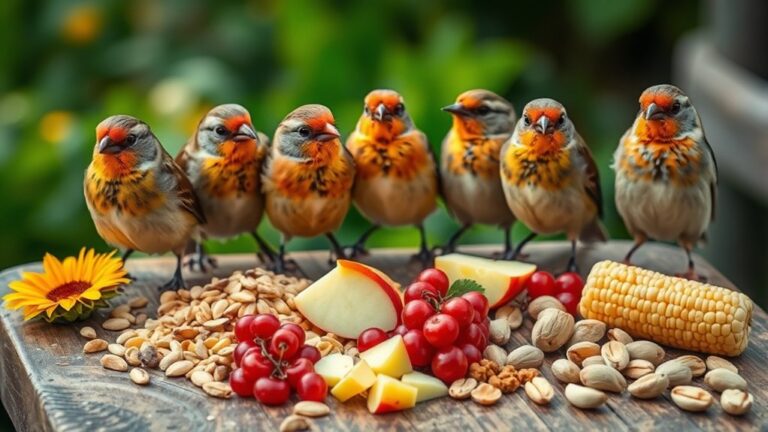
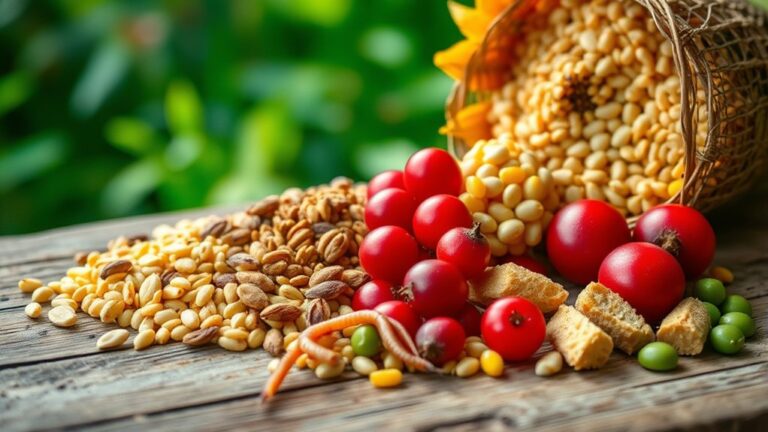
What Do Wild Birds Eat?
If you’ve ever tried to attract wild birds to your backyard, you know how tricky it can be to figure out what to feed them. You’re not alone—many people struggle with choosing the right foods that keep these feathered visitors happy and healthy. Understanding what wild birds eat is key to creating a thriving bird-friendly space.
Wild birds eat a variety of foods depending on their species, habitat, and season. You’ll find them feeding on seeds, fruits, insects, and nectar to meet their energy and nutritional needs.
Their diets shift with migration and breeding cycles, favoring protein during nesting and energy-rich seeds during winter.
Habitat also shapes what’s available, from forest berries to wetland fish. Keep exploring, and you’ll uncover how these feeding habits affect their health, behavior, and survival.
Key Takeaways
- Wild birds eat seeds, insects, fruits, nectar, and small animals, varying by species and habitat.
- Their diets change seasonally to match food availability and energy needs, such as insects in spring and seeds in winter.
- Forest birds consume insects and berries, while wetland birds eat aquatic plants and invertebrates. This shows how habitat influences diet.
- Protein-rich insects and high-energy seeds support breeding, migration, and chick growth, which impacts bird health and reproduction.
- Providing safe, natural foods like seeds and insects benefits wild birds. Avoiding processed or harmful items is crucial.
Common Food Types in Wild Bird Diets

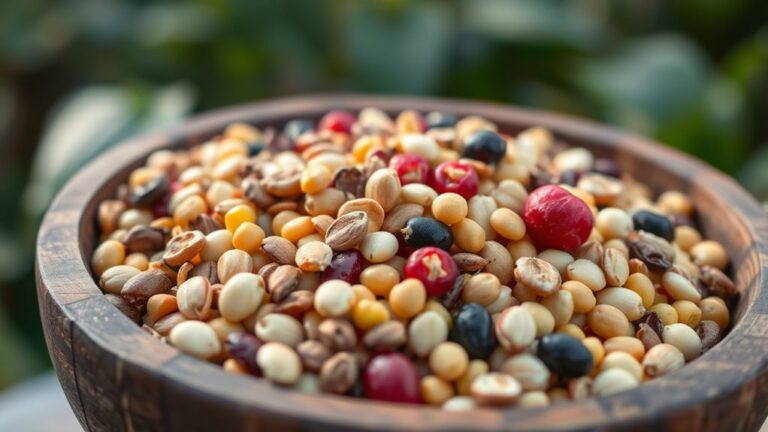
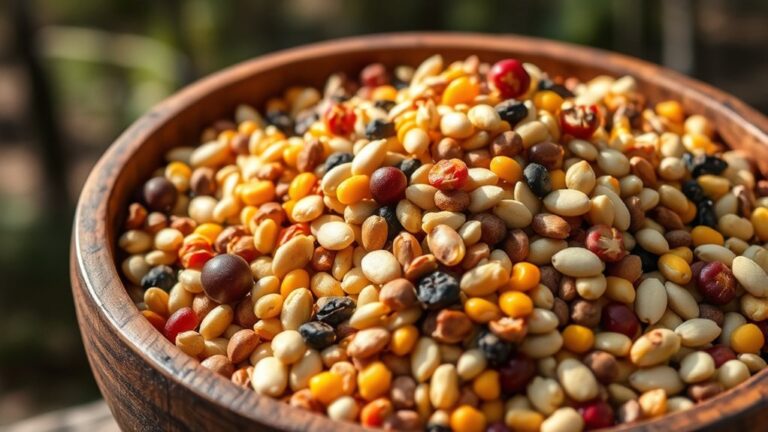
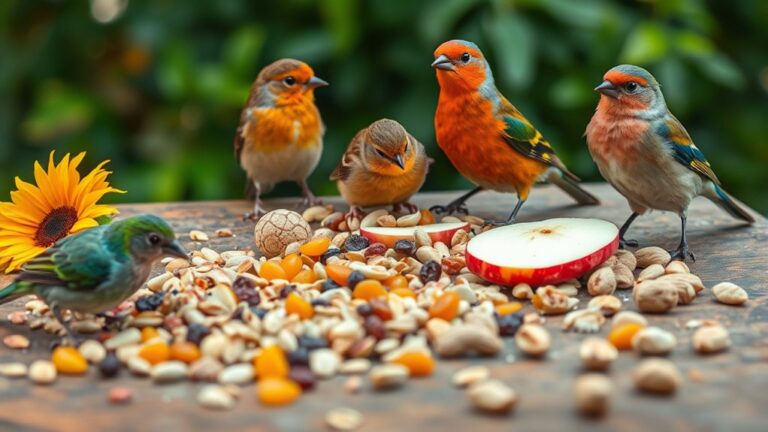
When you watch wild birds, you’ll notice they eat a variety of foods depending on their species and habitat. Many birds rely on seeds, insects, fruits, and nectar as their primary food sources.
Wild birds eat a diverse range of foods based on species and habitat, including seeds, insects, fruits, and nectar.
Bird migration patterns influence what they eat, as birds adapt their diets to available food along their routes. For example, some species switch from eating insects during breeding seasons to fruits during migration.
Nesting site preferences also affect diets; birds nesting in trees may consume more caterpillars and insects found on leaves, while ground nesters often forage for seeds and small invertebrates.
Understanding these common food types helps you appreciate how birds meet their nutritional needs throughout the year. Whether they’re insectivores, granivores, or frugivores, wild birds’ diets are closely linked to both their movement and where they choose to nest.
This connection shapes what you’ll see them feeding on during different seasons and locations.
How Habitat Shapes Wild Birds’ Diets

Because different habitats offer distinct food resources, wild birds adjust their diets to fit their surroundings. When you observe birds in a forest, you’ll notice they primarily eat insects, seeds, and berries native to that environment. In wetlands, birds rely more on aquatic plants, fish, and invertebrates. Habitat preservation plays a vital role here. If you protect natural environments, you help maintain the diverse food sources birds depend on. Without it, birds struggle to find suitable nourishment.
You’ll also see how bird migration ties into their dietary habits. Migratory birds travel between habitats to access seasonal foods they need for energy and survival. By understanding how habitat shapes what birds eat, you can better appreciate the importance of conserving these environments. When you support habitat preservation, you’re ensuring wild birds have the right food wherever they live or migrate. This balance is essential for their health and the ecosystems they help sustain.
Seasonal Changes in Wild Birds’ Eating Habits

You’ll notice wild birds change their eating habits as the seasons shift. Food availability varies throughout the year, so birds adjust to what’s accessible. And at the same time, their nutritional needs evolve, pushing them to seek different foods.
Food Availability Variations
As the seasons change, wild birds adjust their diets to match the shifting availability of food sources. You’ll notice that during colder months, some birds rely more on urban foraging, scavenging in cities where food scraps and feeders provide sustenance when natural options dwindle.
Meanwhile, migratory patterns influence which species you see locally and what they eat. Birds traveling south often time their movements to coincide with food abundance along their route.
In spring and summer, insects and fresh fruits become plentiful, while in fall and winter, seeds and nuts dominate many diets. By understanding these variations, you can better appreciate how wild birds survive and thrive through seasonal challenges, adapting their feeding habits to the ever-changing environment around them.
Nutritional Needs Shift
When seasons shift, wild birds change their nutritional needs to stay healthy and energized. You’ll notice they adjust their diets based on bird migration patterns, fueling up with high-energy foods like seeds and insects before long flights.
During breeding season, their focus shifts again as nesting site choices influence what they eat. Protein-rich insects become *essential* to support egg production and feeding hatchlings.
As temperatures drop, you’ll see birds eating more calorie-dense foods to build fat reserves for warmth and endurance. Understanding these shifts helps you appreciate how wild birds adapt their eating habits to seasonal demands, ensuring survival and reproductive success throughout the year.
Watching closely, you’ll realize their diets are a perfect response to nature’s changing rhythms.
Wild Birds’ Preferred Seeds and Grains
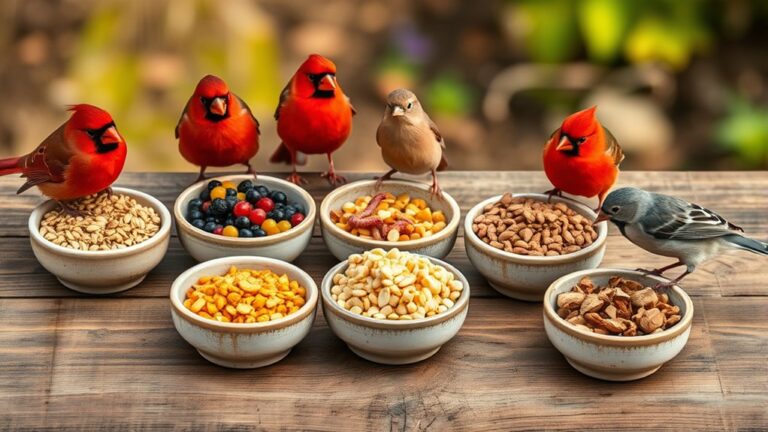
You’ll notice wild birds often go for sunflower seeds and millet when they’re feeding. Grains like cracked corn and oats also attract a variety of species. So, knowing what they prefer can really help you provide the right food to support local bird populations. It’s pretty rewarding to see them come back again and again!
Popular Seeds for Wild Birds
Although wild birds eat a variety of foods, certain seeds and grains consistently attract the most species. When you provide popular seeds, you support birds during critical times like bird migration and nesting habits. This offers them energy and nutrients.
These seeds suit many wild birds, making your feeders a hotspot.
Here are some popular seeds you can offer:
| Seed Type | Commonly Attracted Birds |
|---|---|
| Black Oil Sunflower | Cardinals, Chickadees, Finches |
| Nyjer (Thistle) | Goldfinches, Siskins |
| Millet | Sparrows, Doves |
Common Grains Birds Favor
Since many wild birds rely on grains for essential nutrients and energy, offering common grains can make your feeder more appealing to a wider variety of species. Birds like sparrows, pigeons, and doves often favor cracked corn, millet, and wheat.
These grains provide crucial carbohydrates that help them maintain energy, especially during demanding migratory patterns. If you live in an area with urban nesting birds, including these grains can attract residents and those passing through.
You’ll notice that during migration season, birds increase their grain intake to fuel long flights. By mixing grains with seeds, you support diverse feeding habits and encourage different species to visit your backyard.
Why Insects and Invertebrates Are Vital for Wild Birds
When wild birds hunt for food, they rely heavily on insects and invertebrates because these creatures provide essential nutrients that other food sources often lack. You’ll find that insects are rich in protein and fats, which are indispensable for birds’ growth, feather development, and energy needs, especially during breeding and migration.
Urban noise can disrupt birds’ ability to locate these prey, affecting their feeding efficiency and overall health. If you pay attention, you’ll notice migratory patterns often align with peak insect availability, showing how essential these tiny creatures are for fueling long journeys.
Insects and invertebrates also offer variety, helping birds maintain a balanced diet that supports their immune systems. Without access to these critical food sources, wild birds would struggle to thrive, particularly in changing environments.
How Nectar Fuels Hummingbirds and Other Nectar Feeders
Three things make nectar a powerhouse fuel for hummingbirds and other nectar feeders: its high sugar content, easy digestibility, and quick energy release. When you watch a hummingbird, you’ll notice how rapidly it flits from flower to flower, fueled by this energy-packed nectar.
However, nectar fermentation can sometimes reduce its quality, so these birds seek fresh sources to maintain their energy levels. During hummingbird migration, nectar becomes even more vital, providing the intense fuel needed for their long journeys.
You’ll find that hummingbirds have evolved to efficiently process nectar’s sugars, converting them swiftly into usable energy. This rapid digestion supports their incredibly high metabolism and constant wing beats.
What Fruits and Berries Attract Wild Birds
Which fruits and berries do wild birds find irresistible? You’ll notice that certain fruits attract more birds, especially during key times influenced by bird migration patterns and nesting site preferences. Offering these can boost your chances of seeing vibrant visitors.
Here are four fruits and berries that birds love:
- Elderberries. Packed with antioxidants, they’re a favorite for species preparing for migration.
- Blackberries. Their juicy sweetness appeals to many berry-eaters during nesting seasons.
- Mulberries. These provide essential nutrients, drawing birds to nesting areas.
- Serviceberries. Early ripening fruits that support birds arriving from migration.
Predatory Feeding: How Wild Birds Hunt Small Mammals and Reptiles
You’ll notice that wild birds use sharp hunting techniques to catch small mammals and reptiles. They rely on keen eyesight and swift movements to make their catch. It’s pretty impressive how carefully they select their prey, thinking about size, speed, and how vulnerable it is. This helps them maximize their chances of success. When you really understand these strategies, you see just how skilled and adaptable these birds truly are.
Hunting Techniques and Strategies
When wild birds hunt small mammals and reptiles, they rely on keen senses and swift, calculated movements to catch their prey. You’ll notice these birds adapt their hunting strategies based on factors like bird migration and nesting habits. Here’s how they do it:
- Perch and Pounce: They scan from a high vantage point, then swoop down quickly.
- Stealth Approach: They creep silently, blending with surroundings to surprise prey.
- Aerial Chase: They chase agile prey mid-air using speed and agility.
- Ground Foraging: They use sharp eyesight to detect movement in underbrush or leaf litter.
Prey Types and Selection
After mastering their hunting techniques, wild birds carefully choose their prey based on availability, size, and nutritional value. When you observe these birds, you’ll notice they often target small mammals like mice or voles and reptiles such as lizards, adapting their diet to seasonal changes.
During bird migration, energy demands rise, so they select prey rich in calories to fuel their long journeys. Their nesting habits also influence prey choice; breeding birds prioritize protein-rich prey to support chick growth.
You’ll see them adjust hunting locations and times to match prey activity patterns. By understanding these factors, you can better appreciate how wild birds optimize their feeding strategies to survive and thrive in diverse environments.
How Diet Affects Wild Birds’ Health and Behavior
Although wild birds adapt to varied environments, their diet directly shapes their health and behavior. When you observe birds, you’ll notice how what they eat influences vital aspects of their lives.
Here’s how diet impacts wild birds:
- Energy Levels: A nutritious diet fuels migration patterns, enabling long-distance travel without exhaustion.
- Reproduction: Proper nutrition supports nesting behaviors, increasing the chances of healthy eggs and hatchlings.
- Immune Function: Balanced diets help birds fight diseases, keeping populations strong and resilient.
- Behavior: Food availability can alter social habits, such as flocking or territorial defense.
Choosing Safe Food to Feed Wild Birds
Understanding how diet influences wild birds’ health and behavior helps you make better choices about what to offer them. When feeding wild birds, you need to provide safe, natural foods that align with their nutritional needs and seasonal habits.
Providing safe, natural foods that meet birds’ nutritional and seasonal needs supports their health and behavior.
During bird migration, many species require high-energy foods like seeds and berries to fuel their long journeys. Offering spoiled or processed foods can harm their health or disrupt their natural behaviors.
Consider their nesting habits too. During breeding season, birds need protein-rich foods such as insects or mealworms to support chick growth. Avoid feeding bread or salty snacks, as these can cause malnutrition or dehydration.
Also, keep feeding areas clean to prevent disease spread. By choosing appropriate, fresh foods and understanding seasonal needs, you support wild birds’ survival and well-being throughout the year. Your thoughtful choices help maintain healthy populations and encourage natural behaviors in your local bird community.
Frequently Asked Questions
How Do Wild Birds Find Water Sources in the Wild?
You find that wild birds locate water sources by following bird migration patterns, which often lead them to reliable watering spots along their routes. They rely on memory and environmental cues like vegetation and terrain changes.
Seasonal food availability also plays a role, as water and food sources fluctuate with the seasons. By adapting to these patterns, birds efficiently uncover water needed for survival during migration and throughout the year.
What Role Do Wild Birds Play in Seed Dispersal?
You might be surprised to learn that wild birds help disperse over 90% of plant seeds in many ecosystems. By eating fruits and carrying seeds far from the parent plant, they play a vital role in seed dispersal.
This process supports ecosystem balance by promoting plant diversity and forest regeneration. So, when you see birds feeding, remember they’re tiny gardeners keeping nature healthy and thriving.
How Do Wild Birds Avoid Poisonous or Toxic Foods?
You avoid feeding wild birds toxic plants by understanding their bird dietary instincts, which guide them to recognize and avoid harmful foods naturally. Birds use visual cues like color and taste to identify toxic plant avoidance, steering clear of brightly colored or bitter items.
Their instincts help them learn from experience and observe other birds, ensuring they pick safe, nutritious food to survive and thrive in the wild.
Do Wild Birds Have Favorite Feeding Times During the Day?
Yes, wild birds usually have favorite feeding times, often early morning and late afternoon. You’ll notice this especially during bird migration when they need extra energy and adjust their schedules.
Seasonal diets also influence their feeding habits. Birds eat more insects in spring and summer, then switch to seeds or berries in fall and winter. So, if you watch closely, you’ll see their feeding times shift with the seasons and migration patterns.
How Do Young Birds Learn What to Eat From Adults?
You might be surprised to learn that young birds pick up what to eat by watching adults, often while listening to their bird song nearby. As adults sing and tend to their nesting habits, they also demonstrate feeding behaviors.
When you hear those songs, it’s usually a signal that young birds are learning. They watch parents catch insects or find seeds, then mimic those actions. This hands-on approach helps you understand their food choices firsthand.
Conclusion
So, if you’re thinking of feeding wild birds, just toss them a gourmet buffet of seeds, berries, and bugs because clearly, they’re picky little food critics. Remember, they’re not just tiny feathered diners; their diet impacts their health and mood (yes, birds get hangry too).
So, skip the junk food and serve up nature’s finest. Otherwise, you might just end up with a flock of very confused and slightly offended avian guests! When it comes to what wild birds eat, offering the right foods makes all the difference.