Balcony Garden Ideas for a Simple How-To Guide
Creating a beautiful balcony garden can feel overwhelming, especially if you’re short on space or unsure where to start. You’re not alone—many people struggle with finding practical ideas that fit their small outdoor areas and lifestyle. Balcony Garden Ideas.
The good news is, with the right approach, you can turn your balcony into a lush, inviting retreat without the hassle.
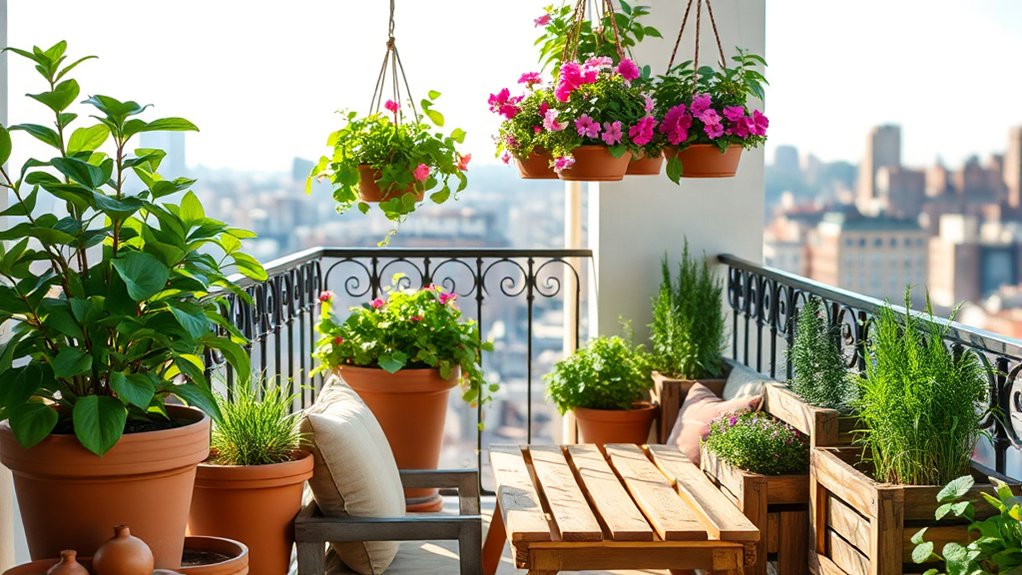
Start by measuring your balcony and keeping a clear path, then line pots along railings and walls for easy access.
Pick plants that match your light, like basil for sun or mint for partial shade, and use compact containers with drainage holes and lightweight mix.
Water at the base, feed lightly, and prune often.
Add trellises or tall planters for privacy, and keep your setup tidy so the next steps feel easy to follow.
Key Takeaways
- Measure your balcony, keep walkways clear, and place pots along rails, walls, and corners for easy access.
- Match plants to light levels: sun lovers go in bright spots, herbs and lettuce do well in partial shade, and ferns thrive in deeper shade.
- Use compact, lightweight containers with drainage holes, saucers, and fast-draining potting mix to prevent waterlogging.
- Water early at the soil base, check moisture first, and prune regularly to improve airflow and encourage healthy growth.
- Add trellises, tall planters, and change plants seasonally to create privacy, style, and interest all year round.
Choose Your Balcony Garden Layout
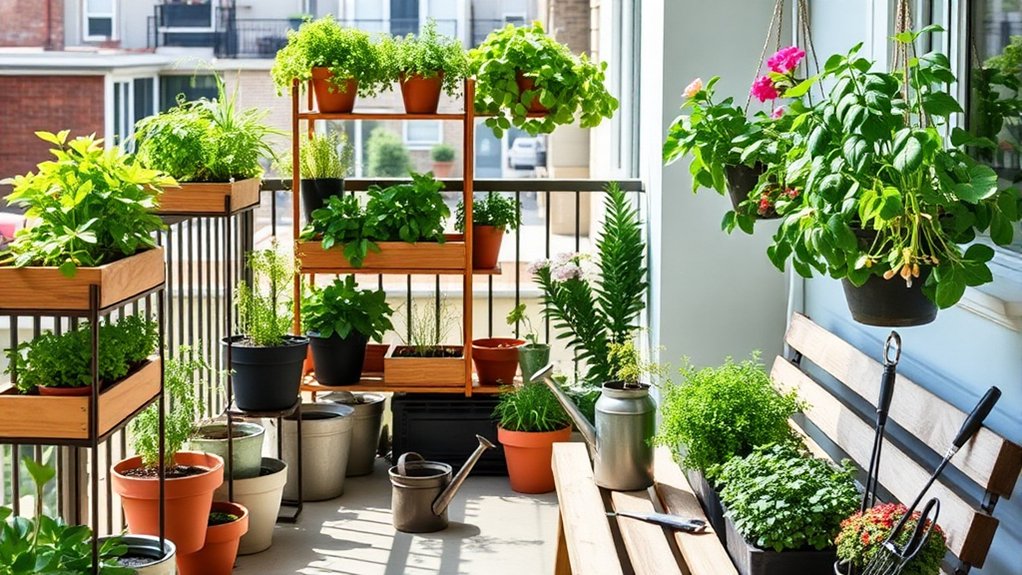
Before you buy a single pot, decide how you want your balcony garden to work. Measure the space, note door swings, and mark where you need clear walking room. Then choose a layout that fits your routine.
If you want easy access, line containers along the railing and wall. If you want a fuller look, cluster pots in corners and vary heights with stands or shelves. This helps you balance balcony aesthetics with function, so the space feels polished instead of crowded.
Keep heavier containers on the floor and lighter ones higher up to stay steady and safe. You can also shape your design around seasonal themes, swapping colors, textures, and accessories as the months change. A flexible layout lets you refresh the scene without starting over.
When you plan the structure first, your balcony garden feels intentional, looks inviting, and gives you room to enjoy it every day.
Pick Plants for Your Balcony Light
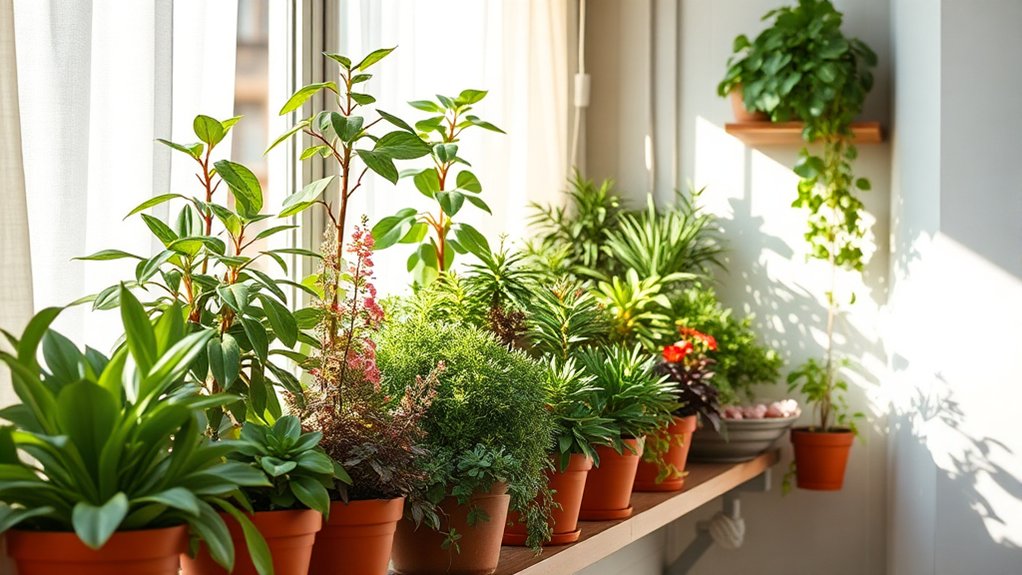
Now that your balcony layout is set, match your plant choices to the light your space actually gets. Watch your balcony across the day and note where direct sun hits, where bright shade lingers, and how long each spot stays warm.
Now that your balcony layout is set, match your plants to the light your space actually gets.
If you have strong sunlight exposure, choose tomatoes, peppers, basil, rosemary, or marigolds. For partial shade, try lettuce, spinach, parsley, mint, or begonias. In deeper shade, lean on ferns, impatiens, and caladiums.
Group plant companions with similar light needs so they thrive together and make care simpler. You’ll also avoid watering one plant correctly while overexposing another.
If your balcony gets shifting light, pick flexible plants that can handle a range of conditions. Start with a few reliable varieties, then add more once you see what performs best.
When you match plants to light, your balcony garden grows healthier, looks fuller, and asks for less guesswork from you.
Select Space-Saving Containers

To make the most of your balcony, go for compact planters that fit neatly on rails, shelves, or corners. You can also try vertical container options, like stacked pots or wall-mounted planters, which free up floor space. These smart choices let you grow more without crowding your balcony.
Best Compact Planters
When space is tight, the right planters can make your balcony feel bigger and work harder for you. Choose lightweight containers with a narrow footprint so you can move them easily and fit more plants without crowding.
Look for shapes that tuck against railings or corners, and pick materials that don’t add unnecessary weight. For smart compact garden tips, use pots with built-in trays and self-watering reservoirs to reduce mess and maintenance.
You’ll also find stylish planter designs that blend with your décor while keeping herbs, flowers, and compact vegetables healthy.
- Slim rectangular boxes save floor space.
- Stackable sets help you group plants neatly.
- Corner-friendly planters use awkward gaps.
- Weatherproof finishes last through seasons.
Vertical Container Options
If your balcony still feels crowded after choosing compact planters, vertical containers can free up floor space fast. You can hang hanging planters from railings, ceiling hooks, or sturdy brackets to grow herbs, strawberries, or trailing flowers without blocking walkways.
Wall mounted shelves let you stack pots upward, so you’ll use every inch of height instead of width. Choose lightweight containers with drainage holes, and make sure each mount can handle the total weight after watering.
You can mix shallow boxes with pocket-style fabric pockets for a layered look that still stays tidy. Rotate plants based on sun exposure, and place taller containers toward the back. With the right vertical setup, your balcony’ll feel larger, greener, and easier to maintain.
Protect the Balcony With Good Drainage
Good drainage keeps your balcony garden healthy and protects your building from water damage. You should start by checking how water moves across the surface after watering or rain. If puddles linger, add drainage solutions that let excess moisture escape fast. Choose containers with holes and saucers that catch runoff without trapping it under the pots.
Use lightweight potting mix since heavy soil can block drainage and strain balcony materials. Raise planters slightly with risers or feet so air can flow underneath and water can drain away cleanly.
- Test your balcony after a heavy watering.
- Keep drain openings clear of soil and debris.
- Place waterproof trays under each container.
- Inspect balcony materials for wear, stains, or soft spots.
When you manage runoff well, you reduce slips, protect surfaces, and give roots the balanced moisture they need.
Arrange Pots for Easy Access
Place your most-used pots within easy reach. That way, you can water, prune, and harvest without any hassle. Also, try to keep walkways clear—it makes moving around much safer and smoother. A simple layout like this really helps your balcony feel organized and easy to use.
Place Frequently Used Pots
Keep your favorite pots within easy reach so balcony gardening feels effortless instead of cramped. Put herbs, salad greens, and daily bloomers where you can water, pinch, and harvest them fast. Smart pot placement boosts plant accessibility and saves time when you need a quick check.
Group these pots near the door, railing edge, or eye level so you can spot changes early and tend them without fuss.
Set thirsty pots where you notice them first. Keep pruning tools beside the containers you use most. Match heavy pots to stable surfaces you can reach safely. Rotate seasonal favorites forward as your routine changes.
This simple system helps you stay consistent, enjoy your plants more, and make each balcony visit feel smooth, tidy, and rewarding.
Keep Walkways Clear
A clear walkway makes balcony gardening easier and safer, so arrange pots to leave enough room for you to step, water, and prune without weaving around obstacles. Keep your main path straight and wide enough for comfortable movement, especially near doors and railings.
Group smaller containers together at the edges, and place larger planters where they won’t block access. This setup supports balcony maintenance by letting you clean, inspect, and rearrange plants quickly.
It also improves space optimization, since every pot has a purpose and a reachable spot. If you need a chair, storage bin, or watering can, make sure it fits without forcing you to shift pots every time.
Clear walkways help your balcony feel open, practical, and easy to enjoy.
Grow Herbs, Flowers, and Compact Vegetables
Herbs, flowers, and compact vegetables can turn even a small balcony into a productive, colorful space. You’ll get the most from sun-loving plants in bright spots and shade-tolerant choices where light is softer. Start with basil, mint, and parsley for easy herb benefits, then mix in flower varieties like petunias, marigolds, and pansies for color and pollinators.
For food, choose cherry tomatoes, lettuce, radishes, and dwarf peppers that stay manageable in containers. Use shallow pots for herbs. Pick trailing blooms for railings. Grow lettuce in wide planters. Harvest often to encourage growth.
Group plants by height so taller ones don’t block the rest. You can also combine edibles and ornamentals in one planter for a balanced look. With the right plant mix, your balcony feels lush, useful, and inviting without crowding your space.
Water Balcony Plants the Right Way
You should check the soil moisture before you water because balcony plants tend to dry out at different rates. It’s a good idea to water early in the morning so the roots can soak up moisture before the heat of the day sets in. Also, make sure any excess water can drain away—otherwise, your plants might end up sitting in soggy soil and struggling.
Check Soil Moisture
Before you water, feel the soil an inch below the surface to see whether your balcony plants actually need it. If it feels dry, water. If it still feels cool and slightly damp, wait.
You can also use a moisture meter for a quick reading or try simple soil testing by pressing a finger into the mix and checking the root zone. Containers dry out faster than garden beds, so you’ll want to inspect them often, especially for small pots and hanging baskets.
Check each container separately. Test deeper than the top crust. Water only when roots need it. Recheck after windy days.
Water Early Morning
Water your balcony plants early in the morning so the roots can soak up moisture before the day heats up and evaporation kicks in. Early watering gives your containers a steady drink while the air stays cool, helping leaves perk up and stems stay firm.
You’ll also make better use of morning moisture, when soil absorbs water more efficiently. Aim the stream at the base of each plant, not across the foliage, so you keep growth focused where it matters most.
Check each pot with your finger before you water, and adjust based on sun exposure, wind, and plant type. With a consistent morning routine, you’ll support healthier roots, reduce stress, and keep your balcony garden looking vibrant through the day.
Drain Excess Water
After watering, let any extra water escape freely so your balcony plants never sit in soggy soil. Check that every pot has drainage holes, then raise containers on saucers, feet, or grids so runoff can leave fast.
If water pools, tilt trays and empty them right away to prevent root rot and other problems from excess moisture. You can also mix in perlite or coarse bark for better airflow and quicker drying.
When your setup needs more support, try simple drainage solutions like mesh screens or gravel-filled bottom layers.
- Lift pots above flat surfaces
- Empty saucers after each watering
- Use light, fast-draining potting mix
- Watch for wilted leaves and soggy soil
Feed and Prune for Healthy Growth
To keep your balcony garden thriving, feed plants regularly with a balanced fertilizer and prune them to encourage strong, healthy growth. Choose among fertilizer types like liquid, slow-release, or organic blends based on each plant’s needs.
Follow package instructions because too much feed can burn roots and weaken growth. During the growing season, apply nutrients every few weeks, and reduce feeding when growth slows.
Use simple pruning techniques: pinch back herbs, trim leggy stems, and remove yellow or damaged leaves with clean shears. This helps air move through the foliage, supports a fuller shape, and directs energy into new shoots and flowers.
Always cut just above a leaf node to spark branching. Check your plants often and adjust care as they respond. With steady feeding and careful pruning, you’ll keep your balcony garden compact, productive, and attractive all season long.
Add Privacy With Trellises and Planters
Trellises and tall planters can turn an open balcony into a more private, sheltered retreat. You can use them to block direct views, soften wind, and frame your space with greenery. Choose trellis designs that match your balcony style, from clean metal grids to rustic wood panels. Then train climbing plants to weave through them for a natural screen.
Pair them with planters that suit your setup and climate. Lightweight planter materials like fiberglass or resin work well when weight matters, while wood adds warmth. Place taller containers along railings or corners to create layered coverage without crowding the floor.
Set trellises where you need the most privacy. Use climbing plants for fast, living coverage. Mix heights to make the screen feel fuller. Match planter materials to durability and weight.
Maintain Your Balcony Garden Year-Round
Keeping your balcony garden thriving year-round means adjusting care as the seasons change. In spring, refresh potting mix, trim dead growth, and start light feeding so plants wake up strong.
During summer, water early, mulch containers, and give shade to tender leaves when heat spikes. Fall calls for seasonal adjustments like reducing fertilizer, moving fragile pots closer to walls, and collecting seeds from healthy plants.
Water early, mulch containers, and shade tender leaves in summer; in fall, reduce fertilizer and protect fragile pots.
In winter, protect roots with wrap, raise pots off cold floors, and bring sensitive herbs indoors. You should inspect leaves weekly for pests, sticky residue, or mildew, then act fast with pest control using neem oil, soap spray, or hand removal.
Rotate containers occasionally so each side gets even light and growth stays balanced. Replace tired soil every year, clean tools after use, and prune often to keep airflow moving.
With steady attention, your balcony garden can stay productive, attractive, and resilient through every season.
Frequently Asked Questions
How Do I Check My Balcony’s Weight Limit?
Start by checking your building plans, owner’s manual, or condo rules for the listed load limit. If you can’t find it, contact your landlord, HOA, or a structural engineer.
You should also note the balcony materials, since concrete, steel, and wood handle loads differently. Then spread weight evenly and watch weight distribution when adding planters, furniture, or water.
If you’re unsure, err on the safe side and keep it light.
Can I Garden on a Windy Balcony?
Yes, you can garden on a windy balcony. Start by choosing wind-resistant plants like succulents, lavender, or ornamental grasses. Then add balcony plant protection with rail screens, heavier pots, and grouped containers.
You don’t need a calm space to grow something beautiful; you just need a smart setup. Anchor tall plants, water more often, and tuck delicate seedlings behind sturdier ones. With a few fixes, your balcony can thrive outdoors.
What Tools Do I Need for Balcony Gardening?
You’ll need a few basics: pots or planters, a trowel, pruning shears, gloves, a watering can, and a spray bottle. Focus on container selection first since drainage matters. Then choose soil types that match your plants.
If you’re growing herbs or flowers, add a small hand fork and stakes. A saucer under each pot helps catch water, and a lightweight shelf can save space on your balcony, too.
How Do I Keep Pests off Balcony Plants?
You can keep pests off your balcony plants by checking leaves often and acting fast. Spray natural repellents like diluted neem oil or soap water, and rinse plants to knock bugs off.
Use companion planting, too, by placing basil, marigolds, or mint near vulnerable plants to confuse pests. Keep pots clean, remove dead leaves, and water early so your plants stay healthy and less inviting to insects.
Can Balcony Gardens Attract Bees Safely?
Yes, you can attract bees safely; your balcony can buzz like a tiny spring meadow. You’ll do best by choosing bee friendly plants such as lavender, thyme, and salvia, and placing them in sunny spots.
Keep water shallow and fresh, and avoid pesticides. If you give balcony pollinators space and calm access, bees’ll visit for nectar without bothering you, and you’ll enjoy a lively, safer garden.
Conclusion
With the right layout, plants, and care, you can turn even the smallest balcony into a green retreat. Like a tiny Eden above the city, your space can bloom with life, color, and calm.
Keep your containers draining, your plants fed, and your watering steady, and your balcony will stay thriving through the seasons. Now you’ve got the simple steps, so go ahead and make your own little sky garden with these balcony garden ideas.