Container Gardening for Beginners: Simple Guide
If you’ve ever wanted to grow your own garden but felt overwhelmed by the idea of soil, space, or plant care, you’re not alone. Many people struggle to find simple, effective ways to start gardening without turning their homes upside down.
Container gardening offers a perfect solution, especially for beginners who want to enjoy fresh herbs, veggies, or flowers with less fuss and more fun. Container Gardening for Beginners.
Start by choosing containers with drainage holes and enough room for each plant’s roots. Use a quality potting mix made for containers, not garden soil, and place your pots where they’ll get the right amount of sun.
Begin with easy plants like herbs, lettuce, marigolds, or cherry tomatoes. Water when the top inch dries, feed lightly, and watch for pests or tired soil.
If you keep going, you’ll pick up simple ways to grow even better.
Key Takeaways
- Choose containers with drainage holes, the right size, and a material suited to your space and watering habits.
- Use potting mix made for containers, not garden soil, for better drainage, moisture control, and nutrients.
- Pick easy, compact plants that match your sunlight, such as herbs, lettuce, cherry tomatoes, marigolds, or dwarf peppers.
- Water consistently, fertilize lightly, and check often for pests, stress, or nutrient problems.
- Refresh soil and repot when roots crowd the pot or growth slows, and adjust care with the seasons.
Choose the Right Containers

Picking the right container sets your garden up for success. You should choose pots that match each plant’s mature size, so roots have room without wasting space.
Look for drainage holes, because excess water needs an easy escape. If a container has none, you can drill some yourself.
Ensure your container has drainage holes so excess water can escape, or drill some if needed.
You’ll also want to think about container materials, since they affect weight, durability, and heat. Clay breathes well but dries fast; plastic stays light and holds moisture longer; wood looks natural but may wear down sooner.
Select a container that’s sturdy enough for your balcony, patio, or windowsill, and make sure you can move it when needed. Larger pots usually stay more stable and give you more flexibility for growth.
Before you buy, check that the shape fits your plant’s roots and your available space. A well-chosen container helps your plants settle in and thrive from the start.
Pick the Best Potting Mix
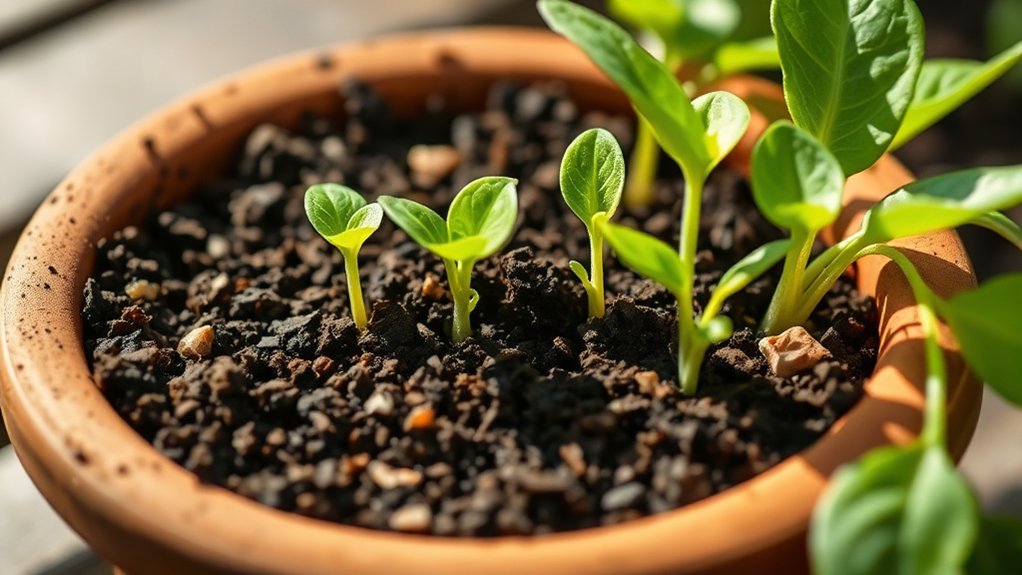
Now that you’ve got the right container, the next step is choosing a potting mix that helps your plants grow strong. You need a mix made for containers, not garden soil, because potting mix types affect airflow, root health, and weight.
Look for organic options if you want ingredients like compost, coco coir, or peat alternatives. Pay attention to drainage importance; a light mix keeps water moving and helps roots breathe.
At the same time, choose one with good moisture retention so your plants don’t dry out too fast. Check the nutrient balance on the label, since some mixes feed plants for weeks while others need added fertilizer.
Also review pH levels, because most vegetables and flowers prefer a slightly acidic range. You can compare homemade mixes for control or choose commercial brands for convenience and consistency.
Pick the blend that matches your plant’s needs.
Find the Sunlight Your Plants Need

After you’ve chosen the right potting mix, the next thing to check is light, since even the best soil can’t make up for poor sun exposure. You should watch your space through the day and note where the sun hits, how long it stays, and when shade moves in.
Most container plants need at least 6 sunlight hours, but some thrive with less, so match each pot to the spot you have.
- Track morning, midday, and afternoon light.
- Compare each area’s sunlight hours with your plant’s label.
- Respect shade preferences, especially on hot patios or balconies.
If a container sits in strong sun, it can dry out fast, so you’ll water more often. In cooler, shadier spots, soil stays moist longer.
Select Easy Plants for Containers
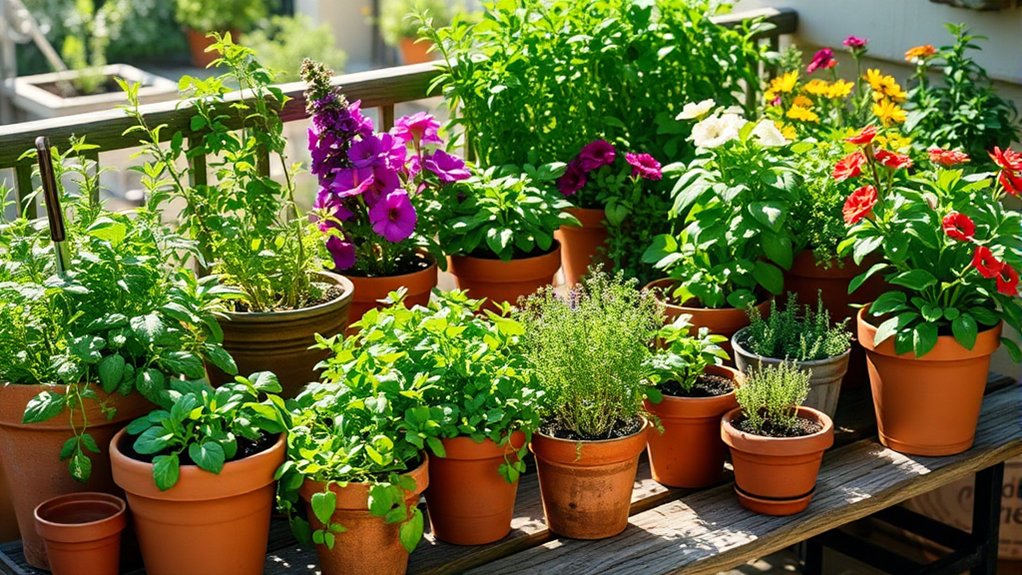
Start with forgiving plants that can handle the ups and downs of container life, like herbs, lettuce, cherry tomatoes, marigolds, and dwarf peppers. Choose herb selections such as basil, parsley, and thyme for quick harvests and steady growth.
Start with forgiving container plants like herbs, lettuce, cherry tomatoes, marigolds, and dwarf peppers for easy success.
Add compact vegetables like bush beans or radishes if you want fast results with easy maintenance. For flowering options, pick marigolds, petunias, or nasturtiums; they bloom generously and keep containers lively.
You can also grow aromatic plants, including rosemary and mint, to enjoy scent and flavor in one pot. If you forget to water sometimes, try drought tolerant varieties like succulents or portulaca.
Mix in colorful foliage such as coleus or sweet potato vine for interest even when blooms fade. Seasonal favorites like pansies in cool weather and zinnias in warm months help you refresh containers with little effort.
Arrange Plants for Small Spaces
When space is tight, think vertically and in layers to make every inch count. You can turn a balcony, patio, or doorstep into a lush display by stacking heights and balancing shapes. Use vertical gardening to lift trailing plants upward with shelves, trellises, or hanging pots, then place compact growers below for a fuller look. Keep the tallest container at the back or center, and let smaller ones frame it.
- Group sun lovers together so you don’t waste prime spots.
- Use plant pairing to combine bold foliage with delicate blooms.
- Repeat colors or textures to make the arrangement feel intentional.
Leave a little breathing room between pots so each plant gets light and air. Choose odd numbers when possible because they look more natural and keep your eye moving. With smart placement, even a tiny space can feel layered, tidy, and vibrant.
Water Container Gardens the Right Way
Water container gardens need steady moisture, but not soggy soil, so you should check them often and water with purpose. Stick a finger an inch into the mix; if it feels dry, give it a slow soak until water runs from the drainage holes. That runoff shows the roots got enough and helps prevent rot.
You’ll need to adjust your schedule as temperatures rise, wind increases, or rain changes your setup.
Container size matters, too. Small pots dry out fast, while larger ones hold moisture longer, so you can’t use the same routine for every planter. Group containers with similar needs together, and place thirsty plants where you can reach them easily.
Water early in the day when possible, so the soil absorbs moisture before heat steals it. If your containers sit in full sun, check them again by afternoon. Consistent attention keeps plants healthy and helps you avoid stress from too much or too little water.
Feed Container Plants for Better Growth
Feeding container plants keeps them growing strong because potting mix holds only a limited supply of nutrients. You can help them thrive by giving regular fertilizer and watching their growth. Choose a product with a balanced nutrient balance so your plants get the nitrogen, phosphorus, and potassium they need without excess. A slow release fertilizer works well in containers because it feeds steadily and reduces guesswork.
- Mix a slow release fertilizer into the potting mix at planting time.
- Feed flowering or fruiting plants with a liquid fertilizer every two weeks.
- Follow label rates closely, then water after feeding to move nutrients through the roots.
You should also adjust feeding for each plant’s needs. Fast growers usually want more food than herbs or succulents. When you keep a simple feeding routine, you support stronger stems, fuller leaves, and better blooms all season.
Fix Common Container Garden Problems
Even well-cared-for container gardens can run into trouble, but you can solve most problems early if you watch for the signs. Check leaves for spots, holes, curling, or yellowing, and look under them for pests.
Use pest management by removing insects by hand, rinsing plants with water, or applying insecticidal soap when needed. If plants wilt even after watering, make sure your containers have drainage holes and never sit in standing water.
Add drainage solutions like pot feet, saucers you empty often, or a lighter potting mix so roots can breathe. If soil dries too fast, move pots out of harsh afternoon sun or group them together to slow evaporation.
Watch for stunted growth too, since it often means the plant needs better light, steadier watering, or less crowding. When you act quickly, you’ll keep small issues from becoming bigger problems and help your container garden stay healthy, productive, and attractive all season.
Refresh Soil and Repot When Needed
When the soil in your container starts to look compacted or doesn’t drain well, it’s a good sign that it’s losing its nutrients. You might also notice your plants growing more slowly than usual. That’s when it’s time to refresh the soil and think about repotting.
If you see roots circling around the pot or pushing through the drainage holes, it’s definitely time to move your plant to a new home. Using fresh potting mix gives your plants better airflow, helps them grow stronger, and gives them a healthier start overall. So, don’t wait too long—your plants will thank you!
Signs of Soil Depletion
If your container plants start looking tired despite regular watering and feeding, the soil may be the problem. You might notice that growth slows, leaves pale, and blooms fade even when you care for them well. These are classic signs that soil nutrients are running low or that a nutrient imbalance is limiting uptake.
Watch for:
- Thin, weak stems and smaller leaves.
- Yellowing, spotting, or curled foliage.
- Water that drains too quickly or pools strangely.
When the mix breaks down, roots struggle to find support and food. You can refresh the top layer with fresh potting mix, then repot into a larger container if the medium has become compacted, salty, or lifeless. Healthy soil should feed your plants, hold moisture, and still drain well.
When To Repot
Repot your container plants when roots start circling the pot, growth slows, or water runs straight through the mix without soaking in properly. Check containers every season, and adjust repotting frequency based on how fast each plant fills its space.
Fast growers may need attention yearly, while slower plants can stay put longer. Gently slide the plant out and inspect root health; crowded, brown, or mushy roots signal it’s time for a larger pot.
If the root ball is firm but tight, loosen it lightly before moving it to fresh soil. Don’t wait until the plant looks stressed all over. Early repotting helps you avoid setback and keeps growth steady.
Fresh Mix Benefits
Fresh potting mix gives your plants a better start by restoring nutrients, improving drainage, and creating room for healthy roots to grow. You’ll notice stronger growth in containers because fresh mix boosts nutrient retention and helps with moisture control. When you refresh soil, you also improve soil aeration, which supports roots after heavy watering.
- Repot tired plants before roots circle tightly.
- Use organic options for vegetables and fresh herbs.
- Match new soil with seasonal planting and companion planting goals.
Fresh mix also aids pest management by removing decaying matter where insects thrive. If your container looks compacted, stale, or slow to dry, don’t wait. Replace part or all of the soil, then water well and let your plants settle in.
Keep Your Container Garden Healthy
To keep your container garden healthy, check it often and respond quickly to what your plants need. Water deeply when the top inch of soil feels dry, and empty saucers so roots don’t sit in water.
Feed plants with a balanced fertilizer, but don’t overdo it since too much can burn roots. Watch leaves for yellowing, spots, or pests, and handle problems early with simple pest control like rinsing insects off or removing damaged growth.
Feed plants with a balanced fertilizer, but don’t overdo it—too much can burn roots.
Rotate pots so each side gets equal sun, and prune back leggy stems to encourage fuller growth. As seasonal changes arrive, adjust your care: move tender plants indoors during cold snaps, shade containers in extreme heat, and slow watering when growth eases.
Refresh tired soil every season, and repot crowded plants before they become rootbound. With steady attention, your containers’ll stay productive, attractive, and easier to manage all year.
Frequently Asked Questions
What Container Materials Work Best in Hot Climates?
Terracotta works best in hot climates because it breathes and helps roots stay cooler; its Terracotta Benefits are strong.
Plastic has Plastic Drawbacks, since it can warp and overheat.
Metal needs caution too, because Metal Considerations include fast heat buildup that can stress roots.
Wood Options are solid if you choose thick, rot-resistant planters, since they insulate well and won’t bake your plants as quickly in intense sun.
Can I Use Garden Soil in Pots?
Yes, you can, but you shouldn’t use garden soil alone in pots. You’ll pack it too tightly, and roots won’t breathe well. Instead, use potting soil, which stays lighter and drains better.
If you mix in garden soil, keep it small and watch for drainage issues. You’ll get healthier roots, fewer soggy spots, and better growth overall. For containers, a quality potting mix always works best.
How Do I Protect Containers From Strong Wind?
Use wind barriers to shield your pots, like fences, screens, or shrubs. You can also place containers against a wall or tuck them into a sheltered corner.
Add container weights, such as stones or bricks, to keep them steady and prevent tipping. Choose low, sturdy pots and group them together for extra support.
If storms hit hard, move lighter containers indoors or to a protected porch.
What Pests Are Most Common in Container Gardens?
Aphids and spider mites are the usual villains in container gardens, and they can appear like tiny raiders overnight. You’ll also see whiteflies, fungus gnats, slugs, and thrips.
For aphid control, you can rinse plants or use insecticidal soap. For spider mite prevention, keep leaves clean and plants evenly watered.
Check undersides often because early spotting helps you stop damage before it spreads and weakens your plants.
When Should I Move Containers Indoors?
You should move your containers indoors when nights drop near your plant’s tolerance, usually before frost or sustained cold. Watch for signs to move: yellowing leaves, slowed growth, or a forecast of freezing temperatures.
Bring them in gradually and place them in the best indoor conditions with bright light, steady warmth, and good airflow. Check soil moisture often since indoor air dries out pots faster than outside.
Conclusion
With the right containers, soil, light, and plants, you’re ready to grow a thriving container garden. Start small, water wisely, and feed your plants so they keep blooming and producing.
If trouble pops up, you can fix it fast and keep things on track. Think of your garden as a tiny green city on your porch, alive with color and growth.
Keep caring for it, and it’ll reward you season after season. With container gardening for beginners, you’ll enjoy the beauty and satisfaction of your own little garden space.