5 Best Herbs for Window Boxes
Finding the perfect herbs for your window boxes can feel overwhelming. You want plants that not only thrive in small spaces but also add flavor and fragrance to your home.
If you’ve struggled with herbs that wilt or don’t grow well in limited sunlight, you’re not alone. Many people face this challenge when trying to create a vibrant and useful herb garden on their windowsill.
For the best window box herbs, choose basil, parsley, chives, thyme, and mint. Best Herbs for Window Boxes.
Basil loves bright sun and gives you tender leaves if you pinch it back often. Parsley keeps producing through cooler weather, while chives stay neat and regrow fast after snipping.
Thyme handles heat and dry soil, and mint brings bold fragrance when you keep it contained.
With a few simple care tips, you’ll soon know which one fits your space best.
Key Takeaways
- Basil thrives in sunny window boxes with rich, well-draining soil. Regular pinching helps it grow bushier.
- Parsley is a versatile, cool-weather herb that provides steady harvests. It works well in mixed boxes too.
- Chives are compact and low-maintenance. They regrow quickly after snipping, making them ideal for small boxes.
- Thyme loves hot, sunny spots and stays small. It needs excellent drainage and infrequent watering.
- Mint offers fragrance and fast growth. Keep it in a contained box to control spreading.
Basil for Sunny Window Boxes

Basil thrives in bright, direct sun, so it’s a natural choice for sunny window boxes. You can grow compact basil varieties like sweet basil, Genovese, or dwarf Greek basil in a narrow planter and still harvest plenty for salads, pasta, and sauces.
Give each plant rich, well-draining soil and a pot with drainage holes so roots don’t stay wet. For solid basil care, water when the top inch of soil feels dry, and pinch off growing tips often to keep plants bushy instead of leggy.
If you let flowers form, leaf production slows, so remove buds as soon as you spot them. You’ll get the best flavor when you harvest in the morning and snip stems just above a leaf pair.
With regular sun, steady moisture, and light feeding, basil rewards you with fragrant leaves all season long. Choose healthy starts, and your window box will stay productive and attractive.
Parsley for Fresh Harvests All Season

Parsley handles cooler weather better than many herbs, so it’s a smart choice for window boxes if you want a steady harvest through much of the season. You can tuck it into a bright spot and clip stems often, which encourages fresh regrowth.
Flat-leaf parsley brings bold flavor for soups, salads, sauces, and grain dishes, while curly parsley adds a crisp garnish. Because you’re growing it close to the kitchen, you’ll reach for it more often and use it in everyday cooking.
Flat-leaf parsley adds bold flavor, while curly parsley lends a crisp garnish to everyday cooking.
Its culinary uses go far beyond decoration, since a handful can brighten simple meals fast. Parsley also offers health benefits, including vitamins A, C, and K, plus a fresh, clean taste that makes healthy dishes more appealing.
Water it regularly, keep the soil evenly moist, and harvest from the outside first so the plant keeps producing. With a little care, you’ll enjoy fresh parsley from spring into fall.
Chives for Small, Low-Maintenance Boxes

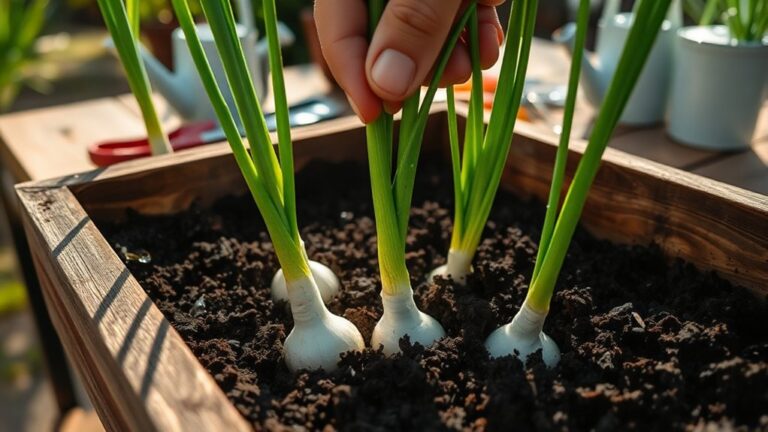
If you want another herb that keeps giving with very little fuss, chives are a perfect fit for small window boxes. You can tuck them into a narrow spot and still enjoy steady growth with minimal care. Their slender stems and tidy clumps won’t crowd neighbors, so you can pair them easily with other herbs or flowers.
Snip what you need, and they’ll regrow quickly, giving you a reliable supply for salads, soups, eggs, and other chive recipes.
Chives also work well for companion planting because they add interest without taking over the box. You only need basic watering and regular trimming to keep them productive.
If blooms appear, you can leave a few for pollinators or remove them to keep the plants focused on leafy growth. For a low-maintenance window box, chives offer flavor, neat form, and dependable harvests in one compact plant.
Thyme for Hot, Sunny Spots
When your window box gets full sun and heats up fast, thyme is one of the best herbs to plant. You’ll love how it stays compact, tolerates dry soil, and keeps producing even when summer turns intense. One of the top thyme benefits is its strong flavor in tiny leaves, so a little harvest goes a long way in cooking.
When growing thyme, give it sharp drainage and don’t overwater. A shallow, gritty mix works well, and you can let the soil dry between waterings. Trim the stems lightly to keep the plant tidy and encourage fresh growth.
- Place thyme where it gets at least six hours of sun.
- Water only when the top inch feels dry.
- Clip often to prevent woody growth.
With the right spot, thyme fills your window box with color, scent, and reliable harvests all season.
Mint for Fragrance in a Contained Box
Mint brings a fresh, cooling scent to a window box, and it grows best when you keep it contained. Choose compact mint varieties like peppermint, spearmint, or chocolate mint, then plant one type per pot to prevent tangling roots.
Give it bright light with afternoon shade, and water whenever the top inch feels dry. Good mint care means snipping stems often, which keeps growth bushy and boosts fragrance.
| Variety | Scent | Best Use |
|---|---|---|
| Peppermint | Sharp | Tea |
| Spearmint | Sweet | Cooking |
| Chocolate mint | Mild | Garnish |
You’ll want rich, moist soil and a box with drainage holes, since mint hates soggy roots. If runners escape, trim them back right away.
With steady harvests, your window box stays lush, aromatic, and easy to manage.
Frequently Asked Questions
How Often Should Window Box Herbs Be Fertilized?
You should fertilize window box herbs every 2 to 4 weeks during active herb growth, since containers use nutrients fast. Choose gentle fertilizer types, like balanced liquid or organic fish emulsion, and always follow label rates. If you overfeed, you’ll get leafy growth with weaker flavor.
In cool months, you can cut back or stop feeding. Water well before and after fertilizing to protect roots and keep herbs thriving.
What Soil Mix Works Best for Herb Window Boxes?
You’ll do best with a light, fast-draining mix: 2 parts quality potting soil, 1 part compost, and 1 part perlite or coarse sand. That blend boosts herb growth while keeping moisture retention balanced, not soggy.
Think of basil in my old apartment window box: when I used heavy garden soil, it sulked. After I switched mixes, it sprang back like it had found a better pair of shoes.
How Can I Prevent Pests on Window Box Herbs?
You can prevent pests on window box herbs by inspecting plants often and removing damaged leaves fast. Spray them with natural pest repellents like neem oil or diluted soap, and avoid overwatering, which attracts bugs.
You should also try companion planting with basil, chives, or marigolds to confuse pests and support healthier growth. Keep your herbs spaced well, and you’ll make it harder for insects to settle in and spread.
When Should I Repot Herbs in a Window Box?
You should repot herbs in a window box when you spot repotting signs like roots circling the drainage holes, soil drying out too fast, or herb growth slowing despite good care. The theory that herbs only need repotting every year isn’t always true; vigorous plants may need it sooner.
Check in spring or early summer, then move them to a slightly larger box with fresh mix before they become crowded.
Can I Grow Herbs in a North-Facing Window Box?
Yes, you can grow herbs in a north-facing window box, but you’ll need to choose carefully. You should focus on herb selection that matches lower light conditions, like mint, parsley, chives, and cilantro.
Check each herb’s light requirements, then give them the brightest spot available and rotate the box if you can. With enough care, you’ll still get healthy growth, though slower than in sunnier windows.
Conclusion
With the right herbs, your window box can do a lot more than look pretty. You can enjoy basil, parsley, chives, thyme, and mint right outside your window, and each one brings its own flavor, scent, and charm.
Start small, keep them watered, and give them the sun they need. Before long, you’ll be picking fresh herbs like a pro. It’s a win-win for your kitchen and your curb appeal when you choose the best herbs for window boxes.