5 Best Plants for Apartment Balconies
Finding the perfect plants for your apartment balcony can feel overwhelming. You want something that fits your space, matches your light conditions, and is easy to care for.
If you’ve struggled to find greenery that thrives in small outdoor areas, you’re not alone—many people face this challenge.
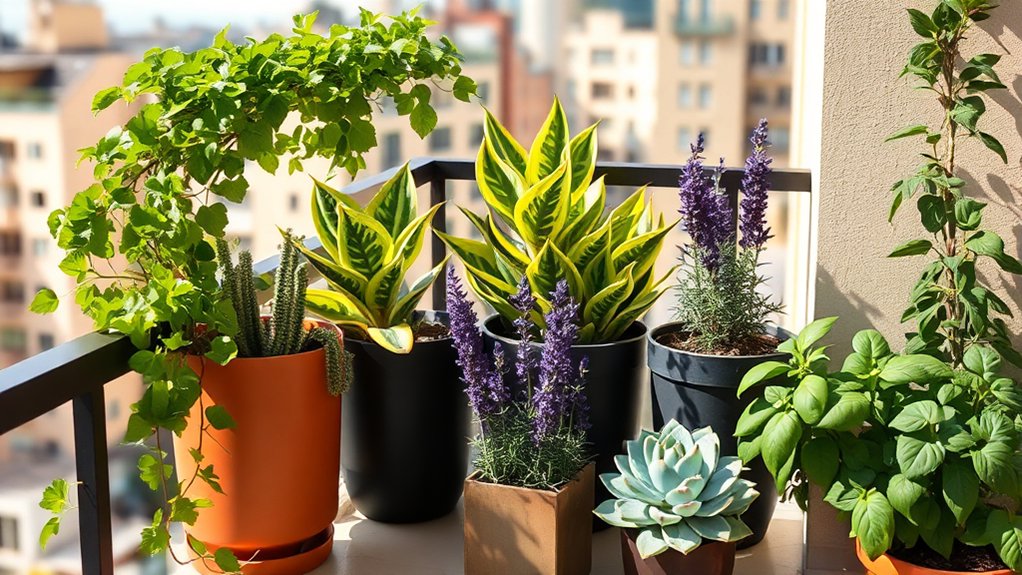
The 5 best plants for apartment balconies are basil, mint, geraniums, succulents, and cherry tomatoes because they fit a range of spaces and care levels.
If your balcony gets lots of sun, herbs and succulents thrive; if it’s shadier, try ferns or begonias.
For small containers, choose thyme or dwarf marigolds. Busy renters can stick with low-maintenance succulents and compact herbs.
With the right plant, your balcony can become a lively, useful retreat, and there’s more to uncover.
Key Takeaways
- Basil, mint, and thyme are great balcony herbs for fresh cooking and easy container growing.
- Geraniums, dwarf marigolds, and miniature begonias add bright color with little maintenance.
- Succulents like jade, sedum, and echeveria are ideal for busy renters because they need minimal watering.
- Ferns, impatiens, and begonias suit shaded balconies with limited sunlight.
- Cherry tomatoes and compact climbers can thrive in larger pots while adding food or privacy.
5 Best Plants for Apartment Balconies

If you want to turn your balcony into a small green retreat, start with plants that can handle containers, changing light, and a bit of wind. You can’t go wrong with five reliable choices.
Herbs like basil and mint give you fresh flavor and help you start a practical herb garden. Geraniums bring bright color and keep your space lively with minimal fuss.
Succulents work well when you want low-maintenance greenery that stores water in its leaves. Cherry tomatoes reward you with tasty harvests and fit nicely in larger pots.
Ferns soften hard edges and add lush texture in shaded corners. Mix these plants in grouped containers for balance, and use shelves or rail planters for vertical gardening when floor space is tight.
With the right mix, you’ll create a balcony that looks good, feels welcoming, and stays manageable through the seasons.
Match Plants to Your Balcony’s Light
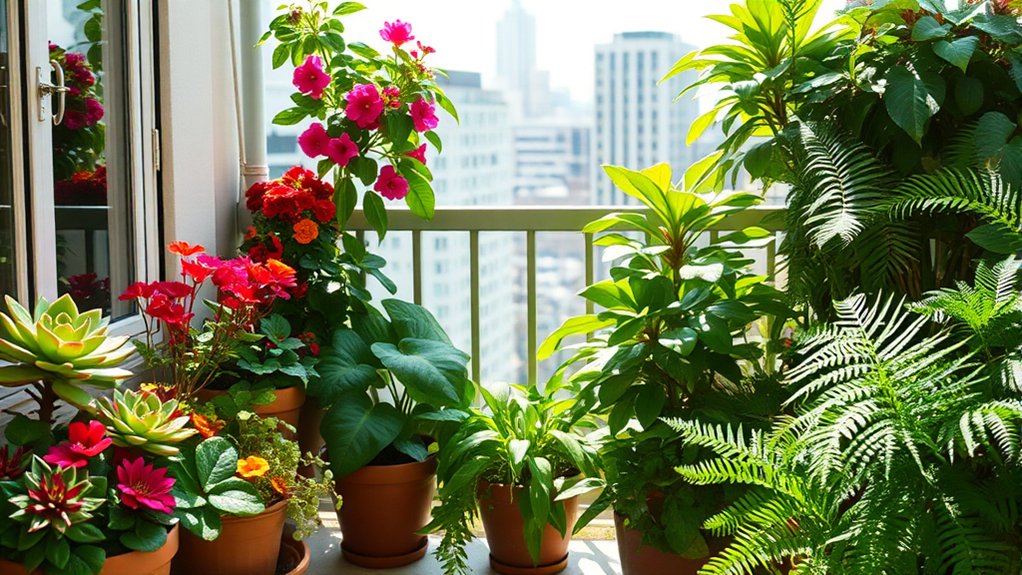
Before you buy more plants, look at how much sun your balcony actually gets. Watch it at different times of day, because morning light, hot afternoon sun, and deep shade support very different growth.
If your balcony stays bright for six or more hours, choose sun loving varieties like herbs, geraniums, or succulents. They’ll thrive with strong light and won’t stretch or weaken. If your space gets only a few hours of sun, pick shade loving plants such as ferns, impatiens, or begonias. They handle lower light and keep their color better than sun seekers do.
You should also notice wind, reflected heat, and nearby walls, since they can change conditions fast. A south facing balcony can bake plants, while a north facing one often stays cool and dim.
Match each plant to the light you actually have, not the look you want. That way, your balcony garden stays healthy, balanced, and easier to maintain year round.
Best Compact Plants for Small Containers
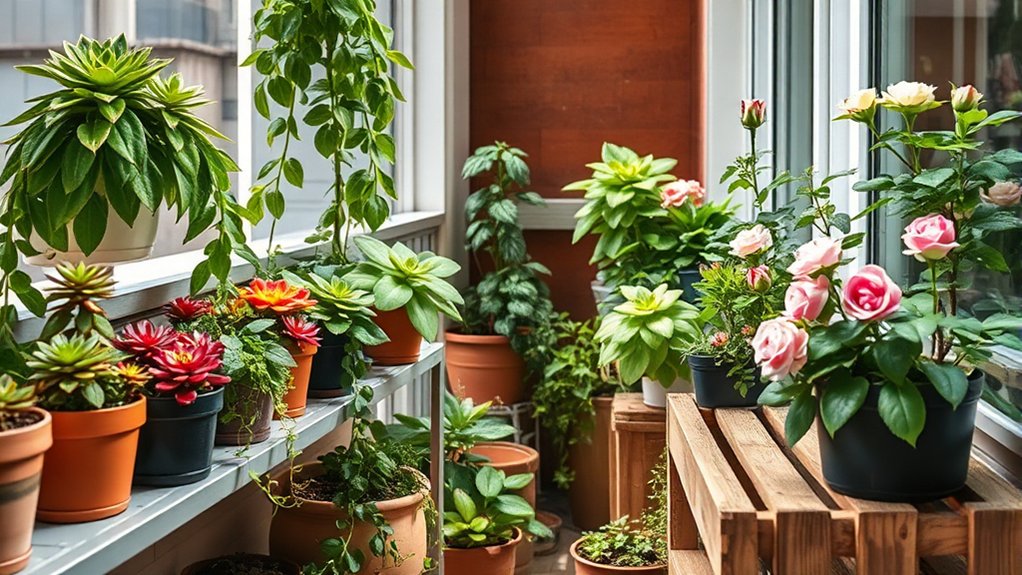
When space is tight, choose plants that stay naturally compact and don’t crowd their containers. You’ll get more from every inch when you pick varieties bred for pots, edging, or dwarf growth.
For herb gardening, try thyme, chives, and compact basil; they give you useful harvests without sprawl. Flowering choices like calibrachoa, dwarf marigolds, and miniature begonias add color while keeping a tidy shape. Succulents such as haworthia and echeveria also fit well in shallow pots, especially if you want structure with minimal soil volume.
| Plant | Why it works | Best use |
|---|---|---|
| Thyme | Low, dense habit | Herb gardening |
| Calibrachoa | Cascades lightly | Rail planters |
| Haworthia | Slow, tidy growth | Small containers |
If you’re short on floor space, pair these with vertical planters to stack greenery upward. That lets you layer texture, scent, and color without crowding your balcony or blocking movement.
Low-Maintenance Balcony Plants for Busy Renters
For busy renters, the best balcony plants are the ones that forgive missed waterings, handle changing light, and keep looking good with minimal fuss. You can choose succulent varieties like jade, sedum, or echeveria because they store water and stay tidy in small pots. Place them in a fast-draining mix, give them bright light, and water only when the soil dries out fully.
You can also lean on easy herb options such as rosemary, thyme, mint, or chives. These plants grow well in containers, ask for regular but simple care, and let you snip fresh flavor whenever you cook. Keep them where they get enough sun, rotate pots now and then, and trim back leggy growth to encourage healthy shape. If you travel often, group your plants together so they hold moisture better and you can water them faster.
Flowering and Foliage Plants for Color and Privacy
If you want your balcony to do more than just survive, flowering and foliage plants can add color, soften hard edges, and create a bit more privacy. You can use tall planters with colorful climbers like jasmine, mandevilla, or morning glory to frame railings and block sight lines without feeling heavy.
Mix in compact shrubs and broad-leafed plants, such as coleus, heuchera, or dwarf hibiscus, to build layers of texture and shade. Choose fragrant flowers near seating areas so you’ll notice their scent every time you step outside.
Mix compact shrubs and broad-leafed plants to create texture, shade, and a more inviting balcony retreat.
Geraniums, sweet alyssum, and dwarf roses work well in sun, while begonias and impatiens brighten shadier spots. Rotate pots occasionally so each plant gets even light, and pinch back leggy growth to keep everything full.
With the right combination, you’ll turn a plain balcony into a colorful, inviting retreat that feels bigger, softer, and more private.
Frequently Asked Questions
How Often Should Balcony Plants Be Fertilized?
You should fertilize balcony plants every 2 to 4 weeks during active growth, but cut back in cool months. Use fertilizer types matched to your plants, like balanced liquid feeds or slow-release granules.
Adjust feeding by growth stages: seedlings need gentle doses, while flowering plants want more nutrients. Always follow label directions, and don’t overdo it.
If leaves yellow or growth slows, you may need a light boost.
What Pots Are Best for Apartment Balcony Drainage?
You’ll want pots with clear drainage holes; they’re the escape hatch that keeps roots from drowning. Choose terracotta or unglazed clay for breathable pot materials, or lightweight plastic with raised feet if you need easier moving.
Add a saucer, but don’t let water sit there. These drainage solutions help your balcony plants breathe, thrive, and stand like little green sentinels against soggy soil.
How Do I Protect Balcony Plants From Strong Winds?
You can protect balcony plants from strong winds by adding wind barriers and securing plant supports around taller stems. Place heavier pots near walls or corners, and group plants to reduce exposure. Tie fragile plants to stakes or trellises so they don’t snap.
Use mesh screens, bamboo panels, or frosted acrylic to block gusts without cutting light. Check pots often because wind can dry soil fast and loosen roots.
Which Plants Are Safe for Pets on Balconies?
You can choose pet-safe balcony plants like spider plants, Boston ferns, calatheas, and African violets. For color, pick non toxic flowers such as marigolds, snapdragons, and roses.
If you want edibles, grow pet friendly herbs like basil, thyme, and rosemary, but keep access limited so pets don’t overeat them. Always check each plant before buying, since toxicity can vary by species and your pet’s habits.
Can Balcony Plants Survive Winter Outdoors?
Yes, some balcony plants can survive winter outdoors if you match them to your climate and protect them properly. For example, a rosemary plant on a sheltered balcony might stay alive through a mild winter with winter care like wrapping the pot and reducing watering.
You should check each plant’s hardiness before leaving it outside because tender herbs and tropicals usually need to come indoors when temperatures drop.
Conclusion
So, whether you’re soaking up sun or stuck in shade, you can still style your space with smart, space-saving plants. Choose compact companions, colorful bloomers, and hardy, low-maintenance picks to make your balcony feel brighter, greener, and more inviting.
With the right plant pairings, you’ll create a cozy, calming corner that fits your lifestyle and your light. Start small, stay consistent, and enjoy your balcony’s blooming beauty every day. These best plants for apartment balconies will help you transform your outdoor space effortlessly.