
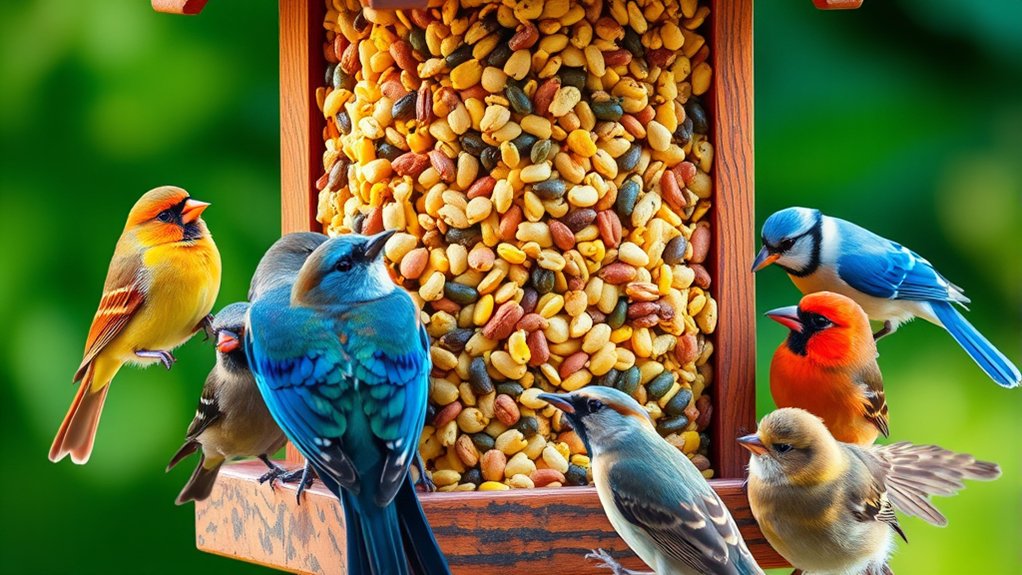
10 Foods Wild Birds Will Eat in Your Backyard
If you’ve ever wanted to enjoy the lively presence of wild birds in your backyard but struggled to attract them, you’re not alone. Many people find it tricky to know what foods will really bring these feathered visitors closer.
Luckily, understanding what wild birds love to eat can make all the difference.
You can attract wild birds to your backyard with ten key foods: black oil sunflower seeds, nyjer, millet, peanuts, and cracked corn provide fats and proteins they need.
Fresh fruits like berries and apples, plus unsalted raw nuts, boost energy and nutrition.
Mealworms are a great protein source, while suet helps birds stay warm in winter.
Adding nectar and fresh greens rounds out a varied diet that supports healthy, year-round visitors.
Discover how to make your backyard even more inviting.
Key Takeaways
- Black oil sunflower seeds, nyjer seeds, and millet attract a wide variety of backyard wild birds.
- Fresh, pesticide-free fruits like berries, apples, and grapes draw robins, orioles, and waxwings.
- Unsalted, raw nuts such as peanuts and walnuts provide high-energy food for many bird species.
- Mealworms supply essential protein, especially during breeding and molting seasons.
- Suet offers critical calories and fat to help birds survive cold winter months.
Choosing Bird Foods for Your Local Wild Birds

When choosing bird foods for your local wild birds, it helps to know which species visit your area most often. This way, you can tailor your offerings to their preferences, ensuring they keep coming back.
Furthermore, consider your birdhouse placement carefully. Position birdhouses away from dense shrubs or places where predators like cats and squirrels can easily hide. Proper placement not only attracts more birds but also supports predator prevention, keeping your feathered friends safe.
You’ll want to place feeders near cover, such as trees or bushes, so birds can quickly escape if threatened. Avoid open areas that expose birds to hawks or other predators.
By combining thoughtful birdhouse placement with predator prevention strategies, you create a welcoming and secure environment. This not only encourages a variety of birds but also helps maintain a healthy backyard ecosystem.
Best Seeds to Attract Wild Birds
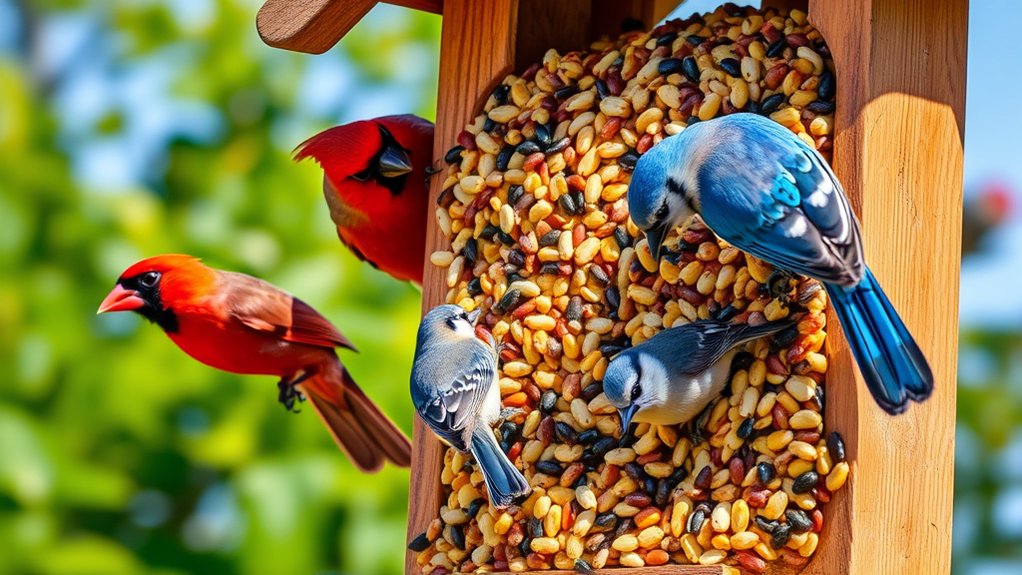
If you want to attract a variety of wild birds, choosing the right seeds is key. You know, popular options like black oil sunflower and millet offer great nutritional benefits that keep birds coming back. So, let’s take a closer look at which seeds work best to support your backyard visitors.
Popular Seed Varieties
Although wild birds enjoy a variety of foods, certain seed types consistently attract the widest range of species to your backyard. Black oil sunflower seeds are a favorite because their thin shells are easy to crack open.
Nyjer seeds draw smaller finches like goldfinches and siskins, while millet is perfect for ground-feeding birds such as doves and sparrows. When placing your bird house or feeders, keep bird house placement and predator protection in mind to keep your feathered visitors safe.
Position feeders away from windows and close to shrubs or trees where birds can quickly escape if threatened. Offering a mix of these popular seed varieties ensures a lively, diverse bird population visits your yard throughout the year.
Nutritional Benefits for Birds
Because wild birds rely on specific nutrients to stay healthy and active, choosing the right seeds is essential to attract them to your backyard. Seeds like sunflower, millet, and safflower provide vital fats and proteins that fuel bird migration, helping them travel long distances.
These nutrients also support energy levels necessary for nest building during breeding seasons. When you offer a variety of high-quality seeds, you help birds maintain strong immune systems and vibrant feathers, which are indispensable for survival.
Fruits Wild Birds Love

When you offer fresh fruits in your backyard, you’ll attract a variety of wild birds that thrive on these natural treats. Birds like robins, orioles, and waxwings are especially drawn to fruits such as berries, apples, and grapes. These fruits provide essential vitamins and hydration, supporting birds during their energy-demanding bird migration.
Fresh fruits like berries and apples attract robins, orioles, and waxwings, providing vital nutrients during migration.
By planting fruit-bearing shrubs or placing cut fruits on feeders, you create an inviting space that mimics their natural food sources, even in artificial habitats.
During migration seasons, fruits offer a quick energy boost, helping birds fuel their long journeys. You can easily support their nutritional needs by rotating seasonal fruits to match availability and bird preferences.
Keep in mind that fresh, pesticide-free fruits work best to keep your backyard safe and healthy for these visitors. Offering fruits also encourages diverse species to visit, enriching your backyard’s ecosystem and providing you with rewarding birdwatching opportunities.
Nuts That Provide Energy and Nutrients for Wild Birds
Nuts are a fantastic source of energy and nutrients that help wild birds stay active and healthy. You can offer popular varieties like peanuts, walnuts, and almonds to attract a range of species.
Just make sure to feed them safely by avoiding salted or flavored nuts. Also, it’s a good idea to break large nuts into manageable pieces so the birds can easily eat them.
Benefits of High-Energy Nuts
Although not all backyard birds eat the same foods, many species thrive on high-energy nuts that provide essential nutrients and calories. You’ll find that offering these nuts benefits birds, especially during bird migration and when they’re building nesting habitats.
High-energy nuts help birds by boosting energy reserves needed for long migratory flights. They also support healthy feather growth, which is vital for insulation and flight. Plus, these nuts provide fats and proteins that aid in egg production and chick development.
Popular Nut Varieties Offered
Offering a variety of high-energy nuts can attract different wild bird species to your backyard. Popular choices include peanuts, walnuts, almonds, and sunflower seeds with shells. Peanuts provide protein and fats, while walnuts offer omega-3s that boost bird health.
Almonds are nutrient-dense but should be unsalted and chopped for easier consumption. When placing nuts near your birdhouse, consider birdhouse placement carefully to guarantee easy access without exposing birds to predators.
Position feeders in open areas with nearby cover, allowing birds to spot danger and escape quickly. This also helps prevent predators by reducing hiding spots for cats or hawks. By offering diverse nuts and thoughtful placement, you’ll support a healthy, active bird population right outside your window.
Safe Nut Feeding Tips
When you feed wild birds nuts, it’s important to choose safe options and prepare them properly to support their health. Nuts provide essential energy and nutrients, especially during bird migration and nesting habits when birds need extra fuel. To guarantee safe feeding:
- Offer unsalted, raw nuts like peanuts, almonds, or walnuts to avoid harmful additives.
- Chop large nuts into smaller pieces to make them easier to eat and reduce choking risks.
- Keep feeding areas clean to prevent mold or bacteria growth, which can harm birds.
Mealworms: A Favorite Protein Source
Because mealworms are rich in protein and easy to digest, many wild birds enthusiastically seek them out as a nutritious snack. If you want to support your backyard birds’ health, adding mealworms to their diet is a smart move.
Wild bird diets rely heavily on protein sources, especially during breeding and molting seasons when energy demands rise. Mealworms provide essential nutrients that help birds build feathers, maintain muscle, and stay active.
You can offer mealworms live or dried, depending on what’s easiest for you and your feathered visitors. Place them in a shallow dish or scatter them on the ground to attract various species, from bluebirds to wrens.
Because mealworms mimic natural insect prey, they’re particularly popular with insectivorous birds. Including mealworms in your feeding routine adds a diverse range of protein sources, promoting a balanced diet and encouraging birds to visit your backyard more frequently.
Why Offer Suet in Cooler Months
When the weather turns cold, suet gives wild birds the energy boost they need to stay warm. Plus, its easy-to-digest nutrients help them keep their strength during those harsh winter months. So, offering suet in your backyard can really make a big difference for their survival.
Energy Boost During Winter
Why does suet become a backyard bird favorite as temperatures drop? Suet offers wild birds a critical energy boost during winter when food is scarce, and their bodies need extra fuel to stay warm.
Unlike other seasons, winter challenges birds with colder climates and reduced daylight. This affects their bird migration and nesting habits. You can help by providing suet because it:
- Supplies high calories essential for maintaining body heat.
- Supports energy-intensive activities like foraging and migration preparation.
- Aids birds in conserving energy during harsh conditions, improving survival chances.
Easy-to-Digest Nutrients
Although birds need plenty of energy during cooler months, their digestive systems also slow down. This makes suet an ideal food choice. Suet provides easy-to-digest nutrients that help birds stay warm without taxing their bodies.
When placing suet feeders, consider birdhouse placement carefully to guarantee safe access while aiding predator prevention. Position feeders near cover but away from places where cats or other predators can hide.
| Benefit | Reason |
|---|---|
| High Energy | Provides essential fats |
| Easy Digestion | Suet breaks down quickly |
| Supports Cold Survival | Helps maintain body heat |
Offering suet this way helps birds thrive through winter’s challenges while you enjoy safe, lively backyard visits.
Fresh Greens and Vegetables Wild Birds Enjoy
Since wild birds often seek out fresh, nutrient-rich foods, offering greens and vegetables in your backyard can attract a variety of feathered visitors. You can supplement their diet by providing safe, pesticide-free options like kale, spinach, and shredded carrots. These fresh treats not only nourish birds but also help reduce garden pests by encouraging natural foragers.
To successfully attract birds with greens, keep these tips in mind:
- Place fresh vegetables near your birdhouse placement to increase visibility and accessibility.
- Avoid using any chemicals on your greens to keep birds safe and healthy.
- Regularly replace wilted or spoiled vegetables to maintain freshness and appeal.
Nectar for Attracting Nectar-Feeding Birds
If you want to attract vibrant nectar-feeding birds like hummingbirds and orioles, providing fresh nectar is essential. Use a simple sugar-water mix: four parts water to one part white granulated sugar to mimic natural nectar. Avoid red dye; the color of your feeder is enough to draw their attention.
Understanding pollinator preferences helps you select the best flowers and feeders. Bright red or orange tubular flowers, like trumpet vine or bee balm, complement your nectar feeders and increase visits.
Bright red or orange tubular flowers enhance your feeders and attract more vibrant nectar-feeding birds.
Besides food, these birds also seek suitable nesting material choices. Soft fibers from plants like cotton or milkweed encourage them to build nests nearby.
Keep your nectar feeders clean and refill them every two to three days to prevent mold and bacteria that could harm the birds. By combining fresh nectar with thoughtful planting and nesting materials, you’ll create a welcoming environment that supports these delicate pollinators all season long.
The Role of Grains in a Bird-Friendly Backyard
When you include grains in your backyard feeding routine, you open the door to attracting a wider variety of bird species. Grains like millet, cracked corn, and wheat offer essential nutrients that many birds rely on, boosting bird dietary diversity.
To make the most of grains, you’ll want to focus on proper grain storage. Keeping grains dry and sealed prevents mold and pests, ensuring your feathered friends get fresh, safe food.
Here are three key benefits of adding grains to your feeding setup:
- They attract ground-feeding birds like sparrows and doves.
- Grains provide a balanced diet when combined with seeds and nectar.
- Easy grain storage means you can keep a steady supply year-round.
Safe Bird Feeding Tips Year-Round
Adding grains to your bird feeding routine can attract a variety of species, but keeping your feeding area safe and clean year-round guarantees those visitors stay healthy. Start by regularly cleaning feeders and birdhouses to prevent mold and disease.
Proper birdhouse placement is key; position them away from heavy foot traffic and predators to provide a secure refuge. During seasonal migration, birds rely heavily on backyard feeders, so maintaining fresh food and water is essential.
Rotate feeding spots to avoid buildup of waste and reduce parasite risks. Use feeders designed to minimize seed spillage, and remove any wet or moldy grains promptly.
In colder months, provide high-energy foods like suet and sunflower seeds to help birds survive harsh weather. Also, avoid sudden changes in food types to prevent upsetting local bird populations.
Frequently Asked Questions
How Do I Clean Bird Feeders to Prevent Disease?
You should clean bird feeders regularly to prevent disease by following a strict cleaning schedule, ideally once every two weeks. First, remove old seed and wash the feeder with hot, soapy water. Rinse thoroughly and let it dry completely before refilling.
Store your seed in a dry, airtight container to avoid mold growth. Keeping up with this routine helps protect the birds and keeps your feeder safe and inviting.
What Types of Feeders Are Best for Different Bird Species?
You’ll want tube feeders for small songbirds that prefer mixed seeds, while platform feeders attract larger birds that enjoy a variety of seed preferences. Nyjer seed feeders are perfect for finches, and suet feeders lure woodpeckers and nuthatches.
Pay close attention to feeder placement. Put tube feeders in sheltered spots and platform feeders where birds can easily spot them. This way, you’ll cater to different species effectively and keep them coming back.
How Can I Deter Squirrels and Other Pests From Bird Feeders?
You can deter squirrels and other pests by using squirrel-proof feeders designed to close access when heavier animals try to feed. Choosing pest-resistant seeds, like safflower or nyjer, also helps since squirrels dislike their taste.
Furthermore, placing feeders away from jumping-off points like trees or fences makes it harder for squirrels to reach them. Regularly cleaning the area to remove spilled seeds reduces attracting unwanted guests, keeping your bird feeders safe.
When Is the Best Time of Day to Feed Wild Birds?
The best time to feed wild birds is during their morning routines, just after sunrise when they’re most active and hungry. Offering food early helps them fuel up for the day.
Evening feeding can also be beneficial, especially in colder months, as birds prepare for the night. Just make sure you clean feeders regularly to keep the area healthy and inviting for your feathered friends at these key times.
Can Feeding Birds Affect Their Natural Foraging Behaviors?
Yes, feeding birds can affect their natural foraging behaviors. When you regularly provide food, birds may exhibit bird diet adaptation, relying more on your offerings than searching for natural sources.
This can lead to foraging behavior changes, where they spend less time exploring and more time at feeders. To minimize this, you should offer food occasionally and encourage birds to maintain their natural habits by keeping your feeding routine varied and balanced.
Conclusion
By offering a variety of foods, from seeds and fruits to mealworms and nectar, you’ll create a vibrant buffet that wild birds can’t resist. Think of your backyard as a symphony, where each food plays its part in attracting different feathered friends.
Keep their needs in mind year-round, and you’ll enjoy a lively, colorful chorus of birds that brings nature’s beauty right to your doorstep. Your care turns your yard into a thriving avian haven full of wild birds.


