What Type of Food Do Birds Eat in the Wild?
If you’ve ever wondered what to feed wild birds or how they find their meals, you’re not alone. Many people struggle to understand the diverse diets of birds in different environments. Knowing what type of food birds eat in the wild can help you make better choices to attract and support them.
In the wild, birds eat a mix of seeds, insects, fruits, nectar, and small animals depending on their habitat and season. You’ll find forest birds munching on berries and insects, while wetland birds focus on fish and amphibians.
During migration, they go for high-energy foods like nectar and insects. Their diets also shift with the seasons to meet nutritional needs. Keep exploring to understand how their food choices impact ecosystems and how you can support them.
Key Takeaways
- Birds consume diverse foods including insects, seeds, fruits, nectar, small animals, and human scraps based on availability and season.
- Insects and small animals provide essential protein and fats that are crucial during migration and nesting periods.
- Seeds, nuts, and grains supply energy, especially in colder months and for species like sparrows and finches.
- Fruits and berries offer vitamins, antioxidants, and natural sugars, supporting immunity and energy.
- Nectar is a high-energy food for specialized birds like hummingbirds, fueling daily activity and migration.
What Foods Do Birds Eat in the Wild?

Although you might think birds only eat seeds, their diets in the wild are surprisingly varied. You’ll find that many birds adapt their food choices based on seasonal needs and behaviors like bird migration and nesting habits.
During migration, birds often increase their intake of high-energy foods such as insects, berries, and nectar to fuel their long journeys. When nesting, many species prioritize protein-rich diets to support egg production and feed their young, often hunting insects or small invertebrates.
You might also notice some birds eating fruits, nuts, or even small reptiles depending on availability and nutritional demands. This flexibility helps them survive changing environments and guarantees they get the right nutrients at critical times.
How Does Habitat Influence Bird Diets?
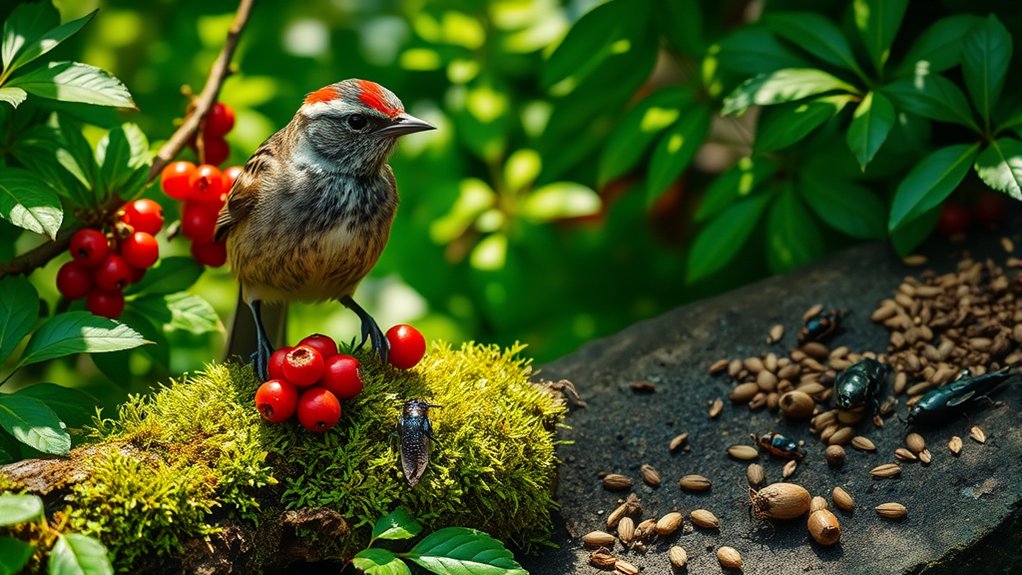
Because different habitats offer unique food sources, a bird’s diet often changes depending on where it lives. When you observe birds in a forest, you’ll notice they mainly feed on insects, seeds, and berries readily found there.
Bird diets shift with their habitats, like forests where insects, seeds, and berries are staples.
In wetlands, they rely more on fish, amphibians, and aquatic plants. Urban adaptation plays a big role in shaping diets too. Birds in cities often scavenge human food scraps or eat insects around streetlights, adjusting their feeding habits to thrive among human activity.
You’ll also see how nesting diets influence what birds eat. During nesting, many species focus on high-protein foods like insects or small invertebrates to feed their young. So, you can expect birds in habitats rich in these options to have diets that support their reproductive needs.
Ultimately, the habitat dictates available food, and birds adapt their diets accordingly to survive and raise their offspring successfully.
How Do Bird Diets Change With the Seasons?

You’ll notice that bird diets shift as the seasons change. That’s because food availability varies throughout the year. Migratory birds, for example, adjust their eating habits depending on where they travel. Others stick around and adapt to local climate shifts to find what they need. Understanding these changes helps you see how birds survive and thrive in the wild. It’s pretty fascinating once you start paying attention!
Seasonal Food Availability
As the seasons shift, bird diets adapt to the changing availability of food sources in their environment. In spring and summer, you’ll notice birds feasting on abundant insects, fruits, and nectar. In fall and winter, they switch to seeds, nuts, and berries that last longer.
Birds in urban areas show remarkable urban adaptations, exploiting bird feeders, discarded food, and even insects drawn to city lights. You’ll also see them adjusting feeding habits to avoid predators, choosing safer foraging spots or feeding times.
Migratory Birds’ Diet
How do migratory birds adjust their diets when they travel across regions and seasons? You’ll notice they rely heavily on diet diversity to meet their changing nutritional needs throughout the year. As seasons shift, migratory birds modify their food sources to stay energized and healthy. Here’s how they do it:
- In spring and summer, they feast on insects and fresh fruits, capitalizing on abundant natural resources.
- During migration, they exploit urban foraging opportunities, scavenging in parks and gardens for seeds and leftovers.
- In winter, they switch to harder-to-digest foods like nuts and berries, which provide long-lasting energy.
Adaptations to Climate Changes
Although climate changes can challenge birds’ survival, they adapt their diets to match seasonal shifts in food availability. You’ll notice many birds adjust what they eat as insects, fruits, and seeds become scarce or abundant throughout the year.
Bird migration plays a key role here. By traveling to different regions, birds access diverse food sources that suit each season. This movement showcases their climate resilience, helping them survive unpredictable weather and habitat changes.
In colder months, you might see birds focusing more on seeds and nuts, while warmer seasons bring a diet richer in insects and berries. Understanding these adaptations helps you appreciate how birds cleverly respond to nature’s rhythms, ensuring their survival despite changing climates.
Which Birds Eat Seeds, Nuts, and Grains?
You’ll find that many birds rely on seeds, nuts, and grains as key parts of their diet. Different species have specific preferences, from small seeds to larger nuts. So, let’s take a closer look at which birds enjoy these foods and how they go about eating them.
Common Seed-Eating Birds
When you spot birds cracking open seeds, nuts, or grains, you’re likely observing some of the most common seed-eating species. These birds often rely on seed-rich diets to fuel bird migration and support nest building.
Here are three familiar seed-eaters you might see:
1. House Sparrows
Adaptable birds that thrive in urban areas, using seeds to build energy for migration and nesting.
2. Goldfinches
Known for their vibrant colors, they favor seeds from thistles and sunflowers, essential during breeding season.
3. Chickadees
Small but resourceful, they stash seeds to prepare for colder months, supporting their survival and nest building.
Recognizing these birds helps you understand how seed consumption supports their life cycles and behaviors in the wild.
Nut Preferences Among Birds
Since birds rely on a variety of foods to meet their nutritional needs, many species have developed a strong preference for nuts alongside seeds and grains. You’ll notice that woodpeckers, jays, and nuthatches especially favor nuts like acorns, walnuts, and pecans.
These nuts provide essential fats and proteins that support energy during bird migration and the demanding period of bird nesting. When you observe birds preparing for migration, they often stockpile nuts to fuel long flights.
During nesting, these nutrient-rich foods help parents feed their young for healthy growth. If you want to attract nut-eating birds to your backyard, offering shelled or whole nuts is a great idea.
Just remember, different species have unique preferences, so variety helps meet their diverse dietary needs.
Grain Consumption Habits
Although seeds, nuts, and grains make up a large part of many birds’ diets, different species show clear preferences based on their beak shape and habitat. You’ll notice that grain consumption varies widely, especially during key periods like molt feeding when birds need extra nutrients.
In urban foraging settings, some birds adapt by selecting available seeds and grains from parks or gardens. Here are three common grain-eating bird types:
- Sparrows and finches use their short, strong beaks to crack open seeds and grains.
- Pigeons and doves prefer small seeds and grains, often found in urban areas.
- Jays and woodpeckers eat nuts and larger seeds, using their powerful beaks to access food.
Why Are Insects Vital in Bird Diets?
Because insects provide essential nutrients that many other food sources lack, birds rely on them heavily to meet their dietary needs. When you observe bird migration, you’ll notice many species time their journeys to coincide with insect abundance. These tiny creatures offer important proteins and fats that fuel long flights and support muscle repair.
Even during urban feeding, where food options can be limited, birds actively seek out insects hiding in parks, gardens, and green spaces.
If you want to help birds thrive in your area, consider creating an insect-friendly environment by avoiding pesticides and planting native vegetation. Insects not only supply energy but also essential amino acids and vitamins that grains or seeds can’t fully provide.
Without insects, many birds would struggle to maintain their health, reproduce, and complete migrations successfully. So, insects play a crucial role in the wild bird diet, acting as a natural powerhouse of nutrition you might not immediately recognize.
How Do Fruit and Berries Fit Into Bird Diets?
You’ll find that fruit and berries give birds essential nutrients like vitamins and sugars, which provide quick energy. Since their availability changes with the seasons, birds often adjust their diets to match. Knowing this helps you understand how fruit fits into a bird’s overall nutrition plan.
Nutritional Benefits of Fruit
When birds include fruit and berries in their diets, they gain essential nutrients that support their energy needs and overall health. You’ll notice that fruit provides a quick source of sugars, which fuel their daily activities. This is especially important during urban foraging where food variety can be limited.
Including fruit also enriches bird dietary diversity, helping birds meet their vitamin and mineral requirements. Here are three key nutritional benefits:
- Vitamins like A and C boost immune function and feather health.
- Antioxidants in berries protect cells from damage and aging.
- Natural sugars supply immediate energy for flight and foraging.
Seasonal Availability Impact
Although fruit and berries provide essential nutrients, their availability changes with the seasons. This directly affects how birds incorporate them into their diets. During peak fruiting seasons, birds rely heavily on these foods, especially when urban foraging options increase.
However, in colder months or during molting season, fruit becomes scarce. This scarcity pushes birds to find alternative food sources.
| Season | Fruit Availability | Bird Behavior |
|---|---|---|
| Spring | Low | Focus on insects |
| Summer | High | Increased fruit consumption |
| Fall | Moderate | Mix of seeds & fruit |
| Winter | Very Low | Seek shelter, seeds |
| Molting | Variable | Energy from diverse diet |
You’ll notice birds adapt their diets based on fruit availability, balancing energy needs throughout the year.
Which Birds Rely on Nectar and How?
Because nectar provides a rich source of energy, many birds have adapted to feed on it regularly. If you observe hummingbirds, sunbirds, or honeycreepers, you’ll notice they rely heavily on nectar. These birds have specialized bills and tongues perfect for extracting nectar deep within flowers.
Here’s how these birds depend on nectar:
- Bird migration: Nectar-rich flowers guide migrating birds along their routes, ensuring they get enough fuel for long journeys.
- Bird nesting: During nesting season, nectar offers a quick energy boost, helping parents care for their young.
- Feeding habits: These birds often feed multiple times a day, visiting flowers with high nectar yields to sustain their high metabolism.
How Do Birds Hunt Small Animals and Fish?
While nectar fuels many birds, others depend on hunting small animals and fish to meet their nutritional needs. You’ll notice birds like kingfishers and hawks use sharp vision and swift movements to catch prey. They often perch silently, waiting for the perfect moment to strike.
During bird migration patterns, some species adjust their hunting strategies to cope with new environments and available prey. You might observe their precision as they plunge into water or swoop down on insects and rodents.
Migrating birds adapt their hunting tactics, showcasing remarkable precision in diverse new habitats.
Nest building behaviors also influence hunting. Birds gathering materials need extra energy, so they hunt more actively before and during nesting seasons. This guarantees they have enough protein to build strong nests and feed their young.
Understanding these behaviors helps you appreciate how birds balance survival and reproduction through their hunting skills.
Why Bird Diets Matter to the Ecosystem
When you observe what birds eat, you’re also witnessing their essential role in maintaining healthy ecosystems. Birds contribute in ways you might not immediately see, balancing nature through their varied diets.
Their urban foraging habits help control insect populations, even in city environments. Understanding predator-prey interactions reveals how birds keep ecosystems stable by managing both prey numbers and plant health.
Here are three key reasons why bird diets matter to the ecosystem:
- Pest Control: Birds consume insects and small animals, reducing outbreaks that could harm plants and crops.
- Seed Dispersal: Many birds eat fruits and spread seeds, aiding plant regeneration and biodiversity.
- Nutrient Cycling: Through their feeding and waste, birds help recycle nutrients, supporting soil health.
How Can You Provide the Right Food to Attract Wild Birds?
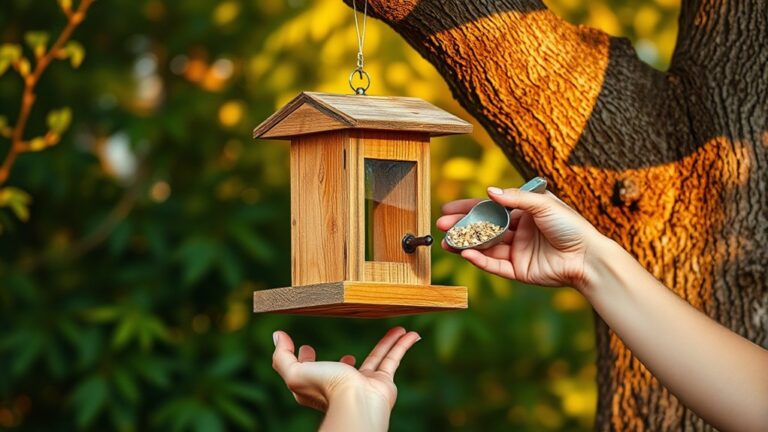
Understanding what birds eat in the wild gives you a clear advantage in attracting them to your yard. To provide the right food, observe the natural diets of local species like seeds, insects, fruits, or nectar.
In urban feeding, offer a mix of native seeds and suet to cater to a variety of birds while avoiding processed or sugary foods. Place feeders in safe spots away from predators to reduce stress caused by predatory behavior common in some bird species.
You can also mimic natural feeding by planting native shrubs and trees that produce berries and attract insects. This approach supports birds’ instincts and helps them thrive.
Frequently Asked Questions
How Do Bird Beak Shapes Affect Their Eating Habits?
You’ll notice bird beak shapes directly influence their eating habits through beak specialization. Different shapes suit specific feeding strategies. Sharp, hooked beaks help birds tear meat, while long, slender beaks let you explore flowers for nectar.
If you observe a bird with a thick, strong beak, it’s designed for cracking seeds. Understanding this helps you see how beak specialization supports diverse feeding strategies in birds.
Can Birds Eat Human Food Safely?
You shouldn’t feed birds human food without caution. While feeding domesticated birds, you need to prioritize bird feeding safety by avoiding salty, sugary, or processed items that can harm them. Some fruits, seeds, and plain cooked grains are safer options.
Always research specific bird species’ diets before offering human food, so you don’t accidentally cause health issues. Stick to natural, species-appropriate foods for their well-being.
How Do Young Birds Learn What to Eat?
You’ll notice young birds learn what to eat through nestling feeding, where parents carefully offer suitable food. This parental guidance teaches them which items are safe and nutritious.
As you watch, the parents bring various foods and gradually encourage the nestlings to try different things. Over time, the young birds develop their own preferences and skills, relying on this early instruction to survive and thrive in the wild.
What Adaptations Help Birds Digest Tough Foods?
You rely on birds’ specialized digestive enzymes and unique feeding behaviors to handle tough foods. Their strong gizzards grind hard seeds and fibrous plants, while enzymes break down complex materials efficiently. You’ll notice some birds swallowing small stones to aid this process.
Their feeding behaviors, like tearing or crushing food, complement these adaptations. Together, these traits help birds extract maximum nutrients from challenging diets, so they thrive even on tough meals.
Do Migratory Birds Change Diets During Travel?
Yes, migratory birds do change diets during travel. You’ll notice they rely on seasonal diet shifts to meet energy demands, eating high-fat foods like berries or insects when available.
Their migratory feeding strategies focus on maximizing fuel efficiency, so they often switch to nutrient-rich foods at stopovers. This way, you can see how they adapt their eating habits to fuel long journeys effectively.
Conclusion
You’ll see that birds eat seeds, insects, nectar, and small animals, adapting to their habitats and the changing seasons. You’ll understand why insects keep ecosystems balanced and why nectar fuels tiny wings.
You’ll learn how to offer the right food to welcome wild birds to your space. By appreciating their diets, you’ll protect nature’s harmony, cherish their beauty, and inspire others to nurture the wild world around you.
Understanding what type of food birds eat in the wild helps you create a welcoming environment that supports their health and happiness.