7 Best Flowers for Garden Borders
Finding the perfect flowers for garden borders can be tricky. You want something beautiful, easy to care for, and that fits your space just right.
If you’ve struggled to find plants that brighten your garden without overwhelming it, you’re not alone. Many gardeners face this challenge, and that’s why we’ve put together a helpful guide.
For the 7 best flowers for garden borders, you can’t go wrong with petunias, alyssum, marigolds, lavender, impatiens, begonias, and salvia.
Choose compact, tidy plants that match your sun and soil, then mix bloom times for color all season.
Petunias and marigolds add bright, easy color, while alyssum softens edges and lavender brings fragrance and structure.
If you want the best fit for your space, there’s more to investigate ahead.
Key Takeaways
- Choose compact, tidy flowers that stay low enough for borders and won’t flop over.
- Match flowers to your border’s sun, soil, and drainage conditions for healthy growth.
- Use early, mid, and late bloomers to keep borders colorful all season.
- Place taller flowers toward the back and shorter ones in front for a layered look.
- Good border choices include petunias, alyssum, marigolds, and lavender for easy care and strong visual appeal.
What Makes a Good Border Flower

A good border flower gives your garden a neat, finished look without stealing the show. You want plants with compact growth, tidy habits, and blooms that stay attractive from the path’s edge.
Strong border flower characteristics include moderate height, sturdy stems, and foliage that hides bare lower growth. Choose plants that don’t flop after rain or crowd neighboring varieties.
Moderate height, sturdy stems, and full foliage help border flowers stay neat, upright, and beautifully contained.
You’ll also get better results when you match bloom time to your space. Think about seasonal border considerations so your bed looks balanced in spring, summer, and fall.
A good border flower should suit your light, soil, and watering routine, too. If you garden in a windy spot, pick flowers that hold upright.
If your border is narrow, select plants that stay contained and won’t need constant trimming. The best choices make maintenance easier while framing your garden with clean lines and reliable color.
Petunias for Border Color
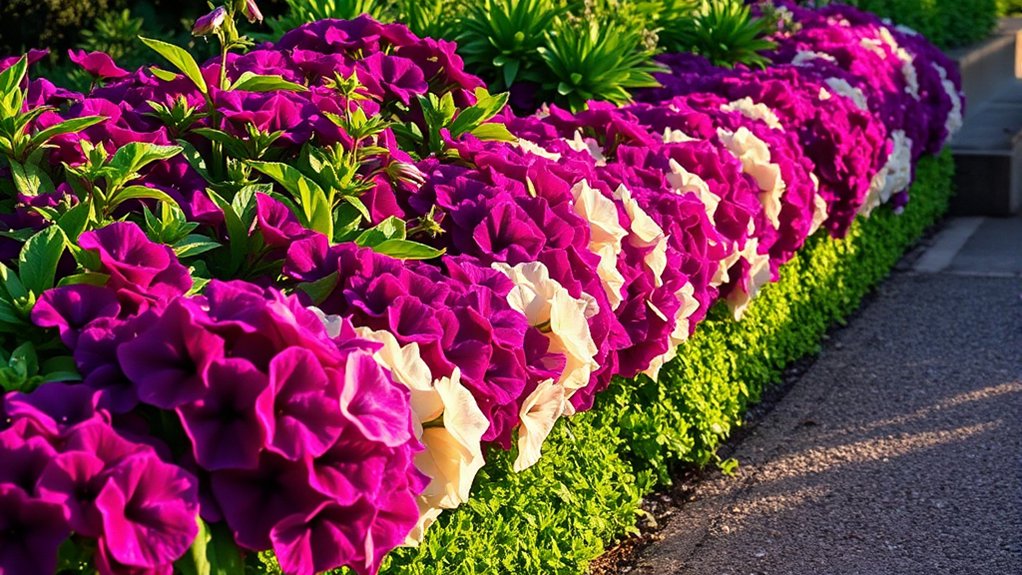
Petunias bring bright, easy color to garden borders, and they spill just enough to soften edges without looking messy. You can use them to fill gaps, line walkways, or frame beds with strong, steady bloom from spring through fall.
Choose petunia varieties that match your style: compact types stay neat, while trailing ones create fuller drifts of color. You’ll get the best results in ideal climates with warm days, full sun, and good airflow, though you can still grow them in containers if your season runs cool.
Water at the base, feed lightly, and deadhead when needed to keep flowers coming. Because petunias respond quickly, you can adjust your border’s look with little effort. Mix bold pinks, purples, whites, or reds for a lively edge that keeps the whole garden feeling polished and welcoming.
Alyssum for Soft Edges
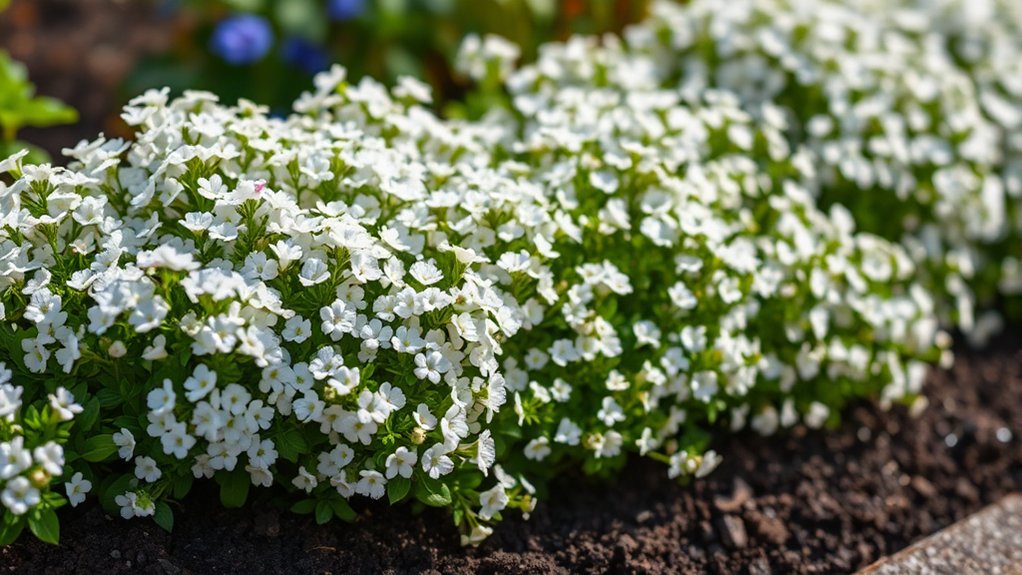
Alyssum gives garden borders a soft, tidy finish with clusters of tiny blooms that spill gently over edges. You can tuck it along paths, raised beds, or stone edging to blur hard lines without hiding nearby plants.
Its low, mounding alyssum growth habits make it easy to weave into narrow spaces, and it usually stays neat with only light trimming. Choose from white, pink, lavender, or purple alyssum color options to echo nearby blooms or create a calm, unified ribbon.
You’ll also appreciate that it fills gaps quickly, so bare spots in your border don’t linger. Plant it where you want a light fragrance and a delicate look, then keep the soil evenly moist while it settles in.
With steady care, alyssum stays compact and charming, giving your border a polished finish that feels soft rather than rigid. It keeps the edge looking fresh through the season.
Marigolds for Easy Color
Marigolds can give your border bright, cheerful color that stands out all season. You’ll love how low-maintenance their blooms are—they handle heat like champs and keep your garden looking lively with very little effort.
If you want easy impact, marigolds are definitely a smart choice for a border that really pops.
Bright Border Color
When you want an easy way to bring bold, sunny color to a border, marigolds are a smart pick. You can tuck them along edging, mix them with salvias, and create colorful combinations that lift the whole bed. Their orange, gold, and copper tones also shift with seasonal variations, so your border feels fresh from spring through fall.
| Placement | Effect | Tip |
|---|---|---|
| Front edge | Frames paths | Use shorter types |
| Mixed border | Adds contrast | Pair with blues |
| Mass planting | Makes impact | Repeat in drifts |
| Containers | Brightens corners | Match pot color |
| Walkway turns | Guides the eye | Cluster tightly |
Low-Maintenance Blooms
If you want reliable color without constant fussing, marigolds are one of the easiest border flowers to grow. You can tuck them along paths, edging beds, or mixed plantings, and they’ll keep blooming with very little help.
Give them full sun, well-drained soil, and occasional deadheading, and they’ll reward you with cheerful gold, orange, and rust tones all season. You don’t need to baby them because they shrug off heat and handle average garden conditions well.
For a tidy border, choose compact varieties that stay low and dense. If you’re comparing perennial options, marigolds still stand out as a seasonal selection that delivers quick impact, simple care, and dependable color when you want your border to look full without extra work.
Lavender for Fragrance and Structure
Lavender adds a lovely fragrance to your border, making every pass by feel a little more inviting. Plus, you’ll love its neat, structural clumps that give your planting scheme a clean, tidy shape. The best part? It’s low-maintenance and handles dry spells like a champ, so it’s an easy choice for busy gardens.
Fragrant Border Appeal
Fragrant lavender adds more than scent to a garden border. It brings crisp structure, silvery foliage, and soft color that holds the edge of a planting together. You can choose fragrant varieties that release aroma when you brush past them, making every walk along the border feel intentional.
Their seasonal blooms soften hard lines and draw pollinators without overwhelming nearby plants.
| Benefit | Border effect |
|---|---|
| Fragrance | Invites closer attention |
| Foliage | Lifts color contrast |
| Flowers | Adds seasonal rhythm |
| Texture | Balances bold neighbors |
| Scent | Extends garden enjoyment |
When you place lavender where sunlight reaches it, you create a border that feels calm, polished, and welcoming.
Neat Structural Clumps
Tidy lavender clumps bring the same fragrance you love into a cleaner, more defined border shape. You can tuck them along paths or at bed edges to give your border crisp rhythm and visual balance. Their upright stems and silvery foliage add structural diversity without crowding softer blooms.
Use repeated clumps to frame mixed plantings. Pair with rounded perennials for contrast. Let spacing create airy definition. Repeat color for cohesion. Trim after flowering to keep lines neat.
When you place lavender thoughtfully, you guide the eye and sharpen the whole design. The result feels calm, intentional, and elegant, with scent rising gently as you pass.
Low-Maintenance Drought Tolerance
Even in hot, dry stretches, you can count on lavender to keep border edges looking composed with very little fuss. You’ll get silvery foliage, upright stems, and fragrant blooms that soften hard lines without demanding constant watering.
Plant it in full sun and sharply drained soil, then let it settle in with minimal help. Once established, lavender shrugs off drought and keeps its tidy shape, so you won’t need to shear it often.
Pair it with succulent varieties for contrast, or tuck it beside low ground cover to create a layered border that still feels clean. You’ll also attract pollinators while discouraging deer and rabbits, making lavender a practical, elegant choice for borders that need lasting structure.
Impatiens for Shady Borders
Impatiens bring a bright, easygoing look to shady borders where many flowers struggle to perform. You can rely on shade-loving varieties to fill dim corners with lush growth and vibrant color options that lift the whole bed. Their soft mounds edge paths neatly, and they bloom steadily through warm weather when you keep the soil evenly moist.
Plant them where afternoon sun won’t scorch leaves. Space them to allow air to move between plants. Use rich, well-drained soil for steady flowering. Pinch back leggy stems to keep them full. Mix colors for a layered, polished border.
With their tidy habit and nonstop flowers, impatiens make your border feel welcoming without demanding constant attention. Choose them when you want a simple way to brighten shade and keep your garden looking fresh.
How to Choose the Right Border Flowers
Once you’ve seen how impatiens brighten a shady edge, the next step is picking border flowers that fit your garden’s light, soil, and style. Start by checking sun exposure: full-sun beds need different blooms than partly shaded ones.
Test your soil, then match plants to drainage and pH so they settle in quickly. Choose colors that support your design, whether you want bold contrast or a soft blend.
Consider height variations so taller flowers anchor the back and shorter ones soften the front. You’ll also want to plan for seasonal considerations, since some borders shine in spring while others peak in summer or fall.
Mix early, mid, and late bloomers to keep the edge attractive for months. Finally, select flowers with similar water needs, and you’ll spend less time adjusting care and more time enjoying a border that looks balanced, healthy, and intentional.
Frequently Asked Questions
Which Border Flowers Attract the Most Pollinators?
You’ll attract the most pollinators with nectar-rich flowers like lavender, coneflower, bee balm, salvia, and rudbeckia. You should choose plants that match pollinator preferences, offering open blooms for bees and butterflies, and tubular flowers for hummingbirds.
Mix in seasonal blooms so your border feeds them from spring through fall. Plant in sunny spots, avoid pesticides, and you’ll create a lively, buzzing edge that supports your garden’s best visitors.
How Often Should Border Flowers Be Deadheaded?
You should deadhead border flowers weekly during peak bloom, and more often if rain or heat speeds fading. Use clean deadheading techniques to snip spent blooms just above a leaf node, then check plants every few days.
Seasonal timing matters too: slow down in late summer and stop when flowers naturally set seed. Keep up with deadheading, and you’ll encourage fuller, longer-lasting displays in your garden.
Can Border Flowers Survive Heavy Rainfall?
Yes, you can keep border flowers thriving through heavy rain if you choose rain-tolerant varieties and improve soil drainage. For example, imagine your border after a storm: marigolds perk back up, while soggy roots from poor drainage cause trouble.
You should plant in raised beds or amend clay soil with compost so water moves away quickly. With the right setup, your border flowers won’t just survive; they’ll keep blooming beautifully.
What Border Flowers Resist Deer and Rabbits Best?
You’ll get the best results with lavender, salvia, catmint, yarrow, and daffodils. These deer-resistant choices have strong scents, fuzzy leaves, or bitter bulbs that discourage browsing.
For rabbits, try marigolds, snapdragons, alliums, and dusty miller since they’re fairly rabbit repellent. Plant them in sunny, well-drained spots, and you’ll create tough border color.
Mix textures and heights, and you’ll keep pests away while adding long-lasting beauty.
Which Border Flowers Pair Well With Ornamental Grasses?
You’ll pair ornamental grasses best with black-eyed Susans, salvia, coneflowers, and yarrow. Their airy blooms and upright forms create strong color combinations, from purple and gold to pink and silver.
You can also add sedum for late-season interest. Keep maintenance tips simple: cut back spent stems, divide crowded clumps, and water deeply but infrequently. These flowers won’t fight the grasses; they’ll make your border look balanced and natural.
Conclusion
You can turn any garden edge into a showpiece by choosing flowers that match your light, style, and care routine. Whether you want petunias for bold color, alyssum for a soft spill, or lavender for tidy structure, each bloom adds its own charm.
Mix sun-lovers with shade-friendly picks, and your borders will hum with life like a cheerful ribbon around your garden. Choose well, and you’ll enjoy beauty from spring through fall. These are some of the best flowers for garden borders to help you create that perfect look.