How to Make a Cottage Garden in 3 Steps
If you’ve ever dreamed of creating a charming outdoor space but felt overwhelmed by where to start, you’re not alone. Many people struggle with turning their garden into that cozy, inviting spot that looks like it belongs in a storybook.
The good news? Making a cottage garden is simpler than you think, and it’s a wonderful way to bring a bit of magic to your yard.
To make a cottage garden in 3 steps, first define your look: choose a romantic, neat, or wild feel, then pick soft colors and repeat a few favorite plants.
Next, plan the layout by measuring your space, sketching relaxed paths, and placing taller plants toward the back or center.
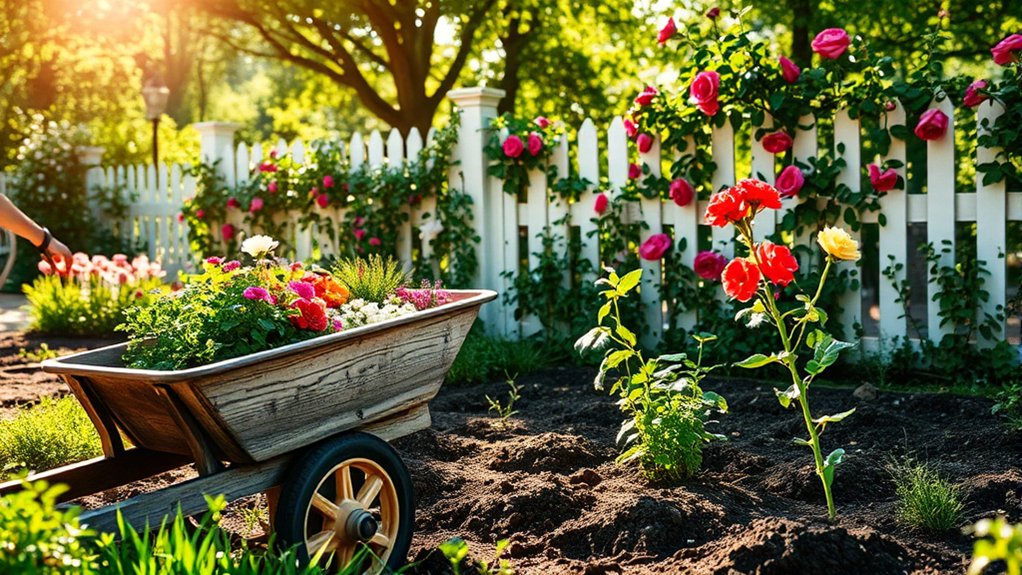
Finally, plant flowers that spill and sway in loose drifts, mixing tall blooms with lower growers for layered charm.
Keep going, and you’ll uncover the details that make it thrive.
Key Takeaways
- Choose a cottage garden style, color palette, and plant mix that feels romantic, relaxed, and cohesive.
- Plan the layout by measuring the space, checking sunlight, and sketching loose paths and planting zones.
- Plant layered flowers in drifts, mixing tall, mid-height, and low growers for a full, informal look.
- Repeat favorite colors and perennial plants throughout the garden to create unity and long-lasting charm.
- Maintain the garden with pruning, deadheading, mulching, and soil care to keep it healthy and blooming.
Define Your Cottage Garden Look
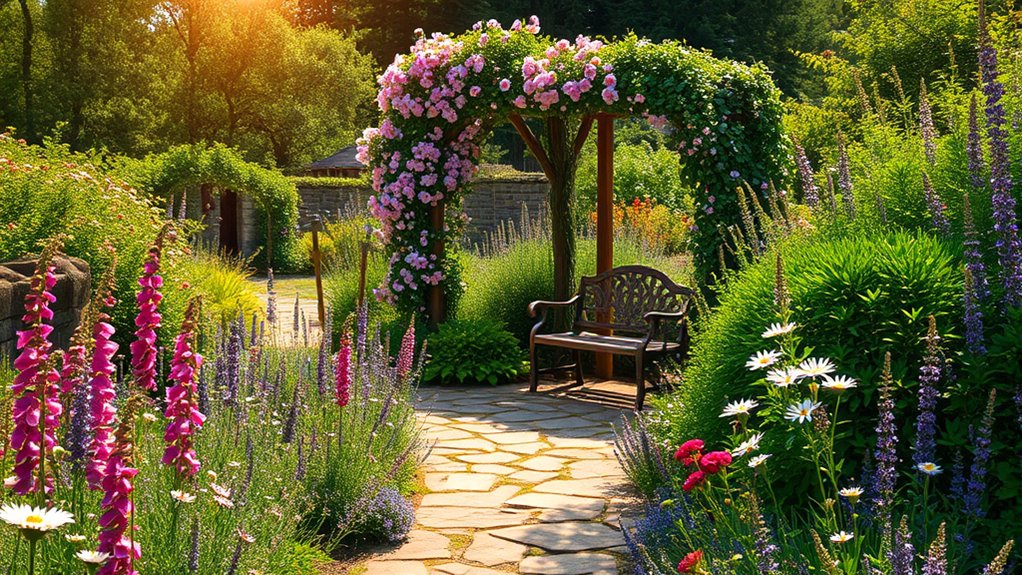
Before you plant a single flower, define the cottage garden look you want, because that style shapes every choice you make. Think about the mood you love most: romantic and overflowing, neat and nostalgic, or a little wild and fanciful.
Cottage aesthetics often mix soft colors, loose forms, and a lived-in charm, but you can still make the space feel personal. Choose a few garden themes to guide you, such as pollinator-friendly blooms, classic English borders, or a simple vintage feel.
Notice which colors make you happy, then pick plants that repeat those tones for unity. Decide whether you want more flowers than foliage, or a balanced mix that keeps the garden interesting all season.
When you picture the finished space, keep that image clear. It’ll help you say yes to plants that fit your vision and no to ones that don’t.
Plan Your Cottage Garden Layout
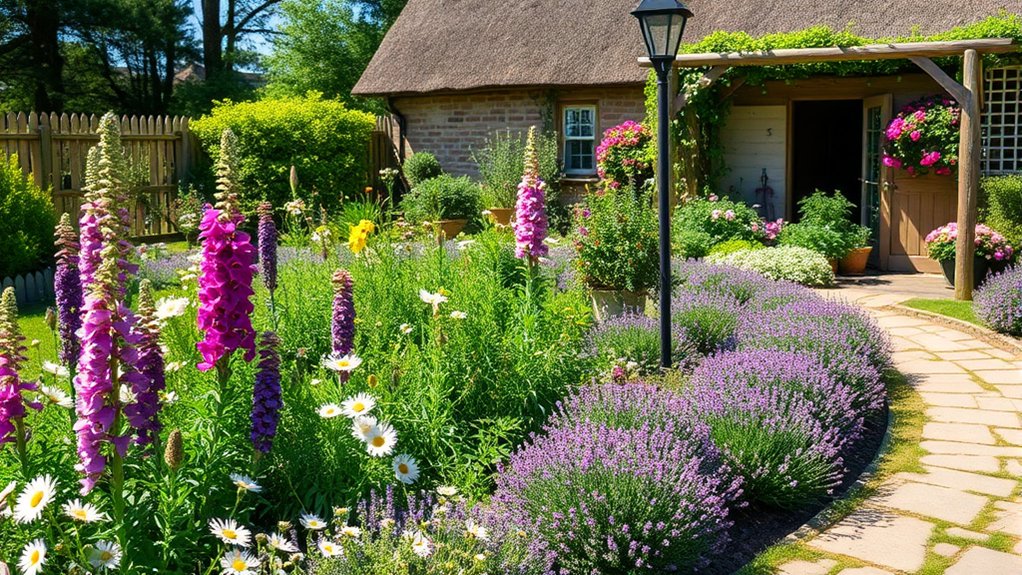
Once you know the look you want, map the garden so that style has room to grow. Start by measuring the space and noting the garden size, sunlight, and access points. Sketch paths that feel relaxed rather than rigid, and leave room for easy movement between beds.
Group areas by function, such as sitting, edging, and practical access, so the layout feels useful as well as charming. Check soil types across the site, because changes in drainage or texture can shape where you place different areas later.
Group areas by function, and check soil differences so the layout stays practical and charming.
Keep taller elements toward the back or center, and use curves to soften corners and guide the eye. Build in repetition with shape and spacing so the plan feels unified.
If the plot is small, simplify the design and avoid overcrowding. A clear layout now will help your cottage garden feel balanced, inviting, and easy to maintain.
Plant Flowers for a Cottage Look

Choose flowers that spill, sway, and bloom in generous layers to create the soft, abundant feel of a true cottage garden. Mix tall hollyhocks, foxgloves, delphiniums, and peonies with lower growers like dianthus, geraniums, and lady’s mantle so your beds feel full from top to bottom.
You’ll want to repeat perennial favorites throughout the space to tie the design together and keep it looking established. Add seasonal blooms, such as sweet peas, cosmos, zinnias, and dahlias, to extend color from spring through fall.
Plant in loose drifts instead of stiff rows, and tuck flowers close enough that foliage overlaps as they mature. This creates the relaxed, overflowing look you’re after.
Choose a few colors and let them echo across the garden. That simple rhythm makes your planting feel cohesive, romantic, and inviting without looking overly designed.
Frequently Asked Questions
How Do I Attract Pollinators to My Cottage Garden?
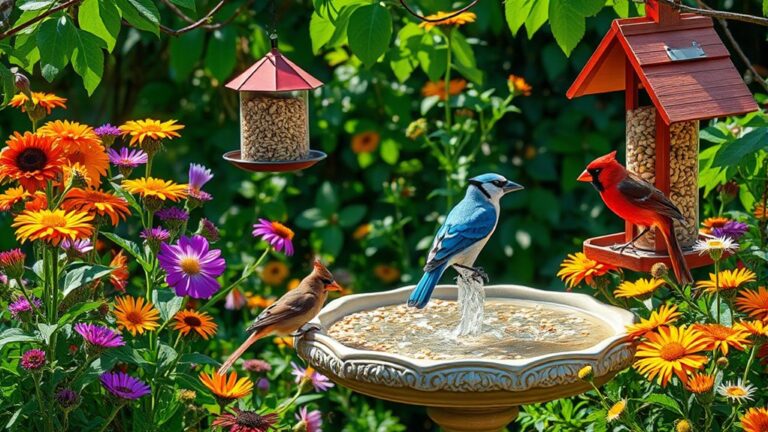
You can attract pollinators by planting native plants, flowering herbs, and nectar-rich blooms that flower from spring through fall. Choose lavender, bee balm, salvia, and oregano, and group them in sunny patches.
Use organic practices, skip pesticides, and add shallow water and bare soil. Try companion planting to mix crops and flowers, so bees and butterflies visit often.
Deadhead less, let some plants reseed, and keep blooms coming.
What Garden Tools Work Best for Cottage Gardening?
You’ll get the best results with a sturdy hand trowel, bypass pruners, a fork, and a watering can. If you’ve ever heard that fancy tools make cottage gardening easier, that’s only partly true. Simple tools often work better and feel more personal.
Use pruners for pruning techniques, and a fork for soil preparation. Add gloves, a hoe, and a rake, and you’ll keep your garden tidy, productive, and charming.
How Often Should I Water a Cottage Garden?
You should water a cottage garden deeply once or twice a week, adjusting for heat, rain, and plant needs. Check soil moisture with your finger; if the top inch feels dry, it’s time to water.
A steady watering schedule helps roots grow strong and keeps flowers blooming. Water early in the morning so you reduce evaporation and avoid fungal problems.
During hot spells, you may need to water more often.
Which Paths Are Best for a Cottage Garden?
You’ll want cottage pathways that feel relaxed and slightly irregular, not formal or stiff. Choose natural materials like gravel, bark, stepping stones, or reclaimed brick because they blend beautifully with flowers and soften the garden’s look.
Keep paths narrow and winding so they invite wandering, and edge them with low plants for charm. You can mix textures too, which adds interest and helps your cottage garden feel cozy and timeless.
How Do I Maintain Cottage Garden Plants Through Winter?
Like tucking your garden in for a long nap, you should start with winter protection. You can mulch roots, wrap tender shrubs, and move pots to shelter before hard frost hits.
Choose hardy plant selection so your cottage garden withstands cold better. Cut back diseased stems, but leave some seed heads for birds.
Water plants well before freeze-up, and check them after storms so you can catch damage early.
Conclusion
You’ve defined your style, planned your layout, and planted your blooms, so now you can step back and enjoy the charm you’ve created. You’ll see soft colors, you’ll smell sweet flowers, and you’ll notice a garden that feels welcoming and alive.
Keep tending it, keep shaping it, and keep letting it grow into its own cottage beauty. With each season, your garden will become fuller, lovelier, and more delightfully yours. This is the joy of a cottage garden—it grows with you, becoming a true reflection of your style and care.