How Do You Make Bird Food in 7 Easy Steps
If you’ve ever wanted to feed wild birds but felt overwhelmed by all the options, you’re not alone. Many people struggle to find the right mix that attracts birds and keeps them coming back.
Luckily, making your own bird food can be simple and rewarding with just a few easy steps.
To make bird food in seven easy steps, first gather all ingredients based on your local bird species’ diets. Choose a mix of seeds like sunflower and millet, plus nuts and fruits for nutrition. Use natural binders like honey or peanut butter to hold it together, then shape your mix into balls or patties. Store it in airtight containers in a cool, dry place to keep fresh. Keep exploring for expert tips to attract more birds effectively.
Key Takeaways
- Gather ingredients based on local bird species and seasonal dietary needs for a balanced mix. This helps ensure the birds get the right nutrients throughout the year.
- Select a variety of seeds, grains, nuts, and fruits to attract diverse birds. Different birds prefer different foods, so mixing it up keeps your feeder popular.
- Use natural binders like honey or peanut butter to mix ingredients into a cohesive texture. This makes the bird food stick together and easy to handle.
- Shape the mixture into small balls, patties, or logs for easy feeding and portion control. It also makes it simple to hang or place the food where birds can reach it.
- Store bird food in airtight containers in a cool, dry place to maintain freshness and prevent pests. Keeping it sealed helps the food last longer and stay safe for the birds.
Gather Ingredients for Homemade Bird Food
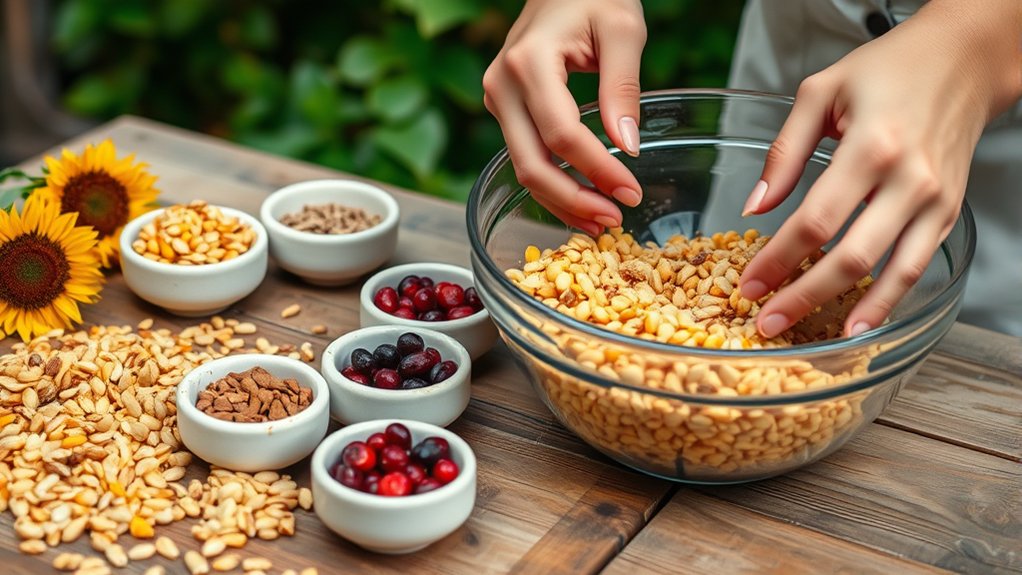
Before you start mixing your own bird food, gather all the necessary ingredients to guarantee a balanced and nutritious mix. Knowing your bird habitat is essential because local environments influence which species visit your feeder.
Gather all ingredients first to create a balanced mix and consider your local bird habitat for best results.
Different bird species preferences mean you’ll want to tailor your ingredients to attract specific birds. For instance, some birds prefer high-fat seeds, while others go for nuts or fruit. Consider the types of birds in your area and what they naturally eat.
You can research or observe to identify their favorite foods. Also, take into account seasonal variations in bird diets, as some species change preferences throughout the year. By selecting ingredients aligned with both your bird habitat and species preferences, you assure the birds get the nutrients they need and keep coming back to your feeder.
This thoughtful preparation forms the foundation for making homemade bird food that suits your feathered visitors perfectly.
Choose Seeds and Grains for Homemade Bird Food
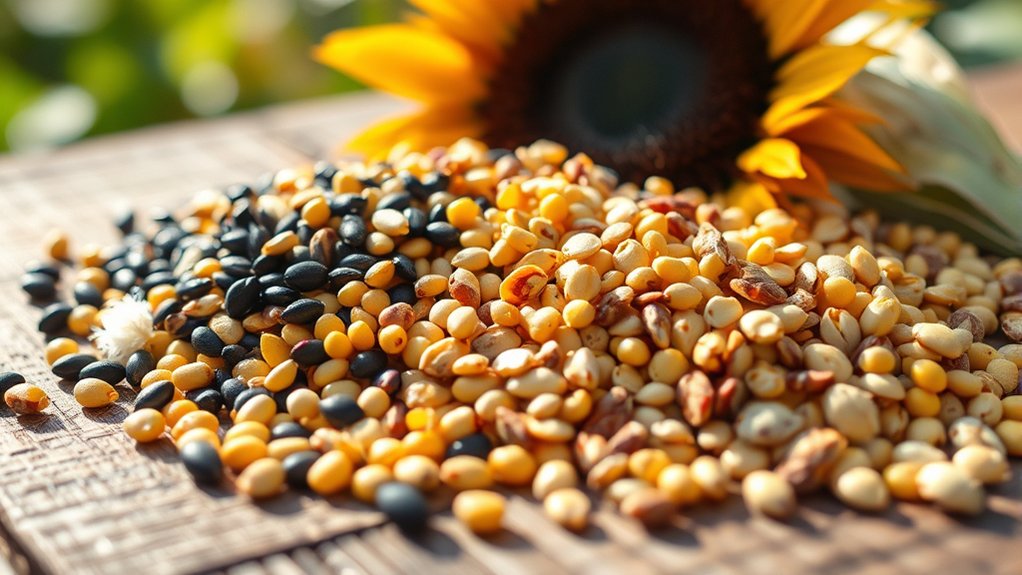
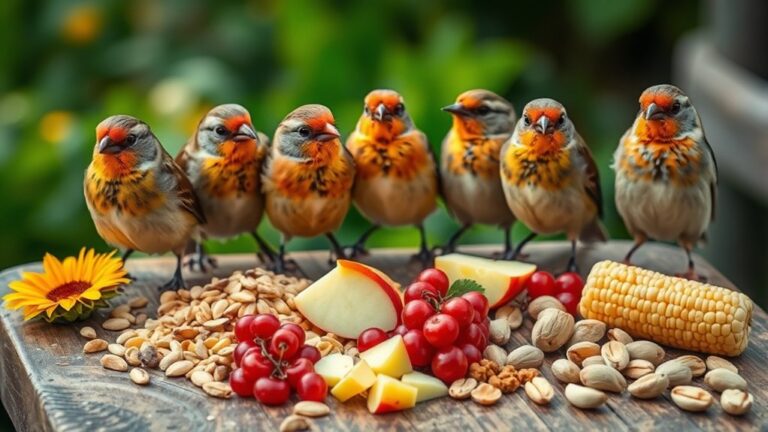
When selecting seeds and grains for your homemade bird food, focus on variety to attract a diverse range of birds. Different bird seed varieties appeal to different species, so including multiple options guarantees more visitors to your feeder.
Pay attention to grain selection as well, since grains like millet and cracked corn add texture and nutrition.
Here’s a quick guide to help you choose seeds and grains:
| Seed/Grain | Birds Attracted |
|---|---|
| Black Oil Sunflower | Cardinals, Chickadees |
| Millet | Sparrows, Doves |
| Nyjer (Thistle) | Finches, Siskins |
| Cracked Corn | Pigeons, Doves |
| Safflower Seed | Grosbeaks, Cardinals |
Mix these bird seed varieties and grains according to your local birds’ preferences. A well-chosen blend keeps birds coming back and promotes a healthy feeding environment.
Add Nuts, Fruits, and Healthy Extras for Nutrition
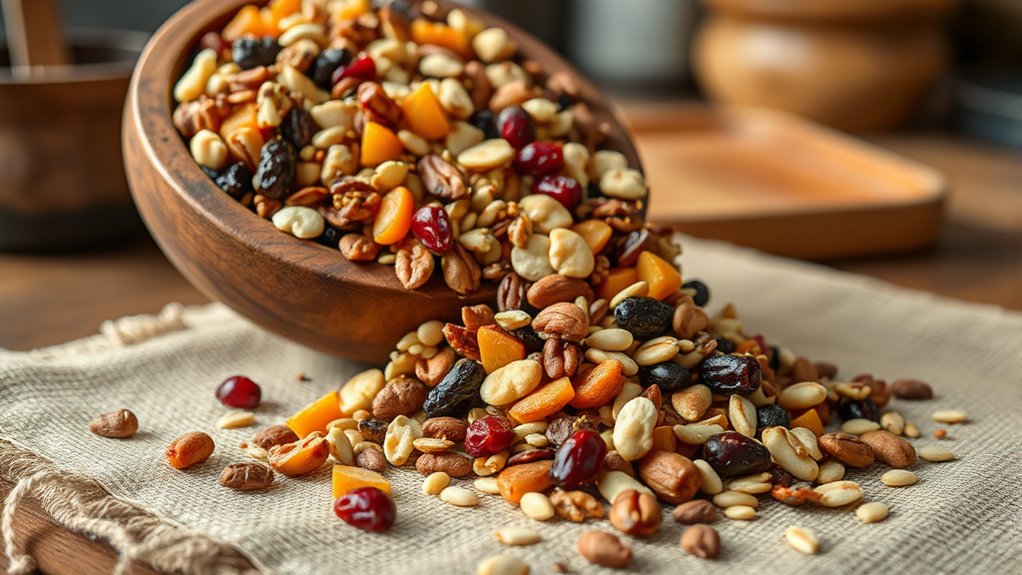
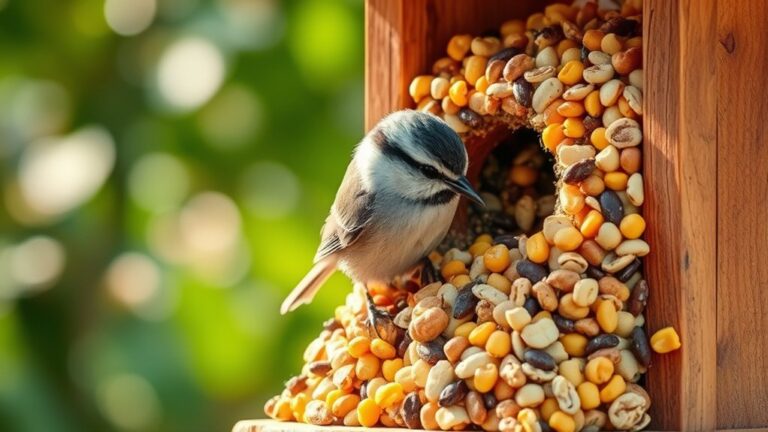
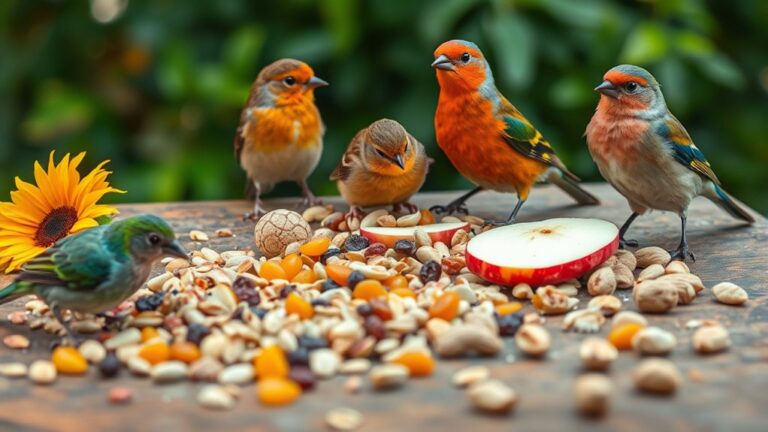
Although seeds and grains form the base of your bird food, adding nuts, fruits, and other healthy extras boosts nutrition and attracts even more species. When selecting a nut variety, consider options like almonds, walnuts, and peanuts, which provide essential fats and proteins birds need. Be sure to chop larger nuts into smaller pieces to make them easier for smaller birds to eat.
Incorporate a mix of fruit types such as dried cranberries, raisins, or chopped apples to add natural sugars and vitamins. Fresh fruits like berries work well but should be offered in moderation to avoid spoilage. You can also include healthy extras like unsweetened coconut flakes or sunflower seeds for added texture and nutrients.
Use Natural Binders to Keep Your Bird Food Together
Adding nuts, fruits, and other healthy ingredients gives your bird food great flavor and nutrition, but they can sometimes make the mix crumbly or loose. To keep everything together, you’ll need to use natural adhesives that act as binders. Common natural adhesives include honey, peanut butter, or mashed banana.
These ingredients work well because they’re sticky enough to hold your bird food components in place without harming the birds.
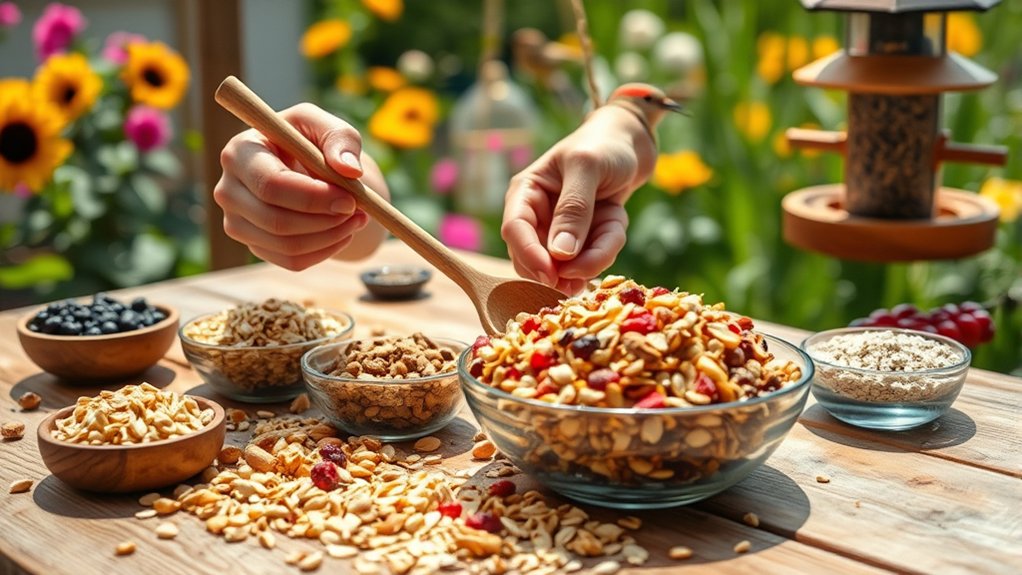
When applying binding techniques, start by mixing your dry ingredients thoroughly, then gradually add your chosen natural adhesive. Stir until the mixture is moist enough to stick but not overly wet. This balance helps maintain structure without making the food soggy.
Using natural binders also ensures your bird food stays fresh and appealing longer. With these simple binding techniques, you’ll create a compact, nutritious mix that’s easy for birds to eat and enjoyable for you to prepare.
Shape and Portion Your Homemade Bird Food Mix
Once your bird food mixture holds together well, you can start shaping and portioning it to suit your feeding preferences. Use simple molds or your hands to form the mix into balls, patties, or logs, depending on how you want to present it.
Bird food presentation matters because it can attract different types of birds and make feeding easier for them. For better portion control, divide the mix into small, consistent servings. This helps prevent waste and lets you monitor how much your feathered friends consume daily.
You can also use cupcake liners or ice cube trays as molds to create uniform portions quickly. If you plan to hang the food, shape it around small sticks or place it in mesh bags.
How to Store Your Homemade Bird Food Safely
Because homemade bird food lacks preservatives, you’ll need to store it properly to keep it fresh and safe for your feathered visitors. Using airtight storage containers is key to maintaining freshness and preventing moisture, which can lead to mold. Choose containers made of glass or BPA-free plastic for the best results.
Pest prevention is another important factor. Store your bird food in a cool, dry place, away from direct sunlight and pests like rodents or insects.
Here’s a quick guide to effective storage:
| Storage Container Type | Best Location | Pest Prevention Tip |
|---|---|---|
| Airtight Glass Jars | Pantry or cupboard | Keep lids sealed tightly |
| BPA-Free Plastic Bins | Cool, dry shelf | Use pest-proof seals |
| Metal Tins | Basement or garage | Store off the floor |
| Zip-lock Bags | Refrigerator | Double bag for extra seal |
Tips to Attract More Birds With Homemade Bird Food
Storing your homemade bird food properly sets the stage for attracting a variety of birds to your yard. To draw more feathered friends, tailor your offerings to the local bird habitat and consider migration patterns.
Different species prefer specific seeds or mixes, so research what’s native to your area. During migration seasons, include high-energy foods like sunflower seeds and suet to support birds on their long journeys.
Place feeders in safe, visible spots near trees or shrubs to provide shelter and encourage visits. Keep feeders clean to prevent disease and spoilage, ensuring birds return regularly.
You can also vary feeder types, like platform, tube, or suet cages, to attract different species. Finally, maintain a consistent feeding schedule, especially in colder months, so birds learn to rely on your food source.
Frequently Asked Questions
What Types of Birds Are Attracted to Homemade Bird Food?
You’ll attract various bird species by tailoring your homemade bird food to their food preferences. Finches love nyjer seeds, while cardinals prefer sunflower seeds.
Sparrows and chickadees enjoy mixed seeds and suet. If you add fruit or nuts, you might see orioles or woodpeckers visit.
Can Homemade Bird Food Cause Allergies in Birds?
Homemade bird food can sometimes be a double-edged sword. If you don’t pay attention to ingredient safety, certain nuts or seeds might trigger allergies in sensitive birds.
Unlike commercial alternatives, homemade mixes lack strict quality control, so you need to choose ingredients carefully. Always research what’s safe, avoid moldy or spoiled items, and introduce new foods slowly.
That way, you’ll keep your feathered friends happy and healthy without unintended reactions.
How Often Should I Refill My Bird Feeder With Homemade Food?
You should refill your bird feeder every two to three days to keep the food fresh and inviting. Feeding frequency depends on the number of birds visiting and the weather.
During colder months, increase refills to daily since birds need more energy. Seasonal adjustments matter. Spring and summer require less frequent refills due to natural food availability.
Always monitor the feeder to avoid mold or spoilage and adjust accordingly for your feathered friends’ health.
Is It Safe to Feed Birds Year-Round With Homemade Mixes?
Feeding birds year-round with homemade mixes is like tuning a delicate instrument. You need seasonal feeding adjustments to keep it harmonious. You can safely feed birds all year if you tweak homemade recipe variations according to the season.
In winter, offer high-fat seeds for energy. In summer, add fruits and insects for hydration and protein. Changing ingredients helps birds thrive without overwhelming their natural diet or causing health issues.
What Are Common Signs of Bird Food Spoilage?
You’ll notice common signs of bird food spoilage when the mix smells rancid, looks moldy, or has clumped seeds. These issues reduce the nutritional benefits birds get, so it’s important to catch them early.
To keep your bird food fresh, store it in airtight containers away from heat and moisture. Follow these storage tips, and you’ll protect the food’s quality, ensuring your feathered friends enjoy safe, nutritious meals.
Conclusion
Now that you’ve crafted your homemade bird food, you’re all set to bring a bit of the Renaissance flair to your backyard birdwatching. By mixing seeds, nuts, and natural binders, you’re creating a nutritious feast that’ll attract a variety of feathered friends.
Just store it properly, and you’ll enjoy the delightful chirps and visits for weeks. So go ahead, toss some of your mix out, and watch your garden come alive with birds. Making homemade bird food is a simple way to welcome nature’s beauty right to your doorstep!