How to Feed Ducks Healthy Alternatives to Bread
Feeding ducks can be a joyful experience, but if you’ve ever worried about what’s actually healthy for them, you’re not alone. Many people struggle with finding safe and nutritious alternatives to bread, which is a common but harmful choice.
If you want to keep ducks happy and healthy, it’s important to know what foods work best.
You shouldn’t feed ducks bread because it harms their health and pollutes waterways. Instead, offer nutrient-rich options like chopped leafy greens, peas, safe grains such as cracked corn or oats, and washed fruits like seedless apples or berries.
Insects like mealworms make great protein-packed treats, too.
Feed small portions during active times and always clean up leftovers to protect the environment. Keep following along to uncover simple ways to feed ducks safely and responsibly for their well-being.
Key Takeaways
- Feed ducks nutrient-rich alternatives like leafy greens, vegetables, fruits, safe grains, and insect protein instead of bread.
- Offer small, chopped portions of kale, spinach, peas, corn, apples, berries, and halved grapes to provide essential vitamins.
- Scatter grains such as cracked corn, oats, barley, and seeds to encourage natural foraging and prevent overfeeding.
- Limit feeding to twice daily with small amounts, stopping when ducks lose interest to avoid pollution and health issues.
- Always clean up leftover food and feed away from busy waterways to protect wildlife habitats and prevent algae blooms.
Why Bread Is Bad for Ducks and the Environment
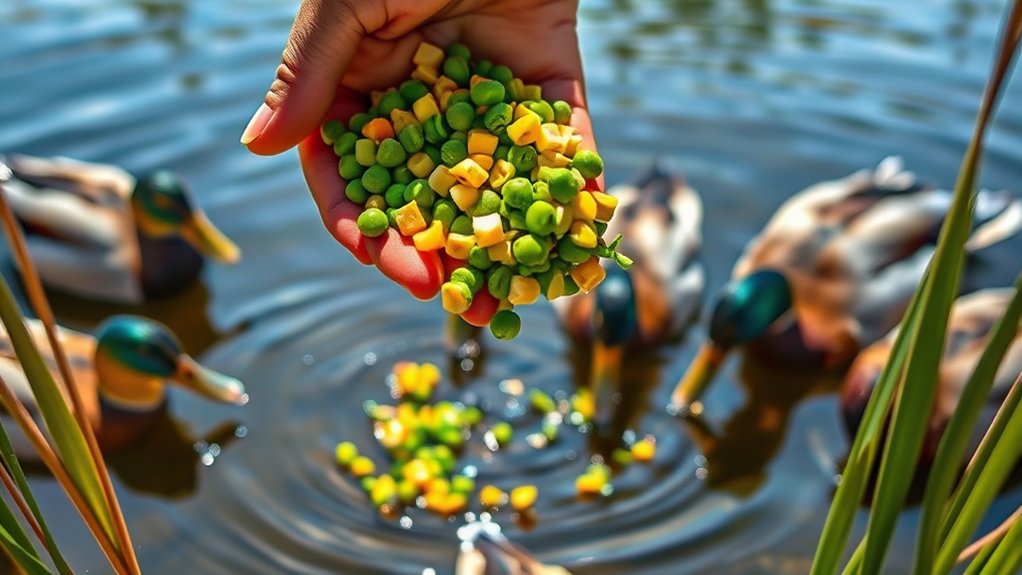
Although it might seem harmless, feeding bread to ducks can actually harm their health and the environment. When you toss bread into the water, it often remains uneaten, leading to urban pollution as it decomposes and fuels algae growth. This disrupts the ecosystem, reducing oxygen levels and harming aquatic life.
Bread lacks essential nutrients ducks need, causing malnutrition and health problems if they rely on it too much. You might not realize that feeding bread also encourages ducks to gather in large groups, increasing waste and spreading disease.
Practicing proper feeding etiquette means avoiding bread altogether. Instead, focus on natural feeding behaviors and respect the wildlife’s needs. By understanding how bread contributes to urban pollution and harms ducks, you’ll make better choices that protect these animals and their habitat.
What Makes Healthy Duck Food Alternatives
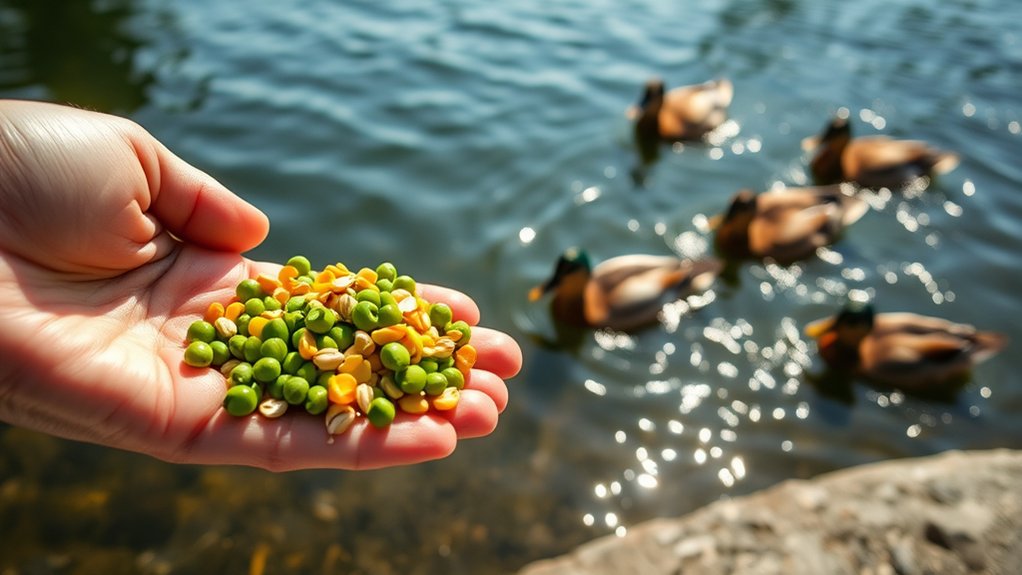
When you choose healthy alternatives to bread, you provide ducks with the nutrients they need to thrive. Proper nutrition supports essential functions like duck migration and enhances feather coloration, which is critical for their survival and reproductive success.
Feeding ducks nutritious alternatives to bread supports their health, migration, and vibrant feather growth essential for survival.
Healthy duck food alternatives share key traits:
- Nutrient-Dense: Rich in proteins, vitamins, and minerals that fuel energy and maintain body functions.
- Easily Digestible: Foods that ducks can process without digestive issues.
- Natural Ingredients: Mimicking their natural diet to support gut health and immune systems.
- Low in Fillers: Avoiding empty calories that contribute to obesity and malnutrition.
Vegetables and Greens to Feed Ducks (And How to Prepare Them)

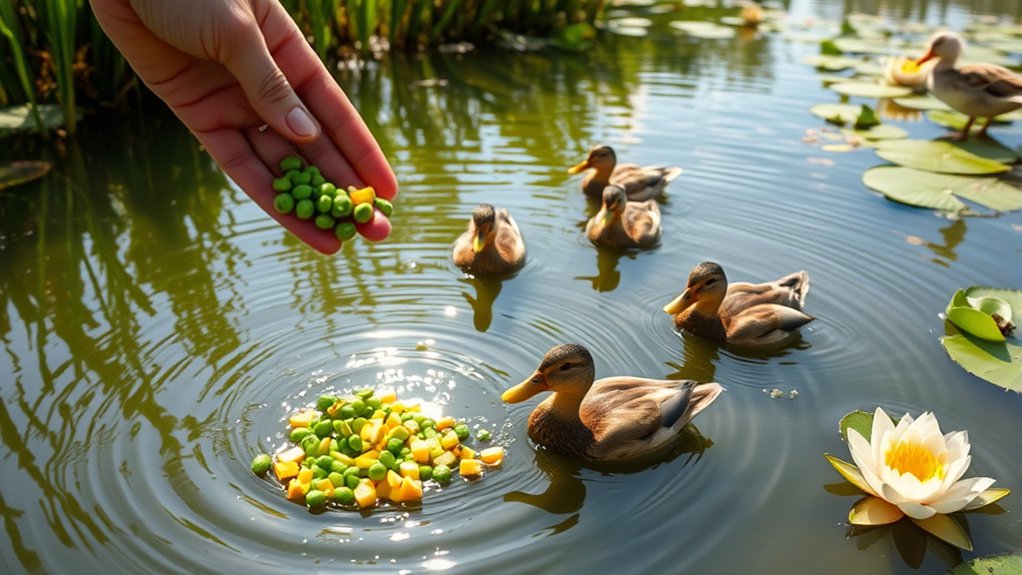
You can offer ducks leafy greens like kale, spinach, and lettuce. Along with those, veggies such as peas and corn are great options too. Just make sure to chop or tear these into small, manageable pieces. This helps keep them safe and easy to eat. These foods provide important nutrients that support ducks’ health and energy.
Best Duck-Friendly Vegetables
Since ducks thrive on a varied diet, offering them fresh vegetables and greens can provide essential nutrients that support their health. Understanding duck behavior helps you choose foods that suit their natural eating habits. This also promotes habitat preservation by encouraging them to forage naturally. Here are some of the best duck-friendly vegetables you can offer:
- Peas – Easy to digest and loved by ducks.
- Lettuce – Provides hydration and fiber; avoid iceberg.
- Spinach – Rich in vitamins but feed in moderation.
- Zucchini – Soft texture, easy for ducks to eat.
These choices align with their foraging instincts and support their well-being without harming their habitat. Feeding ducks right encourages healthy behavior and helps maintain a balanced ecosystem.
Preparing Greens Safely
Offering ducks fresh vegetables like peas, lettuce, and spinach provides essential nutrients. Preparing these greens properly guarantees they’re safe and easy for ducks to eat.
Always wash vegetables thoroughly to remove pesticides and dirt that could harm them. Chop greens into small, manageable pieces to prevent choking and aid digestion, especially during waterfowl migration when ducks need extra energy.
Avoid feeding wilted or moldy greens, as these can cause illness and threaten duck habitat preservation efforts.
| Vegetable | Preparation Tip |
|---|---|
| Peas | Wash and serve fresh or thawed |
| Lettuce | Rinse, chop finely |
| Spinach | Wash thoroughly, chop small |
| Kale | Remove tough stems |
| Cabbage | Wash, shred into pieces |
Preparing greens this way supports healthy ducks and thriving habitats.
Nutritional Benefits Explained
Although ducks enjoy a variety of greens, understanding the nutritional benefits of each vegetable helps you choose the best options to support their health. Proper nutrition influences waterfowl behavior and prepares them for bird migration by boosting energy and immunity.
Here are four nutritious veggies to feed ducks and how they help:
- Kale is rich in vitamins A, C, and K. It supports feather growth and immune function.
- Peas are high in protein and fiber, which aid digestion and muscle repair.
- Romaine lettuce provides hydration and essential minerals without harmful pesticides.
- Spinach contains iron and antioxidants that promote blood health and reduce oxidative stress.
Feeding these greens encourages natural foraging behaviors and supports ducks during seasonal migrations.
Which Grains and Seeds Are Safe for Feeding Ducks
When you’re feeding ducks, it’s important to pick grains that are nutritious and won’t harm them. Good choices are cracked corn, oats, and barley—these are easy for ducks to digest.
You can also toss in some seeds like sunflower or pumpkin seeds now and then. Just keep it moderate to help keep their diet balanced and healthy.
Nutritious Grains for Ducks
Since ducks thrive on a varied diet, including the right grains and seeds can boost their health and energy. When feeding ducks, pay attention to feeding etiquette and duck behavior to avoid overcrowding or aggressive competition. Offering nutritious grains guarantees they get essential nutrients without harming their digestion.
Here are four nutritious grains to feed ducks:
- Cracked corn – High in carbohydrates and energy.
- Barley – Rich in fiber and vitamins.
- Oats – Provide protein and fiber.
- Wheat – Contains essential nutrients and is easy to digest.
Always feed grains in moderation and scatter them to encourage natural foraging behavior. This approach supports the ducks’ well-being and respects their natural habits.
Safe Seeds to Offer
If you want to keep ducks healthy and happy, choosing safe seeds is just as important as picking the right grains. Offer seeds like sunflower, millet, and flax, which provide essential nutrients without harming ducks.
Avoid seeds that can cause digestive issues or contribute to water pollution when uneaten. Feeding ducks safe seeds supports their natural diet, especially during bird migration when they need extra energy.
Be mindful not to overfeed, as leftover seeds can pollute water, disrupting ecosystems and harming aquatic life. By selecting safe seeds, you help maintain clean waterways and support ducks’ health throughout their journey.
Fruits That Make Tasty Treats for Ducks
Although ducks enjoy a variety of foods, offering them fruits as tasty treats provides essential vitamins and natural sugars that support their health. When you feed ducks, it’s important to understand duck behavior and follow proper feeding etiquette. Avoid overfeeding and scatter treats in small amounts to prevent competition and stress among them.
Here are four fruits that make excellent snacks for ducks:
- Apples (cut into small pieces, seeds removed)
- Berries (blueberries, strawberries, raspberries)
- Grapes (halved to avoid choking)
- Melon chunks (cantaloupe or watermelon without seeds)
These fruits are not only nutritious but also easy for ducks to eat and digest. Remember to wash all fruits thoroughly and avoid citrus fruits, which can upset their digestive system. By choosing these healthy fruit treats, you’ll encourage better duck behavior and contribute to their well-being while respecting their natural feeding habits.
Protein-Rich Duck Food: Insects and Mealworms
You can boost your ducks’ health by offering protein-rich insects like mealworms. These tiny snacks provide essential nutrients that support growth and energy. Plus, including insects in their diet helps keep ducks strong and active.
Benefits of Insect Protein
Why should you consider insect protein as a staple in your ducks’ diet? Insect farming offers a sustainable and efficient way to provide high-quality protein supplementation. Incorporating insects into their meals supports their health and growth naturally.
Here’s why insect protein benefits your ducks:
- Rich in essential amino acids, boosting overall nutrition.
- Supports immune function and healthy feather development.
- Sustainable insect farming reduces environmental impact compared to traditional feed sources.
- Easily digestible, improving nutrient absorption and energy levels.
Mealworm Nutritional Value
Since mealworms pack a dense source of protein and essential nutrients, they make an excellent addition to your ducks’ diet. These little insects provide essential amino acids that help support muscle development and energy, especially important during bird migration when ducks need extra fuel.
Mealworms also supply healthy fats and minerals like calcium and iron, which aid in overall health and feather quality. Unlike bread, mealworms don’t contribute to water pollution or waste, supporting water conservation efforts in local ponds and lakes.
How Much and When to Feed Ducks Without Overfeeding
Although feeding ducks can be enjoyable, it’s important to regulate how much and when you offer food to prevent overfeeding. Maintaining proper feeding frequency and portion control ensures you support their health without disrupting their natural foraging habits.
Here are four tips to help you feed ducks responsibly:
- Feed ducks no more than twice a day to avoid overfeeding and encourage natural food searching.
- Offer small portions, roughly a handful per duck, to prevent leftover food from polluting the water.
- Observe the ducks’ feeding behavior. Stop feeding when they lose interest or leave food uneaten.
- Choose feeding times when ducks are most active, such as early morning or late afternoon, to match their natural routines.
Where to Find Affordable, Healthy Duck Food Near You
When you’re looking to feed ducks healthy alternatives without breaking the bank, local stores and farmers’ markets often have affordable options that suit their dietary needs. Respecting the duck habitat and following proper feeding etiquette ensures you don’t disrupt their natural behaviors.
You can find nutritious foods like cracked corn, oats, or birdseed blends nearby.
Here’s a quick guide to affordable, healthy duck food sources:
| Location | Food Options | Price Range |
|---|---|---|
| Local Feed Stores | Cracked corn, birdseed | $5 – $15 per bag |
| Farmers’ Markets | Fresh vegetables, grains | $3 – $10 per lb |
| Garden Centers | Duck pellets, seeds | $7 – $20 per bag |
Tips for Feeding Ducks Safely to Avoid Harm
To keep ducks healthy and happy, you should feed them the right foods in safe ways. Feeding ducks improperly not only harms their health but can disrupt bird migration patterns and duck habitats. Follow these tips to avoid causing harm:
Offer natural foods like cracked corn, oats, or birdseed instead of bread. Feed ducks in moderation to prevent dependency and overcrowding in their habitats.
Avoid feeding near busy waterways to minimize pollution and protect ducklings. Choose feeding spots that won’t interfere with local bird migration routes or nesting areas.
Enjoy Feeding Ducks While Protecting Waterways
Feeding ducks can be a joyful experience that connects you with nature, but it’s important to do so in ways that protect nearby waterways. When you feed ducks, avoid tossing bread or processed foods that pollute water and contribute to urban pollution.
Instead, choose healthy alternatives like cracked corn, oats, or duck pellets that won’t degrade water quality. By feeding ducks responsibly, you help prevent excess nutrients from entering ponds and lakes, supporting waterway conservation efforts.
Remember to clean up any leftover food to avoid attracting pests or causing algae blooms. Staying mindful of your impact helps keep aquatic habitats healthy for both wildlife and people.
When you enjoy feeding ducks thoughtfully, you actively contribute to preserving clean, vibrant ecosystems in urban areas. So, make your feeding routine a positive part of waterway conservation. Your care can make a real difference in protecting these natural spaces.
Frequently Asked Questions
Can Feeding Ducks Affect Their Migration Patterns?
Yes, feeding ducks can cause migration disruption if you increase their feeding frequency too much. When ducks rely on human-provided food, they might delay or skip their natural migration patterns because they stay where food’s easy to find.
You should limit how often and what you feed them to avoid interfering with their instincts. Keeping feeding occasional helps maintain their natural behaviors and supports healthy migration habits.
How Do Ducks Digest Different Types of Food?
You watch ducks peck, swallow, and waddle, processing seeds, insects, and greens. Duck digestion starts in the crop, where food softens, then moves to the gizzard, grinding tough bits with grit.
Nutrients and dietary minerals get absorbed in the intestines, fueling their energy and health. You’ll see how their bodies efficiently handle diverse foods, turning simple grains or protein-rich insects into essential sustenance that supports their active lives and migration patterns.
Are There Any Seasonal Changes in Ducks’ Dietary Needs?
Yes, ducks experience seasonal diet changes to meet their nutrient requirements. In spring and summer, they eat more insects and aquatic plants rich in protein to support breeding and growth.
During fall and winter, their diet shifts to seeds, grains, and tubers, providing energy and fat for warmth. You should recognize these seasonal diet shifts to help ducks stay healthy year-round, offering appropriate food options that match their changing nutritional needs.
Can Feeding Ducks Spread Diseases to Humans?
When you feed ducks, you’re opening a tiny door where bird health and disease transmission can slip through. Yes, feeding ducks can spread diseases to humans if you’re not careful.
Pathogens in water or on birds’ feathers can hitch a ride to you. To keep that door firmly closed, always wash your hands afterward and avoid feeding ducks in crowded or polluted areas. Your vigilance protects both you and the birds.
What Are the Signs of Malnutrition in Ducks?
You’ll notice signs of malnutrition in ducks when they show dull feathers, lethargy, and weight loss. If ducks aren’t getting proper duck food, nutritional deficiencies can cause weak bones and slow growth.
They might also have swollen joints or difficulty swimming. To prevent this, provide a balanced diet rich in vitamins and minerals, avoiding bread, which lacks the nutrients ducks need to stay healthy and active.
Conclusion
Feeding ducks healthy alternatives to bread not only keeps them strong but also protects their environment. Remember, “you are what you eat,” and the same goes for ducks.
By offering fresh vegetables, grains, and fruits in moderation, you’re helping them thrive without harm. Stick to safe feeding habits, and you’ll enjoy watching ducks happily flourish while keeping waterways clean and safe.
So, choose wisely and feed with care when feeding ducks healthy alternatives to bread!