3 Best Things What to Plant in Fall
Struggling to keep your garden thriving as the seasons change? You’re not alone—many gardeners find fall planting a bit tricky but rewarding when done right.
If you want to extend your growing season and enjoy fresh flavors and vibrant colors, knowing the best plants to start now can make all the difference.
For the 3 best things what to plant in fall, start with hardy herbs like thyme, oregano, and chives, which settle in fast and keep giving flavor.
Next, plant cool-weather vegetables such as carrots, spinach, and kale for sweeter, stronger harvests.
Finally, add bright flowers like pansies, violas, or chrysanthemums to keep your beds colorful.
Fall planting is easy on roots and sets you up for a healthier garden, and there’s more to discover just ahead.
Key Takeaways
- Plant hardy herbs like thyme, oregano, and chives for quick establishment and cool-weather growth.
- Grow root vegetables such as carrots and radishes, which improve in flavor and mature well in fall.
- Add leafy greens like spinach, kale, lettuce, and beets for productive cool-season harvests.
- Choose fall flowers like pansies, violas, and chrysanthemums to bring instant color and texture.
- Water deeply, mulch lightly, and give roots space so new plants settle in before winter.
Best Fall Plants to Start With

If you want a strong fall garden, start with plants that handle cooler weather well and establish quickly. You can choose hardy favorites that root fast before winter settles in.
Perennial herbs like thyme, oregano, and chives give you fragrance, flavor, and reliable growth, while also tolerating cooler nights. Add ornamental grasses to bring movement, texture, and late-season interest. They’ll keep your beds looking lively even as other plants fade.
Perennial herbs and ornamental grasses add fragrance, texture, and lasting beauty as the season cools.
You should also look for shrubs, groundcovers, and spring-flowering bulbs that benefit from fall planting because the soil stays warm enough for roots to spread. Focus on healthy, well-watered starts and give them room to settle in.
When you plant now, you help your garden build strength underground, so it bursts back with vigor when spring arrives.
The Best Fall Vegetables for Cooler Weather

- Carrots: develop better flavor in cool soil.
- Radishes: mature fast, so you can sow them in succession.
- Spinach: grows quickly and handles light frost.
- Kale: stays productive through chilly mornings.
You should also try lettuce, which bolts less in fall, and beets, which give you both roots and edible tops. Keep soil evenly moist, and your fall garden will stay productive with less stress and fewer pests.
Top Fall Flowers for Color and Curb Appeal

After harvesting cool-season vegetables, you can keep your garden looking lively with fall flowers that handle crisp nights and shorter days. Choose bright pansies, violas, and snapdragons to add instant color along walkways, porch steps, and borders.
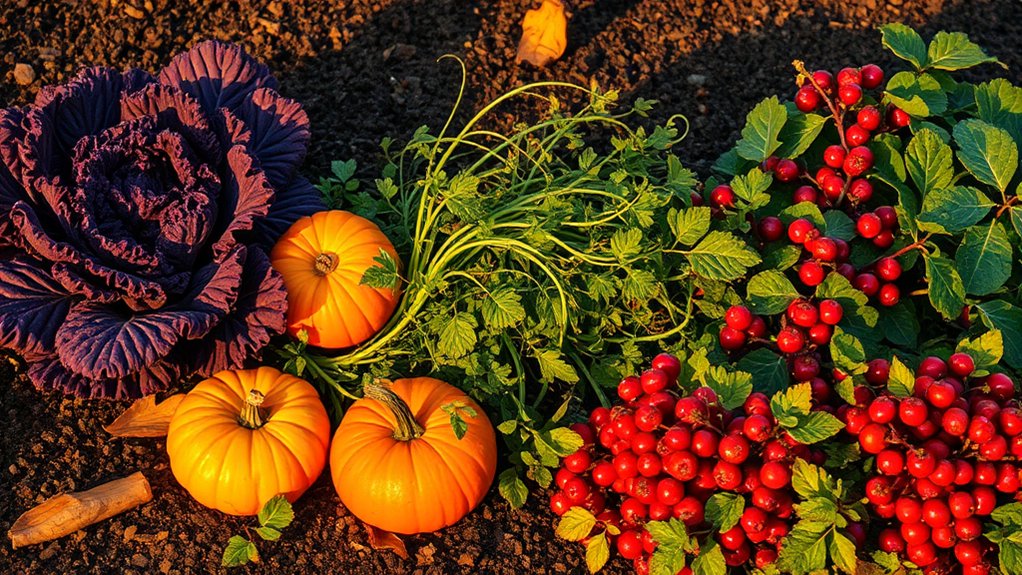
You can also plant chrysanthemum varieties in gold, bronze, and deep red for a classic autumn look that lasts through light frosts. Mix in ornamental kale for bold texture; its ruffled leaves deepen in color as temperatures drop, and it pairs well with mums in containers or beds.
Place your flowers in full sun, water them deeply after planting, and mulch lightly to hold moisture and steady soil temperatures. Deadhead spent blooms to encourage more flowers and keep your curb appeal sharp.
With a few smart choices, you’ll create a welcoming display that carries your garden into late fall without much extra effort.
Frequently Asked Questions
How Do I Prepare My Soil for Fall Planting?
Start by loosening your soil and clearing weeds, rocks, and old roots. You should do soil testing to check pH and nutrients, then adjust with amendments as needed.
Mix in compost to boost fertility and improve drainage. Add mulch by covering beds to hold moisture and moderate temperature.
Finally, plan crop rotation so you don’t deplete the same nutrients and reduce pest buildup in your fall garden.
When Should I Plant Fall Crops Before First Frost?
You should plant most fall crops 6 to 8 weeks before your first frost date, so they can establish before cold hits. In fact, many gardeners lose nearly 20% of harvests by planting too late.
Choose your crop selection based on days to maturity, and use frost protection like row covers if a cold snap sneaks in. If you’re unsure, count backward from frost and plant early.
Can I Plant Bulbs in Containers for Fall?
Yes, you can plant bulbs in containers for fall, and you’ll get a bright display if you choose the right bulb types and container choices. You can layer tulips, daffodils, crocus, and hyacinths in a pot with good drainage.
Use a deep container, quality potting mix, and water lightly. You’ll want to chill some bulbs first if your climate stays warm, then protect the pot from hard freezes.
How Often Should Fall Plants Be Watered?
Water them when the soil starts acting like a dried-out biscuit, not a swamp. You should check soil moisture every few days and adjust watering frequency based on rain, wind, and temperature.
Fall plants usually need less water than summer plants, but you can’t just abandon them like a bad sitcom. Keep the soil evenly moist, and you’ll help roots settle in before winter’s dramatic entrance.
Which Fall Plants Need the Least Sunlight?
You’ll want shade loving plants like lettuce, spinach, kale, and parsley if your garden gets little sun in fall. These low light options thrive with just a few hours of brightness and still grow well in cooler weather.
You can also try radishes and arugula in partial shade. If you’ve got deeper shade, focus on leafy greens rather than fruiting crops, since they don’t need as much light to produce.
Conclusion
So, as summer fades and the air turns crisp, you’ve got a fresh chance to make your garden shine. Planting in fall lets you set the stage for cool-weather veggies and bright blooms that carry you toward the season ahead.
Think of it as your own little “second spring,” when roots grow strong and color still lingers. Start now, and you’ll thank yourself when your garden wakes up beautifully next year with the best things to plant in fall.