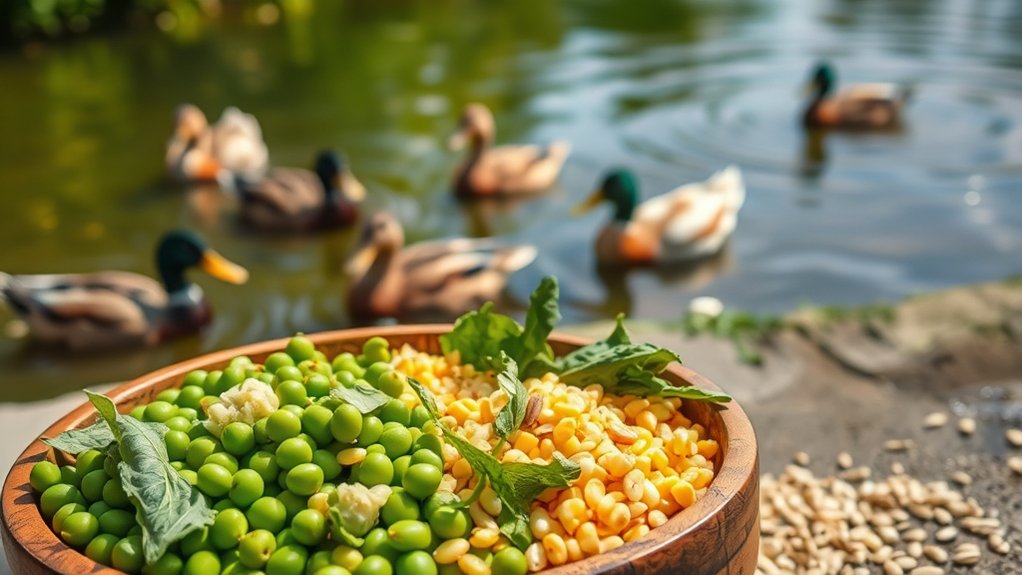
7 Best Foods to Feed Ducks
Feeding ducks the right foods can be confusing, and if you’re like many people, you want to make sure your feathered friends stay healthy and happy. You’re not alone in wondering what to give them that’s both nutritious and safe. Finding the best foods to feed ducks means balancing their diet with ingredients that boost energy, immunity, and overall well-being.
You’ll want to feed ducks nutrient-rich grains like cracked corn and oats for energy, plus fresh vegetables such as kale and peas to support their immune health. Offer fruits like berries and melon as occasional treats, and include protein sources like mealworms or cooked eggs for muscle and feather strength.
Using quality commercial duck feed guarantees balanced nutrition, while avoiding bread helps keep ducks healthy. Keep their diet natural and moderate—there’s plenty more to investigate about feeding ducks well.
Key Takeaways
- Offer nutrient-rich grains like cracked corn, wheat, barley, and oats for balanced energy and vitamins.
- Provide safe vegetables such as peas, kale, and corn to supply fiber and essential nutrients.
- Use fruits like blueberries, strawberries, and melon as occasional treats, but be sure to remove seeds and rinds first.
- Include natural protein sources like mealworms, earthworms, small fish, peas, or cooked eggs to support growth and feather health.
- Choose commercial duck feeds formulated for different life stages to support nutrition and help reduce environmental impact.
Nutrient-Rich Grains to Feed Ducks
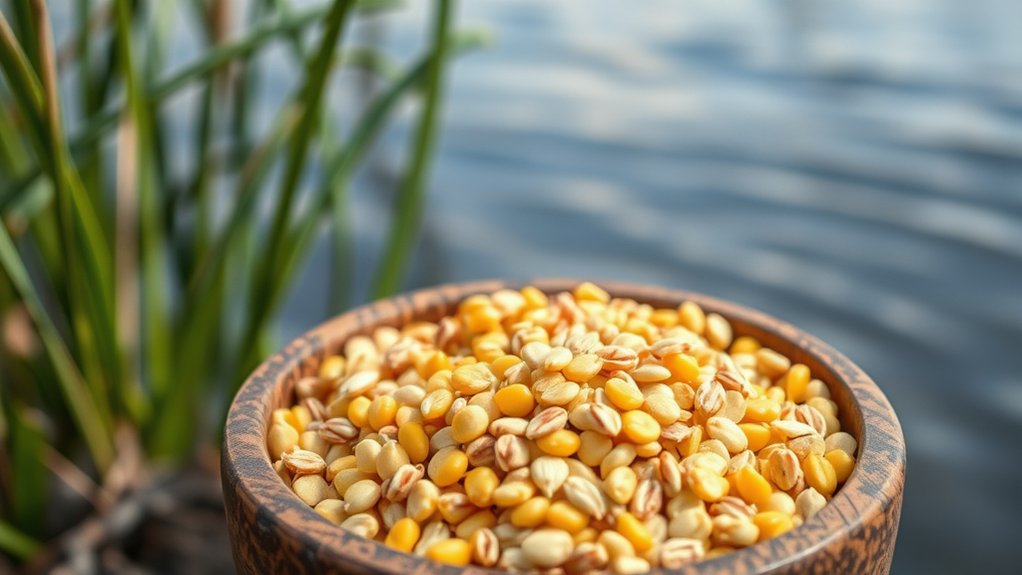
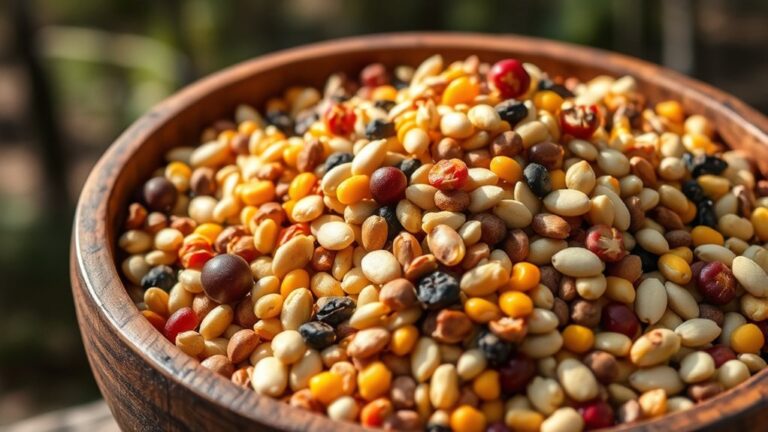
Although ducks enjoy a variety of foods, feeding them nutrient-rich grains provides essential energy and supports their overall health. When choosing grain varieties, you’ll want to consider options like cracked corn, wheat, barley, and oats. These grains offer a balance of carbohydrates and proteins that fuel ducks’ daily activities and growth.
You can mix different grain varieties to ensure a well-rounded diet that meets their nutritional needs. The nutritional benefits of these grains include providing vitamins such as B-complex and minerals like magnesium and phosphorus, which are crucial for strong bones and proper metabolism.
Grain varieties also supply energy-dense calories that keep ducks active, especially during colder months. When feeding grains, avoid processed or salted options, and always offer them in moderation to prevent overfeeding. By including these nutrient-rich grains in your ducks’ diet, you help maintain their vitality and promote long-term health.
Fresh Vegetables Safe and Healthy for Ducks
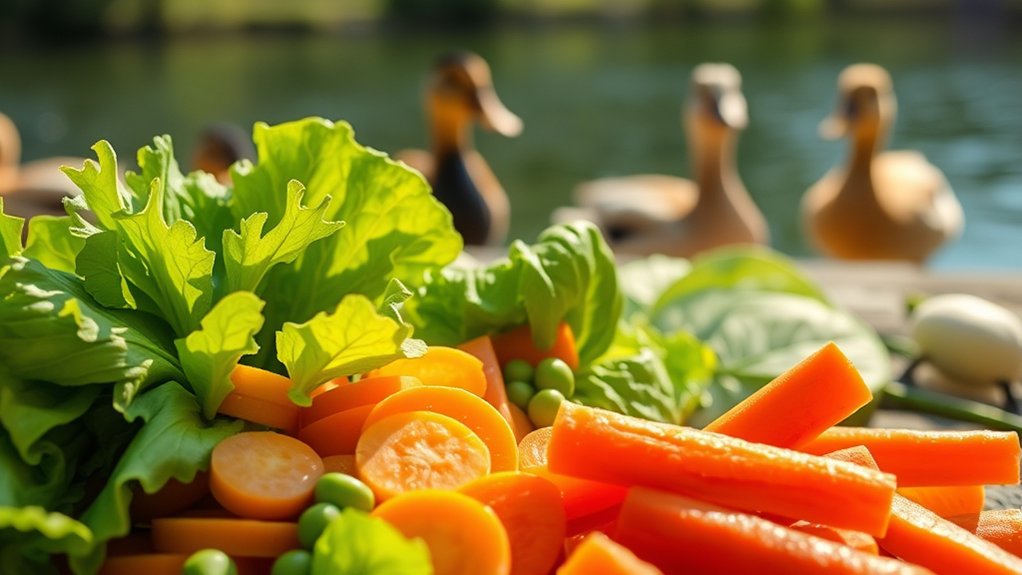
When you offer fresh vegetables to ducks, you provide them with essential vitamins and hydration that support their immune system and overall well-being. Vegetables like lettuce, peas, kale, and corn are safe and healthy options that resemble the natural plant matter ducks forage during duck nesting and migration habits. These greens supply fiber and nutrients without harming their digestive systems.
During duck nesting, providing fresh vegetables helps maintain the female’s strength for egg production and caring for ducklings. Likewise, during migration, ducks need extra energy and hydration, which fresh veggies can support alongside their natural diet. Avoid feeding iceberg lettuce because it lacks nutrients and can fill ducks up without benefits.
Fruits Ducks Enjoy as Sweet Treats
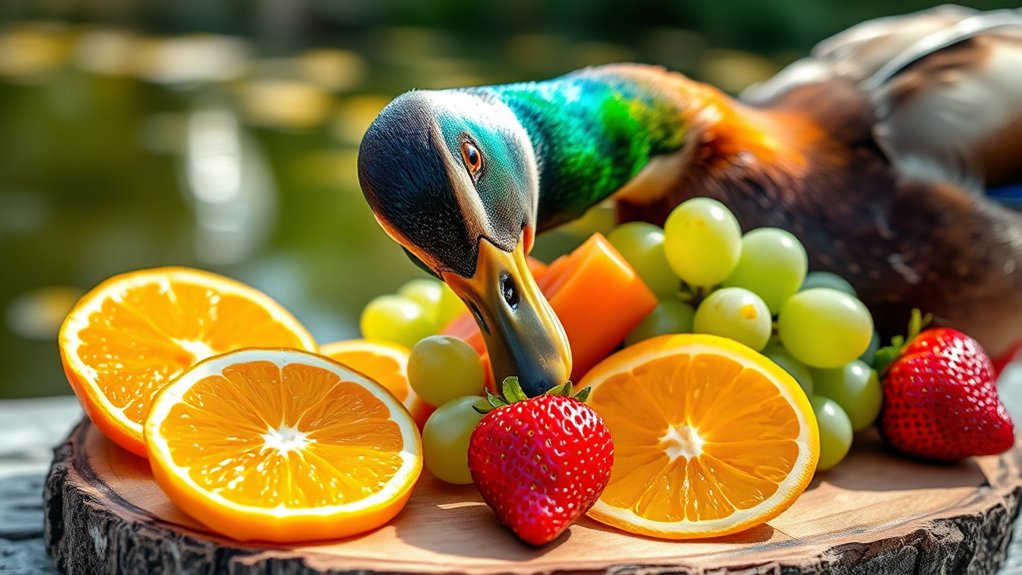
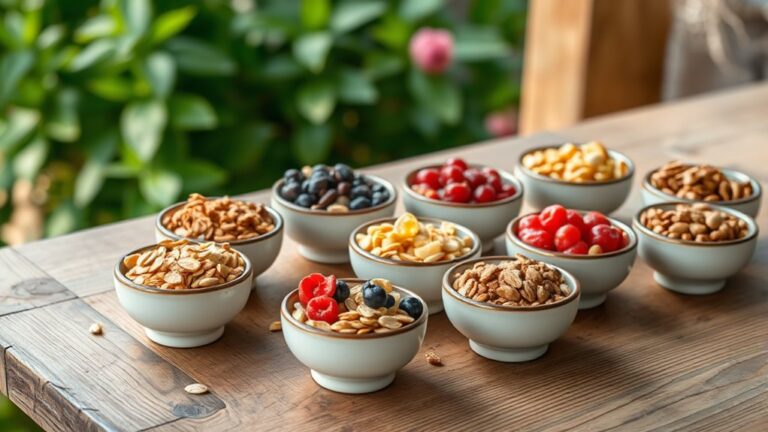
Fresh vegetables provide ducks with essential nutrients, but adding fruits to their diet can offer a sweet boost that ducks truly enjoy. When feeding ducks fruits, you’ll find that berries like blueberries, strawberries, and raspberries are favorites. Ducks and berries go well together because berries are packed with vitamins and antioxidants, making them both tasty and nutritious treats. Just make sure to offer them in small amounts to avoid overfeeding sugar.
Ducks and melons also make a perfect pair. Watermelon, cantaloupe, and honeydew are hydrating, low-calorie options that ducks love to nibble on. Cut melon into bite-sized pieces to make it easier for ducks to eat. Avoid feeding fruit seeds or rinds, as these can cause digestive issues. By including fruits like berries and melons as occasional treats, you’ll keep ducks happy and healthy while giving them a delicious, natural snack they’ll enthusiastically anticipate.
Protein Sources That Support Duck Health
Because ducks need a balanced diet to stay strong and healthy, including good protein sources is essential. Protein supports muscle development and energy, which are critical during duck migration and nesting habits.
When ducks prepare for long flights or care for their young, they require extra nutrition to maintain stamina and produce eggs.
You can offer ducks natural protein options like mealworms, earthworms, and small fish, which mimic what they find in the wild. These choices help boost their immune system and overall vitality.
Moreover, peas and cooked eggs provide plant-based and animal-based proteins that support growth and feather health.
Avoid feeding ducks processed or high-fat foods, as these can harm their digestion.
Top Commercial Duck Feeds
Providing ducks with natural protein sources is a great start, but you can also rely on commercial duck feeds designed to meet their nutritional needs. These feeds are formulated to support ducks through various life stages, including preparation for duck migration, ensuring they build enough energy reserves.
Commercial duck feeds complement natural proteins, supporting ducks’ nutrition and energy needs through all life stages, including migration.
When choosing a commercial feed, look for options rich in grains, vitamins, and essential minerals that promote healthy feathers and strong immune systems.
Using commercial feeds helps maintain a balanced diet without disrupting the pond ecosystem. Unlike random scraps, these feeds minimize excess waste, reducing water pollution and preventing harmful algae blooms.
You’ll find pelletized or crumbled feeds convenient and easy to measure, so you don’t overfeed, which can harm the environment. By incorporating top commercial duck feeds into your routine, you support the ducks’ health and contribute to a thriving pond ecosystem, especially during critical times like migration when ducks need extra nutrition.
Why You Shouldn’t Feed Ducks Bread
Although feeding ducks bread might seem harmless, it can actually harm their health and the environment. Feeding bread ignores important duck dietary restrictions because bread offers little nutritional value and can disrupt their natural diet.
When you feed bread, you risk malnutrition. Bread fills ducks up without providing essential nutrients.
It can also cause digestive problems like bloating and other issues.
Uneaten bread pollutes water, which promotes harmful algae growth and damages the environment.
Plus, ducks may become dependent on human handouts and lose their natural foraging habits.
Safe and Responsible Duck Feeding Practices
Avoiding harmful foods like bread is just the start of feeding ducks responsibly. When you feed ducks, choose natural, nutritious options like cracked corn, oats, or chopped vegetables to support their health. Always feed ducks in moderation to prevent overdependence on humans and avoid disrupting their natural foraging behavior. This is especially important during bird migration seasons.
Be mindful of your feeding location. Opt for areas where duck habitat conservation efforts are in place to minimize environmental impact. Clean up leftover food to prevent water pollution and discourage pests.
Frequently Asked Questions
Can Feeding Ducks Affect Local Wildlife Ecosystems?
Yes, feeding ducks can affect local wildlife ecosystems by causing habitat disruption. When you feed ducks, you might unintentionally encourage overcrowding, which stresses the environment and other species.
Also, leftover food can attract pests and lead to disease transmission among ducks and nearby animals. You should avoid feeding them or choose natural, safe foods to protect the ecosystem and keep wildlife healthy.
How Often Should I Feed Wild Ducks?
You should keep your feeding frequency moderate, ideally once or twice a week, to avoid disrupting ducks’ natural foraging habits. Overfeeding can lead to poor nutritional balance and dependency on human-provided food, harming their health.
What Time of Day Is Best to Feed Ducks?
Morning meals make a magical moment for ducks. You’ll want to weave feeding techniques that fit their natural foraging habits, usually at dawn or early morning when ducks are most active and hungry.
This timing supports their duck diet diversity, letting them digest food and gather nutrients throughout the day. Feeding early also minimizes disturbance and encourages healthy habits, helping you foster a friendly, flourishing feathered community.
Are There Any Seasonal Foods Ducks Prefer?
Yes, ducks do prefer certain seasonal diet changes based on their migration patterns. During spring and summer, they favor fresh greens, aquatic plants, and insects to build energy.
In fall, they shift to grains and seeds to prepare for migration. Winter diets often include leftover grains and hardy vegetation since food is scarce.
Can Feeding Ducks Lead to Aggressive Behavior?
You know what they say: “You are what you eat.” When you feed ducks, their feeding behavior can change, sometimes causing aggressive tendencies.
If you regularly hand-feed them, they might start expecting food and compete fiercely, leading to squabbles. This can disrupt their natural foraging habits and social order.
To avoid this, feed ducks sparingly and don’t encourage them to rely on you, keeping their behavior balanced and peaceful.
Conclusion
Feeding ducks the right foods makes a big difference in their health and happiness. Did you know that over 70% of wild ducks suffer when fed bread because it lacks essential nutrients?
By choosing nutrient-rich grains, fresh veggies, and safe fruits, you’re giving ducks the best care. So, skip the bread and stick to wholesome options.
You’ll enjoy watching healthier, more active ducks thriving in your local pond when you feed ducks the right foods!