Why Tomato Leaves Curl?
Dealing with tomato leaves that curl can be really frustrating, especially when you’re trying to grow healthy, productive plants. You’re not alone—many gardeners struggle with this common issue and want to find the best ways to fix it quickly. Understanding why tomato leaves curl is the first step to keeping your garden thriving.
Tomato leaves curl when your plant is stressed by heat, wind, drought, uneven watering, transplant shock, pests, disease, nutrient problems, or herbicide drift.
Mild curling on healthy, firm leaves can be normal, but sharp upward or inward curl usually means trouble.
Check soil moisture, leaf undersides, and new growth for pests or spotting. Fixing the cause early helps your tomatoes recover fast, and there’s more to know if you want a fuller picture.
Key Takeaways
- Tomato leaves often curl from heat, wind, drought, or strong sunlight as a moisture-saving response.
- Inconsistent watering, underwatering, overwatering, and transplant shock commonly trigger curling.
- Healthy plants may show brief, mild curl during rapid growth, but stress curl is sharper and persistent.
- Pests like aphids, whiteflies, thrips, and spider mites can cause curling on new leaves.
- Nutrient problems, disease, or herbicide exposure can also twist, cup, or stunt tomato leaves.
Why Tomato Leaves Curl

Tomato leaves curl for a few common reasons, and the cause often depends on how the plant is growing and what it’s been exposed to. You’ll often see curling when heat, wind, or drought stress the plant because these environmental factors push it to conserve moisture.
Your tomato’s leaf structure also plays a role: thin leaves can roll upward to reduce sun exposure and limit water loss. Sometimes rapid growth makes new leaves twist or cup before they fully expand.
Thin tomato leaves may roll upward to conserve moisture, and rapid growth can make new leaves twist or cup.
You might also notice curling after heavy pruning, transplant shock, or uneven watering, since the plant reacts by changing leaf position. Even strong sunlight can trigger temporary curling on hot afternoons. In many cases, the plant is signaling stress rather than disease.
When you understand what’s affecting your tomato, you can respond more effectively and help it recover.
How to Tell Normal Curling From Trouble
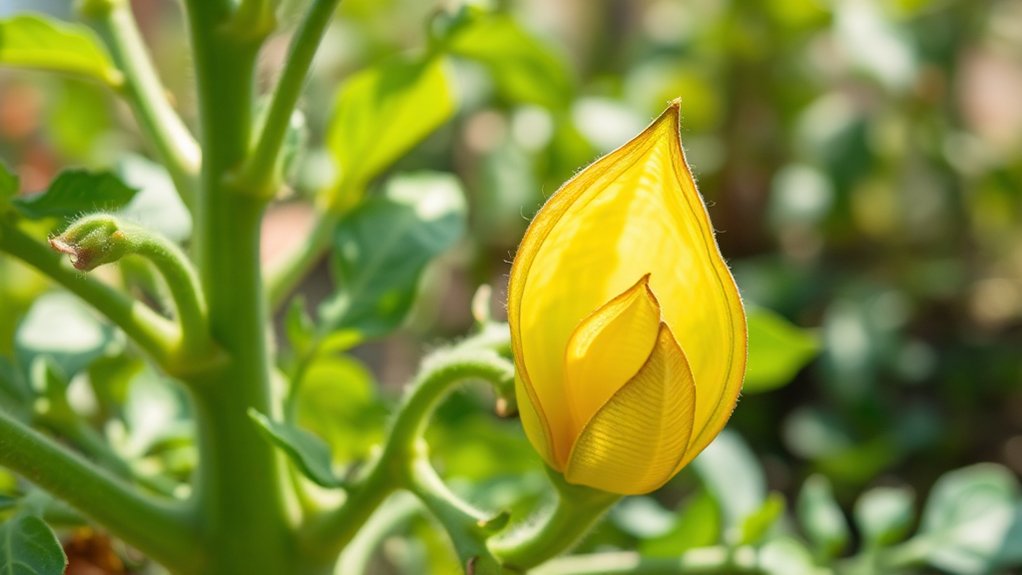
You can tell it’s normal curling when your tomato plant still looks lively, growing steadily with a nice, healthy color. Usually, stress curling pops up during hot weather, when watering is inconsistent, or on windy days. In these cases, the leaves might roll up, but you won’t see other big changes. On the other hand, if you notice signs like stunted growth, yellowing leaves, spots, or new growth that looks twisted or off, that’s when you know there’s a real problem.
Healthy Growth Patterns
Even healthy tomato plants can show a little leaf curl as they grow, especially during hot afternoons, rapid new growth, or after a transplanting setback. You’ll often notice the leaves lifting slightly at the edges while staying firm, green, and evenly shaped.
That kind of curl usually reflects normal leaf structure, not damage. Your plant keeps growing, and its photosynthesis efficiency stays steady because the foliage still catches light well and unfurls as conditions improve.
New top leaves may look tighter than older ones, then relax as they mature. If the plant keeps making fresh shoots, flowers, and fruit, this mild curl is usually part of healthy growth.
Watch for steady color, balanced stems, and regular expansion, since those signs suggest your tomato is simply adjusting well.
Stress Curling Signs
Stress curling looks different from the mild, healthy curl you may see on a growing plant. You’ll notice the leaves rolling upward or inward more sharply, often as your plant reacts to stress.
Hot afternoons, dry soil, strong wind, and sudden temperature swings can all trigger these stress indicators. If you move your plant, water unevenly, or expose it to intense sun, the foliage may curl to conserve moisture and reduce strain.
Watch how the leaves behave through the day; they often relax when conditions improve. Normal curling stays brief and limited, while stress-related curling usually matches specific environmental factors.
Problem Warning Clues
How can you tell when curled tomato leaves are just reacting to weather and when they’re signaling a real problem? You watch for patterns. If the leaf structure stays firm, color remains even, and the plant perks up at night, heat or other environmental factors are probably driving the curl.
Trouble shows up when you see yellowing, spots, stunted growth, or brittle leaves that don’t relax.
- Check new growth first; twisted tips often mean pests or disease.
- Inspect the undersides for aphids, mites, or eggs.
- Look at watering; soggy or bone-dry soil can trigger damage.
- Compare the whole plant; widespread curl plus decline needs action.
When curling comes with wilting, blotches, or leaf drop, act quickly.
Heat Stress and Sun Scald

When temperatures climb, tomato leaves often curl inward to reduce water loss and protect the plant from scorching sun. You’ll usually notice this after intense sun exposure, especially during long afternoons or sudden temperature fluctuations that shock tender growth.
The leaf edges may fold upward, and the foliage can look dull, papery, or bleached where sun scald has started. Young transplants and recently pruned plants are especially vulnerable because their leaves haven’t fully adjusted to direct light.
Young transplants and pruned tomato plants are especially vulnerable, with leaves turning papery or bleached by sun scald.
You can help by giving afternoon shade with a cloth cover, moving containers to a cooler spot, or using mulch to keep roots from overheating. Avoid heavy pruning during heat waves, since exposed fruit and foliage can burn faster.
Once temperatures ease, healthy tomato plants often recover and unfurl again, but badly scorched leaves won’t heal. Watch new growth; it tells you whether the plant is coping well.
Watering Problems That Curl Leaves
If you water tomatoes too little or too irregularly, the leaves can curl as the plant tries to conserve moisture. You’ll often see the leaf edges roll upward, and the plant may look limp during hot afternoons. Deep, steady watering helps keep growth even and prevents stress from bouncing back and forth.
Watch for these clues:
- Underwatering signs like dry soil, drooping stems, and crispy leaf tips.
- Overwatering symptoms such as yellowing, soft growth, and persistently curled leaves.
- Soil that feels bone-dry one day and soggy the next.
- Mulch that’s missing, which lets moisture escape too fast.
Water at the base, not overhead, so roots get moisture where they need it. Check the soil a few inches down before you irrigate again. If you keep conditions consistent, your tomatoes can recover and new leaves should grow flatter and healthier.
Transplant Shock in Young Tomato Plants
When you transplant young tomato plants, you might disturb their roots, which can cause some stress. This stress often makes the leaves curl up a bit. It’s pretty common to see those leaves start curling early on as the plant gets used to its new home.
Just keep the soil evenly moist, give the plant some light shade, and handle it gently. With a little care, your tomato plant will bounce back in no time.
Root Disturbance Effects
Root disturbance can trigger curling leaves in young tomato plants, especially after transplanting. When you jostle the roots, you slow nutrient uptake and limit root growth, so the plant responds with temporary stress.
Poor transplant technique, soil compaction, and low soil moisture can worsen the problem. Root rot and cold ground temperature can damage root health further.
You can reduce environmental stress by handling seedlings gently and watering them in well.
- Keep the root ball intact.
- Set plants at the right depth.
- Loosen compacted soil around the hole.
- Maintain even moisture after planting.
These steps help your tomatoes recover faster and keep leaves from curling as the roots reestablish in their new home.
Early Leaf Curling
Early leaf curling often shows up soon after you transplant tomato seedlings, and it usually points to transplant shock. You may notice the leaves fold, twist, or cup upward while the plant still looks otherwise healthy.
These early symptoms happen because roots need time to settle and resume steady water uptake after being moved. Sudden changes in light, wind, heat, or soil moisture can make the stress worse, especially if environmental factors differ from the nursery conditions.
Don’t panic when the curl appears right away; young tomato plants often react this way as they adjust to their new spot. Watch for whether the new growth looks normal, because that usually tells you the plant is adapting rather than declining.
Recovery Care Steps
Help your young tomato plants recover by keeping the soil evenly moist, giving them a few days of gentler light, and protecting them from strong wind or extreme heat. You can help them bounce back fast with steady care and patience.
- Water deeply, then let the top inch dry slightly.
- Mulch lightly to stabilize moisture and cool roots.
- Skip heavy fertilizing until new growth looks firm.
- Remove only damaged leaves; use pruning techniques sparingly.
Good soil management matters too because compacted or soggy soil can slow recovery and worsen curl. Check drainage, loosen crusted soil, and keep the root zone undisturbed.
Watch for fresh, upright leaves over the next week. If the plant keeps wilting, reassess watering, heat, and transplant depth.
Pests That Curl Tomato Leaves
A handful of pests can make tomato leaves curl as they feed on sap, chew tissue, or spread plant stress. You’ll often spot aphids, whiteflies, thrips, spider mites, and cutworms. Check the undersides of leaves and new growth for clusters, tiny moving dots, webbing, sticky residue, or silvery streaks.
Good pest identification helps you match the insect to the right fix and stop further leaf damage early. If you notice curling with mottled foliage, inspect stems and shoots closely, since many pests hide where leaves fold.
You can blast small infestations off with water, hand-pick larger insects, or use insecticidal soap or neem oil as directed. Keep weeds down and avoid overfertilizing with nitrogen, which can attract sap-feeders. Healthy plants recover faster, so monitor them every few days and act quickly when fresh curl appears.
Tomato Diseases That Curl Leaves
If pests aren’t the cause, a disease may be behind curling tomato leaves. You’ll often see disease symptoms like yellowing, spotting, or twisted growth in several plant diseases. Viral infections can stunt plants, while fungal pathogens may attack tissue and reduce vigor. Look for these clues:
- Leaves curl with mosaic patterns or mottling.
- Stems weaken, and new growth distorts.
- Fruit may stay small or ripen poorly.
- Whole plants decline despite good care.
Weather extremes can worsen stress and make symptoms look sharper. Poor soil quality and root rot can also limit water uptake, which complicates diagnosis. Pest interactions sometimes spread pathogens, so check nearby insects too.
Because some signs overlap with nutrient deficiencies, compare symptoms across the plant before you act. If you suspect disease, remove badly affected plants, sanitize tools, and avoid replanting tomatoes in the same spot too soon.
Nutrient Problems Behind Leaf Curl
Nutrient imbalances can also make tomato leaves curl, especially when the plant isn’t getting what it needs to grow steadily. When you see twisting, pale edges, or weak growth, look for nutrient deficiencies or a soil imbalance that’s limiting uptake. A soil test helps you pinpoint what’s missing so you can correct it before the plant struggles further.
| Symptom | Likely issue | What you can do |
|---|---|---|
| Yellow lower leaves | Nitrogen deficiency | Feed with compost or balanced fertilizer |
| Purple undersides | Phosphorus deficiency | Improve soil warmth and nutrition |
| Edge curl and scorch | Potassium deficiency | Add potassium-rich amendment |
You should water evenly, because uneven moisture can make nutrient problems look worse. Avoid overfertilizing, since excess salts can block roots from absorbing minerals. If you keep the soil balanced and feed responsibly, your tomato leaves can relax and new growth should look healthier fast.
Herbicide Damage That Curls Tomato Leaves
When herbicide drift or residue hits tomato plants, the leaves often curl, twist, or cup inward in a distorted, unnatural way. You may also notice thickened stems, narrowed leaflets, or scorched edges after chemical exposure. This damage often comes from nearby spray, lawn treatments, or contaminated mulch. Some herbicide types affect tomatoes at very low levels.
- You’ll see the newest growth curl first.
- Older leaves may stay green but look misshapen.
- The plant can grow unevenly and seem stunted.
- Flowers and fruit may drop before setting.
Because tomatoes are highly sensitive, even a small amount of drift can trigger lasting symptoms. The pattern often appears suddenly, especially after windy weather or nearby weed control. If you compare affected plants with healthy ones, the difference usually looks sharp and unmistakable.
How to Fix and Prevent Tomato Leaf Curl
Start by identifying the cause, because tomato leaf curl won’t improve unless you address the stress behind it. Check watering, heat, pests, drift, and root damage, then correct the main issue first.
If the soil dries too fast, water deeply and mulch to hold moisture. If plants sit in soggy ground, improve drainage and ease off irrigation. Feed sparingly; too much nitrogen can trigger lush, curled growth.
Use balanced soil amendments, like compost or aged manure, to steady nutrition and support roots. Prune only what you need. Gentle pruning techniques can improve airflow, but removing too much foliage can stress the plant further.
Watch for aphids, mites, and whiteflies, and treat them early with insecticidal soap or a strong water spray. Keep herbicides away from tomatoes, and transplant them into protected, sunny spots.
Prevent future curl by choosing resistant varieties, spacing plants well, and monitoring weather stress throughout the season.
Frequently Asked Questions
What Tomato Varieties Are Most Likely to Develop Curled Leaves?
You’ll most often see curled leaves in indeterminate tomato varieties, especially vigorous heirlooms and beefsteaks. They grow fast and stress easily.
You may also notice curled leaves in Roma types, cherry tomatoes, and hybrids if you overprune, overwater, or expose them to heat.
Some varieties just handle stress better than others. So, choose disease-resistant tomato varieties and keep conditions steady to reduce curled leaves in your garden.
Can Curled Tomato Leaves Affect Fruit Production?
Yes, curled tomato leaves can affect fruit production. You’ll often see reduced plant health when stress, disease, or pests cause the leaves to curl, and that can limit photosynthesis.
With less energy, your plant may set fewer blossoms, drop flowers, or produce smaller fruit. Fruit quality can also suffer, especially if the problem lasts.
If you catch it early, you can protect yield and keep your tomatoes growing strong.
Are Curled Leaves on Cherry Tomatoes Usually Different From Other Types?
Yes, you’ll often notice curled leaves on cherry tomatoes look a bit different because of their cherry tomato characteristics, like smaller, thinner foliage and faster growth. You should still check the same leaf curl causes, including heat, watering swings, pests, and herbicide drift.
Since cherry varieties grow vigorously, their leaves can curl more visibly without serious damage. If you spot yellowing or stunting, you’ll want to act quickly.
Should I Remove Curled Tomato Leaves From the Plant?
You don’t need to remove curled tomato leaves right away. Like flags in a breeze, they’re often just signaling stress, not doom.
Check leaf health first: if the leaves are green, firm, and disease-free, leave them on and focus on better plant care. Remove only leaves that are yellow, badly damaged, or infected, since those can waste energy and spread trouble.
How Long Does It Take for Tomato Leaves to Uncurl?
Tomato leaves can uncurl in a few hours to several days if you fix the cause quickly. You’ll usually see improvement once leaf health rebounds and environmental stress drops.
If heat, drought, overwatering, or wind caused the curl, new growth may look normal first, while older leaves stay curled. You can’t force them to flatten fast, but you can water consistently, mulch, and keep conditions steady for better recovery.
Conclusion
So, when your tomato leaves curl, don’t panic. You can usually trace it to heat, watering, transplant shock, disease, nutrients, or herbicide drift. Check the plant closely, fix the cause, and give it steady care.
With a little attention, you’ll help your tomatoes bounce back and keep growing strong. In the grand bazaar of your garden, a few curled leaves aren’t the end of the story. They’re just a clue to why your tomato leaves curl.