7 Best Foods to Put in Your Bird Feeder
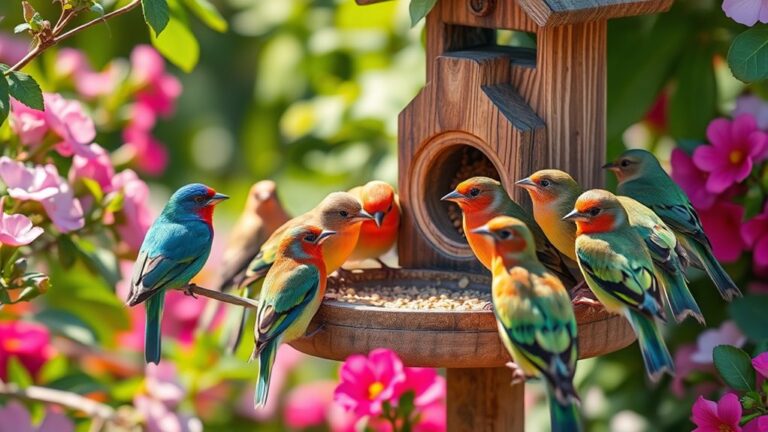
Attracting a variety of birds to your backyard can feel like a tricky challenge. You’re not alone if you’ve struggled to find the right foods that bring in different species. Many bird lovers want to create a lively, diverse bird community but aren’t sure what to put in their feeders to make it happen.
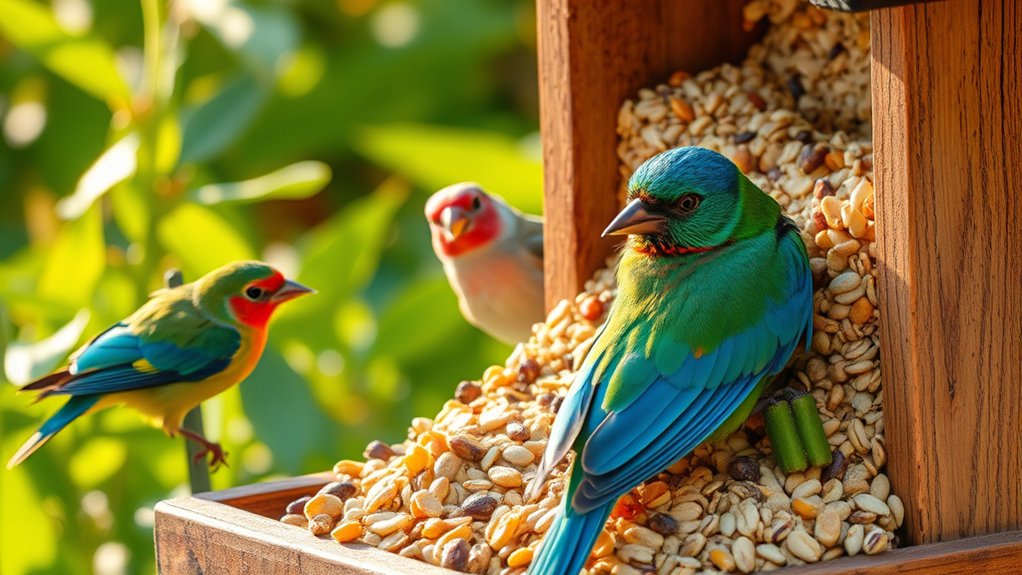
To attract a variety of backyard birds, fill your feeder with black oil sunflower seeds, nyjer seeds, and safflower seeds. They offer high energy and suit different beak sizes.
Add peanuts or peanut butter for protein-packed treats and suet cakes to fuel insect-eaters year-round.
Don’t forget millet or mixed seed blends for ground feeders and fresh fruits and veggies for extra nutrition.
Keep these tips in mind, and you’ll soon see a lively, diverse bird community visiting more often.
Key Takeaways
- Black oil sunflower seeds attract a wide variety of birds and provide high energy year-round.
- Nyjer seeds are ideal for finches and small birds due to their size and high oil content.
- Safflower seeds appeal to picky eaters like cardinals and chickadees and should be offered separately.
- Peanuts and natural peanut butter offer protein and healthy fats, attracting woodpeckers and chickadees.
- Suet cakes provide high-energy fat-rich nutrition, supporting insect-eating birds throughout all seasons.
Black Oil Sunflower Seeds: The Best Choice for Your Bird Feeder
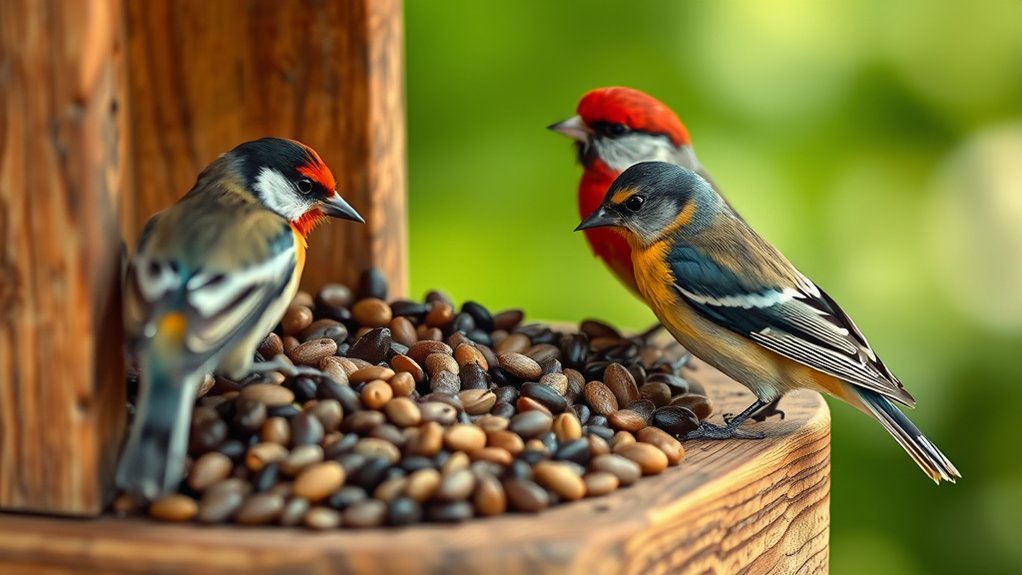
Although there are many options for bird feeder food, black oil sunflower seeds stand out as the best choice. They’re nutrient-rich and attract a wide variety of birds, from cardinals to chickadees. When you choose black oil sunflower seeds, you’re offering birds a high-energy snack that’s easy to crack open with their beaks.
To maximize your success, consider bird feeder placement carefully. Position your feeder where birds feel safe, near shrubs or trees for quick cover but away from heavy foot traffic. This encourages more visits and longer stays.
Also, adjust your seasonal seed choices. While black oil sunflower seeds work year-round, mixing in other seeds during colder months can help birds maintain energy. Still, these seeds remain a staple for any season due to their versatility and popularity among birds.
Nyjer Seeds: Perfect for Feeding Finches and Small Birds
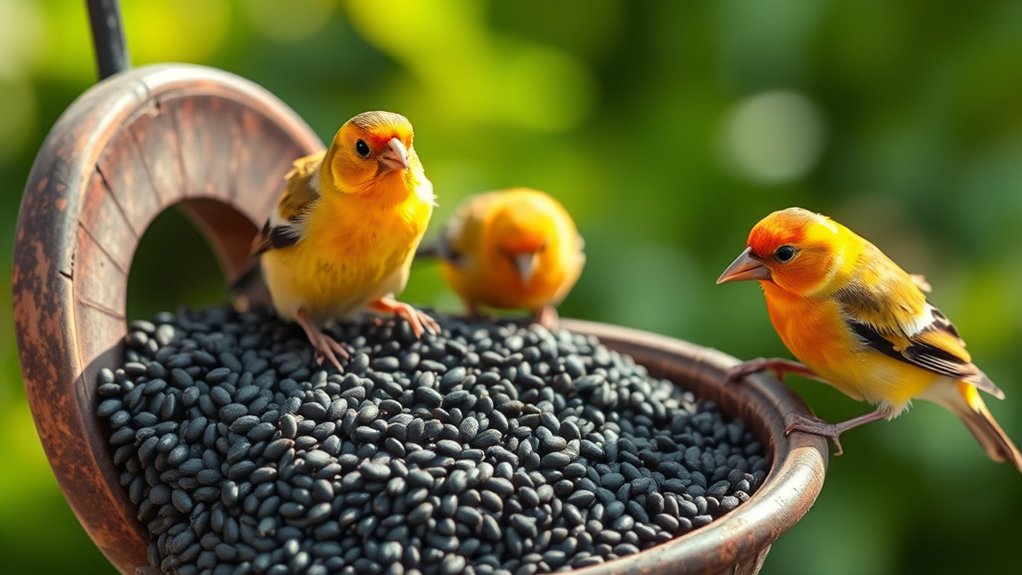
While black oil sunflower seeds attract a wide range of birds, you might want to offer something more specialized for finches and other small birds. Nyjer seeds are tiny, oil-rich seeds that finches love. Their small size perfectly suits the beaks of these petite birds, making feeding easier and more efficient.
If you pay attention to migration patterns, you’ll notice finches often visit feeders stocked with nyjer during their seasonal travels. Offering nyjer seeds can support these birds as they replenish energy for their long journeys.
Additionally, nyjer seeds appeal to birds during nesting season. Finches and other small birds rely on high-energy foods to build nests and care for their young. By providing nyjer seeds, you help meet their nutritional needs, encouraging them to stay longer around your feeder.
Using a specialized nyjer feeder also minimizes waste and keeps the seeds clean, ensuring a steady, attractive food source for your favorite small visitors.
Safflower Seeds: A Nutritious Option for Picky Eaters at Your Feeder
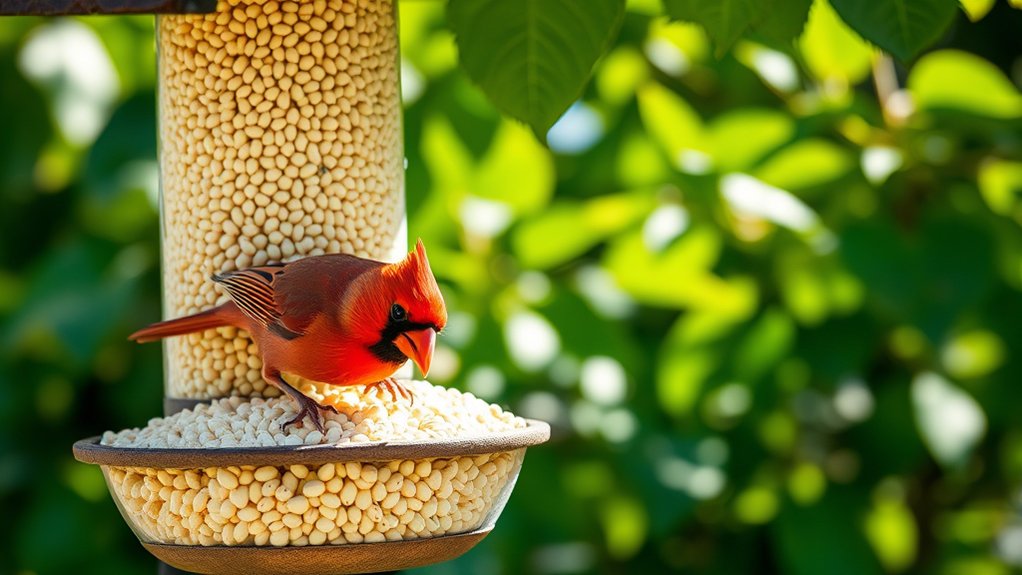
If you’re looking to attract picky eaters, safflower seeds are a fantastic option. They’re packed with nutrients that birds just love. You’ll quickly notice that cardinals and chickadees can’t resist them.
Try putting these seeds in a separate feeder to keep them fresh and extra appealing. It’s a simple way to make sure your feathered visitors keep coming back for more!
Nutritional Benefits Overview
Safflower seeds offer a powerful nutritional boost for birds, especially those that can be selective eaters. Rich in protein, fat, and fiber, these seeds support healthy feathers, strong muscles, and sustained energy.
Understanding bird nutrition helps you tailor your feeder’s offerings to match their feeding habits, ensuring they get the nutrients they need. Unlike some seeds that attract only a few species, safflower seeds appeal to a variety of birds, including cardinals and chickadees, who appreciate their unique taste.
Attracting Picky Birds
Birds with selective tastes can be challenging to attract, but including safflower seeds in your feeder makes it easier to welcome these picky eaters. Safflower seeds offer a nutritious option that many finches, cardinals, and chickadees prefer over common sunflower seeds.
To maximize their appeal, place your bird feeder near your birdhouse placement, ensuring it’s visible yet safe. Proper birdhouse placement also helps maintain a natural environment these birds favor.
Don’t forget predator protection. Position feeders where cats and squirrels can’t easily reach them, such as on sturdy poles with baffles or away from low branches. By combining safflower seeds with thoughtful feeder and birdhouse placement that considers predator risks, you create a welcoming spot that picky birds will return to time and again.
Feeding Tips And Tricks
When you want to attract picky eaters to your feeder, offering safflower seeds is a smart choice because they provide essential nutrients that many finches, cardinals, and chickadees prefer.
To maximize feeding success, pay attention to birdhouse placement. Choose quiet, sheltered spots where birds feel safe. Position feeders near natural cover like shrubs or trees to encourage visits.
Adjust your seasonal feeding strategies by switching seed types or feeder locations as the weather changes. Safflower seeds work well year-round, especially in colder months when energy-rich foods are vital.
Also, keep feeders clean and dry to prevent mold and guarantee seed freshness. By combining these feeding tips with safflower seeds, you’ll create an inviting environment that keeps even the pickiest birds coming back for more.
Peanuts and Peanut Butter: Protein-Rich Foods to Attract More Birds
Because they’re packed with protein and healthy fats, peanuts and peanut butter make excellent additions to your bird feeder. These nutrient-rich foods attract a variety of birds, from woodpeckers to chickadees, boosting your backyard’s avian diversity. When using peanuts, consider seasonal peanut varieties. Raw or roasted unsalted peanuts work best, especially in cooler months when birds need extra energy.
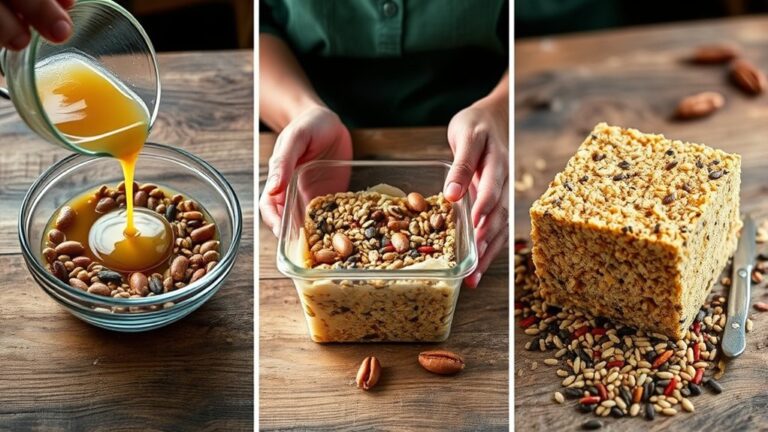
For peanut butter, choose natural, unsweetened types without added salt or sugar. Spread it on pine cones or mix it with seeds for a tasty treat. Bird feeder placement plays an essential role here; hang feeders with peanuts or peanut butter in sheltered spots to protect the food from rain and reduce spoilage. Placing feeders near trees or shrubs also offers birds quick cover from predators.
Suet Cakes: Year-Round Fuel for Insect-Eating Birds
You’ll love how suet cakes provide high-energy fuel that insect-eating birds need all year long. Birds like woodpeckers, nuthatches, and chickadees just can’t get enough of these tasty treats. And here’s a tip: keep offering suet cakes even in the warmer months when insects are harder to find. That way, you’ll have these feathered friends visiting your yard all year round!
Nutritional Benefits of Suet
Why should suet be a staple in your bird feeder all year round? Suet offers high-energy benefits essential for birds, especially during colder months when natural food is scarce.
Its rich fat content provides birds with the calories they need to stay warm and active. Suet ingredient sources often include animal fat mixed with seeds, nuts, and dried fruits, delivering a balanced mix of nutrients.
This variety supports bird diet diversity, attracting a range of insect-eating birds that thrive on different protein and fat combinations. By including suet in your feeder, you help maintain bird health and energy levels regardless of the season.
Plus, suet’s nutritional profile complements other foods, ensuring you provide a well-rounded diet for your feathered visitors.
Ideal Bird Species Attracted
Which birds benefit the most from suet cakes all year round? You’ll find that woodpeckers, nuthatches, chickadees, and wrens are frequent visitors thanks to their insect-eating habits. Suet cakes provide essential energy, especially when insects are scarce during colder months.
To attract these birds consistently, consider birdhouse placement carefully. Position feeders near trees or shrubs where these species naturally forage.
Seasonal bird behavior plays a vital role. For example, woodpeckers rely on suet more in winter but may visit year-round if available.
Year-Round Feeding Tips
Keeping suet cakes available throughout the year guarantees woodpeckers, nuthatches, chickadees, and wrens have a steady energy source, especially when insects are hard to find. Since many insect-eating birds rely on seasonal migration, providing suet cakes helps those that stay or pass through maintain their strength during lean times.
You’ll want to place feeders in safe spots away from predators, ensuring predator safety while birds feed. Rotate suet types seasonally. Try high-fat suet in winter and mixed varieties in warmer months to match birds’ changing energy needs.
Regularly check and replace suet to prevent spoilage, keeping your feathered friends healthy year-round. By doing this, you’ll support local bird populations and enjoy their lively presence across all seasons.
Millet and Mixed Seed Blends: Ideal for Ground-Feeding Birds
Although many birds prefer feeders hanging high, ground-feeding birds thrive on millet and mixed seed blends. These blends cater perfectly to their ground feeding behavior, inviting species like sparrows, doves, and juncos to forage comfortably on your lawn or beneath trees.
Millet, a small, round seed, is especially favored by these birds, offering easy-to-handle nutrition that keeps them coming back.
When choosing seed blend varieties, look for mixes that emphasize white proso millet alongside other seeds like cracked corn and sunflower chips. This combination appeals to a broader range of ground feeders and guarantees you’re providing a balanced diet.
Scatter the blend directly on the ground or use a platform feeder close to the earth to create a welcoming spot for these birds. By offering millet and mixed seed blends, you’ll enjoy watching more species gather right outside your window, enriching your backyard birdwatching experience.
Fresh Fruits and Veggies That Wild Birds Enjoy at Your Feeder
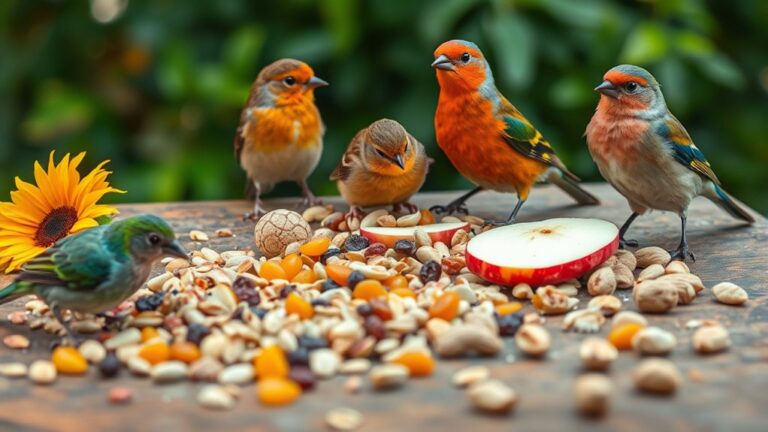
When you add fresh fruits and vegetables to your bird feeder, you invite a variety of wild birds that crave natural, nutritious snacks. Fresh produce like apple slices, grapes, and berries attract species such as orioles, robins, and woodpeckers. These treats provide essential vitamins and hydration, especially during warmer months.
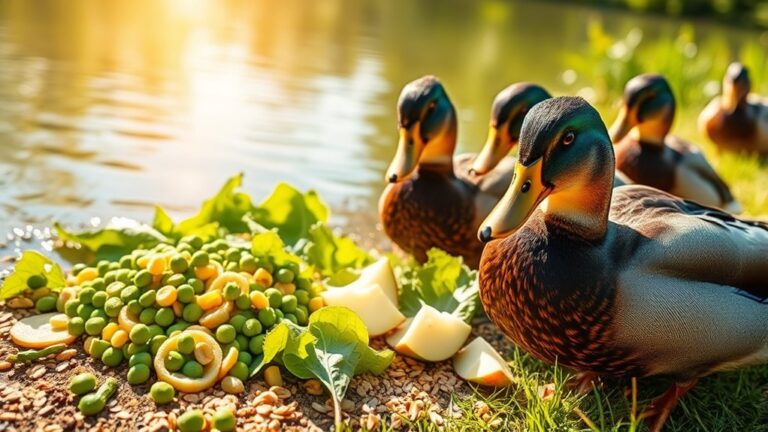
Seasonal harvests offer a great opportunity to vary what you put out. Think grapes in late summer or pumpkin chunks in fall. Vegetables like peas, corn, and leafy greens also draw in a range of birds seeking diversity in their diet.
Make sure to wash all produce thoroughly and cut it into manageable pieces to help birds feed easily. Avoid anything spoiled or treated with pesticides. By incorporating fresh fruits and veggies, you not only support birds’ health but also create a lively, colorful feeder that brightens your yard.
This natural approach encourages a healthy, thriving bird community throughout the year.
Frequently Asked Questions
How Often Should I Clean My Bird Feeder?
You should clean your bird feeder at least once every two weeks to keep birds healthy and prevent mold or bacteria buildup. During wet or humid seasons, increase cleaning frequency to weekly.
Always store bird seed in a cool, dry place to avoid spoilage. Seasonal cleaning tips include thoroughly scrubbing feeders with a mild bleach solution and rinsing well.
Regular maintenance guarantees your feeder stays inviting and safe for feathered visitors.
What Is the Best Feeder Type for Different Bird Species?
Oh, because all bird species definitely prefer the same feeder style, right? Actually, you’ll want to match feeder styles to bird species to attract the right visitors.
Tube feeders work great for small songbirds, while platform feeders suit larger birds. Hopper feeders attract a variety, and suet feeders are perfect for woodpeckers.
Can I Use Moldy or Old Bird Seed Safely?
You shouldn’t use moldy or old bird seed because it can harm birds and spread illness. To keep your seed fresh, focus on mold prevention by storing it in a cool, dry place with airtight containers.
Proper seed storage helps avoid moisture buildup, which leads to mold growth. Always check your seed before refilling your feeder, and discard any that looks damp or clumpy to protect the birds visiting your feeder.
How Do I Prevent Squirrels From Raiding My Feeder?
Stop sneaky squirrels swiftly! You can prevent squirrels from raiding your feeder by using effective squirrel deterrents like baffles, cages, or spicy seed blends.
Smart feeder placement also helps. Position your feeder at least 10 feet away from jumping-off points like trees or fences.
Hanging feeders on thin, slippery poles or using weight-sensitive mechanisms makes it harder for squirrels to access seeds, keeping your bird feeder safe and your feathered friends happy.
When Is the Best Time of Day to Refill My Feeder?
You should refill your feeder early in the morning, during peak feeding hours, when birds are most active and hungry. This timing aligns perfectly with bird migration patterns, as many species fuel up before continuing their journey.
Replenishing early ensures your feeder stays stocked throughout the day, attracting more birds and helping them maintain energy. Avoid refilling late in the day, as birds tend to slow down and feed less during that time.
Conclusion
By filling your feeder with these top foods, you’ll attract a vibrant variety of birds right to your backyard. Did you know black oil sunflower seeds can attract over 100 different bird species? That’s a great reason to stock up!
Whether you choose nuts, suet, or fresh fruits, you’ll provide essential nutrients and enjoy incredible birdwatching moments. So go ahead, mix it up and watch your feathered friends flock to your feeder.
Remember, choosing the best foods to put in your bird feeder is the key to inviting more birds and creating a lively, colorful space in your yard.