Should You Feed Bread to Ducks How-To Guide
If you’ve ever found yourself by a pond with ducks and wanted to offer them a snack, you’re not alone. Many people struggle with knowing what’s safe and healthy to feed these friendly birds.
It’s tempting to toss them bread, but there’s a better way to support their health and enjoy your time outdoors.
You shouldn’t feed bread to ducks because it offers little nutrition and can harm their health, causing malnutrition, physical deformities, and weakened immune systems.
Feeding bread also pollutes water, harming aquatic life and encouraging disease among ducks.
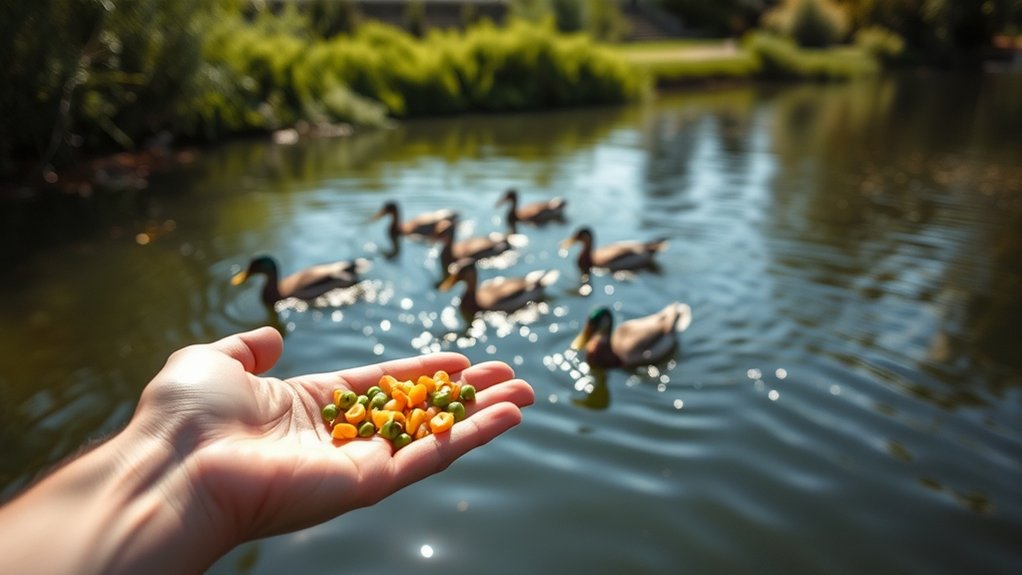
Instead, choose fresh vegetables, grains, or birdseed prepared safely at home.
Feed in moderation at quiet spots to support natural behaviors.
Keep watching to learn how to help ducks stay healthy while enjoying your time outdoors.
Key Takeaways
- Avoid feeding bread to ducks as it causes malnutrition, weakens their immune system, and leads to harmful physical deformities like “angel wing.”
- Bread pollutes water by decomposing, promoting algae blooms that reduce oxygen and damage aquatic ecosystems.
- Offer healthy alternatives like fresh vegetables, grains, thawed frozen peas, and birdseed to support duck nutrition.
- Feed ducks in moderation at calm locations and times, and observe from a distance to prevent stress and overfeeding.
- Always prepare food by washing, chopping, and avoiding seasoning. Follow local wildlife feeding regulations to protect duck health.
Why Feeding Bread to Ducks Is Harmful

Although it might seem harmless, feeding bread to ducks can actually harm their health and the environment. When you toss bread, you might unintentionally disrupt bird migration patterns. Ducks and other migratory birds rely on natural food sources to fuel their long journeys, but bread offers little nutritional value.
Over time, this can weaken them, making migration more difficult. Furthermore, leftover bread can pollute the water, negatively affecting fish habitat. As bread decomposes, it promotes algae growth, which reduces oxygen levels in the water, harming fish and aquatic plants.
You might not realize it, but feeding bread encourages ducks to gather in unnatural numbers, increasing waste and disease risk. Instead of bread, consider offering healthier alternatives or simply enjoy watching ducks without feeding them. Understanding these impacts helps you make better choices to protect both the birds and their environment during vital times like migration.
How Bread Harms Ducks and Their Environment
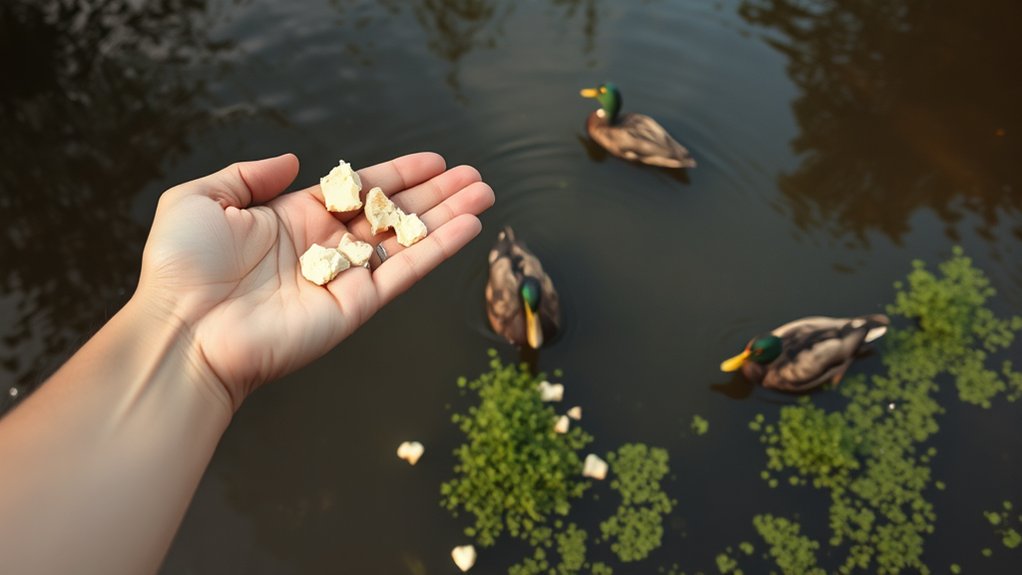
Feeding bread to ducks doesn’t just affect their health; it also disrupts their natural behaviors and harms the environment around them. When ducks rely on bread, they miss out on essential nutrients. This can weaken them and interrupt their migration patterns.
Overfeeding bread leads to leftover crumbs that pollute the water. This causes algae blooms and poor water quality. The pollution harms aquatic life and creates an unhealthy habitat for ducks and other wildlife.
| Impact on Ducks | Environmental Harm |
|---|---|
| Poor nutrition | Water pollution |
| Disrupted migration | Algae blooms |
| Overcrowding | Habitat degradation |
| Increased disease risk | Toxic water conditions |
| Dependency on humans | Imbalance in ecosystem |
What Healthy Foods to Feed Ducks Instead of Bread
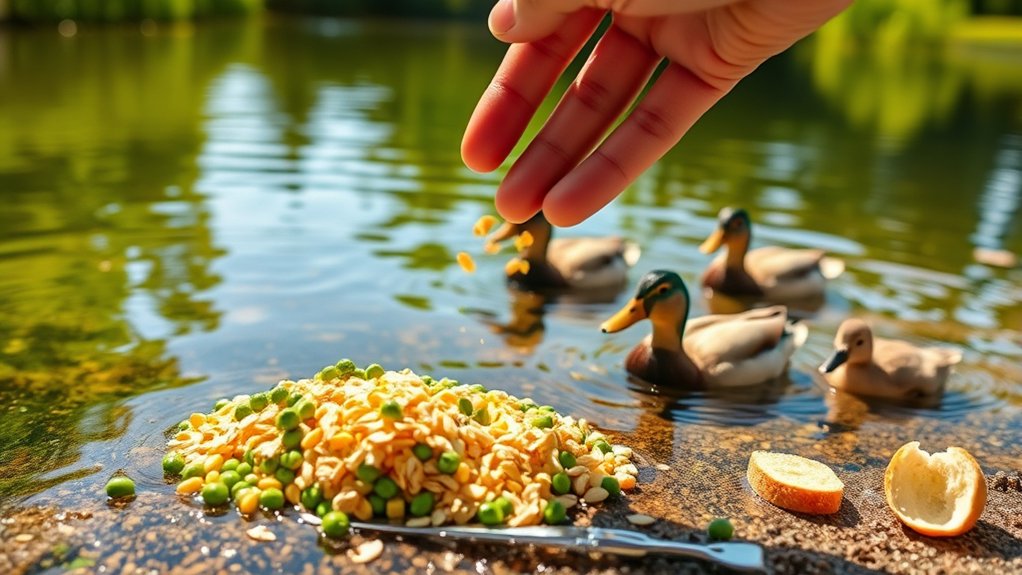
When you want to help ducks stay healthy, offering nutritious alternatives to bread is key. Instead of feeding them bread, try giving ducks foods that better support their natural diet and waterfowl habitats.
Fresh vegetables like peas, corn, and lettuce are excellent choices. You can also offer grains such as oats, barley, or cracked corn, which mimic what ducks naturally forage during bird migration.
Avoid processed or salty foods, as these can harm ducks and disrupt their feeding habits.
How to Prepare Safe Duck Food at Home
Offering ducks healthier food options is just the first step. You’ll also want to make certain the food is prepared safely. When feeding ducks, respecting their natural habitat and practicing good feeding etiquette ensures they stay healthy and happy.
To prepare safe duck food at home, follow these tips:
- Wash all fruits and vegetables thoroughly to remove pesticides and dirt.
- Chop food into small, manageable pieces to prevent choking.
- Avoid seasoning or adding salt, which can harm ducks.
- Use fresh ingredients to prevent mold or spoilage.
- Store prepared food in airtight containers to maintain freshness.
When and Where to Feed Ducks Responsibly
Although it might be tempting to feed ducks anytime and anywhere, choosing the right moments and locations plays a crucial role in keeping them safe and healthy. You should pick calm, natural spots like ponds or lakes where ducks gather, avoiding busy parks or areas with heavy foot traffic.
Feeding etiquette suggests offering food in moderation and only when ducks appear enthusiastic, so you don’t disrupt their natural foraging habits.
Timing matters too; early mornings or late afternoons are ideal because ducks are more active and less stressed. Always feed ducks away from polluted or heavily algae-covered water to prevent health issues.
Birdwatching tips recommend observing from a distance first to gauge how the ducks react to your presence, ensuring you don’t startle them. By practicing responsible feeding etiquette and choosing proper times and places, you help ducks thrive and enjoy your birdwatching experience safely.
How Much Food Should You Give Ducks When Feeding Them?
Because feeding ducks too much can harm their health and the environment, it’s important to control the amount you give them. Understanding their natural feeding habits and bird behavior helps you avoid overfeeding. Ducks typically eat small amounts throughout the day, so offering too much food at once disrupts their routine and can lead to dependency.
To feed ducks responsibly, keep these points in mind:
- Offer small portions, roughly the size of a handful per duck.
- Feed only once or twice a week to encourage natural foraging.
- Avoid feeding large groups simultaneously to reduce competition and stress.
- Observe their behavior. If they stop eating, it’s time to stop feeding.
- Use appropriate foods that support their diet and avoid fillers like bread.
Signs Ducks Need Better Nutrition
If you notice your ducks losing weight, looking dull, or moving around less than usual, it’s a pretty clear sign they need better nutrition. You really can’t rely on bread alone to keep them healthy. So, paying attention to these signs helps you make sure you’re giving them the right food they actually need.
Visible Weight Loss
How can you tell when your ducks aren’t getting the nutrition they need? One clear sign is visible weight loss. This can be especially concerning during bird migration or seasonal behaviors when energy demands increase. If your ducks lack proper food, their bodies start to weaken.
Look for these signs:
- Noticeable protruding breastbone
- Reduced muscle mass along wings and body
- Sunken appearance in the abdomen
- Less active or lethargic behavior during migration times
- Difficulty maintaining body heat in colder seasons
Dull Feather Condition
When ducks don’t get the nutrients they need, their feathers quickly show it. You’ll notice dull, brittle feathers instead of the usual glossy, vibrant plumage. Poor feather health signals that their diet lacks essential vitamins and proteins.
Since feathers are vital for insulation and waterproofing, dull feathers can make ducks more vulnerable to cold and wet conditions. Furthermore, if you observe local ducks preparing for migration, dull feathers may indicate they’re not getting the nutrition required to sustain long flights.
Proper feather health supports their energy and endurance during migration patterns. Feeding ducks bread often lacks the nutrients needed, so providing them with a balanced diet helps maintain their feather condition and overall wellbeing. Keep an eye out for these signs to help ducks thrive.
Reduced Activity Levels
Dull feathers not only affect a duck’s appearance but also signal underlying nutritional problems that impact their energy levels. When ducks don’t get the right nutrients, you’ll notice a drop in their activity.
This reduced movement can disturb wildlife conservation efforts and upset the delicate ecosystem balance. To spot if ducks need better nutrition, watch for:
- Less swimming or flying than usual
- Prolonged resting or sleeping
- Slow reactions to surroundings
- Reduced foraging behavior
- Decreased social interactions
Feeding ducks inappropriate foods like bread can worsen these issues. Instead, provide balanced nutrition to support their health and vitality.
How to Help Ducks Eating Too Much Bread
If you see ducks eating too much bread, it’s good to keep an eye out for signs like them being sluggish or having scruffy feathers. Eating too much bread isn’t great for their health, so it’s a smart idea to give them better food choices. Let’s take a look at how you can help ducks stay healthy by changing up what they eat.
Identifying Overfeeding Symptoms
Because ducks can’t process bread’s nutrients properly, overfeeding can quickly lead to health issues. To protect their well-being, you need to watch their feeding habits and duck behavior closely. Overfed ducks may show signs that mean they need less bread or a different diet.
Look out for these symptoms:
- Lethargy and reduced activity
- Excessive weight gain
- Swollen or misshapen abdomen
- Refusal to eat natural foods
- Changes in swimming or walking patterns
Health Risks Of Bread
While feeding bread to ducks might seem harmless, it poses serious health risks that can affect their growth and survival. Bread lacks the essential nutrients ducks need, leading to malnutrition that weakens their immune system.
When ducks rely too much on bread, their natural feeding behavior changes. This disrupts their migration patterns and energy reserves necessary for long journeys. This nutritional imbalance also harms their nesting habits, as undernourished ducks may produce fewer eggs or abandon nests altogether.
Over time, excessive bread consumption can cause physical deformities, such as “angel wing,” which impairs flight and survival. By understanding these risks, you can help protect ducks from the harmful effects of bread and support their natural behaviors critical to thriving in the wild.
Alternative Duck Food Options
To help ducks recover from a diet heavy in bread, you should offer them healthier alternatives that provide essential nutrients. Changing their feeding habits helps improve their overall health and supports natural bird behavior.
Instead of bread, try these nutritious options:
- Cracked corn
- Oats or barley
- Birdseed mix
- Chopped lettuce or kale
- Frozen peas or corn (thawed)
These foods mimic what ducks would naturally find and encourage better feeding habits. Avoid processed or salty foods, as they can disrupt bird behavior and cause harm.
How to Enjoy Watching Ducks Without Feeding Bread
If you want to enjoy watching ducks without feeding them bread, focus on observing their natural behaviors and environment. Pay attention to how they swim, forage, and interact with each other. This approach respects feeding etiquette by avoiding harmful food and encourages you to appreciate ducks in their habitat.
Bring a pair of binoculars or a camera to improve your bird watching experience. Use a notebook to jot down interesting behaviors or species you spot. Find a quiet spot near the water’s edge and remain still to avoid disturbing the ducks. You’ll notice more natural activity this way.
Tips for Responsible and Enjoyable Duck Feeding
Although feeding ducks can be a fun and rewarding experience, you should follow some simple guidelines to keep the ducks healthy and the environment clean. When feeding ducks in urban habitats, practicing proper feeding etiquette guarantees both their well-being and the area’s natural balance.
Here are some tips for responsible and enjoyable duck feeding:
- Offer healthy alternatives like oats, corn, or birdseed instead of bread.
- Feed ducks small amounts to avoid overfeeding and water pollution.
- Stay quiet and calm to prevent stressing the ducks.
- Dispose of any trash or leftover food to keep the habitat clean.
- Observe local rules about feeding wildlife in urban habitats.
Frequently Asked Questions
Can Feeding Bread to Ducks Cause Allergies in Humans?
Feeding bread to ducks generally doesn’t cause allergies in humans, but you should be cautious if you have dietary restrictions or sensitivities. Moldy or stale bread can trigger allergic reactions or respiratory issues.
Wildlife conservation experts recommend avoiding bread to protect ducks’ health and local ecosystems. Instead, choose safer, natural foods for ducks to support their wellbeing and minimize any indirect risks to your health.
What Is the History of Feeding Bread to Ducks?
Feeding bread to ducks dates back centuries as a popular pastime, especially in urban parks. You’ve likely seen people tossing bread to ducks, unaware of its nutritional impact.
Historically, it wasn’t linked to wildlife conservation, but now you know bread can harm ducks’ health. Instead, you should consider healthier options that support their natural diet and well-being, aligning with modern efforts in wildlife conservation to protect these animals.
Are There Any Cultural Traditions Involving Feeding Bread to Ducks?
Imagine you’re at a Japanese garden during spring; people practice seasonal feeding, offering rice cakes to waterfowl as a symbol of respect. In many cultures, feeding etiquette varies. Some see it as a bonding ritual, while others warn against disrupting natural diets. You’ll find traditions tied to festivals or seasons, where what and when you feed ducks reflects local beliefs and care, blending respect with celebration.
How Do Ducks’ Diets Vary by Species?
Ducks’ diets vary by species because their bird dietary needs depend on habitat and behavior. You’ll find dabbling ducks mainly eat plants and insects near water surfaces, while diving ducks prefer fish and aquatic invertebrates.
Understanding duck nutrition means recognizing these differences, so you can appreciate how each species meets its energy and nutrient needs naturally. Feeding them the wrong food can disrupt their health and ecosystem balance.
What Tools or Equipment Can Help Feed Ducks Safely?
To feed ducks safely, you’ll want duck-friendly tools that make the process smooth and simple. Feeding stations designed with shallow trays keep food dry and accessible, which reduces waste and mess.
Using scoopers or small containers helps portion treats without hand-feeding. This avoids overfeeding and encourages natural foraging.
These tools create harmony between you and the ducks, ensuring their health while satisfying your joy of feeding them responsibly.
Conclusion
Feeding bread to ducks might seem harmless, but it’s actually like giving them junk food. It can harm their health and pollute their home. Instead, offer nutritious snacks like peas or corn to keep them thriving.
Remember, you’re not just feeding ducks; you’re caring for a delicate ecosystem. So, next time you visit the pond, be a hero, not a hazard. Enjoy watching these beautiful creatures in their natural, healthy state and always think twice before feeding bread to ducks.