How to Grow Houseplants From Cuttings in 3 Steps
If you’ve ever wanted to grow your own houseplants from cuttings but felt unsure where to start, you’re not alone. Many people struggle with getting cuttings to root successfully and worry about damaging their favorite plants. How to Grow Houseplants From Cuttings.
The good news? With a little know-how and patience, you can easily propagate new plants and watch them thrive.
Start by choosing a healthy parent plant and cutting a fresh, flexible stem with several nodes, using clean snips or a sterilized knife.
Root the cutting in water or in moist potting mix, and keep it warm, bright, and out of direct sun.
Once roots form, pot it up in a small container with well-draining soil and water lightly.
Keep the new plant evenly moist, watch for fresh growth, and there’s more to know if you keep going.
Key Takeaways
- Choose healthy, pest-free stems with several nodes from a vigorous parent plant.
- Cut with sanitized snips, then place cuttings in water or rooting hormone-treated soil.
- Keep cuttings warm, bright, and out of direct sunlight while roots develop.
- Pot rooted cuttings into well-draining mix and water lightly to avoid soggy soil.
- Monitor new growth, humidity, and pests, and delay fertilizing until plants are established.
How to Choose Healthy Cuttings and Tools

Start with a healthy parent plant, because strong cuttings root faster and have a better chance of thriving. For cutting selection, choose a stem that looks vigorous, free of pests, and has several nodes, since those points can form new roots.
Avoid yellowing, wilted, or damaged growth, and skip stems that feel soft or woody beyond the plant’s normal texture. You’ll get better results from fresh, flexible shoots with firm leaves.
Gather your tool essentials before you cut. Use sharp pruning snips or a clean knife, plus rubbing alcohol to sanitize blades between cuts. A small tray, gloves, and labels can also help you stay organized.
Make each cut just below a node at a slight angle to increase the surface area and keep the parent plant tidy. Work quickly, and place each cutting in a clean container so it doesn’t dry out while you finish preparing the rest.
Root Houseplants From Cuttings in Water or Soil

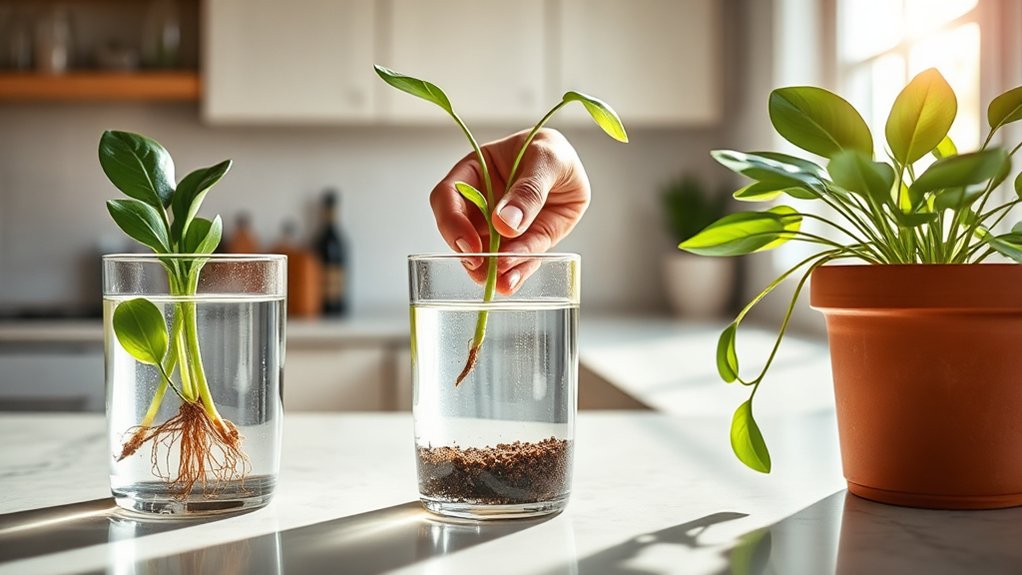
Now that you’ve got healthy cuttings, you can root them in either water or soil, depending on the plant and your preference. With water propagation, place the stem in a clean jar so only the nodes touch the water. Set it in bright, indirect light and change the water every few days to keep it fresh.
Root healthy cuttings in water or soil, keeping nodes moist in bright, indirect light.
Soil propagation works best when you dip the cut end in rooting hormone, then insert it into a moist, well-draining mix.
Choose water for easy monitoring and fast rooting. Choose soil if the plant dislikes transplant shock. Keep cuttings warm, stable, and out of direct sun.
Check for roots by looking for new growth, tugging very gently, or spotting white tips through the glass. Some cuttings root quickly, while others take weeks. Don’t rush them; steady conditions help them succeed.
Pot Up and Care for New Cuttings

Once your cuttings have a healthy root system, move them into small pots with fresh, well-draining potting mix and water them lightly to help settle the soil. Keep the soil evenly moist, but don’t let it stay soggy. A simple watering schedule helps you avoid rot while encouraging steady root development.
Place the pots in bright, indirect light since harsh sun can scorch tender leaves and too little light can slow growth. Maintain moderate humidity levels by grouping plants together or using a pebble tray if your home runs dry.
Watch for new leaves, which show the cutting is adapting well. Avoid fertilizing right away; wait until you see active growth. Check stems and undersides of leaves often for pests, and remove problems early before they spread.
With consistent care, your young houseplants will adjust quickly and begin growing into sturdy, healthy plants.
Frequently Asked Questions
Which Houseplants Are Hardest to Propagate From Cuttings?
The hardest houseplants to propagate from cuttings are usually difficult species like fiddle-leaf fig, rubber plant, and some begonias. You’ll often struggle because they root slowly, rot easily, or need precise propagation techniques to succeed.
You may also find crotons, jade plants, and some succulents tricky if you don’t manage moisture and light carefully. If you want better results, take healthy stem cuttings and keep conditions warm, bright, and humid.
How Long Do Cuttings Take to Root Indoors?
You’ll usually see roots in 2 to 8 weeks, though some cuttings surprise you sooner while others linger, as if timing itself is teaching patience. Your rooting timeframes depend on the plant, light, warmth, humidity, and the quality of your indoor conditions.
Check for gentle resistance when you tug lightly. If you keep the medium moist, not soggy, and give bright indirect light, you’ll often speed up the process.
Can I Use Rooting Hormone on All Plant Cuttings?
No, you can’t use rooting hormone on all plant cuttings. You’ll get the best results with many softwood and semi-hardwood plants, but some species root fine without it, and others may react poorly.
Follow simple propagation tips: check the plant type, use a clean blade, and dip only the cut end lightly. Rooting hormones can help, but they’re optional, not universal, so you should match your method to each cutting.
What Signs Show a Cutting Has Failed to Root?
A cutting that’s gone limp, blackened, or mushy is waving a white flag. You’ll notice leaves yellowing, dropping, or drying out, and stems softening instead of firming up.
If new growth never appears and roots don’t show after weeks, you’re likely seeing rooting failure. Keep up careful cutting care, but if the base smells rotten or collapses, it’s usually too far gone to recover and needs replacing.
When Should I Take Cuttings for Best Success?
You should take cuttings when your plant’s actively growing, usually in spring or early summer. Those ideal seasons give you warm temperatures, brighter light, and faster root formation.
Avoid taking cuttings during dormancy or stress because they’ll struggle to root. Use clean, sharp tools and match your cutting techniques to the plant type.
If you time it right, you’ll boost success and help each cutting establish quickly.
Conclusion
With a few clean cuts, a little patience, and the right setup, you can turn one healthy houseplant into several. Choose strong stems, root them in water or soil, then pot them up once they’re ready.
Before long, your windowsill will feel like a small green orchestra, with each new plant adding its own note. Keep caring for them, and you’ll enjoy fresh growth and a thriving indoor garden.
Growing houseplants from cuttings is a rewarding way to expand your collection and bring more life into your home.