Best Soil for Vegetable Gardens: 7 Tips
If you’ve ever struggled to grow a thriving vegetable garden, you’re not alone. Many people find it tough to get their soil just right, which can lead to disappointing results despite their best efforts.
The good news is that understanding how to create the best soil for vegetable gardens can make all the difference.
For the best soil for vegetable gardens, you want loose, loamy earth that drains well, holds steady moisture, and is rich in organic matter.
Test your soil’s pH and nutrients first, aiming for about 6.0 to 7.0. Then mix in compost to boost fertility and improve texture.
Check drainage before planting, and refresh the bed each season. Match crops to your soil’s strengths, and you’ll set yourself up for healthier plants and better harvests with a few smart tweaks.
Key Takeaways
- Use loose, crumbly loamy soil that balances sand, silt, clay, air, and moisture. This helps roots grow easily and ensures even drainage.
- Keep soil rich in organic matter by mixing in 1 to 2 inches of compost. This improves fertility, structure, and moisture retention.
- Test soil pH and nutrients first. Most vegetables grow best in pH 6.0 to 7.0 with balanced nitrogen, phosphorus, and potassium.
- Improve poor drainage with raised beds, shallow channels, or extra organic matter. This prevents soggy roots and standing water.
- Protect the surface with mulch and rotate crops yearly. Doing this reduces weeds, erosion, disease, and nutrient depletion.
What Vegetable Garden Soil Needs Most?

Vegetable garden soil needs three things most: good structure, steady moisture, and plenty of nutrients. You want a loose, crumbly texture that roots can push through easily. You also need soil composition that holds enough water without turning dense.
Aim for a mix rich in organic matter, since it improves texture and helps soil feed your plants over time. Keep an eye on nutrient balance because vegetables use up nitrogen, phosphorus, and potassium quickly. If one nutrient dominates, growth can suffer even when the soil looks fine.
You’ll also do better when your soil stays biologically active because helpful microbes break down matter and release nutrients plants can absorb. Before you plant, work in compost or well-rotted amendments to support structure and fertility. When you start with healthy soil, your vegetables grow stronger, taste better, and need less correction later.
Check Drainage Before You Plant
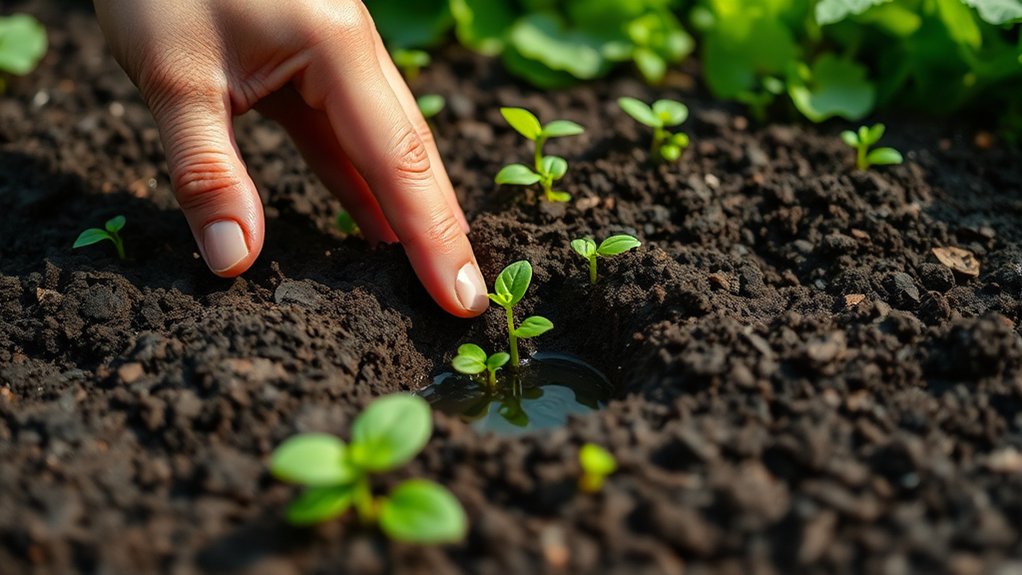
Before you plant, test how well your soil drains, because roots can’t thrive in waterlogged ground. Dig a hole about a foot deep, fill it with water, and watch how fast it empties. If it still holds water after several hours, you’ve got a drainage problem that needs attention.
Test your soil’s drainage before planting—roots won’t thrive in ground that stays waterlogged.
You can improve conditions with drainage solutions like raised beds, shallow channels, or adding organic matter to help water move through more evenly. Pay attention after heavy rain, too, since standing puddles signal trouble.
Check soil moisture with your hand or a simple meter before watering again. If the surface looks dry but the soil stays soggy below, your plants may suffer from too much water.
Good drainage protects roots, reduces disease, and helps vegetables grow steadily. When you start with soil that sheds extra water well, you give your garden a stronger chance to thrive all season.
Choose Loamy Soil for Strong Roots
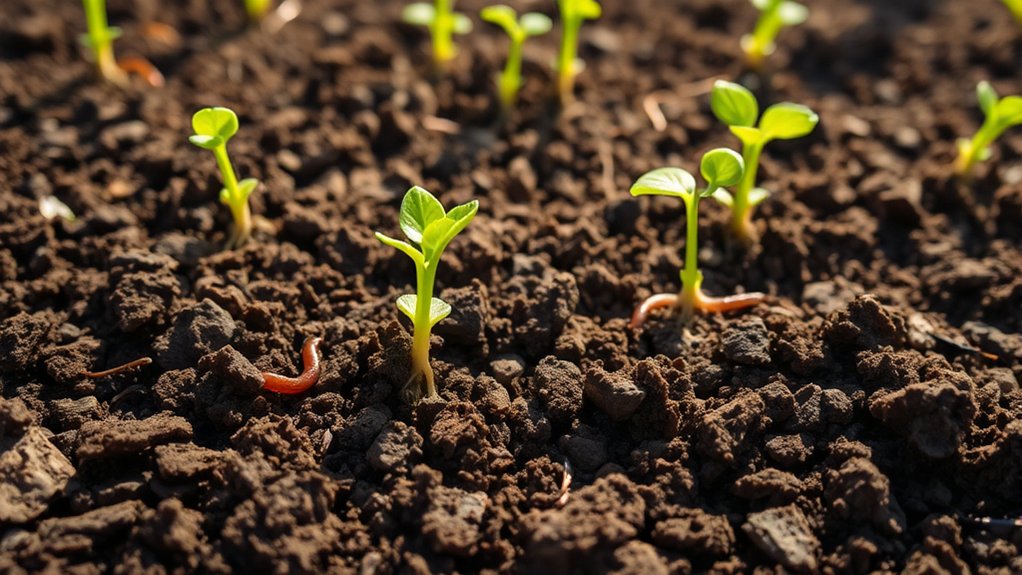
Loamy soil gives your vegetables the best chance to build strong, healthy roots because it balances sand, silt, clay, air, and moisture. You want that loamy texture because it lets roots spread easily while holding enough water for steady growth. When soil feels crumbly and rich, your plants can anchor faster and develop better root stability.
| Trait | What You Want | Why It Helps |
|---|---|---|
| Texture | Crumbly | Roots move freely |
| Drainage | Even | Prevents soggy pockets |
| Moisture | Moderate | Supports steady growth |
| Air space | Balanced | Roots breathe well |
| Structure | Loose | Improves root stability |
You can test a handful by squeezing it; it should hold shape briefly, then break apart. If it stays sticky or falls apart completely, it isn’t ideal. Add compost to improve structure, and work it in gently so you keep that loose, productive foundation for your garden beds.
Test Soil pH and Nutrients Before Planting
Even great-looking soil can miss the mark, so you should test its pH and nutrient levels before you plant. Soil testing tells you whether your garden is too acidic, too alkaline, or balanced for vegetables.
Most crops grow best in a pH range of 6.0 to 7.0, where roots can absorb nutrients efficiently. Use a simple home kit or send a sample to a lab for a fuller nutrient analysis.
Check for key elements like nitrogen, phosphorus, and potassium, and note any deficiencies before you sow seeds or set transplants. If results show an imbalance, you can choose crops that fit your soil or adjust your planting plan.
Testing also helps you avoid guessing, wasted effort, and weak yields. Take samples from several spots in the bed, mix them well, and follow the instructions closely for accurate results.
Improve Vegetable Garden Soil With Compost
Compost is a great way to boost your soil because it adds nutrients, improves texture, and helps it hold moisture without becoming soggy. You can simply spread a 1- to 3-inch layer over your garden bed and then mix it into the top few inches of soil.
Compost Benefits
If you want richer, healthier vegetable garden soil, compost is one of the best tools you can add. It feeds beneficial microbes, improves drainage, and helps sandy or clay soil hold moisture better. You can choose from different compost types, and each one supports your beds in unique ways. The right compost applications boost fertility without relying on heavy synthetic inputs.
| Benefit | What you get |
|---|---|
| Nutrients | Slow-release food for crops |
| Soil structure | Looser, better-aerated beds |
| Water balance | Better moisture retention |
When you mix compost into your garden, you also reduce waste and build long-term soil health. Your vegetables grow stronger roots, and you’ll often see healthier leaves, steadier growth, and better harvests overall.
How To Apply Compost
To get the most from compost, spread a 1 to 2 inch layer over your vegetable beds and work it into the top 6 to 8 inches of soil before planting. Choose compost types that match your soil needs, then use steady compost application to feed roots and boost moisture retention.
You’ll see healthier growth when you:
- Mix compost evenly, so every plant gets nutrients.
- Add a fresh topdressing midseason, keeping beds lively.
- Water after spreading, helping compost settle into the soil.
Avoid piling compost against stems, and don’t overdo it; too much can smother young plants. With consistent care, you’ll build richer soil, stronger harvests, and a garden that feels more rewarding each season.
Match Soil to Each Vegetable
You should match your soil to each vegetable’s root depth. Shallow-rooted crops need looser topsoil, while deep-rooted plants need room to reach down. It’s also important to adjust the texture and nutrients for each crop’s specific soil needs. For example, tomatoes, carrots, leafy greens, and beans all grow best in different conditions. When you tailor the bed to each plant, you help your vegetables grow stronger and produce more.
Root Depth Needs
Root depth matters because not every vegetable needs the same amount of room below the surface. When you choose soil, think about how far roots will stretch and how easily they can move. Loose, well-drained soil lets root growth happen fast, while packed ground can slow plants down and trap moisture.
You’ll also want soil that warms at a steady soil temperature, since cold, heavy soil can leave roots struggling.
- Shallow-rooted crops need only a light, workable layer.
- Deep-rooted vegetables need extra depth to anchor and feed them.
- Mixed plantings need soil that supports both styles without stress.
When you match depth to the crop, you give your garden a better shot at strong starts, healthy leaves, and satisfying harvests.
Crop-Specific Soil Needs
Different vegetables ask for different soil conditions, so matching your soil to the crop can make a big difference in growth and yield. You should tailor texture, fertility, and drainage to each plant’s needs. Leafy greens like rich, moisture-holding soil, while carrots need loose, stone-free ground.
Tomatoes prefer well-drained, nutrient-rich beds, and beans do best in moderately fertile soil. Use soil amendments to fine-tune pH and organic matter before planting.
| Vegetable | Soil Preference | Best Action |
|---|---|---|
| Lettuce | Moist, fertile | Add compost |
| Carrots | Loose, sandy | Remove rocks |
| Tomatoes | Well-drained | Mix in compost |
With crop rotation, you’ll prevent nutrient depletion and reduce disease pressure. When you match soil to each vegetable, you’ll grow stronger plants and harvest more reliably.
Refresh Vegetable Garden Soil Each Season
Each season, refresh your vegetable garden soil to keep it fertile, loose, and ready for strong plant growth. Start by removing spent roots and debris, then mix in compost or other soil amendments to restore nutrients and improve texture. Rotate crops each year with seasonal rotation so hungry plants don’t drain the same minerals again and again.
- Add compost to feed microbes and boost moisture retention.
- Work in aged manure or worm castings to strengthen tired beds.
- Top with mulch to protect the surface and reduce crusting.
When you renew the soil this way, you give seeds a healthier start and roots more room to spread. You’ll also reduce disease pressure and keep harvests more reliable. A few careful steps in spring and fall can turn exhausted ground into a productive, living foundation that supports bigger, tastier vegetables all season long.
Frequently Asked Questions
How Often Should I Water Vegetable Garden Soil?
You should water your vegetable garden soil when the top inch feels dry. Usually, this means watering 1 to 3 times a week depending on heat, rain, and soil type.
You’ll need to water deeper less often so roots grow strong. Improve moisture retention with compost and mulch, and use drainage solutions if water pools after watering.
Check soil regularly because too much water can drown plants and too little can stress them.
Can I Use Raised Beds Instead of In-Ground Soil?
Yes, you can use raised beds instead of in-ground soil. They’re like a clean slate for your garden, giving you control over texture, nutrients, and moisture.
You’ll enjoy raised bed benefits such as easier planting and fewer weeds. Plus, you can improve soil drainage with the right mix.
Fill them with rich, loose soil and water consistently. This will help your vegetables grow stronger and healthier with less effort.
What Tools Help Test Garden Soil at Home?
You can test garden soil at home with a simple pH kit, a digital pH meter, and an at-home soil test kit for nutrient levels. Use a trowel to collect samples from several spots, then mix them in a clean bucket. You’ll learn if your soil needs lime, compost, or fertilizer.
A moisture meter can also help you check drainage and watering needs before you plant anything.
Are Worms Beneficial for Vegetable Garden Soil?
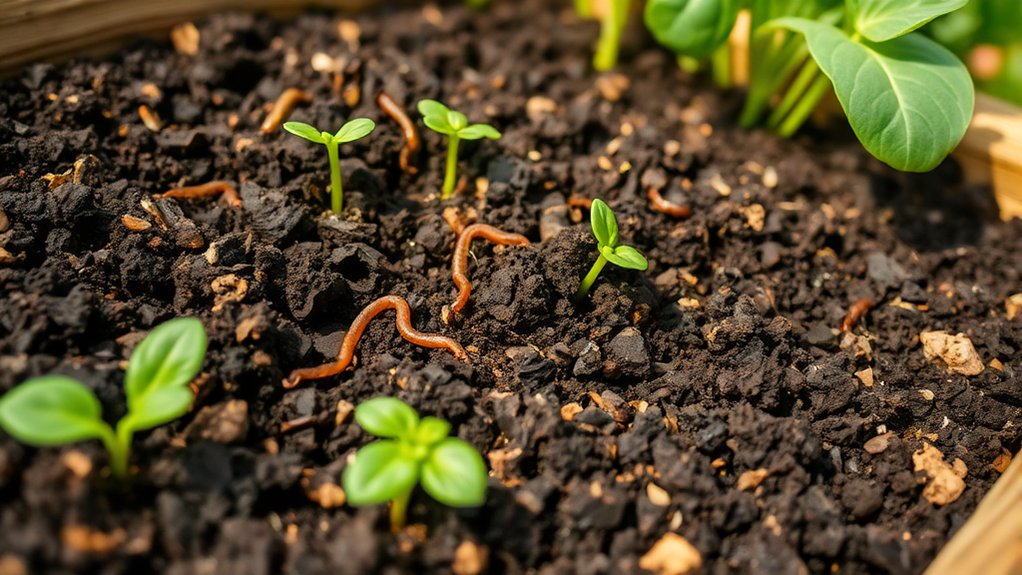
Yes, worms are very beneficial for your vegetable garden soil. You’ll often find that one acre can host over a million worms, and that tells you how active healthy soil can be.
Different worm types break down organic matter, enrich nutrients, and improve soil aeration, so roots breathe and spread more easily. You should encourage them with compost, mulch, and less tilling, and your crops will thank you with stronger growth.
Should I Mulch Vegetable Garden Beds Year-Round?
Yes, you can mulch vegetable garden beds year-round, but you should choose wisely. You’ll get the best mulch benefits by matching mulch types to the season and crop. Use straw, shredded leaves, or grass clippings in warm months to hold moisture and suppress weeds.
In winter, keep a lighter layer so soil can breathe. You should always pull mulch back from stems to prevent rot and pests.
Conclusion
So, after all that digging, you’ll find the “best” soil isn’t glamorous at all. It’s the quiet, crumbly stuff that lets water slip through, roots breathe, and nutrients show up on time.
Funny how the dirt that looks the least impressive can grow the loudest harvest. If you keep testing, feeding, and rejuvenating it, your garden will reward you with vegetables that seem to burst from the ground just to prove you wrong.
That’s the magic of the best soil for vegetable gardens—it may not look like much, but it’s everything your plants need to thrive.