How to Improve Clay Soil in 5 Steps
If you’ve ever tried gardening in clay soil, you know how tough it can be. The heavy, sticky texture makes planting and drainage a real challenge. You’re not alone—many people struggle with improving clay soil to create a healthier, more workable garden space. How to Improve Clay Soil.
Test your soil first: moisten it and see if it forms a tight, sticky ball, or do a jar test to confirm clay. Then add 2 to 4 inches of compost, leaf mold, or well-rotted manure to loosen it and boost drainage.
Next, break up compaction with a garden fork or broadfork when the soil is just moist. Improve runoff with raised beds or shallow channels, and mulch to hold the gains and keep the soil thriving, as there’s more to know.
Key Takeaways
- Test your soil first to confirm clay content and understand how much improvement it needs.
- Add 2 to 4 inches of compost, leaf mold, or well-rotted manure to loosen dense clay.
- Work soil only when slightly moist, using a garden fork or broadfork to break compaction.
- Improve drainage by raising beds or creating shallow channels where water pools.
- Mulch with organic material to reduce crusting, retain moisture, and keep soil structure improved.
Test Whether Your Soil Is Clay
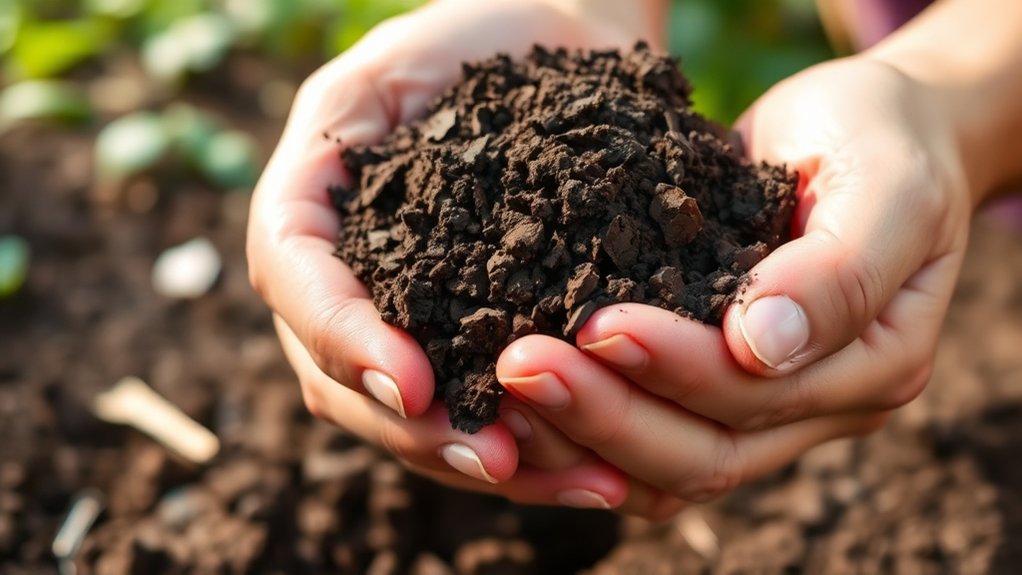
How can you tell if your soil is clay? Start with a simple pinch test. Moisten a handful of soil, then squeeze it. If it forms a tight ball that holds shape, you likely have clay. Rub it between your fingers; clay feels smooth, sticky, and dense rather than gritty.
When wet, it may smudge easily, and when dry, it can crack hard. These clay soil characteristics help you identify problem areas in your garden.
For clearer results, do basic soil texture testing. Fill a jar halfway with soil, add water and a little dish soap, then shake it hard. Let it settle. Sand drops first, silt follows, and clay stays suspended longest.
A thick, cloudy layer that settles slowly often means high clay content. You can also dig a small hole after rain. If water lingers instead of draining fast, your soil likely contains lots of clay.
Add Organic Matter to Clay Soil

Adding organic matter is one of the best ways to improve clay soil because it loosens dense particles, boosts drainage, and makes roots easier to grow. You can mix in finished compost, leaf mold, well-rotted manure, or shredded leaves to feed soil life and improve texture.
Adding organic matter loosens clay soil, improves drainage, and gives roots room to grow.
These compost benefits add nutrients, help soil hold moisture evenly, and create air pockets that roots need. Spread a 2- to 4-inch layer over the bed, then work it into the top few inches of soil or leave it as mulch around plants. Repeat this each season for steady improvement.
As organic matter breaks down, it encourages earthworm activity, and worms help move material through the soil naturally. You’ll notice the soil becoming darker, crumbly, and easier to plant in.
Keep adding organic material regularly, and your clay soil will gradually become healthier, more workable, and better suited for strong plant growth.
Break Up Compacted Clay Soil

Compacted clay soil can choke roots and block water, so loosening it is a key step in making the ground healthier. You can start by working when the soil is just moist, not wet, so it won’t smear or clump. Use a garden fork or broadfork to lift and crack the soil without turning it over.
These soil aeration techniques open space for air and roots.
| Tool | Use |
|---|---|
| Garden fork | Pry and fracture tight soil |
| Broadfork | Loosen deep layers gently |
| Compost | Support structure after loosening |
| Mulch | Protect the surface from packing |
| Cover crops | Help keep soil open |
After aerating, mix in clay soil amendments like composted leaves or aged manure. Step lightly in beds and avoid repeated traffic in the same spots. This way, you’ll keep the soil softer, easier to work, and far less restrictive for plant roots.
Improve Drainage in Clay Soil
If water sits on top of your clay soil after rain, the ground likely needs better drainage. You can start by loosening the area with a broadfork or garden fork, then add drainage techniques that move excess water away from roots.
Mix in organic soil amendments such as compost to open tight particles and help water flow through instead of pooling above them. If your yard stays soggy, shape beds slightly higher than the surrounding ground so rain can escape faster.
Mix in compost to loosen clay and raise beds slightly so excess rain drains away faster.
You might also direct runoff with shallow channels or a French drain where needed. Watch how the soil responds after each change because small fixes often bring big relief.
- Feel less frustrated after heavy rain.
- Protect roots from drowning and rot.
- Give plants a stronger chance to grow.
- Turn a muddy mess into usable ground.
Mulch Clay Soil to Maintain Improvements
A good layer of mulch helps your clay soil hold onto the progress you’ve made. Spread 2 to 4 inches of organic mulch around plants, but keep it a few inches from stems and trunks so moisture doesn’t collect there.
Mulch reduces surface crusting, slows evaporation, and cushions the soil from heavy rain. This helps preserve better structure and drainage. It also feeds soil life as it breaks down, adding organic matter that keeps clay looser over time.
Use mulch types like shredded leaves, straw, wood chips, or compost, and choose what suits your beds and climate. Refresh the layer each season, especially after rain and wind move it around.
Avoid piling on too much since thick mats can block air and invite pests. With steady mulching, you’ll protect your improvements and make future digging, planting, and watering easier.
Frequently Asked Questions
How Long Does Clay Soil Take to Improve?
Clay soil can start improving in a few months, but you’ll usually need one to three years for lasting change. You’ll see faster results if you use soil amendment techniques like compost and mulch, plus drainage solutions such as raised beds or channels.
You won’t fix it overnight, but regular care helps. Keep adding organic matter each season, and you’ll notice better texture, easier digging, and healthier plant roots over time.
Can I Plant Vegetables Directly in Clay Soil?
Yes, you can, but the results may surprise you. You can plant vegetables directly in clay soil if you choose the right planting techniques and vegetable varieties.
Start with raised beds, loose planting holes, and plenty of compost to help roots move. You’ll do best with tough crops like cabbage, kale, beans, and squash.
Avoid working wet clay, or you’ll make it tighter and harder for your vegetables to grow.
Which Plants Tolerate Heavy Clay Soil Best?
You’ll get the best results from native plants like switchgrass, coneflower, black-eyed Susan, and daylily, since they handle heavy clay naturally. Choose plants with shallow to moderate root depth, and match them to your site’s moisture retention.
If your clay stays soggy, add drainage solutions and soil amendments such as compost. Increasing organic matter helps roots spread, so you can grow tougher perennials and shrubs with less stress.
Should I Add Sand to Clay Soil?
You shouldn’t add sand to clay soil unless you mix in lots of organic matter too. The old theory says sand loosens clay, but it often turns sticky clay into a concrete-like mix.
You’ll get better results with soil amendments like compost and leaf mold, plus drainage solutions such as raised beds or drainage tiles. Work amendments in gradually, and you’ll improve texture, airflow, and root growth without making the problem worse.
How Often Should I Retest My Soil?
You should retest your soil every 2 to 3 years, or sooner if your plants struggle or you’ve added amendments. Regular soil testing helps you track nutrient levels and catch pH shifts before they cause problems.
If you grow vegetables or make big changes, test yearly. You’ll make smarter decisions, avoid wasting fertilizer, and keep your soil balanced for healthier growth.
Conclusion
With a little patience, you can turn stubborn clay into workable soil. Test it, add organic matter, break up compaction, improve drainage, and mulch well to lock in the gains.
Keep tending it season by season, and you’ll see roots spread, water move better, and plants thrive. Think of it like tuning a medieval plow for a modern garden: a few smart tweaks can make your whole plot work smoother and stronger.
Improving clay soil takes time, but the results are worth it. Follow these steps consistently, and your clay soil will become a healthy foundation for vibrant plants.