How Do I Make Suet in 3 Simple Steps
If you’ve ever tried feeding wild birds, you know how tricky it can be to find the right food that keeps them coming back. Many people struggle with making suet that birds actually love and that provides the energy they need, especially in colder months. You’re not alone in wanting a simple, effective way to boost your backyard bird feeding routine.
To make suet in 3 simple steps, first gather high-quality suet or beef fat and bird-friendly ingredients like sunflower seeds, peanuts, and dried fruits. Next, gently melt the fat in a pan, stir in the seeds and fruits evenly, then pour the mixture into molds.
Finally, refrigerate until firm, then place it in suet feeders outside. This easy blend offers birds essential energy, especially in cold months. Keep going to uncover tips for storage and feeding success.
Key Takeaways
- Gently melt high-quality suet or beef fat in a pan until fully liquid.
- Stir in bird-friendly ingredients like sunflower seeds, cracked corn, and dried fruits evenly.
- Pour the mixture into molds or containers for setting.
- Refrigerate the suet until it becomes firm and solid.
- Store suet in airtight containers and keep refrigerated or frozen for freshness.
Gather Essential Ingredients and Tools to Make Homemade Suet

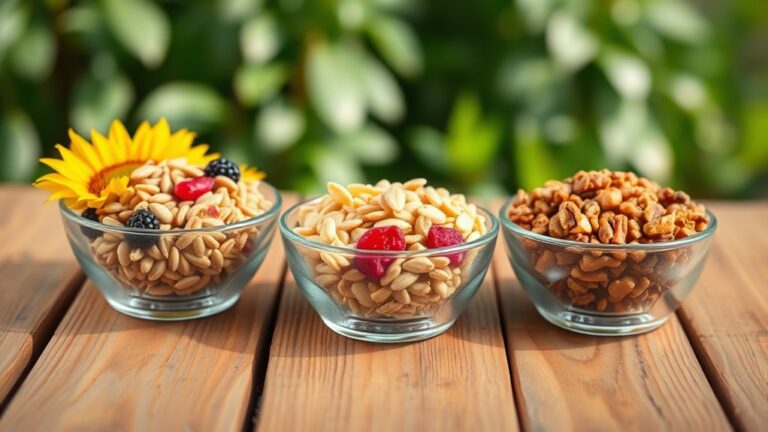
Before you begin making suet, gather all the essential ingredients and tools to streamline the process. Start with high-quality suet or beef fat as your base, which provides the energy birds need during colder months.
You’ll also want to collect bird-friendly additions like sunflower seeds, cracked corn, peanuts, and dried fruits. These add variety and nutrition. Having a mixing bowl, spoon, and molds or containers ready guarantees smooth preparation.
Keep in mind bird feeding tips: avoid ingredients like salt, sugar, or anything processed because they can harm birds. Seasonal suet recipes often call for specific ingredients, like cranberries in winter or chopped apples in fall, to attract different bird species and provide seasonal nutrients.
Preparing everything beforehand saves time and helps you focus on creating a nutritious suet blend that supports your local wildlife. By assembling these essentials, you’re setting yourself up for success before you even start mixing.
Mix and Prepare Nutritious Suet in 3 Simple Steps

With all your ingredients and tools ready, you can now start mixing and preparing the suet to create a nutritious treat for your feathered visitors. Follow these three simple steps to guarantee your suet is both healthy and appealing.
| Step | Action |
|---|---|
| 1. Melt fat | Gently melt suet or lard in a pan to a liquid form. |
| 2. Mix | Stir in seeds, nuts, dried fruits, and oats evenly. |
| 3. Pour & set | Pour mixture into molds and refrigerate until firm. |
This method maximizes the suet health benefits, giving birds essential fats and nutrients. Remember, high-quality suet supports bird energy and survival, especially in colder months. Applying these bird feeding tips will help you attract a variety of species to your yard.
Store and Use Homemade Suet to Attract More Backyard Birds
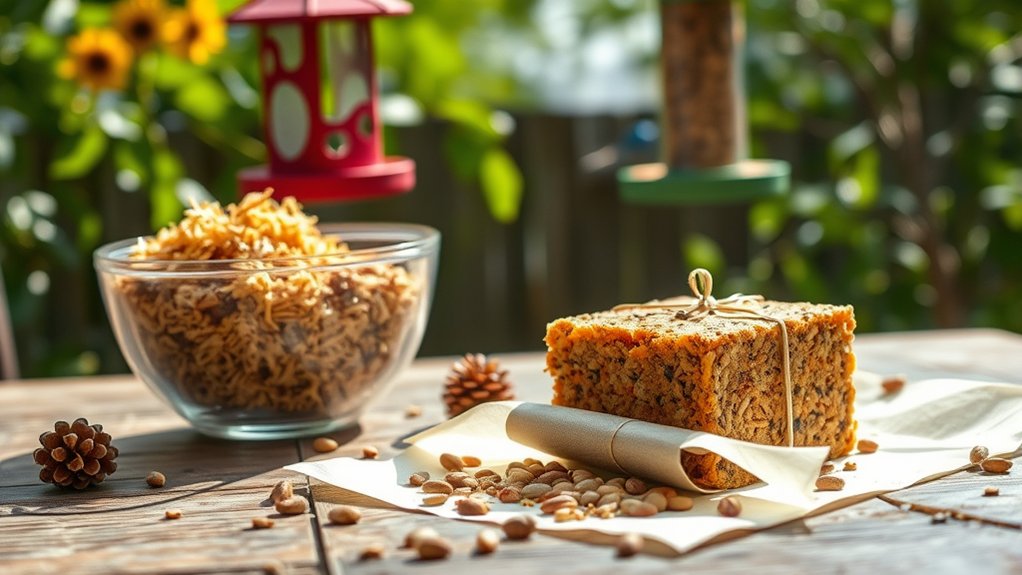
Properly storing and using your homemade suet guarantees it stays fresh and inviting for birds throughout the season. Once you’ve made your suet, store it in an airtight container in the refrigerator for up to two weeks or freeze it for longer storage.
Store homemade suet airtight in the fridge for two weeks or freeze to keep it fresh longer.
When you’re ready to feed the birds, place suet cakes in a sturdy feeder designed for suet to keep it secure. Pay close attention to bird feeder placement. Choose a shady, sheltered spot away from strong winds and predators.
This helps attract more suet bird species like woodpeckers, nuthatches, and chickadees. Rotate your feeding locations occasionally to prevent territorial disputes among birds and keep them coming back.
Regularly clean your suet feeder to avoid mold and bacteria buildup, ensuring a safe feeding environment. By storing your suet correctly and thoughtfully placing feeders, you’ll enjoy a lively backyard full of vibrant, healthy birds all season long.
Frequently Asked Questions
Can Suet Be Made Without Animal Fat?
Yes, you can make suet without animal fat by using vegetarian alternatives. Plant-based fats like coconut oil, vegetable shortening, or cocoa butter work well to mimic the texture and energy content of traditional suet.
When you use these plant-based fats, you’ll still attract birds and provide them with a nutritious treat. Just mix your chosen fat with seeds, grains, and nuts, and you’re set for a vegetarian-friendly suet option!
What Birds Are Attracted to Homemade Suet?
You’ll attract various bird species like woodpeckers, nuthatches, chickadees, and wrens with homemade suet. These birds love the energy-rich suet ingredients, such as rendered fat, seeds, and nuts.
Adding dried fruits or mealworms can draw in even more species, including starlings and titmice. By offering suet, you provide a valuable food source, especially in colder months, encouraging a lively and diverse group of birds to visit your feeder regularly.
How Often Should I Replace Suet Feeders?
Like clockwork, you should replace suet feeders every two to three days to keep the feeding frequency just right. During colder months, suet lasts longer, so you can extend it to about a week.
But in warm weather, it melts and spoils quickly, so swap it more often. Always consider seasonal considerations. Heat and humidity speed up spoilage, so keep an eye on your feeder to guarantee birds get fresh, tasty suet.
Is Homemade Suet Safe for All Bird Species?
Homemade suet can be safe for many bird species, but you need to ensure nutritional content and bird preferences. Some birds prefer high-fat suet, while others need more seeds or nuts.
Avoid ingredients like salted or sugary additives, which can harm birds. Tailor your suet mix to local species to guarantee it meets their dietary needs. By doing this, you’ll provide a healthy, attractive treat for a variety of birds.
Can Suet Be Used in Winter Only?
You don’t have to use suet only in winter. Imagine a chilly morning when bird migration thins your backyard visitors. Suet keeps energy-rich meals accessible year-round.
Just be mindful of suet storage. In warmer months, it can spoil quickly. Keeping it cool and dry extends its life, letting you enjoy feeding birds beyond the cold season.
Conclusion
Making suet is like planting a tiny garden for your feathered friends. Each step you take nourishes their vibrant visits. Just as a single seed grows into a flourishing plant, your simple mix of ingredients transforms into a powerful bird magnet.
Remember, backyard birds flock to suet feeders 40% more than to seed alone. So enjoy watching your garden of wings thrive with every homemade suet treat you prepare. Making suet is a wonderful way to keep your feathered visitors coming back for more.