10 Key Factors That Attract Birds to Bird Feeders
Attracting birds to your feeder can sometimes feel like a guessing game. You’re not alone if you’ve struggled to see many feathered visitors despite setting up a feeder. Many people want to enjoy watching birds up close but aren’t sure how to make their feeders more appealing.
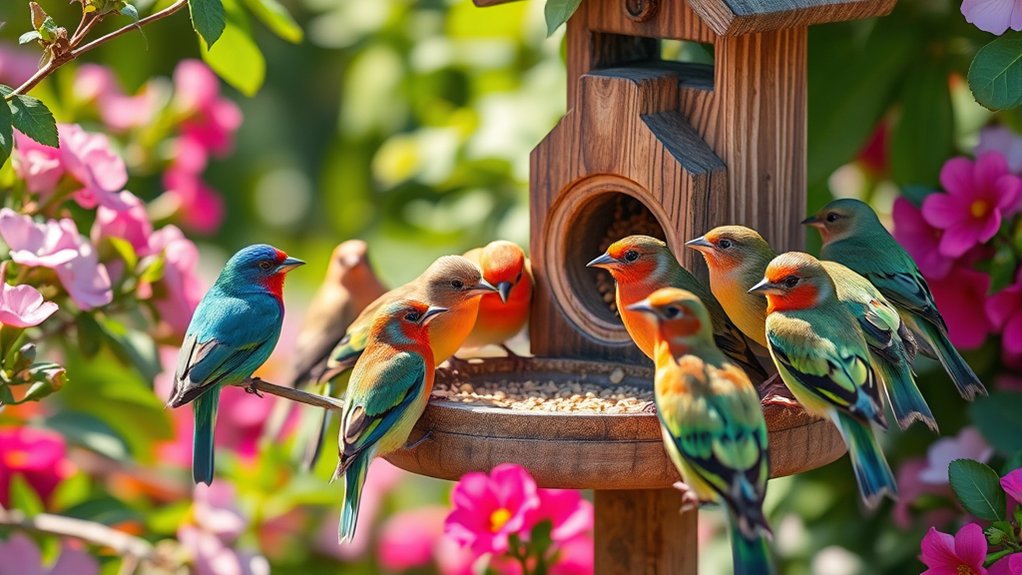
You’ll attract more birds by choosing the right feeder type: tube feeders for small songbirds, platform feeders for larger species, and suet feeders for insect-eaters. Use high-quality seeds like black oil sunflower and keep feeders clean to prevent disease.
Place feeders near natural cover about 5 to 15 feet off the ground for safety and visibility. Adding water features and seasonal seed variety also boosts visits.
Keep these basics in mind, and you’ll realize even more ways to invite feathered friends.
Key Takeaways
- Use a variety of feeder types and seed mixes to attract diverse bird species and keep their interest.
- Position feeders near natural cover like trees or shrubs for safety and easy access.
- Provide fresh water features, such as birdbaths or fountains, to attract and sustain visiting birds.
- Maintain cleanliness by regularly cleaning feeders and removing spilled seeds to prevent disease and pests.
- Choose feeder designs and colors that suit target bird species. Avoid reflective surfaces since they may deter shy birds.
Types of Bird Feeders That Attract More Birds
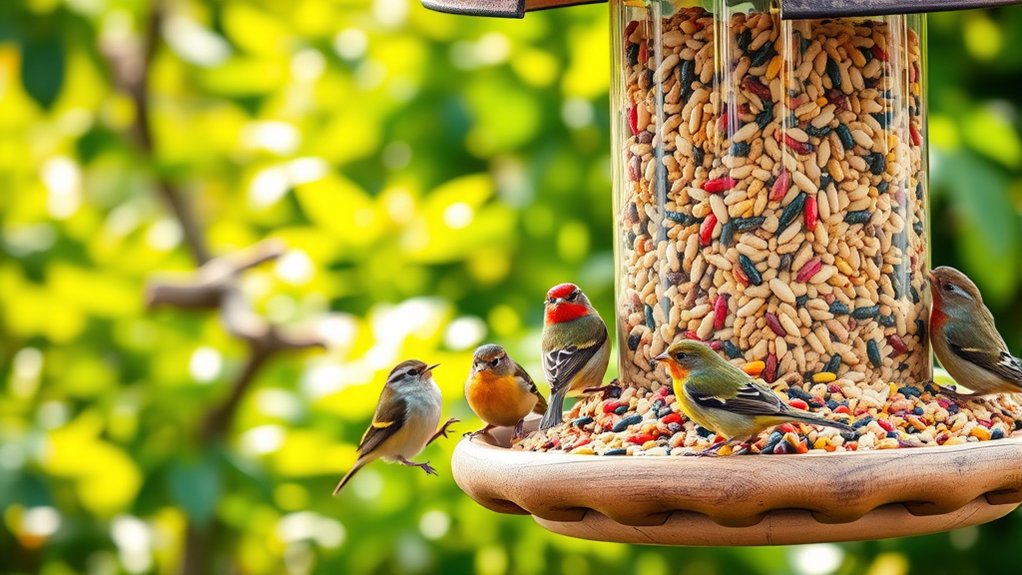
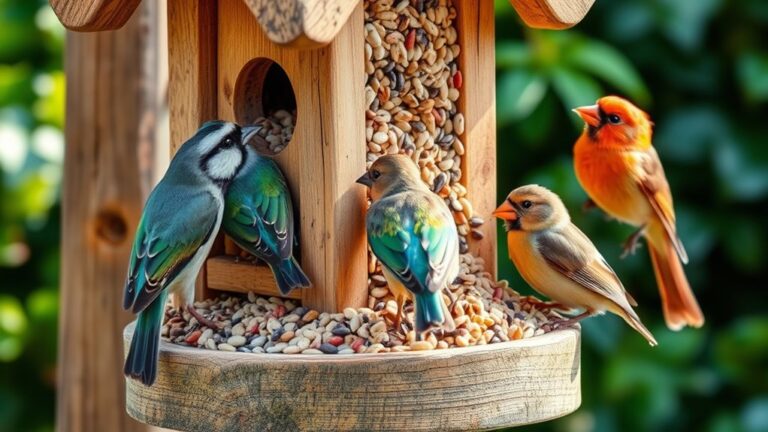
When you choose the right type of bird feeder, you’ll attract a wider variety of birds to your yard. Tube feeders are great for small songbirds, while platform feeders offer space for larger birds.
Hopper feeders combine seed storage solutions with easy access, keeping seeds dry and fresh. Suet feeders attract insect-eating birds, especially in colder months.
Remember, bird feeder placement plays a vital role too. Position feeders near trees or shrubs for cover but far enough from windows to prevent collisions. Also, placing feeders at different heights can draw diverse bird species.
Proper seed storage solutions guarantee seeds remain fresh and pest-free, making your feeder more inviting. By selecting appropriate feeders and carefully placing them, you create a welcoming environment that satisfies different birds’ feeding habits and safety needs.
This approach encourages more frequent visits and a richer bird-watching experience right outside your window.
Best Birdseed Mixes for Your Bird Feeder
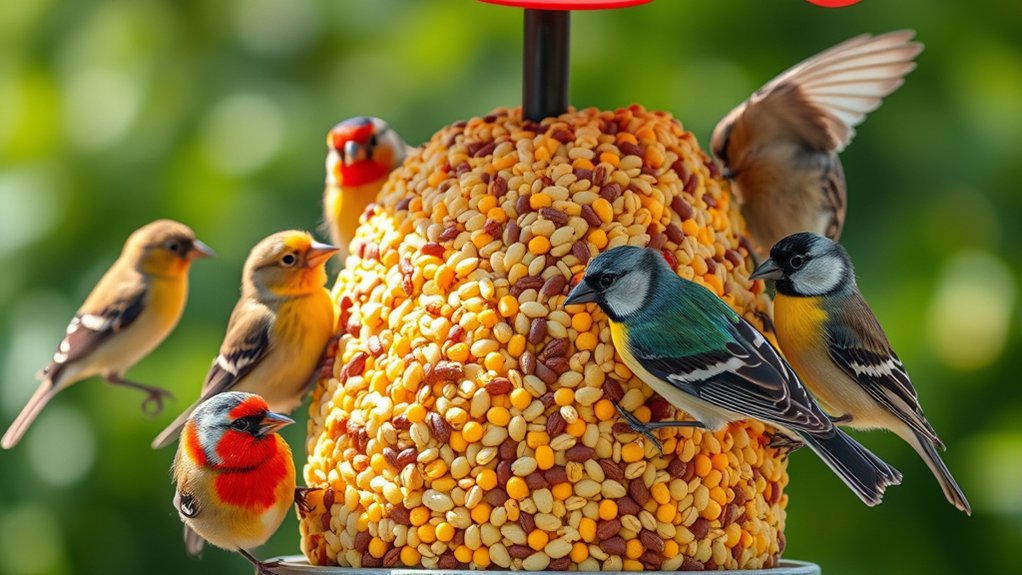
Choosing the right bird feeder sets the stage, but selecting the best birdseed mix keeps your feathered visitors coming back. Different birdseed varieties attract different species, so understanding what birds frequent your area helps you pick the perfect blend.
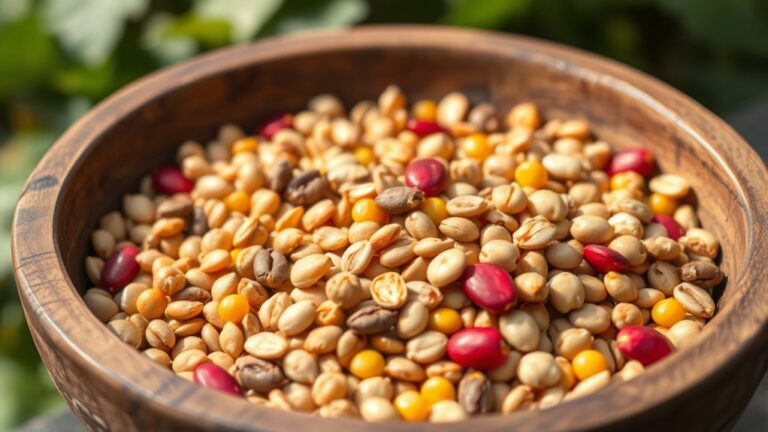
Black oil sunflower seeds are a favorite for many birds due to their high energy content and thin shells. Mix in millet and cracked corn to appeal to ground feeders like sparrows and doves.
Black oil sunflower seeds energize many birds, while millet and cracked corn attract ground feeders like sparrows and doves.
When buying birdseed, pay attention to freshness. Proper seed storage is essential to prevent mold and pests, which can deter birds.
Store your birdseed in airtight containers in a cool, dry place to maintain its quality. Avoid seed mixes with fillers like red millet or oats, as these often go uneaten and waste your investment.
How to Place Your Bird Feeder for Maximum Visits
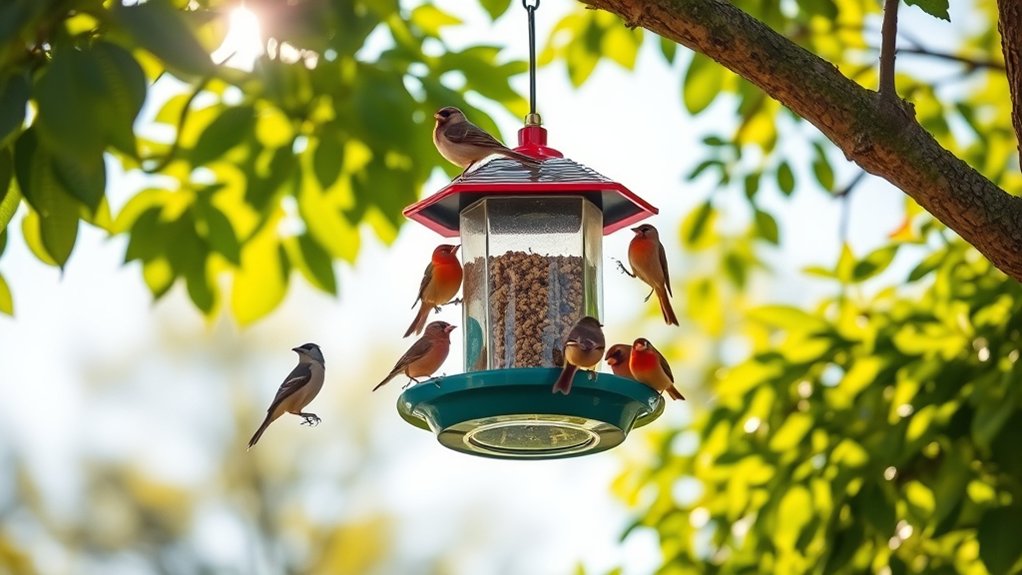
Placing your bird feeder thoughtfully can substantially increase the number of visitors you attract. First, consider the natural flight paths birds use during bird migration; placing feeders near trees or shrubs along these routes makes your feeder more noticeable.
Birds often prefer feeders located within 10-15 feet of cover, so they can quickly escape predators. Also, take into account local birds’ nesting habits. Position feeders close to natural nesting sites, such as dense bushes or trees, to encourage frequent visits.
Avoid placing feeders too close to windows to prevent collisions, but keep them visible from your favorite viewing spot. Height matters too; placing a feeder about 5 feet off the ground balances accessibility for birds and safety from ground predators.
Why Keeping Your Bird Feeder Clean Attracts More Birds
You’ll attract more birds when you keep your feeder clean because it helps prevent the spread of disease and keeps the food fresh. Birds are more likely to visit often if they feel safe and find tasty, appealing food.
Plus, regular cleaning makes your feeder a healthy and inviting spot for your feathered friends. So, keeping things tidy isn’t just about looks—it’s about creating a welcoming environment that birds will want to come back to again and again.
Prevents Disease Spread
Because bird feeders can become hotspots for germs, keeping them clean plays a crucial role in attracting more birds. When you regularly sanitize your feeder, you reduce disease transmission and help with parasite management. Birds are more likely to visit a feeder where they feel safe from infections.
Here’s how cleaning impacts bird health:
| Factor | Impact |
|---|---|
| Disease Transmission | Cleaning limits bacteria spread |
| Parasite Management | Removes harmful parasites |
| Bird Attraction | Healthy birds return frequently |
Enhances Food Freshness
When you keep your bird feeder clean, the food stays fresher longer, making it more appealing to birds. Regular cleaning supports seed preservation by preventing mold, mildew, and leftover debris from contaminating the seeds.
This freshness maintenance guarantees birds encounter dry, healthy food instead of spoiled or clumped seeds, which they tend to avoid. You’ll notice that clean feeders preserve the natural quality of seeds, attracting a wider variety of birds.
Encourages Frequent Visits
Although birds are naturally cautious, they quickly learn to frequent feeders that offer a clean, safe environment. When you keep your bird feeder spotless, you reduce the risk of disease and contamination, making it a reliable food source during bird migration. Birds notice this and are more likely to return regularly.
Clean feeders also support healthy nesting behaviors, as birds need good nutrition to build nests and raise their young. When you maintain your feeder’s cleanliness, you create a trustworthy spot that fits their natural habits and life cycles.
Adding Water Features to Boost Bird Feeder Visits
You can attract more birds by adding water features near your feeder, like birdbaths or small fountains. Birds need water for drinking and bathing, so these features make your yard more inviting.
Let’s take a look at some simple types of water setups that can boost bird visits without much effort.
Benefits of Birdbaths
Adding a birdbath near your feeder not only attracts more birds but also encourages longer visits. Birds rely on fresh water for drinking and bathing, so a clean birdbath becomes a crucial resource.
To keep it inviting, you need regular birdbath maintenance. This means emptying stagnant water, scrubbing algae, and refilling with fresh water. Maintaining good water quality prevents disease and keeps birds safe.
When your birdbath sparkles, birds will come back frequently, increasing the activity around your feeder. Plus, the sight of birds bathing adds delightful movement and life to your yard.
Types of Water Features
What kinds of water features can you include to make your yard more inviting for birds? Consider adding a birdbath with gentle water circulation to keep water fresh and attract more visitors.
A small fountain or dripper provides soothing sounds and movement, which can draw birds in. If space allows, a pond improves pond aesthetics and serves as a natural water source.
Incorporating a shallow edge or stones in the pond gives birds easy access to drink and bathe safely. Remember, moving water catches birds’ attention better than stagnant water, so maintaining circulation is key.
Creating Shelter and Cover Around Your Bird Feeder
Although a well-stocked feeder draws birds in, creating nearby shelter and cover keeps them coming back. You can improve your feeder’s appeal by planting shrubs, trees, or tall grasses nearby. These natural elements offer birds essential protection for nest building and a safe place to rest.
Dense foliage provides hiding spots from predators, giving birds the confidence to visit your feeder regularly.
When you design your feeding area with shelter in mind, you’re supporting predator guarding. Birds can quickly escape threats by darting into nearby cover, which reduces their stress and encourages longer visits.
Avoid placing feeders in open areas where birds feel exposed and vulnerable. Instead, aim for a balance: feeders close enough to cover for quick escape routes but far enough to avoid predators lurking nearby.
How to Adjust Your Feeding Strategy for Each Season
You’ll want to switch up the types of seeds you offer as the seasons change, so you’re meeting the birds’ changing diets. It also helps to adjust when and where you put your feeders to match the birds’ activity patterns throughout the year. Just a few simple tweaks like these can keep your feeder busy all season long.
Seasonal Seed Selection
Since birds’ dietary needs change throughout the year, adjusting your seed selection by season helps keep them healthy and attracted to your feeder. In spring and summer, focus on seeds favored by native species that stay year-round, like black oil sunflower or nyjer. These support breeding and nesting.
During fall, consider adding millet and cracked corn to accommodate birds preparing for migration or local species storing energy. Winter calls for high-fat seeds such as sunflower and safflower, providing essential calories to help birds survive colder temperatures.
Pay attention to migration patterns in your area to tailor your offerings. Migrating birds often prefer specific seeds depending on their species and travel needs. By matching your seed choices to seasonal demands, you create a welcoming environment year-round.
Timing And Placement
When you modify the timing and placement of your feeders throughout the year, you improve your chances of attracting a variety of birds. Timing strategies play a key role: in spring and summer, offer food early in the morning when birds are most active. In colder months, keep feeders stocked throughout the day to help birds conserve energy.
Placement techniques also matter. During nesting season, position feeders near natural cover like shrubs to provide safety. In winter, place feeders in sunny, sheltered spots to protect birds from harsh weather.
Adjusting both timing and placement according to seasonal bird behaviors ensures your feeders become reliable food sources. This encourages diverse species to visit regularly and thrive in your yard year-round.
Choosing Bird Feeder Colors and Designs That Attract Birds
Although many factors influence bird visitation, the colors and designs of your feeder play a crucial role in catching their attention. Using color psychology can help you select hues that naturally attract birds. Bright colors like red, yellow, and orange often draw species such as hummingbirds and orioles, while softer tones may appeal to other varieties.
You should consider feeder aesthetics not only for birds but also for how the feeder complements your outdoor space. Sleek designs with clean lines and natural materials can blend well with your garden, making feeding stations inviting for both birds and people. Avoid overly flashy or reflective surfaces that might deter shy birds.
How to Protect Your Bird Feeder From Predators
Attracting birds with the right feeder colors and designs is just one part of creating a welcoming environment. To keep your feathered visitors safe, you need effective predator proofing strategies.
Start by placing your feeder at least 10 feet away from trees or structures where predators like cats can hide and pounce. Use baffles above or below the feeder to block climbing predators. Opt for sturdy mounting poles instead of hanging feeders that swing, making access harder for unwanted guests.
Position feeders away from cover, use baffles, and choose sturdy poles to keep predators at bay.
Employ bird deterrent methods such as reflective tape or predator decoys nearby to discourage hawks and other threats. Keep the area clean by regularly removing spilled seed to avoid attracting rodents or raccoons.
Finally, consider feeders with enclosed designs that offer birds protection while they eat. By combining these predator proofing strategies and bird deterrent methods, you’ll create a safer feeding spot that encourages birds to visit without fear.
Tips to Attract a Variety of Birds to Your Feeder
To draw a wide range of birds to your feeder, you’ll need to offer diverse food options and create a welcoming habitat. Proper feeder placement plays a key role. Position feeders near natural cover like shrubs or trees to provide safety and perching spots.
Using varied seed types attracts different species, and rotating food keeps birds interested. Follow these birdwatching tips to maximize your success.
| Tip | Benefit |
|---|---|
| Use mixed seeds | Attracts finches, sparrows, and more |
| Place feeders near cover | Provides protection, encourages visits |
| Clean feeders regularly | Prevents disease, keeps birds healthy |
| Offer water sources | Attracts birds that need drinking spots |
| Vary feeder types | Appeals to ground feeders and perching birds |
Frequently Asked Questions
How Often Should I Refill My Bird Feeder?
You should refill your bird feeder every few days or whenever the seeds run low to keep birds coming back. Pay attention to feeder placement. Put it somewhere visible and safe to encourage frequent visits.
Also, choose seed types that attract the birds you want, like sunflower seeds for finches or nyjer for goldfinches. Keeping your feeder full and well placed guarantees hungry birds a reliable food source they can depend on.
Can Bird Feeders Spread Diseases Among Birds?
Yes, bird feeders can spread diseases among birds if you don’t maintain proper bird hygiene. Imagine a feeder where seeds get moldy and droppings accumulate. This environment can harbor harmful pathogens.
To guarantee disease prevention, you should clean your feeder regularly with hot, soapy water and rinse thoroughly. By keeping feeders clean, you protect visiting birds from illnesses like salmonella and keep your backyard wildlife healthy and thriving.
What Time of Day Do Birds Visit Feeders Most?
You’ll notice birds visit feeders most during early mornings and late afternoons when they’re actively foraging. This pattern can shift with bird migration, as feeding times may adjust based on energy needs during long flights.
Seasonal variations also play a role. Birds often feed more frequently in colder months to fuel up. So, expect peak feeder activity around dawn and dusk, but be ready for changes depending on migration and the season.
Are There Specific Bird Calls That Attract Birds to Feeders?
Yes, you can use bird call varieties to attract specific species to your feeder. Different birds respond to their own calls or those of similar species, so playing recordings of these sounds can draw them in.
For example, using chickadee calls might attract chickadees, while sparrow calls can bring sparrows. Experiment with different bird call varieties to see which ones work best for attracting the birds you want to your feeder.
How Do Weather Conditions Affect Bird Feeder Visits?
When weather patterns shift like a dancer changing rhythm, you’ll notice bird feeder visits ebb and flow. Cold snaps and storms push birds toward your feeders for warmth and sustenance, while mild days invite more frequent visits.
Seasonal changes also play their part. During harsh winters, feeders become essential stops, but in spring, birds might feast on natural treats and visit less. So, keep your feeders stocked through varying weather to keep visitors coming.
Conclusion
When you carefully choose the right feeder and seed, place it thoughtfully, and keep it clean, you’re not just attracting birds. You’re creating a welcoming space where nature feels safe and vibrant.
As you nurture this small haven, you’ll find your own world brightening too. The simple act of feeding birds connects you to life’s rhythms, reminding you that care and attention bring beauty both to your garden and your heart.
By focusing on the key factors that attract birds to bird feeders, you create a space that benefits both the birds and yourself. It’s a rewarding experience that deepens your connection with nature every day.