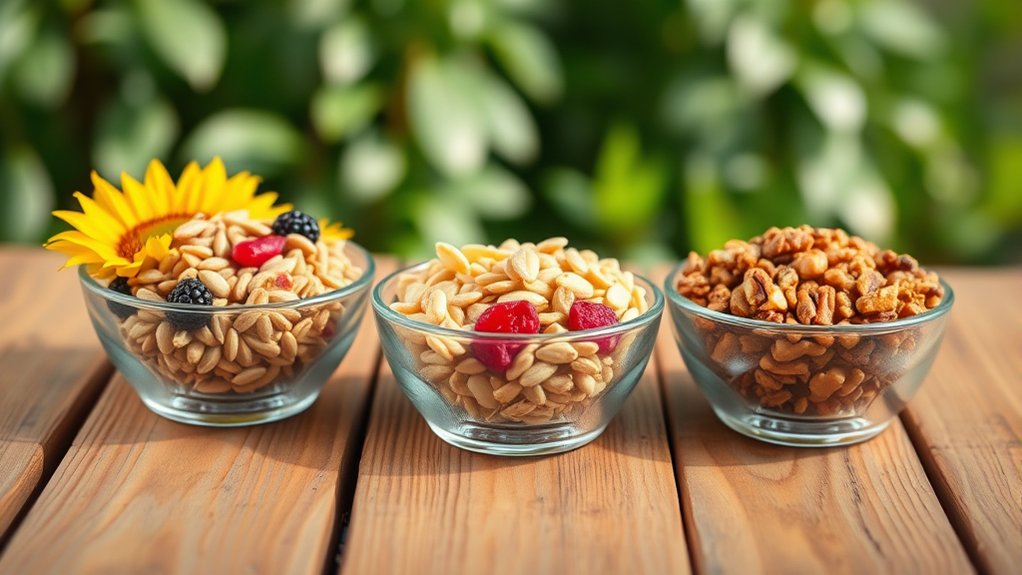
How to Make Bird Food in 3 Steps
If you’ve ever wanted to attract a variety of colorful birds to your backyard but struggled to find the right food, you’re not alone. Many people find it challenging to create a bird food blend that keeps feathered visitors coming back.
The good news is, making your own bird food is easier than you think and can make a big difference in the types of birds you attract.
First, gather quality seeds like sunflower, millet, and safflower, plus supplements such as dried fruits and mealworms.
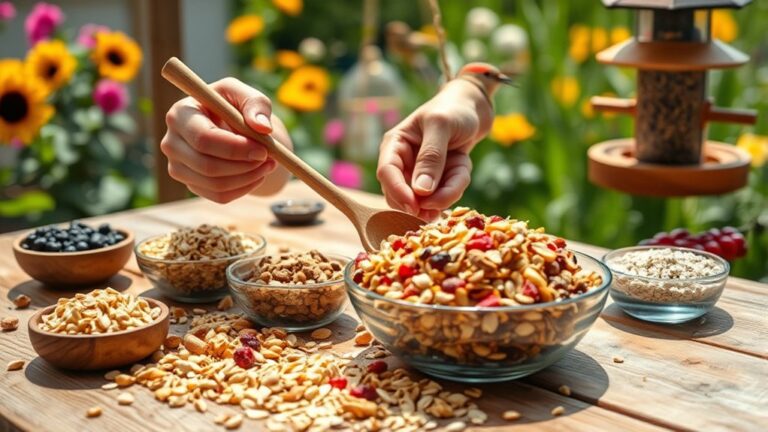
Next, measure and mix these ingredients evenly in a clean bowl to create a balanced, nutritious blend.
Finally, store your homemade bird food in airtight containers kept in a cool, dry place to maintain freshness and prevent pests.
Position your feeders thoughtfully to attract different birds.
Keep going to uncover tips that will help you attract a variety of backyard birds effectively.
Key Takeaways
- Gather a variety of seeds like sunflower, millet, and safflower along with nutritional supplements such as dried fruits and mealworms.
- Measure ingredients accurately and mix thoroughly in a clean bowl for balanced nutrition and even distribution.
- Store the mixed bird food in airtight containers in a cool, dry place to maintain freshness and prevent spoilage.
- Label containers with the preparation date and keep them away from direct sunlight and humidity.
- Use species-specific seeds and place feeders in sheltered, quiet areas to attract diverse backyard birds effectively.
Get Your Ingredients and Tools Ready for Homemade Bird Food
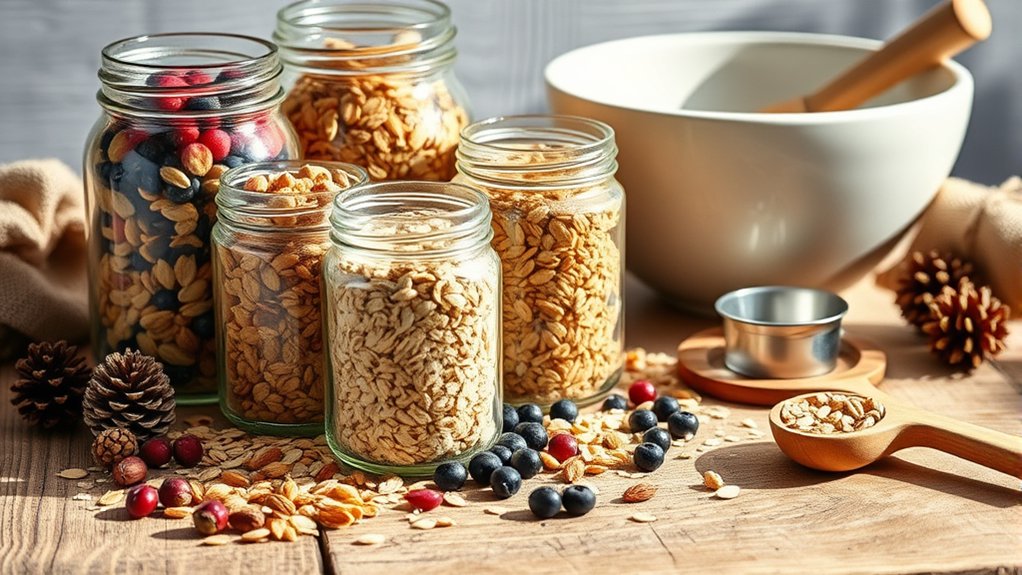
Before you start mixing your bird food, gather all the necessary ingredients and tools to make the process smooth and enjoyable. You’ll want a selection of bird seed varieties, such as sunflower seeds, millet, and safflower, to attract a range of birds.
Including nutritional supplements like crushed eggshells, dried fruits, or mealworms can boost the health benefits of your mix. Make certain you have clean bowls for mixing and airtight containers to store your homemade blend. Measuring cups and spoons will help you portion ingredients accurately.
Also, consider having gloves on hand to keep everything hygienic. By organizing these items beforehand, you’ll avoid interruptions and create a balanced recipe tailored to the birds in your area. This preparation step ensures you’re ready to craft a nutritious treat that supports wild birds’ energy and well-being throughout the seasons.
Mix Ingredients to Make Nutritious Homemade Bird Food
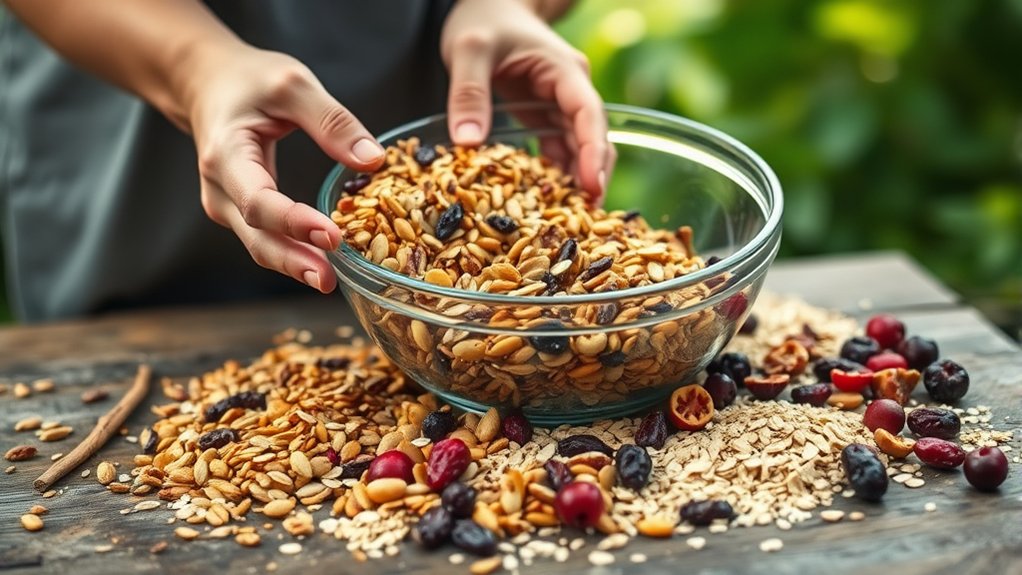
Once you’ve gathered your ingredients, start by measuring each component carefully to maintain the right balance of nutrients. Choose a variety of bird seed varieties to cater to different bird species. Sunflower seeds, millet, and cracked corn are great staples.
Mix these seeds in proportions that reflect the birds you want to attract, usually favoring sunflower seeds as they’re widely loved. Next, add nutritional supplements like dried fruits, nuts, or mealworms to boost energy and protein content. You can also include suet or gelatin if you want a homemade suet cake.
Stir everything thoroughly to guarantee an even distribution of ingredients, so every handful is packed with nutrition. Using a large bowl or container makes mixing easier and helps avoid spills. By combining diverse seeds and supplements thoughtfully, you’ll create a nutritious homemade bird food blend that supports healthy, happy birds visiting your garden.
Store Homemade Bird Food Safely and Tips to Attract Backyard Birds
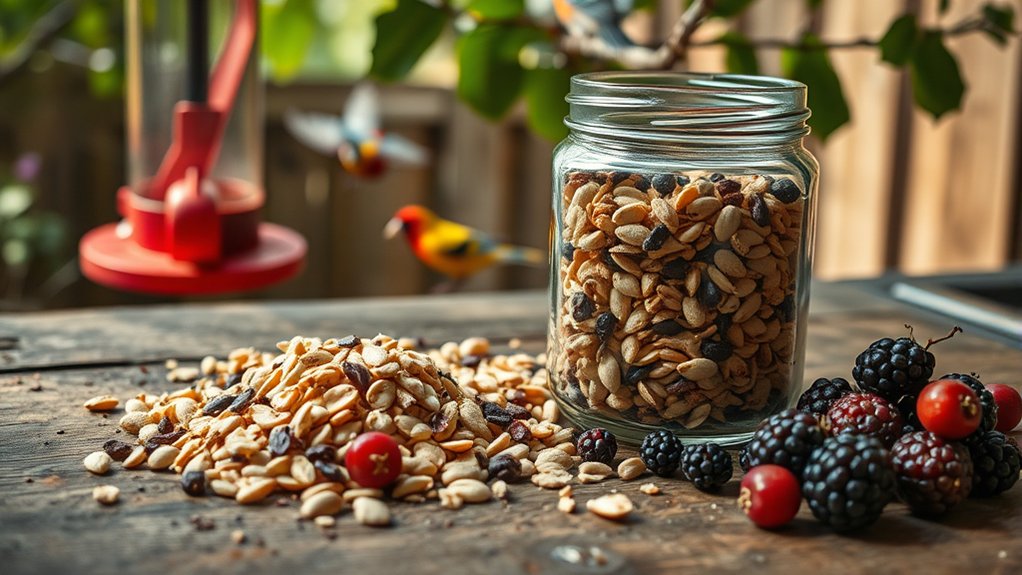
After mixing your homemade bird food, proper storage is key to keeping it fresh and safe from pests. Store it in airtight containers placed in a cool, dry area to prevent mold and spoilage. Avoid direct sunlight, which can degrade nutrients and attract insects. Label containers with the date so you can use older batches first.
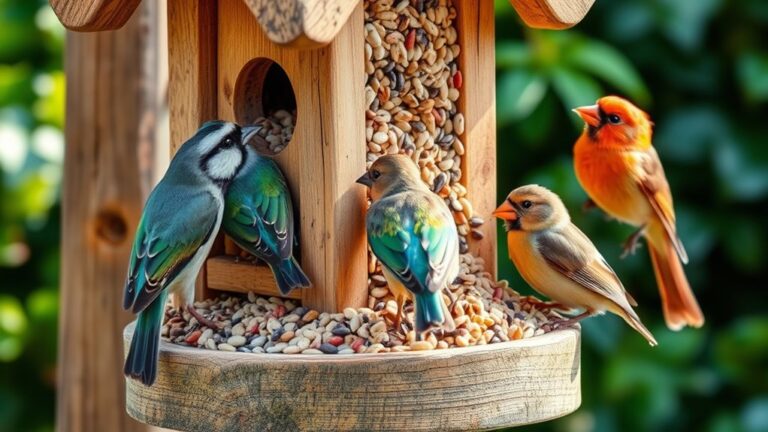
To attract backyard birds effectively, tailor your food to bird species preferences. For example, finches enjoy nyjer seeds, while cardinals prefer sunflower seeds. Use seasonal feeding tips by adjusting your offerings: in winter, provide high-energy seeds, and in summer, offer fruits and nectar to match birds’ natural diets.
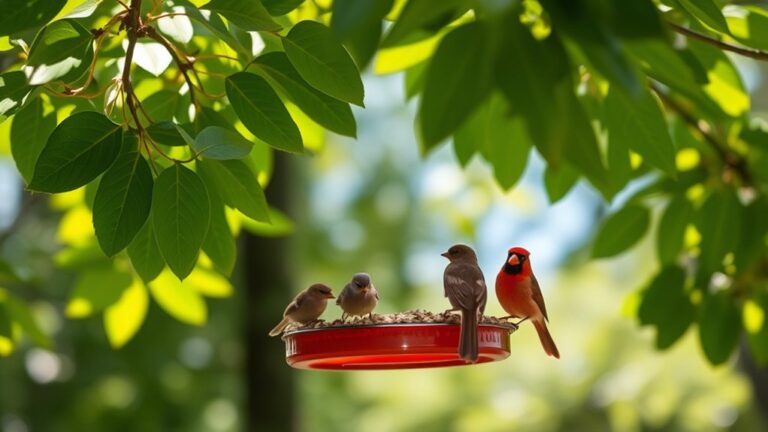
Place feeders in quiet, sheltered spots near trees or shrubs to offer birds protection and perching spots. Clean feeders regularly to prevent disease. By storing food properly and catering to your local birds’ needs, you’ll enjoy a lively, healthy backyard flock year-round.
Frequently Asked Questions
What Types of Birds Prefer Homemade Bird Food?
You’ll find that many bird species enjoy homemade bird food, especially those with diverse feeding preferences. Finches, chickadees, and cardinals often prefer seeds and nuts you prepare yourself.
Woodpeckers and nuthatches appreciate suet-based mixes, while sparrows like grains. By tailoring your homemade blends to match specific bird species’ feeding preferences, you’ll attract a wider variety of visitors to your yard and keep them coming back for more.
Can Homemade Bird Food Cause Allergies in Birds?
Oh, sure, your bird might suddenly develop a dramatic allergy to your gourmet snack because birds love surprises, right? But seriously, if you don’t guarantee nutritional balance and ingredient safety, you could unintentionally cause issues.
Birds rely on you to pick safe, non-toxic ingredients; skip that, and they might face allergic reactions or digestive problems. So, don’t wing it. Research carefully and keep their meals both tasty and safe!
How Often Should I Refill the Bird Feeder?
You should refill the bird feeder every few days to keep food fresh and attract birds consistently. Feeding frequency depends on the number of visitors and weather conditions.
During colder months, birds eat more, so you’ll want to refill more often. Seasonal adjustments are key. Feed less in spring and summer when natural food is abundant, and increase feeding in fall and winter to support birds through harsher conditions.
Is It Safe to Feed Birds Year-Round?
Yes, you can safely feed birds year-round! Studies show that nearly 60% of backyard birds rely on supplemental feeding during winter.
When you practice seasonal feeding, you’ll meet birds’ changing dietary needs. Offer high-energy seeds in cold months and more protein-rich foods in warmer seasons.
Just avoid feeding moldy or spoiled food. Adjust your offerings as birds’ nutritional needs shift throughout the year to keep them healthy and thriving.
What Are Common Signs of Bird Food Spoilage?
You’ll notice common signs of bird food spoilage like mold growth, foul odors, or clumping, which indicate a drop in nutritional quality. If the seeds look discolored or feel damp, that’s a red flag.
Spoiled food increases contamination risks, potentially harming birds. Always check your bird food regularly and discard any that shows these signs to keep your feathered friends safe and healthy.
Conclusion
Now that you’ve made your own bird food, you’re ready to welcome feathered friends to your yard. Isn’t it amazing how a simple mix can bring so much life and color to your outdoor space?
By preparing and storing your bird food properly, you’re not just feeding birds. You’re creating a little sanctuary. So, why not enjoy the beauty of nature right outside your window while helping birds thrive with your homemade bird food?