10 Best Foods to Give Birds to Eat
If you love watching birds but struggle to find the right foods to attract and nourish them, you’re not alone. Many people want to create a welcoming feeding station but feel overwhelmed by all the options and advice out there. Finding the best foods for birds can make a huge difference in their health and your enjoyment.
You’ll want to offer birds a mix of nutrient-rich foods like black oil sunflower seeds, suet cakes for winter energy, millet for ground feeders, and fresh fruits to attract colorful songbirds.
Adding mealworms or insects boosts protein, while safe veggies like carrots and leafy greens support overall health.
Avoid toxic or processed foods, and keep feeders clean.
Want to create the perfect feeding station and learn about seasonal needs? There’s plenty more to investigate.
Key Takeaways
- Black oil sunflower seeds provide essential fats and proteins, fueling birds during migration and supporting feather growth.
- Suet cakes offer high-calorie fat, ideal for winter energy and attracting woodpeckers and chickadees.
- Millet and small seeds support ground-feeding birds and encourage natural foraging behaviors.
- Fresh fruits like berries and apples supply vitamins, hydration, and attract colorful songbirds.
- Mealworms and insects deliver crucial proteins and fats, mimicking birds’ natural diets during migration and growth.
Why Picking the Right Bird Food Makes a Difference
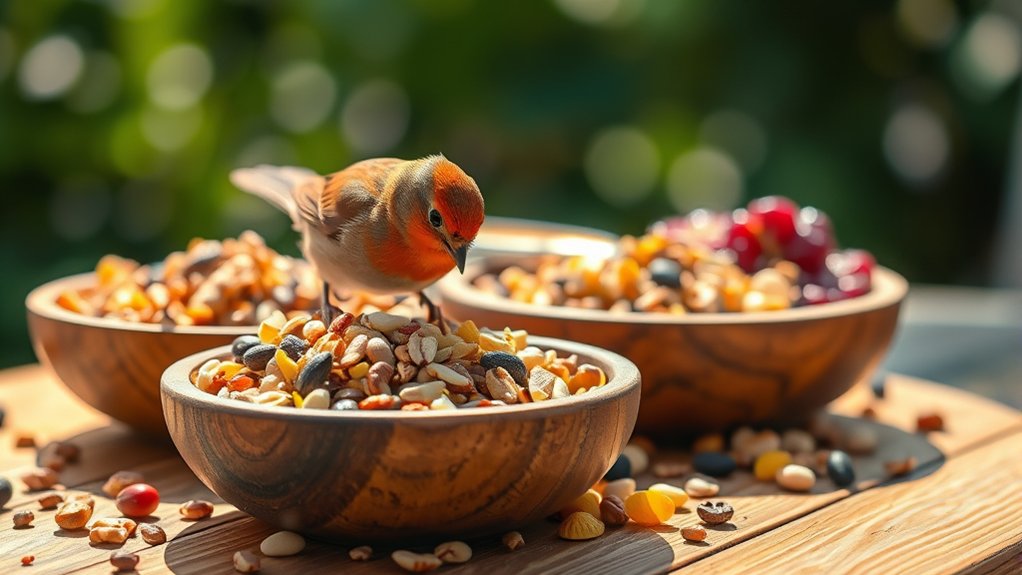
Although it might seem simple, picking the right bird food directly impacts the health and behavior of the birds you feed. When you choose appropriate foods, you support their natural needs throughout the year.
During bird migration, for example, birds require high-energy foods to fuel their long journeys. Feeding them nutrient-rich seeds and fruits helps them build up fat reserves essential for survival.
Furthermore, when birds are busy nest building, they need protein sources like insects or nuts to strengthen their bodies and care for their young. If you provide food lacking in essential nutrients, you might unintentionally harm their health or disrupt their natural patterns.
Black Oil Sunflower Seeds: Top Choice for Most Birds
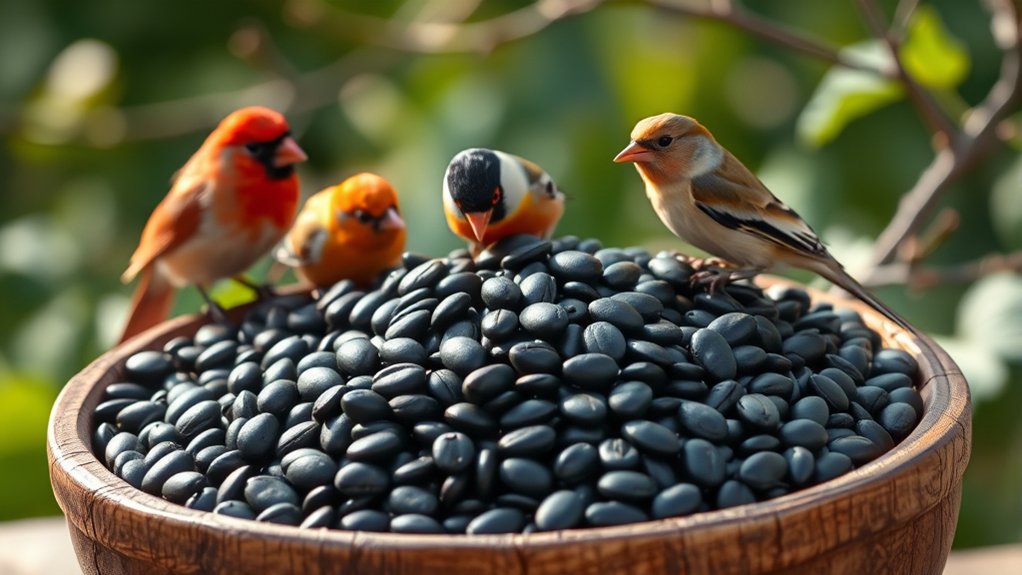
You’ll find black oil sunflower seeds packed with nutrients that most birds love. A lot of birds prefer these seeds because they’re easy to crack and high in fat. So, why are they such a top choice? Let’s take a closer look and see how you can offer them to attract a variety of feathered friends.
Nutritional Benefits Explained
Because black oil sunflower seeds pack a rich blend of fats, protein, and essential nutrients, they’ve become the top choice for feeding most birds. You’ll notice these seeds provide the energy birds need during bird migration, helping them fuel long journeys.
Plus, the high fat content supports their metabolism, keeping them warm and active in colder months. During nesting habits, birds rely on these seeds to build strength, especially for feeding their young.
The protein promotes healthy feather growth, essential for flight and insulation. You’ll also appreciate that black oil sunflower seeds have thin shells, making them easy for birds to crack open and digest efficiently.
Offering these seeds supports birds’ overall health and well-being, making your feeding efforts truly beneficial.
Bird Species Preference
When you offer black oil sunflower seeds, you attract a wide variety of bird species because these seeds meet diverse dietary needs. Many birds rely on these seeds during bird migration as a high-energy food source, helping them fuel their long journeys.
Species like finches, chickadees, cardinals, and titmice particularly favor black oil sunflower seeds due to their thin shells and high oil content. These seeds also support nest building since they provide essential nutrients that help birds stay healthy and active during breeding season.
Feeding Tips And Tricks
Although many seeds attract birds, black oil sunflower seeds stand out as a top choice due to their high nutritional value and ease of consumption. When feeding birds, place the seeds in feeders that accommodate various species to support them during bird migration and nest building seasons.
Keep your feeders clean to prevent disease and always provide fresh seeds. Position feeders near natural cover to offer birds safety from predators. You can also scatter some seeds on the ground to attract ground-feeding birds.
Avoid mixing seeds with fillers, as birds tend to ignore those. By offering black oil sunflower seeds consistently, you’ll help birds maintain energy for their long migratory journeys and provide essential nutrients for building strong nests. This simple strategy benefits both you and your feathered visitors.
Suet Cakes: Energy Boosters for Winter Birds

Suet cakes provide winter birds with a dense source of energy that helps them stay warm during cold months. When you offer a suet block, you’re giving birds a high-fat treat that’s essential for their survival in harsh weather. Suet cakes melt slowly, giving birds a steady energy boost as they forage.
Here’s why suet cakes are a top choice for winter feeding:
- High-Calorie Fuel: Suet blocks are packed with fat, which birds burn to maintain body heat.
- Attracts Diverse Species: From woodpeckers to chickadees, many birds flock to suet in winter.
- Easy to Use: Hang suet cakes in mesh feeders or specialized holders for clean, mess-free feeding.
Millet and Small Seeds as Bird Food for Ground Feeders
You’ll find millet and small seeds are packed with nutrients that ground feeders love. Birds like sparrows and doves especially flock to these tasty treats. If you want to attract them, just scatter the seeds on the ground or use a low platform feeder so they can easily get to them.
Nutritional Benefits for Birds
When you scatter millet and small seeds on the ground, you provide ground-feeding birds with a highly nutritious meal packed with essential proteins, fats, and carbohydrates. These nutrients support birds through critical life stages, especially during bird migration and nesting habits. Here’s why they matter:
- Energy Boost The fats and carbs in millet fuel long migrations and daily activities.
- Muscle Repair Proteins help birds rebuild muscles after long flights and support chick growth during nesting.
- Immune Support Nutrients in small seeds strengthen birds’ immune systems, keeping them healthy through seasonal changes.
Popular Ground Feeder Species
Several ground feeder species thrive on millet and small seeds, making these foods a favorite choice for attracting them to your yard. Birds like sparrows, doves, and juncos rely on these seeds, especially during bird migration when they need extra energy.
You’ll notice these species prefer feeding on the ground, which aligns with their natural foraging and nesting habits. Offering millet mimics their natural diet and encourages them to stay nearby and even nest close to your feeding area.
Best Ways to Serve
Ground feeders like sparrows and juncos thrive on millet and small seeds, so offering these foods in the right way can make a big difference in attracting and supporting them. Since bird migration and nesting habits influence feeding patterns, you’ll want to cater to these behaviors.
- Scatter seeds on the ground or use a low platform feeder to mimic natural feeding spots, supporting their ground-foraging instincts.
- Keep feeding areas clean to prevent disease and discourage pests, especially during nesting seasons when birds are more vulnerable.
- Refill feeders regularly during migration periods to provide a reliable food source, helping birds build energy for their journeys.
Fresh Fruits to Attract Colorful Songbirds
Why not brighten your backyard by offering fresh fruits that attract colorful songbirds? These vibrant visitors not only add beauty but also play a vital role in wildlife conservation.
Providing fruits like berries, apples, and oranges supports bird habitat restoration by supplementing natural food sources, especially in urban areas where their environment may be limited. When you place fresh fruits in feeders or simply scatter them on the ground, you encourage a variety of songbirds such as orioles, robins, and tanagers to visit.
These fruits offer essential vitamins and hydration, keeping birds healthy and active. By carefully selecting and rotating fresh fruits, you help maintain a balanced diet for your feathered friends.
Remember to remove any spoiled fruit to prevent attracting pests. Your efforts directly support local ecosystems, promoting biodiversity and aiding bird populations in thriving.
Offering fresh fruits is a simple yet effective way to contribute to bird habitat restoration and enjoy nature’s colorful melodies.
Nuts: Protein-Packed Treats for Larger Birds
When you offer nuts, you provide larger birds with a rich source of protein and healthy fats essential for their energy and growth. Nuts variety is key to keeping their diet balanced and exciting. Different nuts supply diverse nutrients that support strong muscles and feathers.
To make the most of nuts as bird food, consider these points:
- Choose unsalted, raw nuts like almonds, walnuts, and pecans to avoid harmful additives and maintain natural bird energy.
- Break larger nuts into smaller pieces or crush them gently to make eating easier for bigger birds.
- Rotate the nuts variety regularly to provide a range of nutrients and prevent dietary boredom.
Mealworms and Insects to Boost Bird Nutrition
Although birds can get nutrients from seeds and nuts, mealworms and insects offer a powerful boost by providing essential proteins and fats that support their growth and energy. When you feed birds mealworms, you’re mimicking what many wild birds naturally find during insect migration seasons, which are crucial times for their nutrition.
Mealworms provide essential proteins and fats, boosting bird growth and energy during critical insect migration seasons.
Mealworm farming has made these insects more accessible and sustainable, so you don’t have to rely solely on seasonal availability. Offering mealworms encourages birds to thrive, especially during breeding or molting periods when their protein needs spike.
Plus, insects contain essential amino acids and fats that seeds alone can’t provide. By including mealworms in your bird feeding routine, you help maintain their health and essential vitality year-round.
Just be sure to provide them fresh or dried, and avoid overfeeding to keep a balanced diet. Incorporating insects into their meals supports their natural habits and boosts their overall well-being.
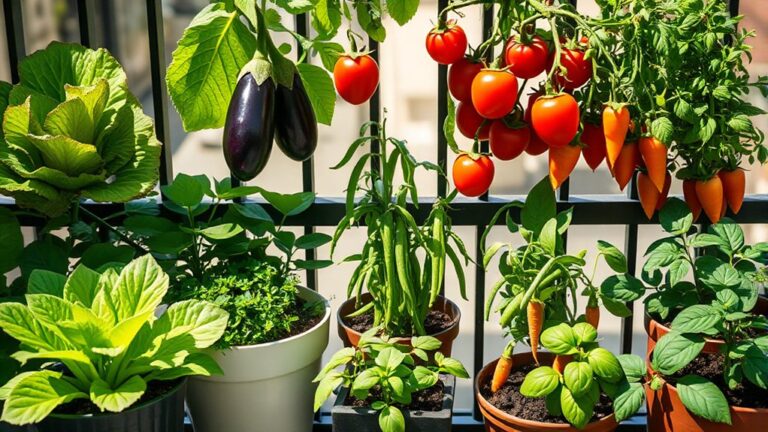
Safe Vegetables to Feed Birds
Several vegetables can make a healthy and safe addition to your bird’s diet, providing essential vitamins and hydration. During bird migration, offering these veggies helps replenish energy stores. During nesting behaviors, they support overall health.
Here are three safe options to include:
- Carrots – Rich in beta-carotene, carrots boost vision and immune function. These are essential for migratory endurance and caring for young.
- Leafy greens – Spinach and kale deliver calcium and iron. They support strong bones and blood health during nesting periods.
- Peas – These provide protein and fiber, aiding digestion and muscle maintenance. This is important when birds prepare for long flights or raise chicks.
Always wash vegetables thoroughly and chop them into manageable sizes to prevent choking. By incorporating these safe vegetables, you actively contribute to the well-being of your feathered visitors throughout their migration and nesting cycles.
Foods to Skip and Feeding Mistakes to Avoid
Since providing the right foods is essential, you should avoid feeding birds anything toxic or nutritionally empty. Toxic foods like chocolate, avocado, and caffeine can seriously harm birds. Also, avoid giving them salty, sugary, or processed human foods.
Stick to a proper feeding timeline, offering treats occasionally rather than daily to maintain their health.
Here’s a quick guide on foods to skip and common feeding mistakes:
| Foods to Skip | Reason |
|---|---|
| Chocolate | Toxic to birds |
| Avocado | Contains harmful toxins |
| Caffeine | Stimulant, dangerous |
| Salty/Sugary snacks | Nutritionally empty, harmful |
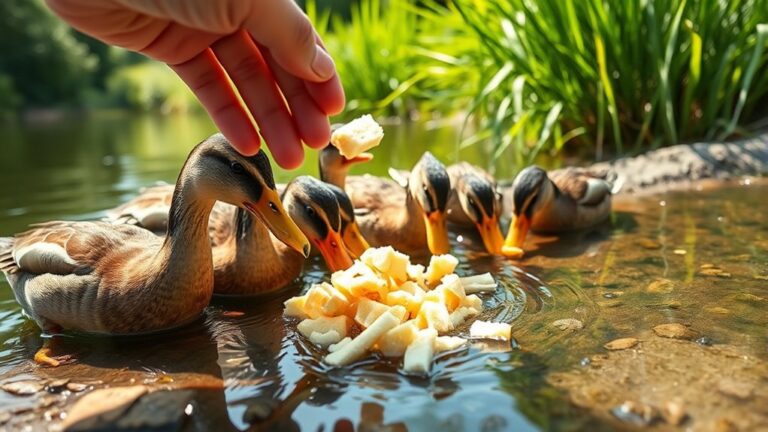
| Bread | Lacks nutrients, causes harm |
Avoid overfeeding and keep fresh water available. Feeding mistakes like inconsistent feeding times or neglecting food quality can cause poor health. Stay consistent with your feeding timeline and focus on safe, nutritious options to keep birds thriving.
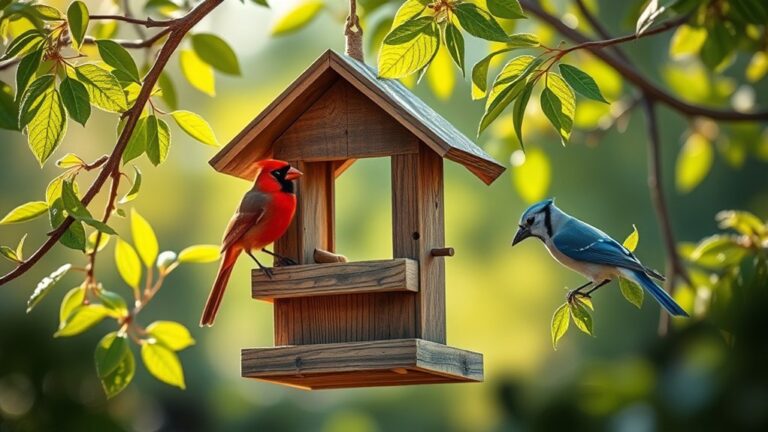
Setting Up a Balanced Feeding Station
Now that you know which foods to avoid and how to prevent feeding mistakes, you can focus on creating a balanced feeding station that meets birds’ nutritional needs. Remember, birds’ dietary requirements change with seasons, especially during bird migration and nesting habits. Here’s how to set up your station effectively:
- Offer Variety: Include seeds, fruits, and insects to cater to different species and provide energy for migration or raising young.
- Use Multiple Feeders: Place feeders at varying heights and locations to accommodate ground feeders and tree dwellers, respecting nesting habits.
- Maintain Cleanliness: Regularly clean feeders and remove old food to prevent disease, ensuring birds stay healthy during critical times like migration.
Frequently Asked Questions
How Often Should I Clean My Bird Feeders?
You should clean your bird feeders at least once every two weeks to prevent mold and bacteria buildup. If you notice wet or clumped bird seed selection, clean more often to keep birds healthy.
During rainy seasons or high feeding frequency, cleaning once a week is best. Regular maintenance guarantees fresh food and reduces disease risk, helping your feathered visitors stay safe and enjoy their meals without any issues.
Can Feeding Birds Affect Their Natural Foraging Behavior?
Oh sure, feeding birds will totally turn them into lazy couch potatoes, abandoning their natural foraging habits forever! In reality, you’ll find that supplementing their bird diet doesn’t ruin their instincts but can actually help during tough seasons.
Just don’t expect them to order takeout. You can enjoy watching them forage naturally while offering treats, striking a balance that supports their health without making them dependent on your generosity.
What Time of Day Is Best for Feeding Birds?
You’ll want to feed birds early in the morning when they’re most active and hungry, especially during bird migration seasons. This timing helps them refuel after long flights.
Seasonal feeding is essential too. Adjust your offerings based on the time of year to support their changing nutritional needs.
Feeding in the morning guarantees they have energy for the day, while avoiding late-day feeding prevents dependency and encourages natural foraging behaviors.
How Do I Prevent Squirrels From Stealing Bird Food?
You can prevent squirrels from stealing bird food by using squirrel-proof feeders designed to close under their weight. Hanging feeders away from trees or structures helps, too.
Natural deterrents like sprinkling cayenne pepper or placing predator decoys nearby can discourage squirrels without harming birds. You’ll also want to clean up spilled seeds promptly so squirrels aren’t tempted.
Combining these strategies keeps your bird feeders squirrel-free and your feathered friends happy.
Are Homemade Bird Food Mixes Safe for All Bird Species?
Homemade bird food mixes can be safe if you pay close attention to ingredient safety. Not all birds eat the same things, so your DIY recipes should match the species you want to feed.
Avoid harmful ingredients like salt, chocolate, or processed foods. Stick to seeds, nuts, and fruits that are bird-friendly.
When you customize your mixes thoughtfully, you’ll keep birds healthy and happy without risking their well-being.
Conclusion
Choosing cheerful, crunchy, and colorful cuisine for your feathered friends can create an enchanting, caring connection. By balancing black oil sunflower seeds, suet cakes, fresh fruits, and safe veggies, you’ll support strong, spirited songbirds year-round.
Avoid awkward feeding accidents by skipping harmful snacks. Setting up a smart, satisfying station not only nurtures nature’s navigators but also brightens your backyard with beautiful birds bustling and buzzing.
Keep kindness and care at the core of your bird-feeding routine, and you’ll see why these 10 best foods to give birds to eat make all the difference.