Why Is Feeding Ducks Bread Bad?
If you love spending time feeding ducks at your local pond but worry about what’s truly good for them, you’re not alone. Many people struggle with knowing the best way to help these charming creatures without causing harm. Understanding why feeding ducks bread is bad can help you make better choices that support their health and the environment.
Feeding ducks bread might seem kind, but it actually harms their health and natural behaviors. Bread lacks the nutrients ducks need, causing malnutrition, weakened immunity, and even deformities.
It also pollutes waterways, promotes harmful algae growth, and attracts pests that disrupt ecosystems. Plus, it encourages ducks to depend on humans instead of foraging naturally.
If you want to help ducks thrive and protect their environment, understanding better feeding choices and their effects is key.
Key Takeaways
- Bread lacks essential nutrients, causing malnutrition, health problems, and behavioral changes in ducks.
- Uneaten bread pollutes waterways, promotes algae blooms, and depletes oxygen, which harms aquatic ecosystems.
- Feeding bread attracts pests like rats and insects, increasing disease risk and disrupting the balance of local wildlife.
- When ducks depend on bread, it changes their natural foraging, migration, and mating behaviors, reducing their chances of survival.
- Choosing healthier feeding alternatives and practicing responsibility helps prevent environmental damage and supports ducks’ natural diets.
Why Feeding Ducks Bread Harms Their Health
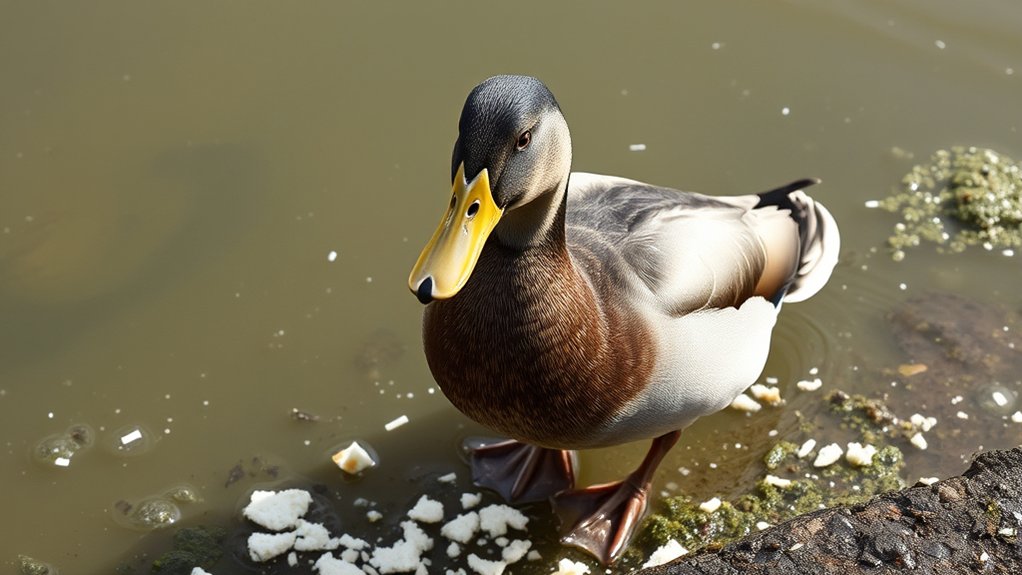
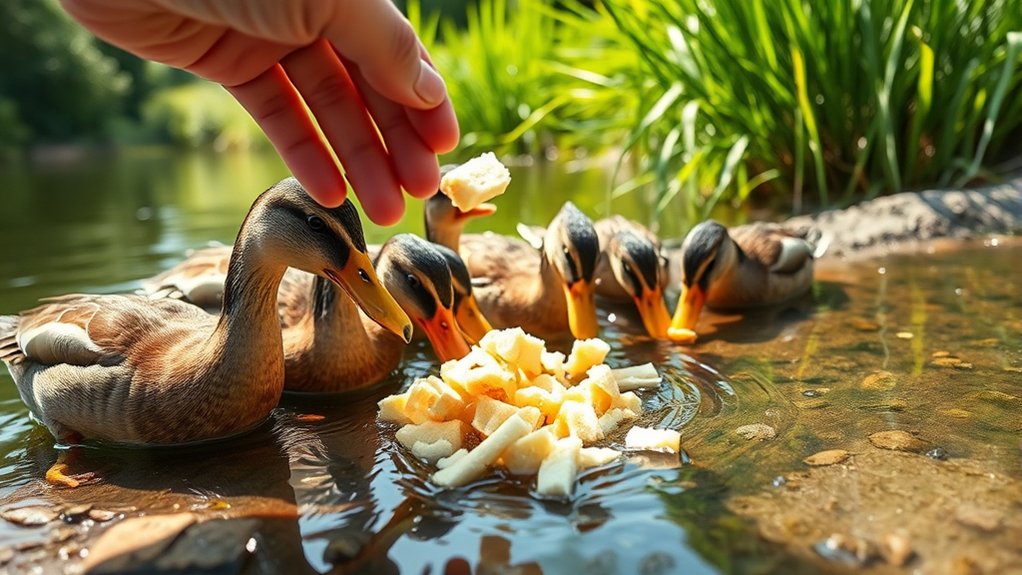
Although it might seem harmless, feeding ducks bread can seriously harm their health. When you toss bread to ducks, you’re not just offering a snack; you’re giving them food filled with bread preservatives that their bodies can’t process well.
Feeding ducks bread may seem innocent but can harm their health due to indigestible preservatives.
These chemicals disrupt their digestion and can lead to malnutrition. This is especially harmful during duck migration when ducks rely on natural, nutrient-rich food to fuel their long journeys.
Eating bread can weaken their immune system, making them less capable of surviving the strenuous trip. Over time, feeding bread encourages ducks to stay in one area rather than migrating properly, which can disrupt their natural behaviors and ecosystems.
Plus, leftover bread attracts pests and pollutes water, causing further harm to ducks and their habitats. So, while it feels good to feed ducks, you’re actually putting their health and well-being at risk by offering bread laden with preservatives and empty calories.
What Nutrients Ducks Need That Bread Lacks
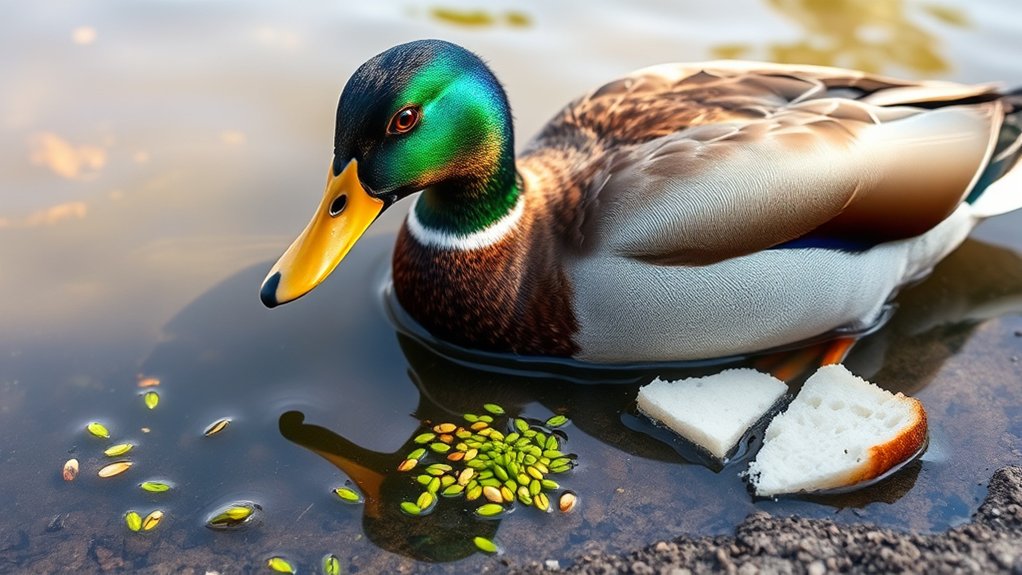
You might not realize it, but bread misses key vitamins and minerals that ducks need to stay healthy. Plus, ducks require protein to support their growth and energy, which bread just doesn’t provide. Feeding them a natural diet helps meet these nutritional needs and keeps them strong. So, it’s better to stick with foods that actually help ducks thrive!
Essential Vitamins and Minerals
Ducks need a variety of essential vitamins and minerals to stay healthy, many of which bread simply doesn’t provide. When you feed ducks bread, you create nutritional gaps that can lead to serious dietary deficiencies.
These missing nutrients are vital for their growth, immune system, and overall well-being. Without them, ducks can become weak or sick.
Here are some essential vitamins and minerals ducks need that bread lacks:
- Vitamin A for healthy eyes and skin
- Vitamin D for strong bones
- Calcium to support eggshell formation
- Iron to prevent anemia
- B vitamins for energy metabolism
Protein Requirements for Ducks
Vitamins and minerals play a big role in a duck’s health, but protein is just as important for their growth and repair. When ducks prepare for duck migration, their bodies demand high-quality protein to build muscles and sustain energy. Bread lacks the essential amino acids ducks need, which can weaken them during long flights or make them more vulnerable in waterfowl habitats.
You might not realize it, but protein fuels tissue repair and supports immune function, both vital for ducks living in the wild. Feeding ducks bread doesn’t provide these nutrients, which can lead to malnutrition over time. Instead, ducks thrive on natural protein sources found in aquatic insects, plants, and small fish within their habitats. This helps them stay strong for migration and daily survival.
Importance of Natural Diet
Although bread might seem like a convenient snack to feed ducks, it lacks the essential nutrients they need to stay healthy. Ducks rely on a natural diet rich in proteins, vitamins, and minerals found in their native waterfowl habitats.
These nutrients fuel their energy for bird migration and daily survival. When you offer bread, you deny them crucial elements like:
- Omega-3 fatty acids for feather health
- Proteins necessary for muscle strength
- Vitamins A and D for immune support
- Essential minerals for bone development
- Natural fibers that aid digestion
Feeding bread disrupts their natural foraging habits and can harm their long-term health. By understanding the importance of a natural diet, you help protect ducks and support their well-being throughout the seasons.
Bread’s Role in Causing Malnutrition and Diseases in Ducks
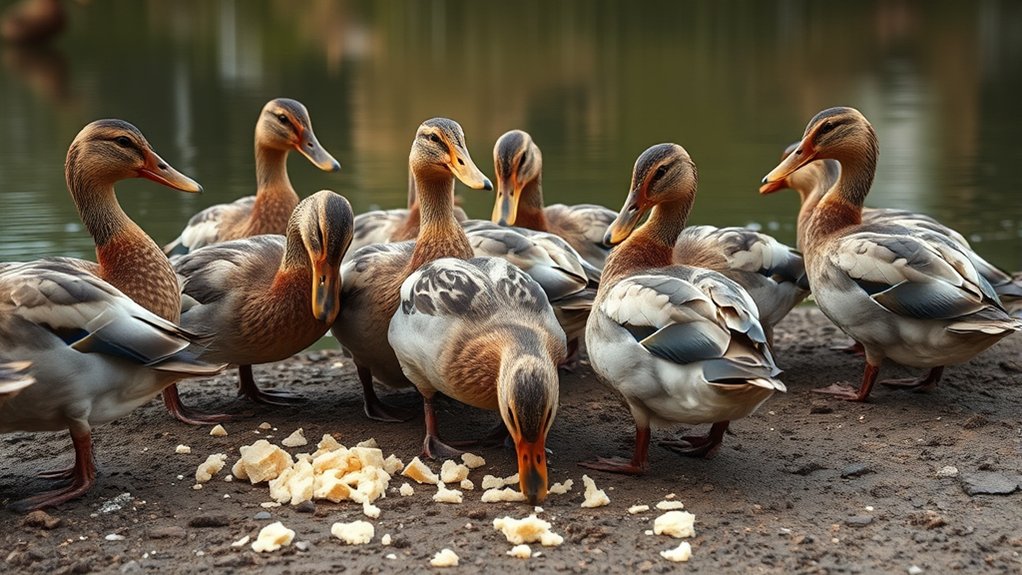
When you feed ducks bread regularly, you unintentionally contribute to their malnutrition and increase their risk of disease. Bread lacks the essential nutrients ducks need, so relying on it can lead to deficiencies that weaken their immune systems.
Moreover, leftover bread often causes bread contamination in their environment. Moldy or decomposing bread attracts harmful bacteria and fungi, which can infect ducks and other wildlife.
Additionally, uneaten bread sinks into the water, promoting water pollution. This pollution triggers excessive algae growth, depleting oxygen levels and harming aquatic life.
Polluted water becomes a breeding ground for pathogens, exposing ducks to diseases like avian botulism and fungal infections. By feeding ducks bread, you not only disrupt their natural diet but also degrade their habitat, making them more vulnerable to illness.
Instead, consider offering healthier alternatives or simply enjoy watching ducks without feeding them to support their well-being and preserve water quality.
Health and Behavior Effects of Ducks Eating Too Much Bread
When ducks eat too much bread, they don’t get the nutrients they actually need. This can lead to serious deficiencies in their diet. You might also see changes in how they act—like they could become more aggressive or just really lethargic. Over time, these effects add up and can cause long-term health problems that make it harder for the ducks to survive.
Nutritional Deficiencies in Ducks
Since bread lacks essential nutrients ducks need, feeding them too much can quickly lead to nutritional deficiencies. When you disrupt their natural feeding habits by offering bread, you unintentionally unbalance their duck diet. Ducks require a variety of vitamins and minerals that bread simply doesn’t provide. Over time, this causes serious health issues you might not immediately see.
You might notice:
- Weak bones from lack of calcium
- Poor feather quality due to vitamin deficiencies
- Reduced energy levels affecting survival
- Digestive problems from low fiber
- Increased vulnerability to disease without proper nutrients
Impact on Duck Behavior
How does feeding ducks too much bread affect their behavior? When ducks consume excessive bread, their natural instincts can change. You might notice ducks becoming more aggressive or overly dependent on humans for food, disrupting their ability to forage naturally.
This altered behavior can interfere with duck migration patterns, as poorly nourished ducks lack the energy and motivation to travel long distances. Moreover, bread’s lack of essential nutrients impacts feather coloration, leading to duller, less vibrant plumage.
Since feather coloration plays a role in mating and survival, changes here can affect duck populations over time. By feeding ducks bread, you unintentionally disrupt their natural behaviors, making it harder for them to thrive in the wild.
Instead, consider offering healthier alternatives that support their well-being and natural habits.
Long-Term Health Risks
Although feeding ducks bread might seem harmless, it poses significant long-term health risks that you should be aware of. Despite urban myths suggesting it’s fine, bread disrupts ducks’ natural feeding habits. This causes malnutrition and health problems. When ducks consume too much bread, their diet lacks essential nutrients, leading to weakened immune systems and stunted growth.
Here are some long-term health risks you should consider:
- Angel wing deformity, causing permanent wing damage
- Obesity from empty calories affecting mobility
- Increased vulnerability to diseases and infections
- Dependency on humans, reducing survival instincts
- Pollution from uneaten bread harming their environment
Common Myths About Feeding Ducks Bread Debunked
Many people believe feeding ducks bread is harmless or even helpful, but that’s not true. One common myth is that bread is a good food source for ducks. In reality, bread lacks the nutrients ducks need and can disrupt their natural feeding habits.
When you feed them bread, they may stop searching for their natural diet of insects, plants, and small fish, which can harm their health.
Another myth is that feeding ducks bread is a fun way to interact with wildlife. While it seems harmless, it can lead to overpopulation in certain areas and increased aggression among birds competing for food.
Instead, consider bread alternatives like cracked corn, oats, or birdseed, which provide better nutrition.
Understanding these myths helps you make better choices that support ducks’ well-being and natural behaviors, ensuring you contribute positively rather than inadvertently causing harm.
Why Leftover Bread Harms Waterways and Ecosystems
Feeding ducks bread doesn’t just affect the birds; it also impacts the environment around them. When leftover bread sinks or floats in water, it leads to water pollution by encouraging excessive algae growth. This algae depletes oxygen, harming fish and plants, and causing ecosystem disruption.
You might not realize that your simple act of feeding bread can create a ripple effect damaging entire waterways.
Here’s what happens when bread is left behind in nature:
- Water becomes cloudy and lifeless due to algae blooms
- Fish and aquatic life suffer from oxygen shortages
- Natural food chains get unbalanced and fragile
- Toxic substances build up, making water unsafe
- Native plants struggle to survive and grow
Bread’s Impact on Attracting Pests and Disrupting Wildlife
When you toss bread to ducks, you’re also inviting pests like rats and insects to the area. And these unwanted visitors don’t just show up for a free meal—they can actually disrupt local wildlife by competing for food and spreading disease. Over time, this creates an imbalance that can harm the entire ecosystem you’re trying to enjoy. So, while it might seem like a kind gesture, feeding bread to ducks can do more harm than good.
Pest Attraction Risks
Although bread might seem like a harmless treat for ducks, it actually draws unwanted pests such as rats, mice, and insects to the area. When you toss bread, you unintentionally create a feast for these pests. This can lead to increased urban pollution and disrupt the natural balance.
This artificial food source can also interfere with bird migration patterns, as birds might linger in one spot longer than they should. You might not realize that feeding bread:
- Attracts disease-carrying rodents
- Encourages insect infestations
- Pollutes waterways with uneaten bread
- Alters natural bird behaviors
- Increases competition among wildlife
Impact on Local Wildlife
How does tossing bread to ducks affect the surrounding wildlife? When you feed bread to ducks, you unintentionally alter their natural behaviors and the habits of other local animals. Bread encourages urban feeding habits, causing waterfowl to linger in one area longer than they should.
This disruption can interfere with waterfowl migration patterns, as birds rely on natural cues and available resources to decide when to move. Furthermore, leftover bread attracts pests such as rats and pigeons, which compete with native species for food and space.
These changes in behavior disturb the balance among local wildlife, leading to overcrowding and increased disease transmission. By avoiding bread, you help maintain healthier, more natural wildlife behaviors and support the proper migration and survival of waterfowl.
Ecosystem Imbalance Effects
Because bread isn’t a natural food for ducks, feeding it to them disrupts the entire ecosystem by attracting pests like rats and pigeons. When you toss bread in urban parks, you unintentionally encourage these pests to overpopulate, upsetting the balance of local wildlife.
This disrupts feeding etiquette that helps maintain healthy environments. You might think you’re helping ducks, but you’re really inviting problems that ripple through the ecosystem. Here’s what can happen:
- Increased rat populations spreading disease
- Overcrowded pigeons pushing out native birds
- Ducks becoming dependent on poor nutrition
- Contaminated water from uneaten bread
- Decline in aquatic plants and insects crucial to the food chain
Better Food Alternatives to Feed Ducks Safely
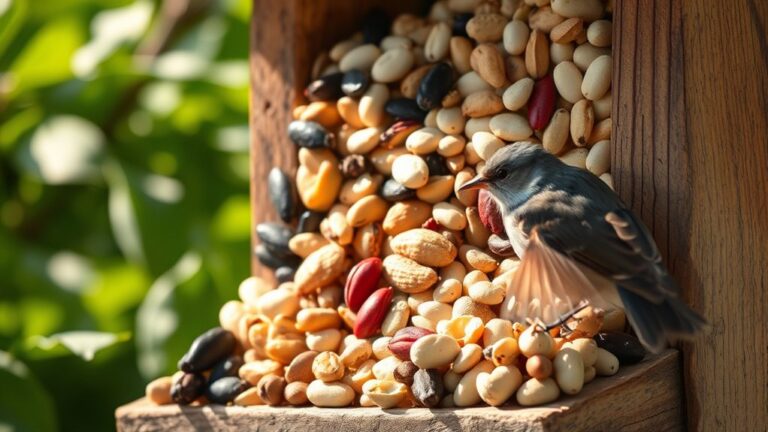
When you want to feed ducks, choosing healthier options can make a big difference in their well-being. Instead of bread, offer them foods like cracked corn, oats, birdseed, or chopped vegetables. These alternatives provide essential nutrients ducks need without disrupting their natural diets.
Feeding ducks appropriate foods supports their energy during bird migration, helping them maintain strength for long flights. Furthermore, healthier foods decompose faster and reduce water pollution, preventing harmful algae growth and protecting aquatic ecosystems.
You can also give them frozen peas or corn, which are easy to digest and safe for ducks. Avoid processed human snacks, as they often contain salt and additives harmful to waterfowl.
How to Feed Ducks Without Harming the Environment
Choosing healthier foods for ducks is just the start of feeding them responsibly. You also need to follow proper feeding etiquette to protect the environment and local wildlife. When urban feeding, it’s important to think about how your actions impact the ecosystem around you. Avoid overfeeding to prevent water pollution and overcrowding.
To feed ducks without harming the environment, keep these points in mind:
- Feed small portions to prevent leftover food from polluting water.
- Offer natural, nutrient-rich foods like peas, corn, or oats.
- Choose feeding spots away from busy water sources to reduce habitat disruption.
- Dispose of any trash or packaging to keep the area clean and safe.
- Respect local guidelines or restrictions on feeding wildlife.
Tips for Teaching Others Not to Feed Ducks Bread
Although many people feed ducks bread out of habit or kindness, you can help change this behavior by sharing clear, simple reasons why bread is harmful. Explain that bread lacks essential nutrients and can cause malnutrition, affecting ducks’ health and disrupting their natural bird migration patterns.
Feeding ducks bread harms their health and disrupts natural migration due to nutrient deficiencies.
Emphasize that leftover bread pollutes water and damages urban landscaping, leading to algae growth and attracting pests.
When talking to others, suggest alternative snacks like cracked corn or birdseed, which support healthy diets and protect the environment. Use friendly, non-judgmental language to encourage understanding.
You might also share informational signs or pamphlets at local parks to reach more people. Remind them that feeding ducks responsibly helps maintain urban ecosystems and supports wildlife on their migration routes.
Frequently Asked Questions
Can Feeding Ducks Bread Affect Their Migration Patterns?
Yes, feeding ducks bread can affect their migration patterns. When you feed ducks bread, you alter their natural feeding habits, making them rely on easy, low-nutrient food.
This can lead to poor health and reduced energy levels, which are vital for migration. Over time, this dependency causes migration disruption, as ducks may not build the strength needed to travel long distances.
How Did the Tradition of Feeding Ducks Bread Start?
Imagine a scene straight out of a classic storybook, where children toss crumbs to ducks by a serene pond. The tradition of feeding ducks bread has historical origins tied to cultural traditions in Europe. It was seen as a simple way to connect with nature and provide food during lean times.
Over centuries, this practice became a beloved pastime, passed down through generations. It symbolizes kindness and community bonding with wildlife.
Are There Specific Times of Year When Feeding Ducks Is More Harmful?
Yes, feeding ducks bread during certain times of the year can be more harmful. During breeding and molting seasons, their nutritional needs increase, so bread’s poor nutritional impact can lead to health problems.
You should avoid feeding bread especially in spring and summer when ducks rely on a seasonal diet rich in natural foods. Instead, offer healthier alternatives like grains or vegetables to support their well-being throughout the year.
What Should I Do if I See Ducks Eating Bread in the Park?
If you see ducks eating bread in the park, gently stop feeding them and avoid throwing more. You can help by offering better options that fit their bird diet, like oats, corn, or birdseed.
Can Feeding Ducks Bread Cause Legal Issues in Some Areas?
Yes, feeding ducks bread can cause legal issues in some areas. You need to check local feeding regulations because many parks enforce legal restrictions to protect wildlife health and water quality.
Ignoring these rules might lead to fines or warnings. So, before offering food to ducks, you should familiarize yourself with the specific feeding regulations in your area to avoid any legal trouble and help maintain a safe environment for the birds.
Conclusion
Feeding ducks bread is like giving them empty promises—empty calories that fill their bellies but starve their health. Instead of nurturing, it clouds their world with illness and weakness, turning vibrant ponds into troubled waters.
You hold the power to rewrite their story. Choose nourishing treats and watch ducks thrive like bright stars on a clear lake. So skip the bread and be the guardian of their health and the harmony of nature by avoiding feeding ducks bread.