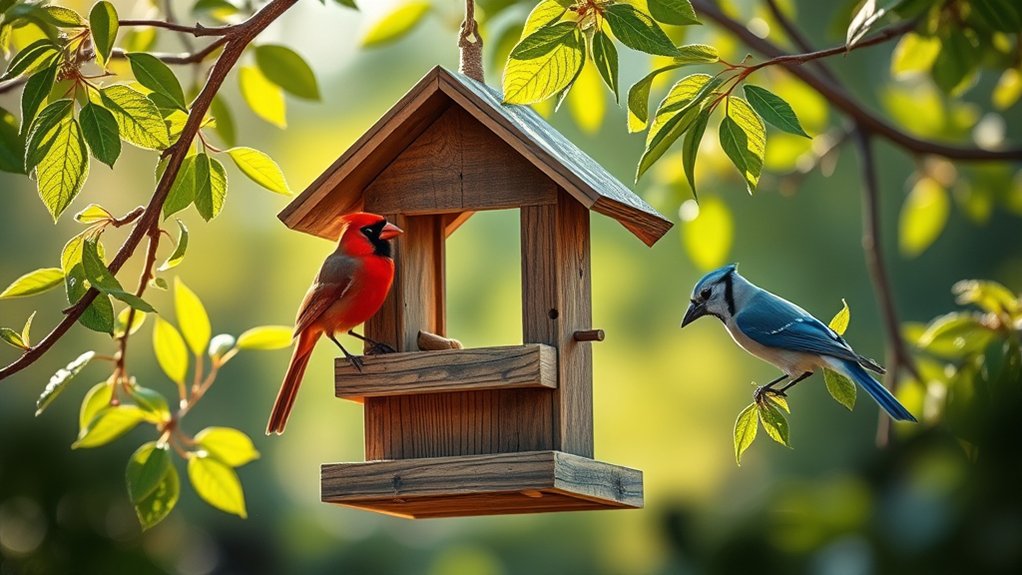
10 Tips on When to Put Out Bird Feeders
If you love watching birds but struggle with knowing the best time to put out bird feeders, you’re not alone. Many bird enthusiasts want to attract more birds but aren’t sure when to start feeding or how to keep it consistent.
Getting the timing right can make a huge difference in helping birds thrive and ensuring your feeders are a reliable source of nourishment.
You should put out bird feeders early in the morning, especially in late winter or early spring when natural food is scarce.
Keep feeding times consistent to build trust and support birds’ routines.
Adjust when you feed based on weather and seasonal changes, adding high-energy seeds during cold snaps or migration.
Reduce feeding in warmer months as natural food returns.
By timing your feeders thoughtfully, you’ll help birds thrive year-round and uncover even more ways to support their needs.
Key Takeaways
- Start putting out feeders in late winter or early spring when natural food is scarce. This helps support birds preparing for nesting.
- Place feeders early in the morning to align with birds’ natural feeding routines and maximize activity.
- Adjust feeding times and seed types seasonally. Use high-fat seeds in winter and lighter options in summer.
- Begin feeders weeks before migration peaks and increase food supply to support migrating birds’ energy needs.
- Reduce or stop feeding in warmer months when natural food sources become abundant. This encourages natural foraging.
When Is the Best Season to Start Using Bird Feeders?
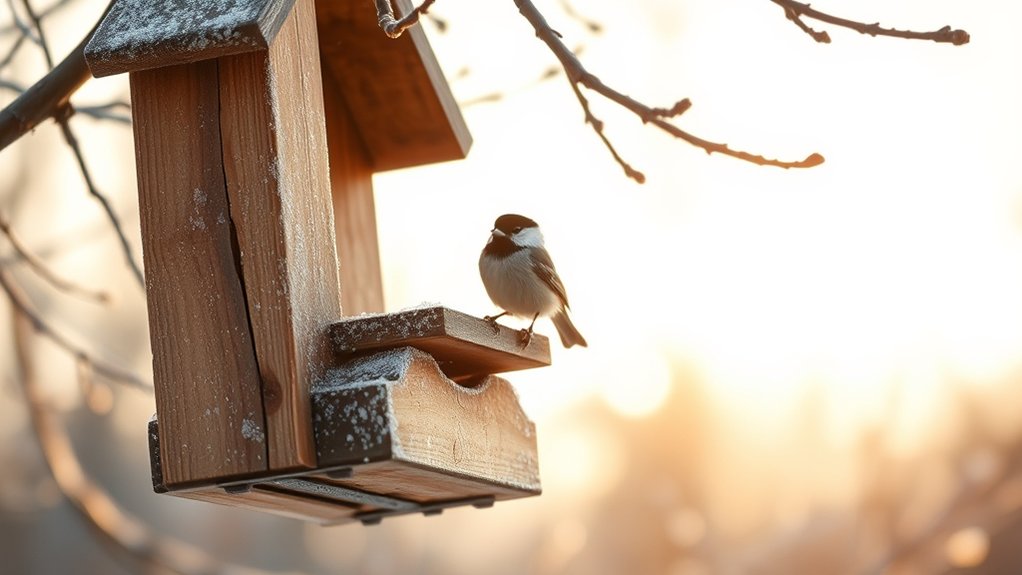
Although you can put out bird feeders year-round, the best season to start is late winter or early spring. During this time, natural food sources are scarce, and birds begin to increase their activity as they prepare for nesting.
You’ll want to think about birdhouse placement too. Put them near feeders but in sheltered spots to protect birds from predators and harsh weather. This encourages birds to stay nearby and feel safe.
Don’t forget bird bath maintenance; clean and refill baths regularly to provide fresh water, which is essential as temperatures rise. A well-maintained bird bath complements feeders by attracting a wider variety of birds.
Starting feeders in late winter or early spring sets you up for a vibrant backyard full of active, colorful birds. By timing your efforts wisely and paying attention to placement and maintenance, you’ll create an inviting habitat that benefits both you and the birds throughout the year.
Why Is Morning the Ideal Time to Put Out Feeders?
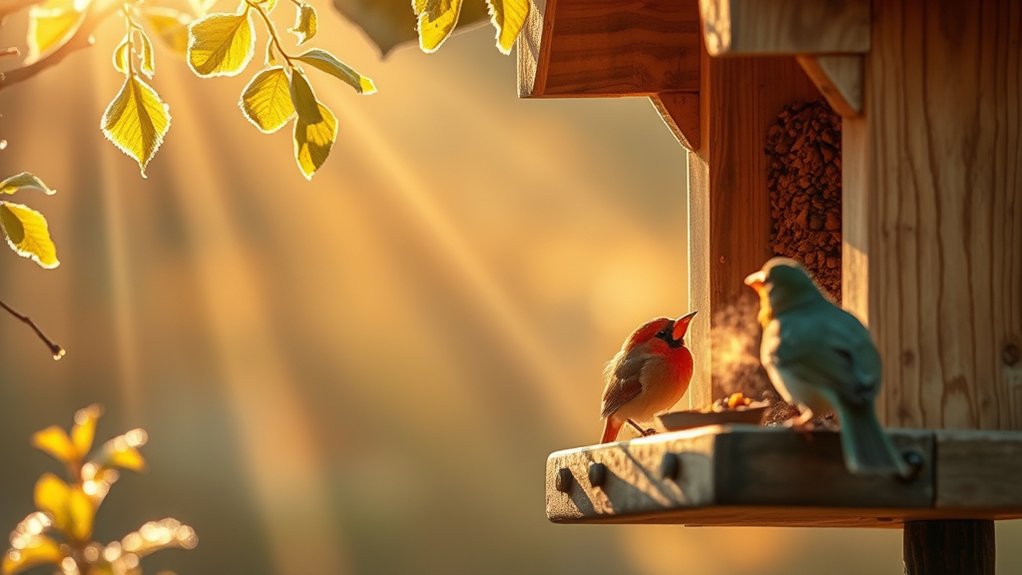
Since birds are most active in the early hours, putting out feeders in the morning guarantees they find fresh food when they need it most. When you place feeders early, you support natural feeding habits, helping birds fuel up for the day. This timing also reduces the chance of seeds spoiling or attracting unwanted pests.
Incorporating bird feeders thoughtfully into your garden design improves both aesthetics and functionality. Position feeders near your birdhouse placement to create a welcoming habitat, encouraging birds to linger safely. By doing this in the morning, you maximize the chances of observing vibrant bird activity.
Morning feeding aligns with birds’ routines, making your efforts more effective and enjoyable. So, set your feeders out early to support local wildlife and boost your garden’s lively atmosphere. This small habit fits seamlessly into a well-planned garden design and birdhouse placement, fostering a thriving bird-friendly space.
Why Does Consistency Matter in Bird Feeder Times?
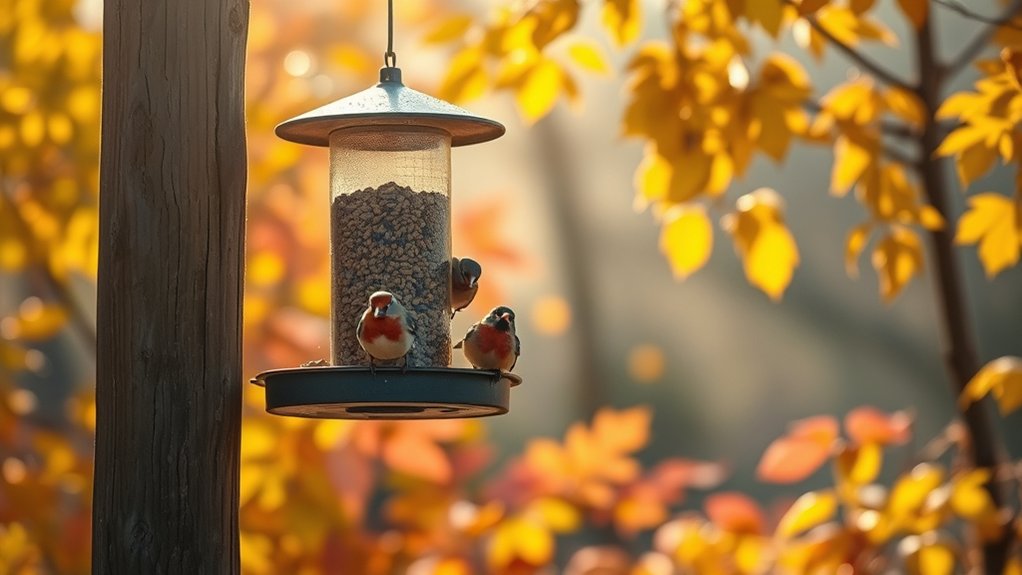
When you put out food at the same time each day, you’re helping birds develop a reliable feeding routine. This consistency builds their trust, which makes them more likely to visit regularly. Plus, sticking to a schedule supports their natural behavior and daily rhythms. It’s like setting a regular mealtime they can count on!
Builds Bird Feeding Routine
When you put out bird feeders at the same time each day, you help birds develop a reliable feeding routine. This consistency allows birds to anticipate food availability, making your yard a dependable stop during their daily activities.
Pairing this with thoughtful bird house placement encourages birds to nest nearby, creating a stable environment. Regular birdbath maintenance complements feeding times by providing fresh water, which is essential for birds’ health and hydration.
When feeders appear predictably, birds adjust their foraging patterns, reducing stress and energy spent searching for food. By setting a steady schedule, you support their natural rhythms and increase the likelihood of regular visits.
Ultimately, building this routine benefits both you and the birds, fostering a harmonious, well-visited backyard habitat.
Enhances Bird Trust
Establishing a regular feeding schedule not only shapes birds’ routines but also builds their trust in you as a reliable source of food. When you put out feeders consistently, bird species learn to depend on your feeder during specific times, making them more likely to visit regularly.
This trust is essential because many birds have precise feeding habits tied to daily rhythms, such as feeding right after sunrise or before dusk. If your feeding times vary, birds may hesitate or avoid the feeder altogether, unsure if food will be available.
Supports Natural Behavior
Why does sticking to a consistent feeding schedule matter so much? When you put out feeders at regular times, you help birds maintain their natural routines. This is essential during sensitive periods like bird nesting.
Consistency allows them to plan for feeding their young without unnecessary stress or disruption. It also supports important behaviors like feather grooming, which keeps them healthy and ready for flight.
If you feed birds erratically, they may become confused or overly dependent, which can interfere with their instinctual habits. By setting predictable feeding times, you encourage birds to balance foraging with natural activities, promoting their overall well-being.
How Does Weather Affect When to Put Out Feeders?
You’ll notice that temperature plays a big role in when birds need extra food, especially during the colder months. When it gets chilly, birds burn more energy to stay warm, so they’ll appreciate a little extra nourishment.
Seasonal weather patterns also change their feeding habits. As the seasons shift, birds adjust when and how much they eat. So, timing your feeder setup to match these changes can really help them stay nourished.
Temperature Impact On Feeding
Although birds can find natural food sources, cold or extreme weather often limits their options, making feeders vital during these times. When temperatures drop, you should put out feeders to support local birds, especially during bird migration when energy demands soar. Urban feeding becomes essential as natural habitats shrink and food is scarce.
Keep these temperature-related tips in mind:
- Provide high-energy foods like seeds and suet during cold snaps.
- Avoid putting out feeders during unseasonably warm days to encourage natural foraging.
- Monitor temperature drops at night; birds need more calories to stay warm.
- Adjust feeding schedules based on sudden cold spells to aid migratory species passing through.
Seasonal Weather Patterns
When seasonal weather shifts, it directly influences when you should put out bird feeders. As temperatures fluctuate and daylight changes, birds adjust their nesting habits and feeding routines.
During colder months, birds rely more on feeders since natural food sources become scarce. You’ll notice that birds’ feather coloration often becomes duller in winter, helping them conserve energy and stay camouflaged.
When spring arrives, birds focus on nesting, so they might visit feeders less frequently, preferring insects and fresh food. Paying attention to these seasonal patterns helps you time when to put out feeders for maximum benefit.
How Do Changing Daylight Hours Influence Feeder Schedules?
Since daylight hours shift throughout the year, adjusting your bird feeder schedule helps match birds’ natural feeding patterns. As birds respond to these changes, factors like bird migration and nesting habits influence when they seek food most actively. You’ll want to take these adjustments into account to support birds effectively.
Adjust your bird feeder schedule to align with birds’ natural feeding habits influenced by daylight changes and seasonal behaviors.
Here’s how changing daylight impacts your feeder schedule:
- Morning Start Time: Birds feed earlier during longer daylight in spring and summer; start feeders at dawn.
- Evening Feeding: In shorter days, birds eat more during daylight’s limited hours, so keep feeders out later.
- Migration Periods: Increased food intake occurs before and after migration; adjust feeder times accordingly.
- Nesting Season: Nesting birds might feed more frequently; consistent feeder schedules help meet their energy needs.
When Should You Adjust Bird Feeder Times for Different Species?
You’ll want to adjust feeder times depending on whether the birds are early risers or active later in the day. For example, some birds start looking for food right at dawn, while others might not show up until mid-morning.
Seasonal changes also play a role in when different species search for food. In colder months, birds might feed more frequently during daylight hours to keep their energy up, whereas in warmer seasons, their feeding times can shift.
Early Birds Versus Night Owls
Although many bird enthusiasts assume that feeding times are the same for all species, adjusting your bird feeder schedule to match the habits of early risers and night feeders can attract a wider variety of birds. Understanding night migration and nocturnal feeders helps you provide food when it’s most needed.
Here’s how to tailor your feeder times:
- Set feeders out at dawn to welcome early birds like robins and finches.
- Leave some food available through dusk to support species active at twilight.
- Consider food types nocturnal feeders prefer, such as fruit or suet for night-active birds.
- Monitor local bird activity to adjust feeder times based on peak feeding hours during night migration.
Seasonal Feeding Time Changes
Adjusting your bird feeder schedule throughout the year helps meet the changing needs of different species. As seasons shift, birds’ feeding patterns change, so you should adjust when you put out food accordingly.
In colder months, early morning feeding is essential since birds need energy to stay warm. During spring and summer, you can delay feeding a bit, as natural food sources become more abundant.
Pay attention to bird feeder placement too. Move feeders to sunnier spots in winter to prevent seed spoilage and closer to shelter for protection.
Also, adjust seed selection seasonally: offer high-fat seeds like sunflower or suet in winter, and switch to lighter options like millet during warmer months. By fine-tuning feeding times, placement, and seed choice, you’ll support local birds all year long.
Species-Specific Activity Patterns
Since different bird species follow unique daily routines, knowing their activity patterns helps you decide the best times to put out feeders. You’ll want to tailor feeding times based on habitat preferences and nesting behaviors to attract specific species effectively. Consider these four points:
- Early risers like chickadees feed at dawn. Put out food just before sunrise.
- Sparrows and finches are active mid-morning. Refill feeders between 8–10 a.m.
- Woodpeckers prefer wooded habitats and visit feeders throughout the day, so maintain food availability longer.
- During nesting season, many species feed their young in the late morning and afternoon. Adjust feeding times accordingly.
How Should You Time Bird Feeders for Migration Periods?
When migration season approaches, you’ll want to prepare your bird feeders to support passing birds effectively. Understanding the feeding habits of migrating species helps you time your feeders just right. Many birds increase their food intake to fuel long flights, so keeping feeders stocked during peak migration boosts their chances of survival.
Start by identifying local migration periods, usually in spring and fall. Put out feeders a few weeks before these times to establish a reliable food source. Pay attention to changes in bird activity; increased visits often signal the migration window.
Adjust your offerings to match preferred seeds and foods for migrating birds, such as high-energy seeds like sunflower or millet.
When Should You Stop Feeding Birds in Warmer Months?
After migration season winds down, you might wonder when it’s appropriate to stop feeding birds during the warmer months. To decide, consider these factors carefully:
- Observe local bird species identification: Note which birds are still visiting your feeder. If you see mostly resident species that can forage naturally, you might reduce feeding.
- Evaluate natural food availability: When insects, berries, and seeds are abundant, birds rely less on feeders.
- Check birdhouse placement: If your birdhouses support nesting during warmer months, feed less to encourage natural foraging and reduce dependency.
- Monitor weather and temperature: On hot days, birds often find sufficient water and food, so you can pause feeding temporarily.
When Should You Refill Bird Feeders to Keep Birds Coming Back?
How often should you refill your bird feeders to keep feathered visitors returning regularly? The answer depends largely on the bird species you want to attract and their feeding frequency. Small, active birds like chickadees and finches may empty feeders quickly, requiring daily refills.
Larger species or those less dependent on feeders might visit less often, so refilling every few days could suffice. Monitor your feeder’s seed levels and adjust your schedule accordingly.
During peak migration or breeding seasons, birds increase their feeding frequency, so you might need to refill more often. Also, keep an eye on seed spoilage and moisture; fresh food encourages consistent visits.
Maintaining a steady supply helps birds form reliable feeding habits, ensuring they keep coming back. By tailoring your feeding frequency to your local bird species’ needs, you create a welcoming environment that supports their health and your enjoyment.
When Should You Use Feeders to Help Birds in Harsh Weather?
Although birds can often find natural food sources, you should utilize feeders during harsh weather to provide extra nourishment when food is scarce. Cold snaps, heavy snow, or drought can limit access to seeds, insects, and berries, making feeders essential for survival.
You’ll want to adjust your feeding frequency based on conditions and the bird species visiting your feeder.
To effectively support birds in tough weather, consider these tips:
- Increase feeding frequency during extreme cold or storms to ensure food remains fresh and available.
- Focus on high-energy foods like sunflower seeds or suet that suit the bird species in your area.
- Keep feeders clean and dry to prevent mold or spoilage, especially in damp conditions.
- Use multiple feeders to reduce competition and stress among different bird species.
Frequently Asked Questions
What Types of Bird Feed Attract the Most Species?
You’ll attract the most species by offering a mix of seed varieties like black oil sunflower, nyjer, and millet. Black oil sunflower is a favorite for many birds, while nyjer draws finches, and millet appeals to ground feeders.
Pay attention to feeder placement too. Position feeders near trees or shrubs to provide shelter and encourage visits.
How Do I Clean Bird Feeders Safely?
You should clean your bird feeders regularly using a solution of one part white vinegar to four parts water. This feeder cleaning method kills mold and bacteria without harsh chemicals.
Scrub all surfaces thoroughly, rinse well, and let them dry completely before refilling. Doing this helps prevent disease and keeps pests away, protecting both birds and your yard.
Regular cleaning also guarantees your feeders remain inviting and safe for feathered visitors.
Can Bird Feeders Spread Diseases Among Birds?
Yes, bird feeders can spread diseases among birds if you don’t maintain proper bird feeder hygiene. You should clean feeders regularly to prevent mold, bacteria, and parasites from building up.
Disease prevention strategies include using disinfectants safe for birds, rotating feeders, and removing uneaten food promptly. By staying on top of these habits, you’ll help keep visiting birds healthy and reduce the risk of spreading illnesses through your feeders.
What Materials Are Best for Durable Bird Feeders?
Think of your bird feeder as a sturdy ship sailing through seasons. You want materials like bamboo, recycled plastics, or metal. These eco-friendly materials resist weather and last long.
With DIY assembly, you get a custom vessel that’s both durable and kind to the planet. Choosing these guarantees your feeder stands strong, welcoming birds without faltering. It makes your backyard a safe harbor all year round.
How Can I Deter Squirrels From Accessing My Feeders?
You can deter squirrels by using squirrel proof techniques like installing baffles above or below your feeder to block their access. Try feeder placement strategies such as hanging feeders at least 10 feet away from jumping points like trees or fences.
Using feeders with weighted mechanisms that close access ports when squirrels climb can also help. Combining these methods will make it harder for squirrels to reach the food, keeping your bird feeders squirrel-free.
Conclusion
By starting your bird feeders in early spring, you’re helping more than just local birds. Did you know over 60 million Americans feed backyard birds annually? Putting out feeders in the morning and staying consistent makes a big difference for their daily routines.
Remember to adjust for weather and migration, and keep feeders stocked during harsh weather. With these tips, you’ll enjoy vibrant bird visits while providing essential support to your feathered friends year-round.
Following these simple steps will help you know when to put out bird feeders and create a welcoming environment for your feathered visitors all year long.