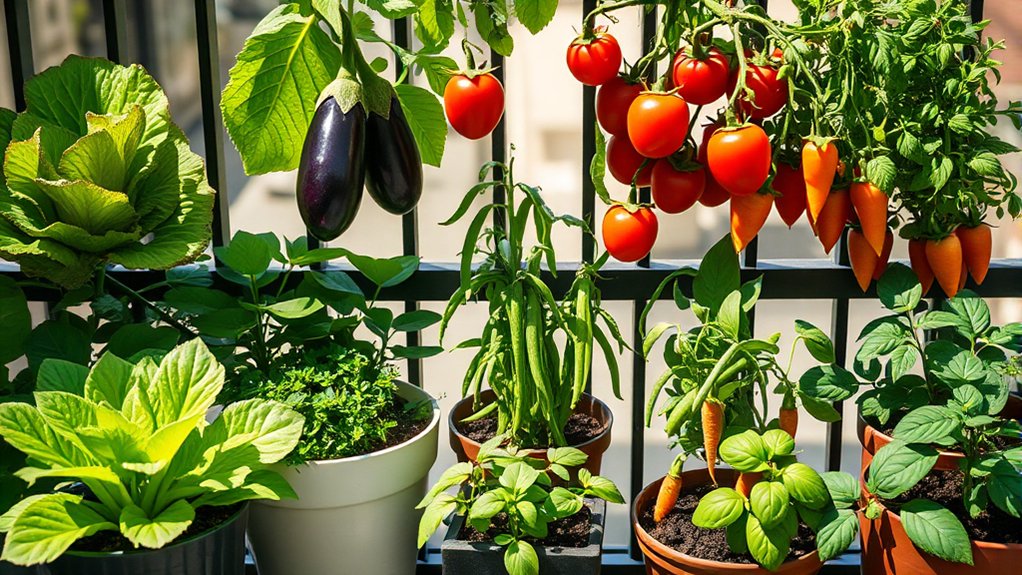
7 Best Vegetables for Container Gardening
If you’ve ever wanted to grow your own fresh vegetables but felt limited by space, you’re not alone. Many people struggle with gardening when they don’t have a yard or a big garden plot.
Container gardening offers a great solution, letting you enjoy homegrown veggies even on a balcony or patio. Best Vegetables for Container Gardening.
For container gardening, you can grow compact vegetables that stay productive in pots, like cherry or dwarf tomatoes, peppers, lettuce, spinach, radishes, bush beans, and carrots.
Use loose, well-draining potting mix and choose shallow containers for greens and radishes, deeper pots for tomatoes, peppers, and carrots.
Give plants enough space, steady water, and regular feeding for strong growth. If you keep going, you’ll find which crops fit your space and harvest goals best.
Key Takeaways
- Lettuce, spinach, arugula, and radishes are excellent container vegetables because they grow quickly in shallow pots.
- Bush beans, peppers, and compact tomatoes do well in containers with deeper soil and good drainage.
- Choose dwarf, patio, or determinate tomato varieties for small spaces. Support them with stakes to keep them growing strong.
- Peppers need at least 12-inch-wide pots, regular watering, and light feeding for steady fruit production.
- Use loose potting mix and avoid overcrowding. Make sure to match pot depth to each crop’s root needs.
What Vegetables Grow Best in Containers?
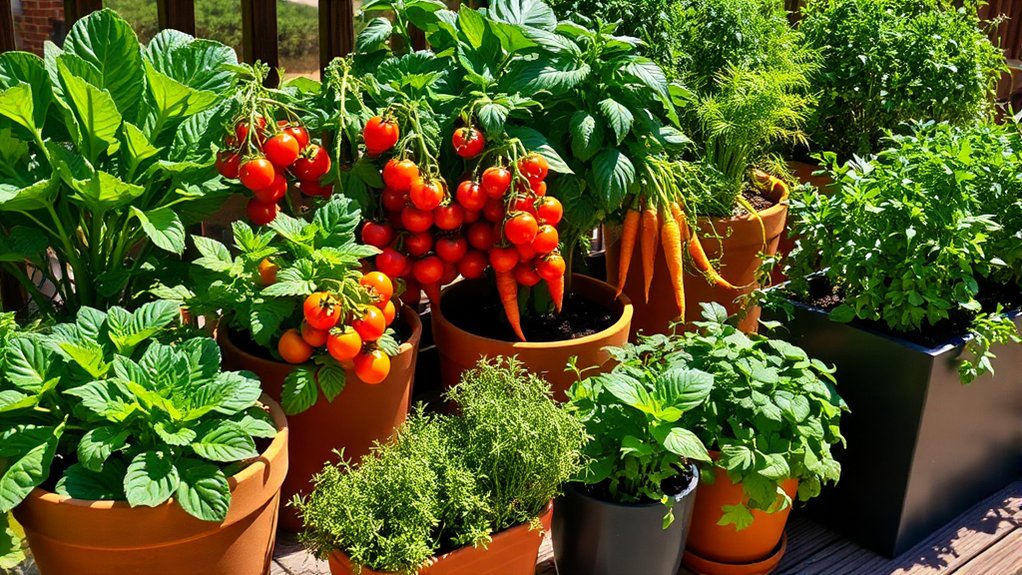
When you’re choosing vegetables for containers, start with compact, productive crops that don’t need much room to spread. You’ll usually get the best results from lettuce, spinach, arugula, radishes, bush beans, peppers, and carrots. These vegetables handle limited root space well and reward you with steady harvests.
Match each plant to the right container size: shallow pots suit greens and radishes, while deeper containers support carrots and peppers. You should also pay attention to soil type, because loose, well-draining potting mix helps roots breathe and prevents waterlogging.
If you want fast returns, pick leafy greens; if you want longer production, choose bush beans or peppers. Give your containers full sun, regular watering, and light feeding, and you’ll keep plants vigorous. Avoid overcrowding, since each vegetable needs enough room for airflow, nutrients, and strong growth.
Best Container Tomatoes for Small Spaces

For small spaces, you’ll get the best results from compact tomato varieties like cherry, patio, dwarf, and determinate types, since they stay manageable and still produce plenty of fruit. You can grow these in 5- to 10-gallon pots with rich, well-draining soil and strong sunlight.
Choose dwarf tomato varieties if you want shorter plants that won’t sprawl, yet still give you juicy harvests. With steady container tomato care, you’ll keep growth healthy and yields steady.
- Cherry tomatoes: Fast to fruit and easy to pick.
- Patio tomatoes: Ideal for balconies and tight corners.
- Dwarf varieties: Great flavor in a compact form.
Water consistently, feed lightly every couple of weeks, and stake stems before they bend. Check soil moisture often, because containers dry out faster than garden beds. If you stay attentive, your tomatoes will reward you with a long, flavorful harvest.
Peppers That Thrive in Containers
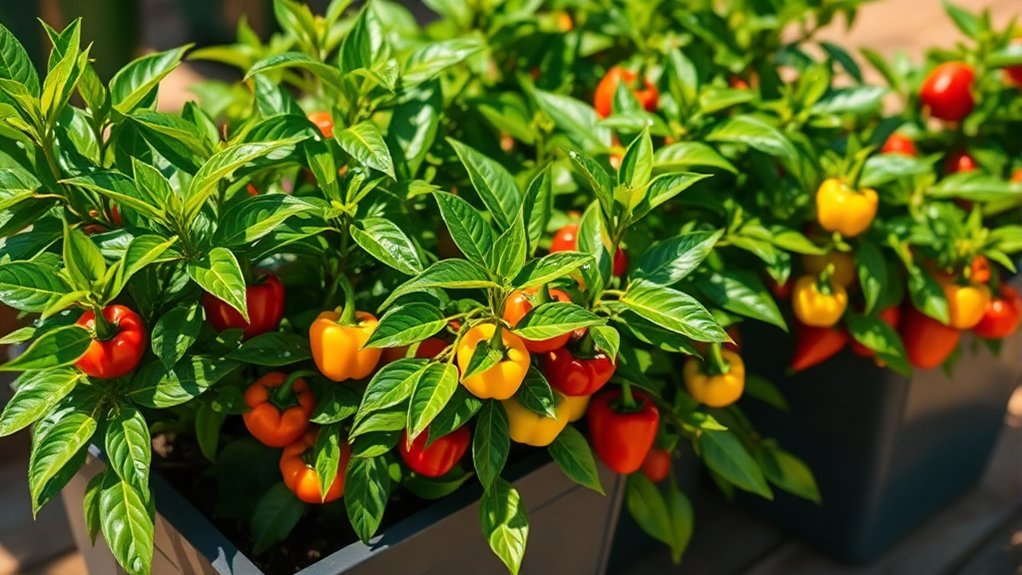
Peppers are one of the easiest vegetables to grow in containers, especially if you choose compact varieties like sweet bells, jalapeños, and mini peppers. You’ll get the best results in a pot that’s at least 12 inches wide with rich, well-draining soil and full sun.
Choose sturdy bell pepper varieties for sweet harvests, or pick hotter types if you want extra kick. Consistent watering matters, but don’t let roots sit soggy.
| Pepper Type | Pot Size | Notes |
|---|---|---|
| Bell peppers | 12-14 in. | Sweet, productive |
| Jalapeños | 12 in. | Compact, spicy |
| Mini peppers | 10-12 in. | Great for snacking |
Good container pepper care includes feeding every few weeks with a balanced fertilizer and pinching early blossoms if plants look weak. Stake taller plants so heavy fruit won’t snap stems. With a sunny spot and steady attention, you’ll enjoy colorful peppers all season.
Leafy Greens for Fast Container Harvests
After a pepper-heavy season, leafy greens are a quick way to fill your containers with fast, fresh harvests. You can sow lettuce, arugula, spinach, and baby kale in shallow pots, then harvest tender leaves in just a few weeks.
These crops give you high nutrient density, especially when you pick them young and often. Mix different salad mixes for color, texture, and steady picking, and keep the soil evenly moist so plants don’t bolt early.
- Choose wide containers with drainage holes.
- Use rich, loose potting mix and add compost.
- Place pots where they get morning sun and afternoon shade.
You’ll get the best results by snipping outer leaves and letting the center keep growing. Rotate sowings every two weeks, and you’ll keep your kitchen stocked with crisp greens.
If you want reliable container crops, leafy greens deliver quick rewards with very little space.
Quick-Growing Radishes for Pots
Radishes are one of the fastest vegetables you can grow in containers, and you can often pull crisp roots in as little as three to four weeks. Choose shallow, wide pots with drainage holes, and match container sizes to the radish varieties you want to grow.
Small round types do well in 6 to 8 inches of soil, while larger daikon types need deeper space. Fill pots with loose, well-draining mix so roots can swell without twisting. Sow seeds thinly, cover lightly, and keep the soil evenly moist to prevent hot, woody roots.
Give your containers full sun for the best flavor and quickest growth. Thin seedlings early so each plant has room, and harvest promptly once roots reach size. You can replant every few weeks for a steady supply.
For extra color, try red, white, or purple radish varieties that mature fast and look great on a patio.
Climbing Beans for Compact Gardens
Climbing beans are a smart choice when you want a big harvest from a small space, since they grow upward instead of spreading out. You can tuck them into deep pots, place them in full sun, and give them steady moisture for strong growth. Use reliable container support so the vines stay upright and the pods stay easy to pick.
When you plan your climbing techniques, guide young stems gently onto a trellis, cage, or tripod before they tangle.
- Choose a pot at least 12 inches deep for root room.
- Add a tall stake or trellis to support fast-growing vines.
- Harvest often so the plant keeps producing tender pods.
With a little training, you’ll turn a balcony, patio, or small deck into a productive bean patch that keeps yielding through the season.
Best Herbs and Small Crops for Containers
You can easily grow compact herbs like basil, parsley, and chives in pots, even if you have very little space. Small crops such as radishes, baby lettuce, and green onions also do really well in containers and give you quick harvests.
With the right soil, plenty of sunlight, and regular watering, you’ll enjoy fresh flavors right outside your door in no time. It’s a simple way to add some greenery and tasty ingredients to your kitchen!
Compact Herbs For Pots
When space is tight, compact herbs make container gardening easy and rewarding, giving you fresh flavor without needing deep pots or a big footprint. You can grow basil, thyme, and chives in small containers on a sunny balcony or windowsill. These herbs stay manageable, trim well, and keep giving when you harvest often.
- Basil adds fast growth and bright aroma.
- Thyme handles dry soil and repeated cutting.
- Chives regrow quickly and suit mixed pots.
Try herb companion planting to pair compatible herbs in one planter for better use of space. If you’re limited indoors, indoor herb gardening helps you keep fresh leaves close to the kitchen. With light, drainage, and regular pinching, you’ll get steady harvests and stronger flavor all season.
Small Crops In Containers
If compact herbs help you make the most of limited space, small crops can do the same for a bigger harvest from pots. You can grow radishes, baby carrots, green onions, lettuce, and bush beans in containers with ease.
Choose the right container size so roots have room to expand without wasting space. A deeper pot suits carrots, while a wider one works better for greens. Use a loose, fertile soil mix that drains well and holds enough moisture for steady growth.
You’ll get faster results by sowing small crops close together, then thinning seedlings as they develop. Keep the soil evenly moist, feed lightly, and harvest young for the best flavor and texture.
With smart planning, your pots can produce fresh food all season.
Frequently Asked Questions
How Often Should Container Vegetables Be Fertilized?
You should fertilize container vegetables every 1 to 2 weeks during active growth, then cut back when plants slow down. Use balanced fertilizer types, slow-release granules, or diluted liquid feeds. Match application frequency to the crop’s needs and pot size.
You’ll need to water first, then feed, so roots don’t burn. Watch leaves for pale color or weak growth, and adjust if your plants seem hungry.
What Size Pots Do Root Vegetables Need?
Think of root vegetables as needing elbow room underground. You’ll want pots deep enough for the crop’s root depth: 12 inches for radishes and beets, 16 to 18 inches for carrots, and 18 inches or more for potatoes and parsnips.
Choose a wide container too, since space helps roots swell nicely. Pot material matters, so use lightweight plastic, sturdy fabric, or glazed clay with drainage holes.
How Do You Prevent Pests in Container Gardens?
You prevent pests in container gardens by checking plants often and acting early. Use pest monitoring to spot trouble, then try natural repellents like neem or साबुन sprays.
Improve soil health with clean compost and proper watering. Use companion planting to confuse bugs, and set insect traps near affected pots.
Stick with organic methods so you protect beneficial insects and keep your containers healthy without harsh chemicals.
Can Container Vegetables Grow in Partial Shade?
Yes, you can grow container vegetables in partial shade, but you’ll want to choose container varieties with good shade tolerance. You’ll get the best results from leafy greens, herbs, radishes, and some peppers.
Place your pots where they receive at least four to six hours of light, and rotate them if needed. You’ll also need rich soil and steady watering, since shaded containers dry out more slowly.
When Should Container Plants Be Repotted?
You should repot when roots circle the pot, water drains too fast, or growth stalls. Last spring, I saw a basil plant sulk like a cramped commuter; once I moved it, it doubled in size.
Watch for repotting signs such as roots peeking out and tired container soil. Usually, you’ll repot every 1 to 2 years, or sooner if the plant looks stressed, top-heavy, or cramped in its current container.
Conclusion
With just a few pots, you can turn even the smallest space into a thriving vegetable garden. Whether you grow tomatoes, peppers, greens, radishes, beans, or herbs, you’ll enjoy fresh harvests right outside your door.
Start small, choose the right containers, and give your plants sun and water. Before long, your patio or balcony will bloom into a little pantry, bursting with color, flavor, and life. Container gardening makes it easy and fun to grow your own veggies anywhere.