How to Grow Citrus Trees in Containers in 7 Steps
Growing citrus trees in containers can feel tricky if you don’t have a garden or lots of outdoor space. You’re not alone—many people struggle with finding the right way to keep these trees healthy and thriving in pots. How to Grow Citrus Trees in Containers.
Luckily, with the right steps, you can enjoy fresh citrus right on your patio or balcony.
To grow citrus trees in containers in 7 steps, choose a sturdy 16- to 20-inch pot with drainage holes, then fill it with a fast-draining citrus mix.
Place your tree in 6 to 8 hours of sun and water deeply only when the top inch dries out.
Feed it during spring and summer, prune lightly, and repot when roots circle the pot.
Protect it from frost, heat, and winter cold, and you’ll pick up a few smart extras too.
Key Takeaways
- Choose a 16 to 20 inch container with drainage holes and use a fast-draining citrus potting mix.
- Give citrus trees 6 to 8 hours of direct sunlight daily. Rotate indoor pots weekly to help them grow evenly.
- Water deeply but let the top inch or two of soil dry out before watering again.
- Feed, prune, and repot regularly to keep your tree healthy and encourage flowering and root growth.
- Protect your trees seasonally with frost protection, summer shade, and winter pot insulation.
Choose the Right Citrus Container
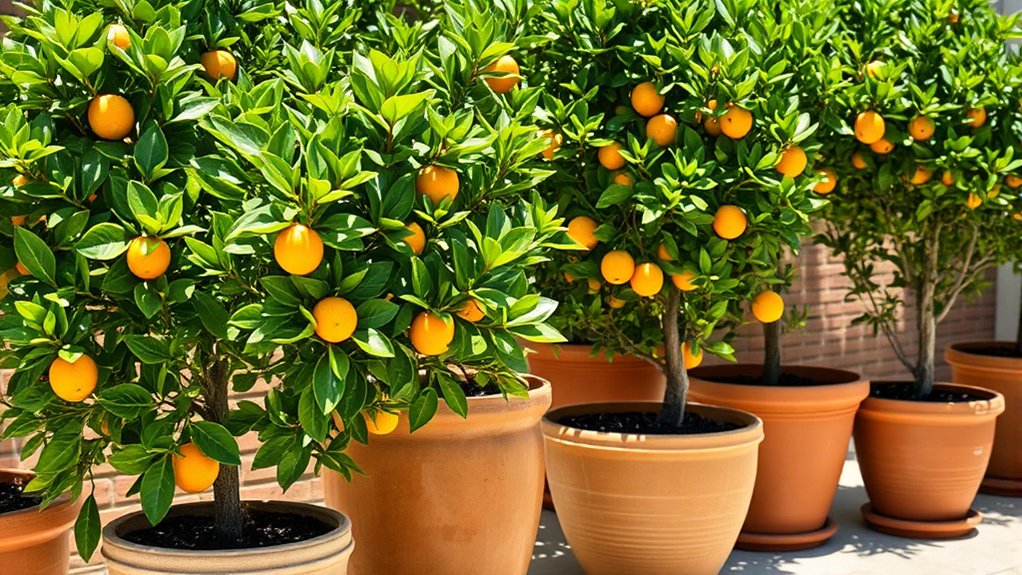
Choosing the right container is the first step to growing healthy citrus trees in pots. You should pick a sturdy pot that gives roots room to spread without drowning them. For most young citrus trees, choose a container size that’s at least 16 to 20 inches wide and deep; larger varieties may need even more space.
If the pot is too small, the tree dries out quickly and stalls. If it’s too large, excess moisture can linger. Make sure the container has drainage holes so water can escape freely after watering. Without them, roots can rot fast.
You can use terracotta, plastic, or resin, but each material changes how quickly the soil dries. Weigh the pot too, because you may need to move it for sunlight, frost, or pruning. A well-sized, well-drained container helps your citrus stay balanced, healthy, and productive from the start.
Choose a Potting Mix for Citrus

For citrus trees in containers, you need a potting mix that drains fast but still holds enough moisture for the roots to stay evenly hydrated. Choose a lightweight blend made for containers, not garden soil, because dense soil can compact and smother roots.
An organic potting mix works well when you want steady moisture retention and good airflow around the root zone. You can improve the mix by adding bark, perlite, or pumice to boost drainage and keep the texture loose.
An organic potting mix helps retain moisture while bark, perlite, or pumice keep roots airy and drainage fast.
Drainage importance matters here: citrus roots hate sitting in wet soil, and excess water can lead to root rot. Before you plant, feel the mix and make sure it crumbles easily in your hand. If it seems heavy, amend it again.
A quality mix gives your tree the foundation it needs to grow vigorously, absorb nutrients efficiently, and establish strong roots in its container.
Give Citrus Trees Plenty of Sunlight

Once you’ve set up a free-draining potting mix, give your citrus tree the bright light it needs to thrive. Place it where it gets at least 6 to 8 hours of direct sun daily, because strong sunlight exposure supports healthy growth, flowering, and fruit development.
South- or west-facing spots often offer the best light, but your ideal placement depends on nearby walls, trees, and seasonal shade. If you grow the tree indoors, set it beside the sunniest window you have and rotate the container every week so all sides receive even light.
In hotter climates, morning sun with some afternoon relief can prevent leaf stress, yet too much shade will reduce vigor and fruit set. Watch the canopy closely: pale leaves, weak stems, and sparse blossoms usually mean your tree needs more light.
Consistent brightness helps citrus stay compact, productive, and full of color.
Water Container Citrus the Right Way
Water container citrus deeply, then let the top inch or two of soil dry before watering again, so roots get moisture without staying soggy. Check the pot daily in hot weather, because watering frequency changes with sun, wind, and container size. Aim for even moisture, not constant wetness, and always empty saucers after watering.
- Use a pot with drainage holes.
- Water until it runs from the bottom.
- Feel the soil before watering again.
- Adjust watering frequency as seasons shift.
Drainage importance can’t be overstated; citrus hate stagnant roots. If the mix stays wet too long, roots lose oxygen and leaves may yellow or drop. In cooler months, you’ll water less often, but don’t let the root ball dry out completely. A moisture-retentive, well-drained mix helps you keep balance.
Citrus need drainage above all—keep soil moist, never soggy, and water less in cooler months.
Watch the tree’s leaves, too: firm, glossy foliage usually means you’re watering on target.
Feed Citrus Trees on a Schedule
To keep your container citrus thriving, it’s best to feed it on a regular schedule rather than guessing when it needs nutrients. A simple feeding calendar can really help you match fertilizer to the tree’s growth cycle and avoid any nutrient gaps.
You’ll want to feed more during the spring and summer when the tree is actively growing. Then, as the cooler months arrive and growth slows down, you can cut back on feeding. It’s all about giving your tree what it needs, when it needs it!
Feeding Calendar Basics
A simple feeding calendar keeps container citrus on a steady growth track because pots lose nutrients faster than garden soil. You can plan around a few repeatable checks and choose fertilizer types that match citrus needs. Aim for balanced nutrient ratios, then adjust the dose by label directions and pot size.
- Inspect new growth and leaf color each week.
- Feed lightly with a citrus fertilizer at the stated rate.
- Water well after feeding so roots absorb nutrients evenly.
- Record what you apply, so you can repeat a reliable pattern.
This routine helps you avoid guesswork and keeps nutrition consistent without overloading the container. Over time, you’ll notice steadier growth, better leaf density, and a more manageable care schedule for your tree.
Seasonal Nutrient Timing
Once your container citrus settles into a routine, seasonal timing makes feeding far more effective than random applications. In spring, you should begin ideal fertilization as new growth starts, because roots and shoots both need steady support.
Feed again in early summer, then taper off as heat peaks and fruit develops. Make seasonal adjustments if your tree flushes growth late or shows pale leaves, but don’t overfeed in winter.
When daylight shortens, your citrus slows down, so fertilizer can burn roots or push weak growth. Water before and after feeding to help nutrients move evenly through the potting mix.
Prune and Repot Citrus Trees
Prune your citrus trees at the right time using clean, sharp tools to keep them healthy and manageable. It’s a good idea to shape the canopy so more light can get in, which helps boost fruit production. Make sure to remove any weak or crowded growth while you’re at it.
When you notice the roots filling up the pot, it’s time to repot your tree. Just move it into a slightly larger container to give it room to keep growing strong.
Pruning Timing And Tools
For the best results, you should prune citrus trees in late winter or early spring, just before new growth starts. This timing helps the tree recover quickly and put energy into fresh shoots. Use clean, sharp essential tools so cuts heal fast and disease stays out.
Choose pruning techniques that remove dead wood, crossing stems, and weak growth without stressing the plant. Sanitize pruners before you start. Make smooth cuts just above healthy buds. Trim back only a little at a time. Inspect the tree after each cut.
You’ll also want gloves to protect your hands and rubbing alcohol to wipe blades between cuts. Keep your pruning light because container citrus responds best when you avoid sudden, heavy trimming.
Shaping For Fruit Production
Shape your citrus tree with fruiting in mind by keeping the canopy open, balanced, and easy for light to reach. You’ll improve fruit tree shaping by removing crowded, crossing, or inward-growing stems, then shortening overly long shoots to encourage sturdy branching.
Focus on citrus tree training that builds a rounded framework with several well-spaced scaffold branches, not a dense top. Pinch soft tips on vigorous growth to slow vertical stretching and redirect energy toward buds and flowers.
Keep suckers below the graft off the plant, since they steal strength from productive wood. After each prune, step back and check the outline so the tree stays even on all sides.
A light, regular approach helps your container citrus stay compact, healthy, and more likely to set quality fruit.
Repotting Root-Bound Trees
When your container citrus has outgrown its pot and the roots start circling the inside, it’s time to prune and repot. Slide the tree out, loosen the root ball, and trim any dead or tightly spiraled roots to restore root health.
Choose the next container size up, not oversized, so the mix drains well and roots don’t stay soggy. Refresh the pot with a gritty citrus blend, then place the tree at the same depth it grew before. Water thoroughly and let excess drain.
- Inspect roots for damage
- Prune circling roots
- Select proper container size
- Refill, water, and monitor
Protect Citrus Trees Year-Round
Citrus trees in containers need protection through every season, not just during winter cold snaps. In spring, shield new growth from late frosts by moving pots to a sheltered spot or covering them overnight.
During summer, give morning sun and afternoon shade if heat spikes, and water deeply so roots don’t dry out. Keep an eye on pests; steady pest management helps you catch scale, mites, and aphids before they weaken the tree.
In fall, reduce fertilizer and prepare for cooler nights by checking drainage and mulching the soil surface. When winter arrives, add winter insulation around the pot, set it on a board or feet to prevent cold from wicking in, and wrap the container if needed.
Rotate the tree occasionally so all sides get light. With consistent protection, you’ll help your citrus stay healthy, productive, and resilient year-round.
Frequently Asked Questions
Can Citrus Trees Fruit Indoors Year-Round?
Yes, you can get citrus trees to fruit indoors year-round if you give them enough light, warmth, and care. You’ll need strong indoor lighting, steady temperature control, and consistent watering to support flowering and fruit set.
Pollinate blooms by hand if needed, and feed the tree lightly during active growth. Even then, fruiting may slow in winter, but a healthy tree can still produce fruit indoors with the right setup.
Which Citrus Varieties Stay Smallest in Containers?
Kumquats and key limes often stay the smallest in pots. You’ll also do well with dwarf varieties like ‘Improved Meyer’ lemon, calamondin, and most mandarins grafted on dwarf rootstock.
About 80% of container success comes from smart container care: use a 14-inch pot, bright light, and regular pruning. You’ll keep growth compact and still get fragrant blossoms and usable fruit without letting the tree overwhelm your space.
Do Container Citrus Need Hand Pollination?
Usually, you don’t need hand pollination for container citrus because most varieties self-pollinate or get help from airflow and insects. With good container care, you can improve fruit set by gently shaking branches during bloom or using a small brush as one of your pollination methods.
If you grow indoors, you may need to assist more often. Keep flowers dry, provide bright light, and avoid stress for best results.
How Do I Know When Citrus Fruits Are Ripe?
You’ll know citrus fruits are ripe when their fruit color has fully changed and looks even, glossy, and mature for the variety. Taste one if you’re unsure, since color alone can mislead.
Use gentle harvest techniques: twist or snip the stem rather than yanking, so you don’t damage the fruit or branch. Ripe citrus usually feels slightly heavy, smells fragrant, and comes away easily without much force.
Can I Move Citrus Trees Outdoors in Summer?
Yes, you can move your citrus trees outdoors in summer, and they’ll often thrive there. You should acclimate them gradually to avoid sunburn, then give them bright summer sunlight and regular watering.
Good citrus tree care means protecting them from strong wind, checking for pests, and bringing them back inside before nights turn cool. If you move them too quickly, you’ll stress them. Treat the change like a sunlit vacation, not a shock.
Conclusion
You’ve got the seven steps to grow citrus trees in containers, so put them to work and enjoy the rewards. Pick the right pot, mix, light, water, feed, prune, and repot with care, and your tree will thank you with healthy growth and bright fruit.
Keep an eye on the seasons and protect it year-round. With a little patience, you’ll be harvesting sunshine in your own backyard. Growing citrus trees in containers makes fresh fruit and vibrant greenery easy and fun.