What Do Birds Eat in the Wild?
If you’ve ever tried to attract wild birds to your yard or simply wondered what they eat, you’re not alone. Many people struggle with understanding the right foods to offer or how birds adapt their diets throughout the year.
Knowing what wild birds eat can make all the difference in supporting their health and enjoying their presence.
You’ll find that wild birds eat a variety of foods that change with the seasons and habitats. Insects and protein-rich meals fuel them during breeding, while seeds, fruits, and nuts provide energy for migration and winter.
Their diet shifts based on what’s available, from grains in open fields to berries in forests. They even store food to manage tough times.
Keep exploring, and you’ll uncover how these habits help birds thrive year-round.
Key Takeaways
- Birds eat a variety of seeds, grains, fruits, insects, and small invertebrates depending on the season and habitat.
- Insects and larvae provide essential protein during breeding and chick-rearing seasons.
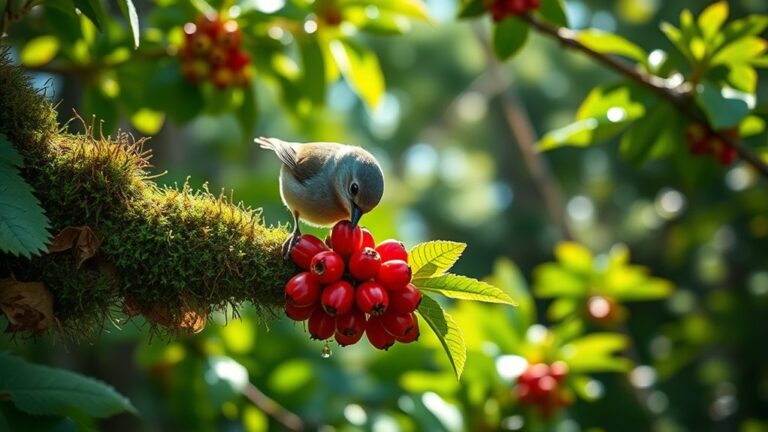
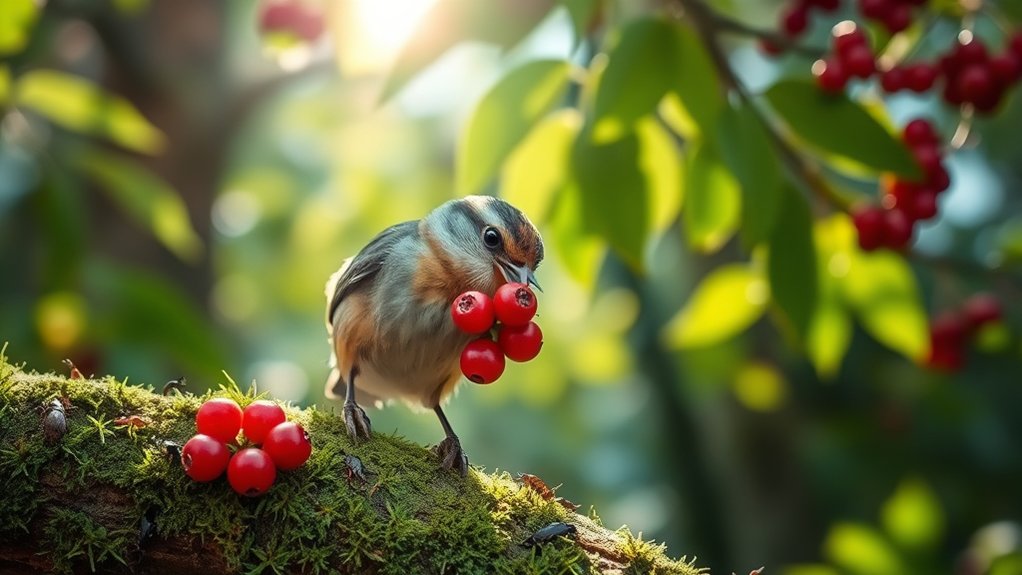
- Fruits and berries supply energy-rich sugars, especially in fall and winter or during migration.
- Habitat influences diet, with urban birds eating scraps and forest birds consuming aquatic insects and berries.
- Birds adapt their diets seasonally, shifting from protein-rich insects in summer to seeds and nuts in winter.
Overview of Wild Birds’ Year-Round Diet
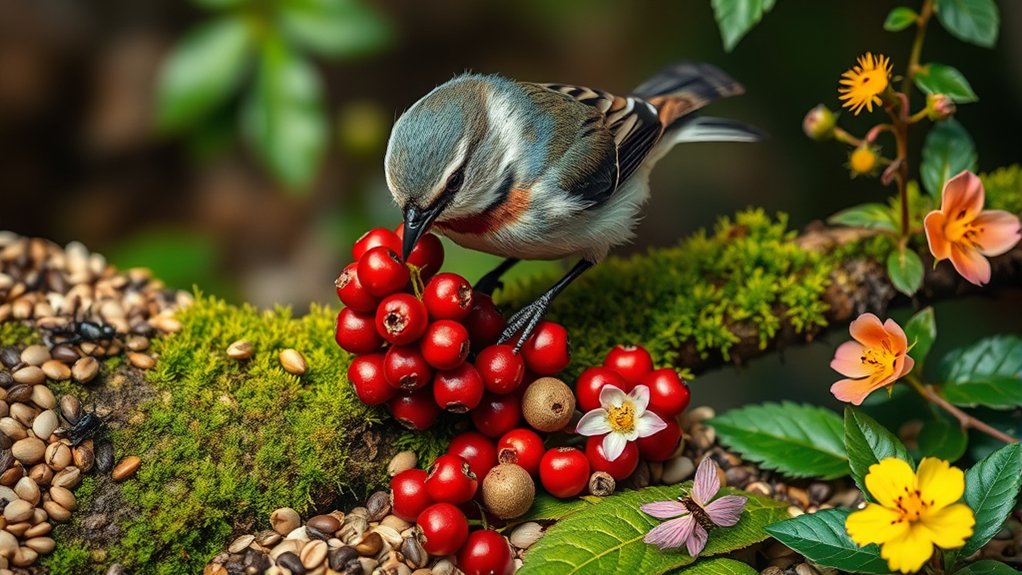
Although wild birds adapt their eating habits to the seasons, you’ll find they rely on a diverse range of foods throughout the year. Understanding their migration patterns gives you insight into how their diets shift across regions and climates.
During migration, birds often increase their intake of energy-rich foods like seeds and insects to fuel long flights. When they settle to nest, their nesting diets usually focus on protein-heavy sources such as insects and small invertebrates, essential for raising healthy chicks.
You’ll notice that many birds switch between plant-based foods and animal prey, depending on availability and nutritional needs. This flexible approach allows them to survive varied environments and challenges year-round.
How Seasons Affect Wild Birds’ Food Choices
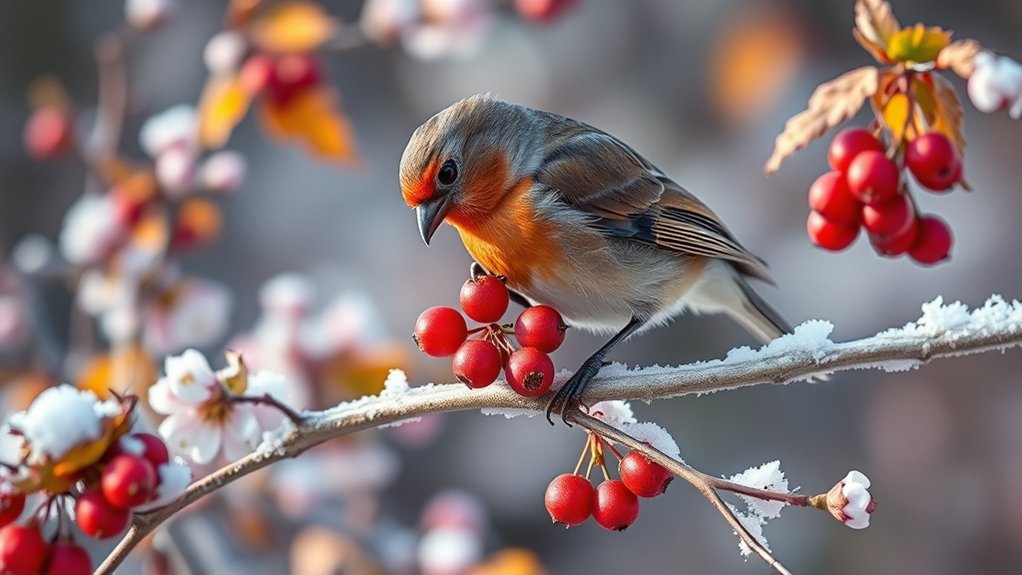
As the seasons change, wild birds adjust their food choices to match the availability and nutritional demands of their environment. In spring and summer, you’ll notice birds focusing on protein-rich insects and larvae to support their nesting diets. This ensures they have the energy to build nests and raise healthy chicks.
During fall, many species shift their diets to include more fruits and seeds, fueling up for migration patterns that require extra stamina. You’ll also see some birds storing food to prepare for scarce winter months.
In winter, when insects and fresh fruits are limited, wild birds rely heavily on whatever seeds, nuts, and berries are available to maintain their energy. Understanding these seasonal shifts helps you appreciate how birds survive and thrive year-round.
Common Seeds and Grains Wild Birds Eat
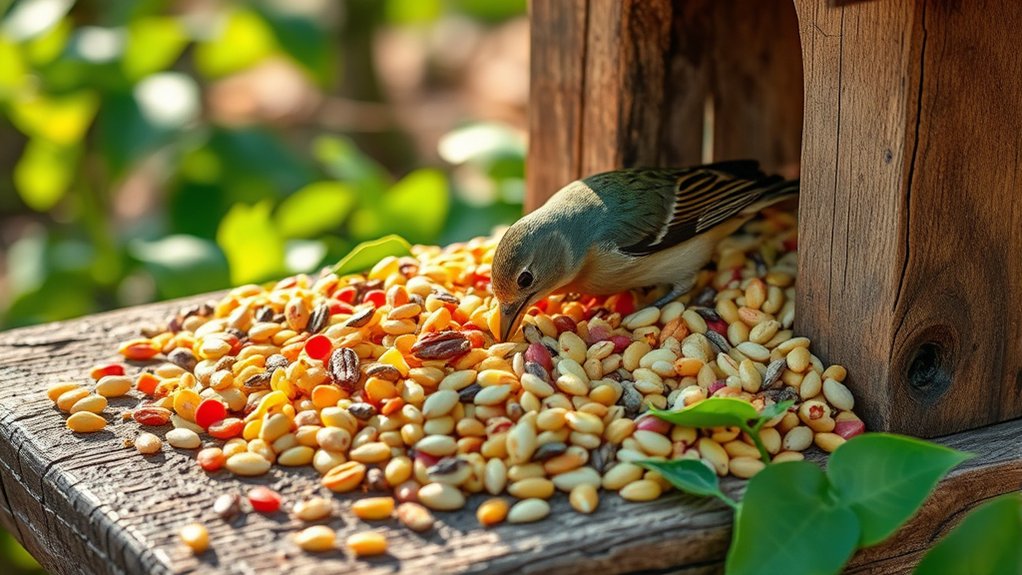
You’ll find that wild birds often go for popular seeds like sunflower, millet, and cracked corn. These grains pack essential nutrients that help birds stay healthy and energized. And depending on the season, their seed preferences can shift to match what’s most available and nutritious.
Popular Wild Bird Seeds
When you offer popular wild bird seeds, you attract a variety of feathered visitors to your yard. Birds have adapted to urban environments, adjusting their migratory patterns based on food availability.
By providing familiar seeds, you support their natural behaviors and help sustain them year-round.
Here are some common seeds you can offer:
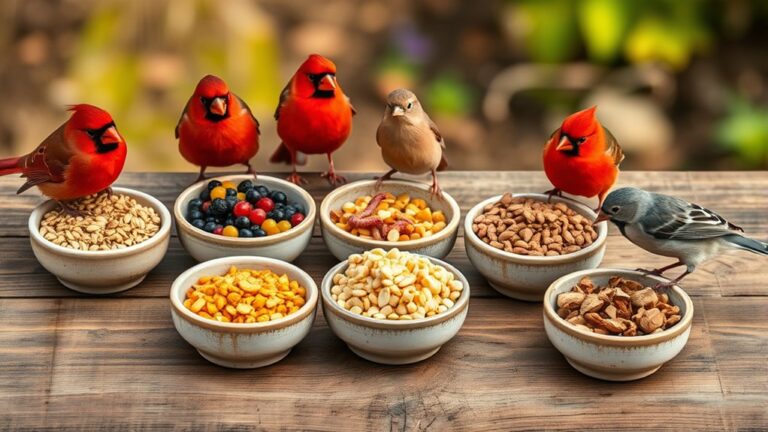
- Black oil sunflower seeds, loved for their high energy and thin shells
- Millet, favored by ground-feeding birds like sparrows and doves
- Nyjer (thistle) seeds, attracting finches with their tiny size
- Safflower seeds, enjoyed by cardinals and grosbeaks
- Cracked corn, appealing to larger birds such as jays and pigeons
Understanding these preferences lets you create a welcoming habitat that respects both urban adaptation and migratory patterns.
Nutritional Value Of Grains
Although wild birds consume a variety of seeds and grains, understanding their nutritional value helps you choose the best options to support their health and energy needs. Grains like millet, cracked corn, and sunflower seeds provide essential carbohydrates, fats, and proteins that fuel wild bird migration and daily activities.
These nutrients boost stamina and body condition, which are essential for long flights and reproduction. Moreover, some seeds contain oils that aid feather maintenance and support the use of natural nest building materials.
When you offer a mix rich in these grains, you help birds maintain energy reserves and overall vitality. By knowing the nutritional benefits, you can better support their survival and thriving in the wild throughout the year.
Seasonal Seed Preferences
Understanding the nutritional value of grains sets the stage for recognizing how wild birds adjust their seed choices throughout the year. As migration patterns shift and nesting behaviors intensify, birds prioritize different seeds to meet their energy needs.
During spring, they seek nutrient-rich seeds to support nesting, while fall calls for high-fat seeds to fuel migration.
You’ll notice birds favor these common seeds seasonally:
- Sunflower seeds for protein and fat
- Millet for easy digestion during nesting
- Safflower seeds to deter squirrels in spring
- Nyjer seeds rich in oils for energy in fall
- Corn kernels for carbohydrate boosts before migration
Fruits and Berries That Attract Wild Birds
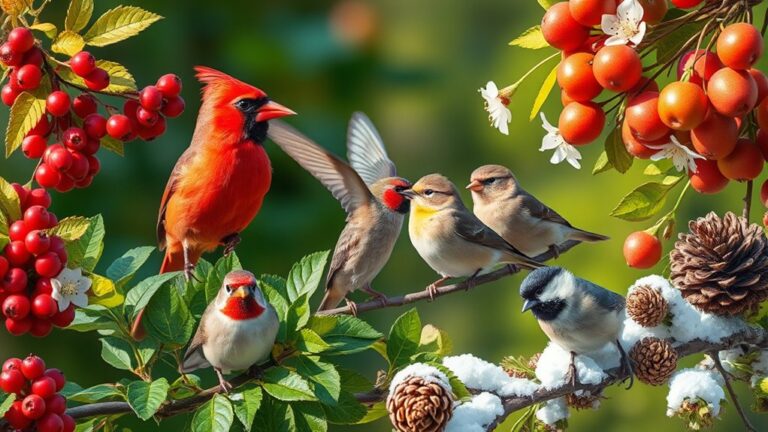
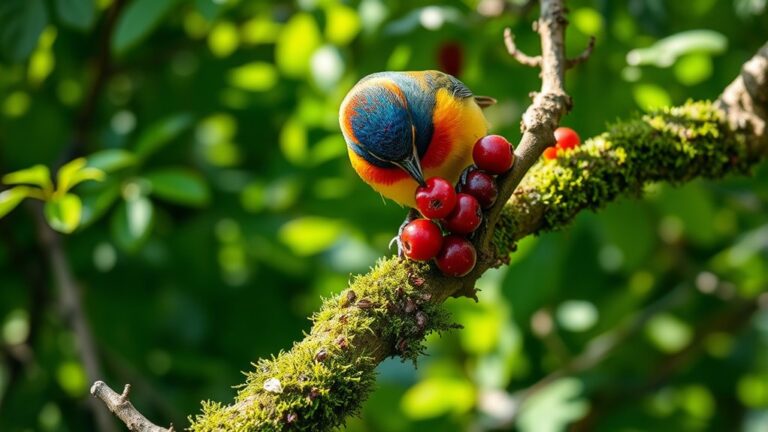
Since wild birds rely heavily on natural food sources, offering fruits and berries can quickly attract a variety of species to your yard. Many birds, especially those involved in urban nesting, depend on these nutrient-rich foods to sustain themselves close to human habitats. Berries like elderberries, blackberries, and mulberries provide essential energy, helping birds maintain their strength during breeding seasons or harsh weather.
Migratory patterns also play a big role in what fruits and berries you’ll see attracting different birds throughout the year. In spring and fall, migratory birds feast on fruits packed with sugars to fuel their long journeys. By planting native fruit-bearing shrubs and trees, you support these seasonal visitors and encourage local species to thrive. You’ll notice more activity from orioles, thrushes, and waxwings when you provide these natural treats. So, including fruits and berries in your bird-friendly garden creates a crucial food source that benefits both resident and migrating birds alike.
The Role of Insects in Wild Birds’ Diets
You’ll notice that insects give wild birds the essential protein they need for energy and growth. Because insects aren’t always around—they come and go with the seasons—birds have to change up their diets depending on what’s available. When you understand this shift, it really shows how important insects are for a bird’s survival out in the wild.
Insects as Protein Sources
Although many birds enjoy a varied diet, insects provide an essential source of protein that supports their energy needs and growth. When you watch birds during migration or while tending to nesting habits, you’ll notice how critical insects are for their survival.
These tiny creatures fuel long flights and help parents feed hungry chicks. You might picture birds catching:
- Crunchy beetles scurrying under leaves
- Soft-bodied caterpillars munching on foliage
- Busy ants crawling in soil and tree bark
- Fast-flying dragonflies skimming water surfaces
- Juicy grasshoppers leaping through tall grass
Seasonal Insect Availability
When insects become scarce during colder months, birds adjust their diets to survive. You’ll notice many species change their feeding habits based on seasonal insect availability.
During warmer months, insects dominate nesting diets, providing essential protein for growing chicks. However, as temperatures drop, birds rely less on insects and more on seeds, berries, or other food sources.
Migration patterns also play a vital role. Some birds travel to warmer areas where insects remain abundant year-round.
Understanding these shifts helps you appreciate how birds adapt to environmental changes. So, when you observe birds in different seasons, remember their diet reflects insect availability, migration habits, and the need to fuel their nesting efforts during breeding seasons.
How Wild Birds Hunt for Protein in the Wild
Because protein is essential for their growth and energy, wild birds have developed diverse hunting techniques to capture insects, small mammals, and other prey. During bird migration, you’ll notice some birds sharpen their hunting skills to build fat reserves. Nesting behaviors demand constant protein intake to feed their young.
To understand how wild birds hunt, imagine this:
- A hawk scanning fields from high above, then plunging swiftly to seize a mouse.
- A kingfisher hovering over water, spotting fish with sharp eyes before plunging.
- A woodpecker tapping on tree bark, flushing out hidden insects.
- A flycatcher darting through the air, snatching flying insects mid-flight.
- An owl silently gliding at night, using keen hearing to locate small mammals.
What Different Wild Bird Species Prefer to Eat
You’ll notice that different wild bird species have clear seed preferences. Some really love sunflower seeds, while others tend to go for millet. When it comes to insects, their diets can vary a lot depending on what’s available and the specific species. Getting to know these preferences helps you understand how birds adapt to their environments.
Seed Preferences by Species
Although many wild birds enjoy a variety of seeds, each species tends to favor specific types that best meet their nutritional needs and feeding habits. You’ll notice that their choices often relate to migration patterns and nesting habits. These influence the seeds available and the energy required.
For example, birds preparing for long migrations pick high-fat seeds, while those nesting nearby prefer easily accessible ones.
Here’s what different species often prefer:
- Finches: sunflower and nyjer seeds, ideal for their strong beaks
- Sparrows: millet and cracked corn, common near ground feeders
- Cardinals: safflower seeds, supporting their nesting energy needs
- Chickadees: sunflower and peanuts, great for winter survival before migration
- Doves: millet and sorghum, suited for ground foraging near nests
Understanding these preferences helps you support wild birds effectively.
Insect Diet Variations
When you observe wild birds, you’ll notice many rely on insects to meet their protein needs, especially during breeding and chick-rearing seasons. Different species prefer various insects depending on availability and nutritional demands.
For example, warblers feast on caterpillars and spiders near their nests, while woodpeckers focus on beetles hidden in tree bark. These preferences often align with their migration patterns; birds adjust their insect diet based on what’s abundant along migratory routes.
Nesting behaviors also influence insect choices. Species that build open nests tend to consume flying insects like flies and moths, while cavity nesters might gather ants or larvae.
Understanding these insect diet variations helps you appreciate how birds adapt their feeding strategies throughout the year to survive and raise their young successfully.
How Habitat Influences Wild Birds’ Food Sources
Because different habitats offer unique resources, wild birds adapt their diets to what’s available around them. When you observe birds in urban nesting areas, you’ll notice they often eat scraps, seeds, and insects found near human activity.
Wild birds adjust their diets to urban surroundings, often eating scraps, seeds, and insects near human activity.
Meanwhile, migratory patterns influence what birds eat seasonally, as they move through forests, wetlands, or grasslands, each providing different food sources. Depending on where you spot them, birds might rely on:
- Berries and fruits in dense woodlands
- Aquatic insects and small fish near lakes or rivers
- Seeds and grains in open fields and meadows
- Nectar from flowers in tropical or subtropical areas
- Human food waste in cities and suburban neighborhoods
How Wild Birds Find and Store Food
Wild birds rely on keen instincts and learned behaviors to locate food in their environment. When you observe them, you’ll notice they use sharp eyesight and memory to find reliable sources like seeds, insects, or fruits.
During bird migration, they depend on familiar stopover sites where food is abundant, fueling their long journeys. You’ll also see some species adjusting their search patterns based on seasonal changes and habitat shifts.
When it comes to storing food, certain birds prepare for scarcity by caching. For example, you might spot woodpeckers or jays hiding seeds or nuts in tree crevices or under leaves. Their nesting habits influence this behavior, as they often store extra food near their nests to feed their young.
Understanding these survival strategies helps you appreciate how wild birds efficiently manage resources throughout the year.
Why Knowing Wild Diets Helps You Feed Backyard Birds
Understanding the natural diets of birds gives you the insight needed to choose the right foods that attract and nourish them in your backyard. When you feed birds based on what they eat in the wild, you support their health and natural behaviors. This is especially important for species involved in urban nesting or following migratory patterns.
Feeding birds their natural diet supports their health and encourages authentic behaviors, especially in urban and migratory species.
Knowing their preferences helps you provide foods that sustain energy and nutrition throughout the year.
Here’s what you can offer to mimic their wild diet:
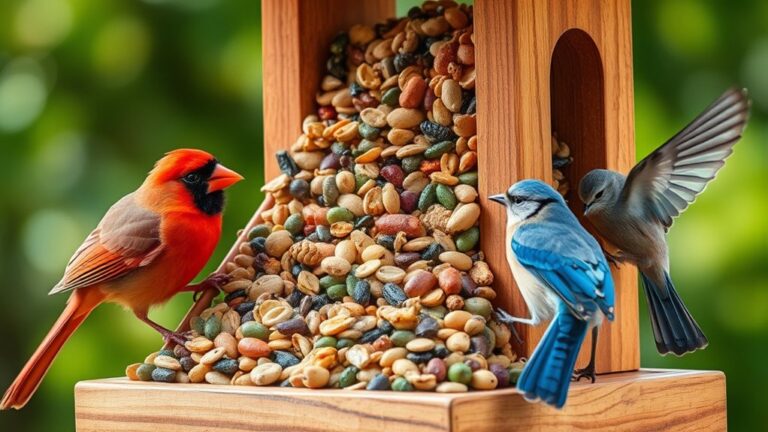
- Seeds and nuts for energy-rich snacks
- Native fruits reflecting their natural forage
- Insects and larvae for protein-packed meals
- Nectar for hummingbirds and butterfly-like species
- Suet or fat-based treats during colder months
Frequently Asked Questions
How Do Baby Birds Get Their First Food in the Wild?
When baby birds need their first food, you’ll see nestling feeding in action. The parents provide for their young by hunting or gathering food and then feeding it directly to the nestlings.
You’ll notice the parents carefully delivering small insects, worms, or regurgitated food right into the babies’ open mouths. This parental provision guarantees the nestlings get the nutrition they need to grow strong before they can feed themselves.
Do Wild Birds Eat Human Food Scraps Safely?
Imagine a crow pecking through a picnic left behind, but don’t assume all human food scraps are safe. You shouldn’t feed wild birds your leftovers because human food safety is tricky for them.
Processed foods, salty snacks, or sugary treats carry food scrap risks that can harm their health or disrupt their natural diet. Instead, let them find their natural meals, keeping their wild instincts sharp and their bodies healthy.
How Do Migratory Birds Adapt Their Diet During Travel?
You’ll notice migratory birds rely on dietary flexibility to survive long journeys. During travel, they adjust their avian foraging strategies, seeking out whatever nutritious food sources are available along the route.
This flexibility helps them maintain energy levels and adapt to changing environments. Whether it’s insects, berries, or seeds, they quickly switch diets to meet their needs, ensuring they stay fueled and ready for the next leg of their migration.
Can Wild Birds Survive Solely on Water Without Food?
You can’t survive without food, and neither can wild birds. Their bird diet relies on various food sources like seeds, insects, and fruits. Water alone won’t sustain them; it only hydrates.
Without proper nutrition, their energy drops, their health fades, and their survival chances plummet. So, while water is essential, you’ve got to make sure birds find food sources to thrive and keep their strength during every season.
How Does Pollution Affect Wild Birds’ Natural Food Sources?
Pollution impact on wild birds is serious because it causes food source contamination. When you see polluted water or soil, it often contains harmful chemicals that get into insects, plants, and aquatic life birds rely on.
This contamination reduces the availability and safety of their natural food, making it harder for birds to find nutritious meals. You’ll notice birds becoming weaker or facing health issues due to the polluted environment affecting their diet.
Conclusion
Think of wild birds as skilled chefs, constantly adapting their menus with nature’s freshest ingredients. Just like you change your meals with the seasons, birds shift from seeds and berries to insects, crafting a perfect diet for survival.
By understanding their culinary dance, you become a thoughtful host, offering the right feast at the right time. So, next time you watch birds flutter by, remember they’re not just eating, they’re mastering the art of living wild and knowing what birds eat in the wild.