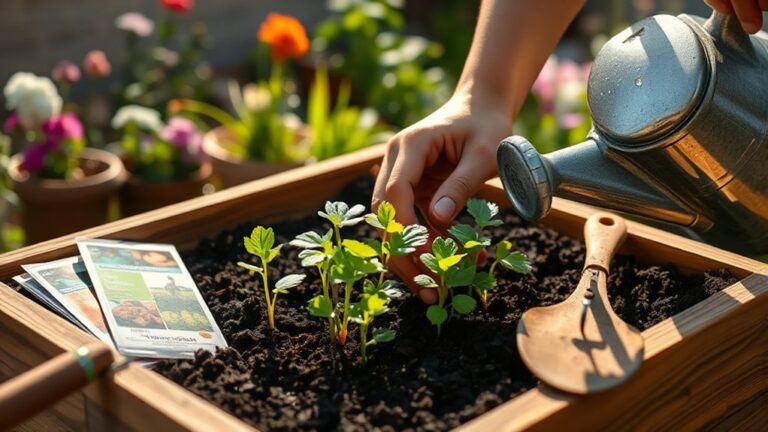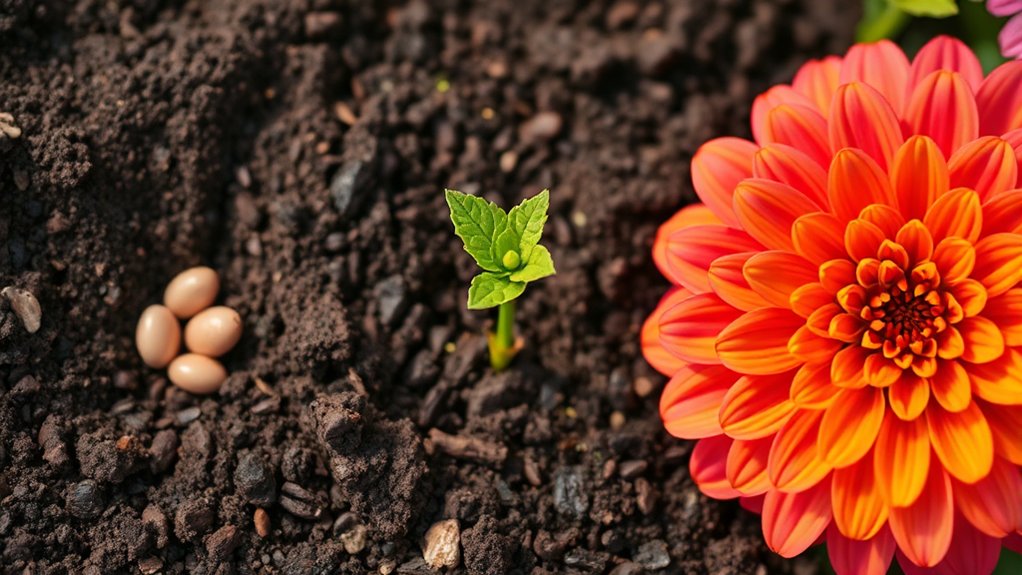
How to Grow Zinnias From Seed in 3 Steps
If you’ve ever wanted to grow vibrant zinnias but felt overwhelmed by all the steps, you’re not alone. Many gardeners struggle to get their zinnia seeds to sprout and thrive. The good news is, with a few simple tips, you can enjoy beautiful blooms all season long without the hassle.
Choose fresh zinnia seeds that fit your space, color mix, and height needs, then sow them outdoors after the last frost in a sunny spot with loose, well-drained soil. How to Grow Zinnias From Seed.
Plant seeds about 1/4 inch deep and water gently to keep them evenly moist until they sprout.
Once they grow, thin seedlings, water at the base, pinch tips for bushier plants, and deadhead spent blooms so they keep flowering all season.
There’s plenty more to master from there.
Key Takeaways
- Choose fresh zinnia seeds suited to your space, climate, and desired bloom size or color.
- Sow seeds outdoors after the last frost in full sun, about 1/4 inch deep, in loose, well-drained soil.
- Keep the soil evenly moist during germination, watering gently at the base to avoid soggy conditions.
- Thin seedlings for proper spacing, then pinch growing tips and deadhead spent blooms to encourage bushier growth.
- Watch for pests and mildew, and provide steady watering, light feeding, and good airflow for healthy plants.
Choose Zinnia Seeds for Your Garden
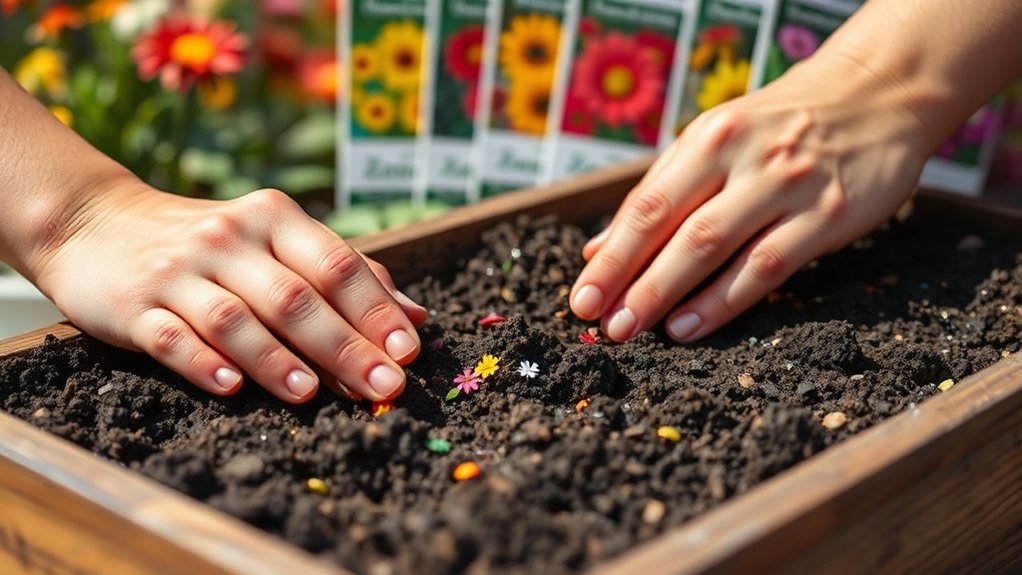
Before you buy, choose zinnia seeds that match your garden’s space, color palette, and growing conditions. If you want a tidy border, pick compact types. If you want cutting flowers, look for taller plants with long stems.
The best zinnia varieties for many home gardens include ‘Profusion’ for disease resistance, ‘Zahara’ for heat tolerance, and ‘State Fair’ for bold, oversized blooms. Check packet details for mature height, bloom size, and color mix so you don’t overcrowd beds or miss your design goals.
You should also read freshness dates and choose seeds from a reliable source. Fresh seed usually gives stronger stands and better color consistency.
For seed germination tips, store packets in a cool, dry place until you plant them, and avoid old seed that may sprout unevenly. When you choose carefully now, you’ll set yourself up for healthier seedlings, better blooms, and a garden that looks exactly how you imagined.
Sow Zinnia Seeds in a Sunny Spot

Pick a sunny spot that gets at least 6 to 8 hours of direct light each day, since zinnias bloom best in full sun. Choose a bed with loose, well-drained ideal soil, then smooth the surface and remove weeds.
You can sow seeds directly outdoors after the last frost, when the soil has warmed. Keep the planting depth shallow, about 1/4 inch, so sprouts can emerge easily.
- Mark rows or clusters where you want color.
- Drop seeds evenly, spacing them so each plant has room.
- Cover lightly with soil and press it down gently.
- Water the area with a fine spray to settle the seeds.
If you plant in a container, place it where sunlight stays strong all day. Good drainage matters, and warm soil helps seeds start quickly. Keep the spot bright, open, and ready for growth.
Care for Zinnias Until They Bloom

Keep the soil evenly moist while zinnia seeds germinate and young plants get established, but don’t let the bed stay soggy. Water at the base in the morning so foliage dries fast, and use steady watering techniques during dry spells.
Once seedlings have a few true leaves, thin them so each plant has room to branch and air can move freely. Feed lightly with compost or a balanced fertilizer if your soil lacks nutrients, but don’t overdo nitrogen or you’ll get leafy growth and fewer blooms.
Watch for aphids, spider mites, and powdery mildew, and use simple pest management like handpicking, spraying insects off with water, and removing infected leaves. Pinch the growing tips early for bushier plants, then follow pruning tips by deadheading spent flowers regularly.
This encourages more buds, keeps plants tidy, and helps zinnias bloom longer and more abundantly.
Frequently Asked Questions
How Long Do Zinnia Seeds Stay Viable in Storage?
Zinnia seeds usually stay viable for 3 to 5 years in proper seed storage, and sometimes longer if you keep them cool, dry, and dark. You’ll get the best germination from fresh seed, but older seed can still sprout.
To protect seed viability, seal them in an airtight container with low humidity. If you’re unsure, test a few seeds first so you don’t waste time or space in your garden.
Can Zinnias Grow Well in Containers?
Yes, zinnias can grow really well in containers, which is almost suspiciously convenient for a flower that loves sun. In container gardening, you’ll want a pot with drainage and plenty of room for roots.
Give your zinnias full sun, regular water, and good zinnia care, and they’ll reward you with bright blooms. Pinch them back early, and you’ll keep them bushier, happier, and blooming longer on your patio.
Which Zinnia Varieties Attract the Most Butterflies?
You’ll attract the most butterflies with single-flowered zinnias like Zahara, Profusion, and older heirloom types. Their open centers make nectar easy to reach, matching butterfly preferences better than tight, double blooms.
Mix bright pink, orange, red, and yellow varieties in your pollinator gardens for the best results. You’ll also want to deadhead spent flowers so plants keep blooming and feeding visitors all season.
How Do You Save Zinnia Seeds for Next Year?
You save zinnia seeds by letting blooms dry on the plant, then cutting the heads when they’re brown and crisp. You’ll rub out the seeds, remove chaff, and dry them fully before sealing them in paper envelopes or jars.
Good zinnia seed saving depends on cool, dark seed storage methods, so label each packet with the variety and year. Store them indoors, and they’ll stay viable for next season.
Are Zinnias Safe for Pets and Children?
Yes, zinnias are generally safe for pets and children. If your dog nibbles a leaf in the garden, you usually won’t face serious trouble, which helps with pet safety and child safety.
You should still discourage chewing since any plant can upset a stomach if eaten in large amounts. Keep an eye on toddlers and curious animals, and wash hands after handling flowers to stay cautious.
Conclusion
Growing zinnias from seed is easier than you might think, and the payoff is huge. In just a few weeks, you can enjoy bright, long-lasting blooms that attract pollinators to your garden.
Did you know a single zinnia plant can produce dozens of flowers in one season? With the right seeds, plenty of sun, and simple care, you’ll have a colorful display that keeps giving all summer long.
Start with good seeds, give them plenty of sunlight, and follow easy care steps. Growing zinnias from seed is a rewarding way to brighten your garden all season.