What Do Mallard Ducks Look Like?
If you’ve ever tried to identify mallard ducks but found yourself confused by their changing colors and similar-looking waterfowl, you’re not alone. Many people struggle with spotting the differences and understanding what makes these ducks so distinctive. It can be frustrating when you want to enjoy birdwatching or learn more about wildlife but feel overwhelmed by the details.
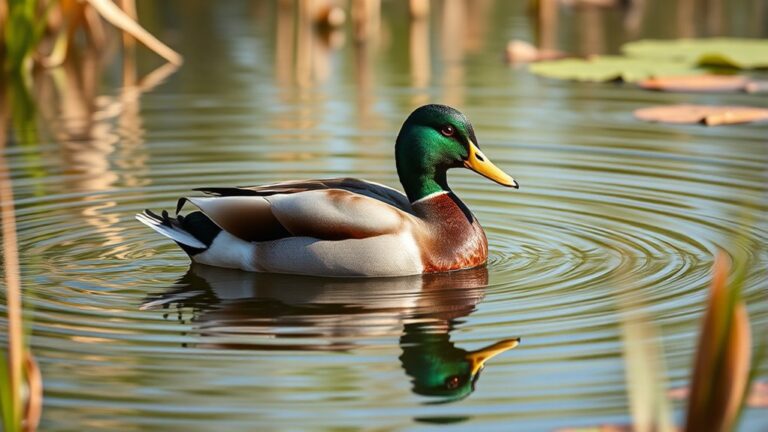
You’ll spot mallard ducks by their sturdy, streamlined bodies built for water and flight. Males stand out with shiny green heads, white neck rings, chestnut chests, and blue wing patches bordered in white. Females wear mottled brown feathers that help them blend in. What Do Mallard Ducks Look Like.
Juveniles look duller with softer feathers. Their colors can shift in different light and weather. Keep exploring, and you’ll uncover even more about their seasonal looks and unique features.
Key Takeaways
- Male mallard ducks have iridescent green heads, white neck rings, chestnut-brown chests, and gray bodies with black accents.
- Female mallards feature mottled brown and tan feathers with a blue wing speculum bordered by white for camouflage.
- Juvenile mallards display duller, mottled brown feathers and lack the vibrant iridescence of adults.
- Mallard feathers shift hues with light angle, appearing more vivid in sunlight and duller in overcast or low-light conditions.
- Recognizable features include the male’s green head, white neck ring, blue wing patch, and the species’ streamlined, compact body shape.
What Do Mallard Ducks Look Like? A Quick Overview

Although mallard ducks come in various colors and patterns, you can usually recognize them by their distinctive features. You’ll notice a broad, flat bill and a rounded head, paired with a sturdy body shape perfect for their mallard habitat, like wetlands, ponds, rivers, and lakes. Their feathers often show a mix of brown, gray, and iridescent hues, blending well with their surroundings.
When you observe their behavior, you’ll see them dabbling for food. Their mallard diet includes aquatic plants, insects, and small fish, which they find by tipping forward in shallow water. You’ll often find them in areas rich with vegetation, providing both food and shelter.
Their adaptable appearance suits their environment, helping them stay camouflaged from predators. So, when you spot a duck near water with these features, chances are you’re looking at a mallard.
What Are Male Mallard Ducks’ Distinctive Colors?

You’ve probably noticed that male mallard ducks stand out with their vibrant colors compared to the more muted tones of females. Their dazzling plumage helps them attract mates and thrive in diverse Mallard habitat, from ponds to rivers. Their Mallard diet, rich in aquatic plants and insects, supports the bright feathers you see.
Here’s a quick look at their distinctive colors:
| Feature | Color Description |
|---|---|
| Head | Iridescent green |
| Neck ring | Bright white |
| Chest | Deep chestnut brown |
| Body feathers | Gray with black accents |
These striking colors not only make males easy to spot but also reflect their health and vigor. So next time you visit a wetland or park, you’ll know exactly why male mallards catch your eye in their natural Mallard habitat.
How to Identify Female Mallards by Their Feathers
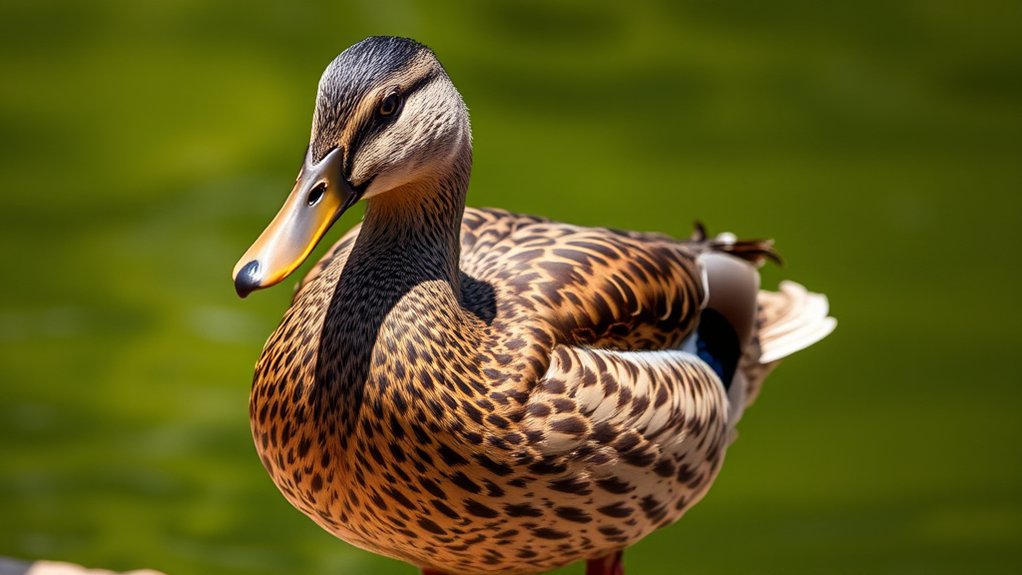
While female mallards don’t sport the bright colors of males, you can still identify them by their distinctive feather patterns. Look closely at their overall feather pattern, which is mottled brown and tan, helping them blend into their surroundings. This camouflaged look is key for protecting themselves and their nests.
Pay attention to the wing coloration, too. Female mallards have a blue speculum, a shiny patch on their wings, framed by white borders that stand out against the muted feathers. When their wings are folded, this blue patch is often visible and is a reliable marker to distinguish females from other ducks.
The feathers on their heads and necks are usually a soft brown with subtle streaks, lacking the iridescence seen in males. By focusing on these feather patterns and wing coloration, you’ll be able to spot female mallards in the wild with confidence.
How Juvenile Mallards Differ From Adults
How can you tell a juvenile mallard apart from an adult? Juvenile mallards show noticeable differences in their juvenile plumage compared to fully grown adults. You’ll see that their feathers are duller, lacking the vibrant colors adults display.
Juvenile mallards have duller feathers and lack the vibrant colors seen in adult birds.
Instead, juveniles have a mottled brown appearance with less defined patterns. Age related markings are less pronounced, so the distinctive bright green head of an adult male isn’t visible yet. Juvenile males often resemble females but with subtle hints of developing adult coloration.
You can also spot juvenile mallards by their softer, fluffier feathers, which they gradually shed as they mature. Their bills tend to be duller and less brightly colored as well. Observing these age related markings and juvenile plumage helps you distinguish young mallards during their first few months before they acquire the full adult look.
This changeover period is key for identification in the wild.
How the Mallard’s Blue Speculum Helps You Identify It
Although mallards boast many distinctive features, their blue speculum stands out as a key identifier you won’t want to miss. This vibrant patch of iridescent blue feathers, bordered by white, flashes brilliantly when the duck takes flight or preens. Whether you spot a mallard in its natural habitat by a pond or during its migration patterns across continents, this blue speculum makes identification easier, even from a distance.
When you’re observing mallards, notice how the speculum:
- Shines vividly against the green and brown tones of their feathers
- Glimmers in sunlight, catching your eye instantly
- Helps distinguish mallards from other duck species sharing the same habitat
- Remains visible regardless of seasonal plumage changes due to migration
- Adds a splash of color that brightens wetland scenes you love
This small but striking feature is your reliable guide to spotting mallards in the wild.
Why Do Male Mallards Have Glossy Green Heads?
Because male mallards need to attract mates, their glossy green heads play a crucial role in courtship displays. This vibrant color catches the eye of females, signaling health and vitality.
In their mallard habitat, like wetlands, ponds, and lakes, the shiny green head stands out against natural surroundings. This gives males an advantage during mating season. Their mallard diet, rich in carotenoids from plants and insects, helps maintain that iridescent sheen.
Here’s a quick look at why the glossy green head matters:
| Feature | Purpose |
|---|---|
| Glossy green head | Attracts females by signaling fitness |
| Location | Wetlands, ponds, lakes (mallard habitat) |
| Diet | Carotenoid-rich foods boost coloration (mallard diet) |
This combination of environment and nutrition creates the stunning green head you see, helping males succeed in the wild.
How Mallard Appearance Changes During Mating Season
You’ll notice male mallards shift from dull to bright plumage when mating season arrives. They show off their glossy green heads and colorful feathers, really standing out. Female mallards also change, but their variations are subtler. This helps them blend in while nesting. So, let’s take a closer look at how these seasonal changes work and why they matter.
Male Plumage Transformation
When the mating season approaches, male mallard ducks undergo a striking plumage transformation to attract females. You’ll notice their usual dull feathers shift to vibrant greens and blues, signaling health and robustness influenced by their mallard habitat and diet. This dazzling display helps males stand out near ponds and wetlands where they live.
Their diet, rich in aquatic plants and insects, supports this vivid change. Watching this transformation, you might feel awe at nature’s artistry.
- Iridescent green head gleaming under sunlight
- Bright yellow bill contrasting sharply
- Deep chestnut-brown chest catching the eye
- Sparkling blue wing patches shimmering in flight
- Bold white neck ring framing their colorful feathers
This vivid makeover is nature’s way of helping males impress and win mates.
Female Seasonal Variations
Although female mallard ducks don’t display the bright colors males do, their appearance still changes subtly during mating season to signal readiness. You’ll notice shifts in their feather coloration, where dull browns become slightly richer and more defined.
This seasonal plumage helps females blend into their environment while also indicating they’re prepared to mate. Unlike males, whose vibrant colors grab attention, females rely on these nuanced changes.
You can see slight intensifications in the patterns on their wings and body, which improve camouflage during nesting. These seasonal variations are vital for survival and reproduction, ensuring females stay protected yet recognizable to potential mates.
How to Spot Mallards in Different Light and Weather
When you’re out trying to spot mallards, keep an eye on how their colors can change depending on the light. For example, in low light or when the sun is really bright, their colors might look a bit different than you expect. Weather plays a role too—fog or rain can make it trickier to see them clearly. So, by paying attention to these shifts, you’ll get better at identifying mallards no matter what the conditions are like.
Color Changes In Light
Because mallard ducks’ colors can shift depending on light and weather, you might need to adjust your observation techniques to spot them accurately. Their iridescent feathers reflect different parts of the color spectrum, changing hues as the angle of light shifts.
Light reflection can turn their green heads from bright emerald to deep blue, while their brown bodies may appear richer or muted.
When watching mallards, keep these tips in mind:
- Notice how sunlight intensifies feather colors
- Look for shimmer during early morning or late afternoon
- Observe subtle color shifts when clouds diffuse light
- Watch for flashes of blue or green when they move
- Use polarized sunglasses to reduce glare and see true colors
These strategies help you appreciate mallards’ stunning color changes firsthand.
Visibility During Weather
Understanding how light affects mallard colors sets you up to spot them better in different weather conditions. Weather impact plays a significant role in how visible mallards appear.
On bright, sunny days, their iridescent green heads shine vividly, making them easier to spot. However, in overcast or foggy conditions, their colors dull, blending more with the surroundings.
You’ll notice mallards become less distinct during rain or mist, so adjusting your focus to their shape and movement helps. Low light at dawn or dusk also challenges visibility conditions, but their silhouette against the water often gives them away.
Mallard Body Shape Compared to Other Ducks
Although mallard ducks share many features with other duck species, their body shape sets them apart in subtle but important ways. When you spot a mallard in its natural habitat, you’ll notice a streamlined body that balances agility and buoyancy. It’s perfect for dabbling in shallow waters while foraging their diverse diet. Unlike some diving ducks, mallards have a rounded chest and a slightly elongated neck that give them a graceful silhouette.
You’ll appreciate how their shape supports swift takeoffs and smooth gliding, especially in the environments they thrive in, from ponds to marshes. This unique build reflects their adaptability and survival skills.
Here’s what stands out about mallard body shape compared to other ducks:
- Sleek, rounded chest for buoyancy
- Longer neck aiding feeding flexibility
- Compact body enhancing flight agility
- Balanced proportions for diverse Mallard habitat
- Shape optimized for their varied Mallard diet
You’ll find their body design fascinating as it suits their lifestyle perfectly.
Why Knowing Mallard Appearance Boosts Birdwatching Fun
Noticing the unique shape and features of mallard ducks makes spotting them much more rewarding. When you recognize their distinct green heads, white neck rings, and chestnut-brown chests, you can quickly identify them even in busy urban habitats. This knowledge sharpens your observation skills, helping you distinguish mallards from other waterfowl.
Understanding their migratory patterns also adds excitement to birdwatching. You’ll anticipate their arrival and departure during seasonal changes, making each sighting feel special. Knowing when and where mallards are likely to appear lets you plan your outings more effectively.
Frequently Asked Questions
What Do Mallard Ducks Eat in the Wild?
You’ll find that a mallard diet in the wild includes a variety of foods. Mallards eat aquatic plants, insects, small fish, and crustaceans.
They also forage for seeds, grains, and worms along the water’s edge. Their wild food sources are diverse, helping them adapt to different habitats.
How Long Do Mallard Ducks Typically Live?
You probably thought mallard ducks live forever, gliding gracefully through lakes like feathered immortals. Nope! They typically live about 5 to 10 years in the wild, though mallard migration and the perils of nature can shorten that.
Their mallard breeding habits keep the population steady, as they bounce between habitats each season. So, while they don’t have eternal life, these savvy ducks make the most of their adventurous, migratory lives.
Where Do Mallard Ducks Build Their Nests?
You’ll find mallard ducks building their nests close to water, often hidden in dense vegetation like reeds or tall grasses. Their mallard breeding habits include careful nesting site selection to keep eggs safe from predators.
They prefer quiet, secluded spots on the ground, sometimes even in urban parks or gardens. By choosing well-covered areas, they increase the chances their ducklings will hatch and thrive.
You’ll notice the female does most of the nest-building herself.
What Predators Commonly Threaten Mallard Ducks?
You’ll often find that raccoons, foxes, and snapping turtles are common predators threatening mallard ducks. These predators use camouflage to sneak up unnoticed, making it tough for the ducks to spot danger early.
Luckily, mallards rely on flight escape techniques, like sudden takeoffs and quick, erratic flying patterns, to evade capture. You’ll notice they stay alert, ready to burst into the air the moment a threat appears, increasing their chances of survival.
How Do Mallard Ducks Communicate With Each Other?
Like characters in a Shakespearean play, mallard ducks use vocal communication to express emotions and intentions. You’ll hear quacks, whistles, and grunts during their mating rituals, signaling attraction or warning rivals.
When you observe their calls, you’ll notice they convey complex messages—from establishing territory to bonding mates. So, when you listen closely, you’re witnessing a rich dialogue shaped by nature’s script, essential for their survival and social harmony.
Conclusion
Think of spotting a mallard like finding a vibrant bookmark in nature’s story. You’ll recognize the male’s emerald crown, the female’s subtle earth tones, and the blue shimmer of their speculum as clues in this living novel.
Knowing these details turns your birdwatching into a treasure hunt, where each feathered character reveals its role. So, keep your eyes sharp and your heart open.
The mallard’s colorful tale is always ready to enrich your outdoor adventures, making it a delightful find for anyone curious about what mallard ducks look like.