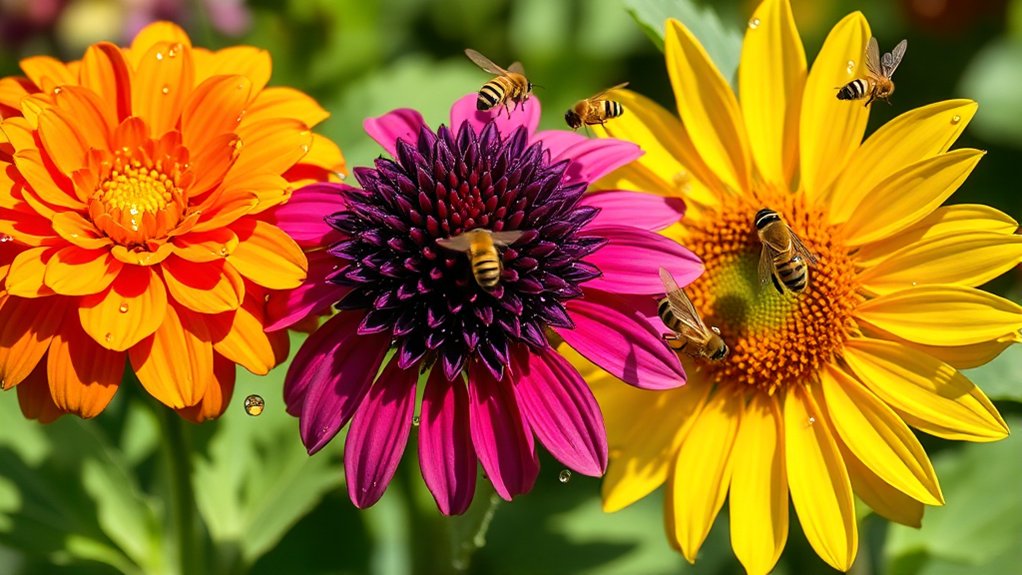
3 Flowers That Attract Pollinators
If you’ve ever tried to create a lively garden full of buzzing bees, fluttering butterflies, and hummingbirds, you’re not alone in finding it tricky. Many people struggle with attracting pollinators despite their best efforts.
Luckily, planting the right flowers can make all the difference and bring your garden to life. Flowers That Attract Pollinators.
You can attract bees, butterflies, and hummingbirds by planting coneflowers, lavender, and bee balm. Coneflowers offer wide centers and rich nectar, lavender brings strong fragrance and bright purple blooms, and bee balm has tubular flowers that hummingbirds love.
Plant them in clusters so pollinators can spot them fast and feed with ease.
Choose blooms that last from spring through fall, and your garden will keep welcoming more visitors with a few simple tricks.
Key Takeaways
- Coneflowers offer wide, colorful centers with rich nectar, making them easy and rewarding for bees and butterflies.
- Lavender attracts pollinators with its strong fragrance, purple blooms, and long-lasting nectar supply.
- Bee balm draws hummingbirds and bees with bold color and tubular flowers that are easy to feed from.
- Plant these flowers in clusters to improve visibility and help pollinators feed efficiently.
- Choose a mix of spring to fall bloomers and avoid pesticides to keep pollinators visiting safely.
What Pollinators Look for in Flowers

When you choose flowers for pollinators, you’re really matching their needs. They look for easy access to nectar and pollen, bright colors, strong scent, and simple flower shapes they can land on or reach into quickly.
You should think about nectar availability first because busy bees, butterflies, and other visitors return to blooms that keep offering food through the day. Their color preferences also matter since different pollinators notice different shades more easily. A clear, vivid display helps them spot flowers from a distance.
Scent strength plays another role, especially when insects rely on fragrance to find blooms before they see them. Finally, flower shape can make a big difference. Open, shallow forms let pollinators feed fast, while narrow tubes suit longer mouthparts.
When you match these features, you make your garden easier for pollinators to use and more likely to support regular visits.
3 Flowers That Attract Pollinators
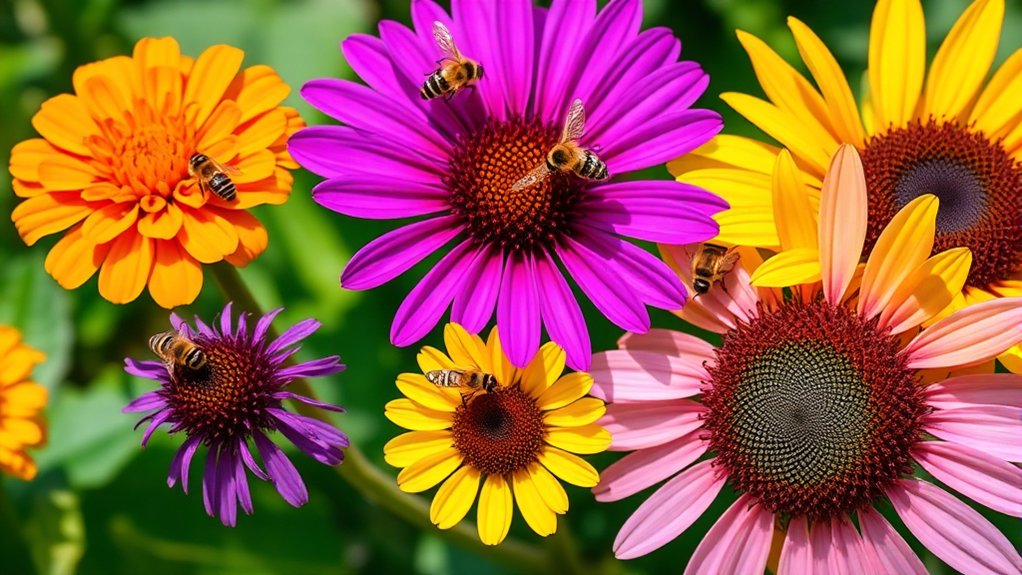
Three flowers stand out for drawing in pollinators: coneflowers, lavender, and bee balm. You’ll notice coneflowers first because their wide centers make landing easy for bees, butterflies, and beetles. These native flower varieties also offer rich nectar and sturdy petals that hold up in sunny beds.
Lavender adds a fragrant draw with its purple spikes, and you’ll often see bees working each bloom in steady lines. Bee balm brings bold color and a tubular shape that hummingbirds can’t resist. Together, these seasonal bloomers give you a mix of shapes, scents, and bloom times that keeps your garden lively.
If you want a simple pollinator patch, plant them in groups so each flower type stands out and stays easy to find. With these three choices, you’ll create a garden that looks beautiful and supports wildlife all season.
How to Keep Pollinators Visiting

To keep pollinators coming back, you need to give them more than a few pretty blooms. Plant in clusters so bees and butterflies can feed efficiently, and choose flowers that bloom from spring through fall.
Mix native species, herbs, and shrubs to boost garden diversity and provide nectar, pollen, and shelter. Leave a shallow water source nearby, and add stones or twigs so insects can land safely.
Skip pesticides whenever you can, because pesticide impact can weaken pollinators and drive them away. If you must address a problem, use the least harmful option at dusk when fewer visitors are active.
Let some stems, seed heads, and leaf litter stay through winter so overwintering insects have cover. Finally, watch your garden closely. When you notice which plants draw the most activity, repeat them.
Consistent food, safe habitat, and careful maintenance make your space a reliable stop for pollinators year after year.
Frequently Asked Questions
Which Pollinators Visit Flowers at Night?
You’ll find that moths, bats, and some beetles visit flowers at night. These nocturnal pollinators rely on scent, pale petals, and strong nectar rewards to locate blooms after dark.
When you plant night blooming flowers, you give them food and support while the evening garden comes alive. You can attract more nighttime visitors by choosing fragrant species and avoiding bright artificial lights that disrupt their feeding.
Do Native Flowers Attract More Pollinators Than Hybrids?
Yes, you’ll usually attract more pollinators with native flowers than with hybrids. Native plants evolved with local bees, butterflies, and other insects, so they offer better food and shelter.
You’ll also get stronger native plant benefits, like easier care and better wildlife support. Many hybrids have hybrid flower drawbacks, such as less nectar, pollen, or accessible blooms, so pollinators may visit them less often.
Can Container Plants Support Pollinators Effectively?
Yes, you can support pollinators with container plants. Think of your porch as a tiny oasis where bees, butterflies, and moths gather like travelers at a waystation.
With container gardening, you can offer nectar-rich blooms, herbs, and native flowers in pots. Mix shapes and bloom times to boost pollinator diversity, and place containers in sun.
Water regularly, avoid pesticides, and you’ll turn small spaces into lively feeding zones.
How Do Pesticides Affect Pollinator Visits?
Pesticides can reduce pollinator visits because you’re exposing insects to pesticide toxicity that can kill, weaken, or disorient them. You’ll also alter pollinator behavior, so bees and butterflies may avoid treated flowers, feed less, or stop returning.
Even low doses can confuse their navigation and foraging. If you want more visits, you should limit spraying, choose targeted products, and apply them when pollinators aren’t active.
When Is the Best Time to Plant for Pollinators?
You’ll get the gentlest start with spring planting, when soil warms and pollinators begin their busy rounds. Plant early enough for roots to settle before summer heat, and you’ll invite seasonal blooms that feed bees, butterflies, and other helpers through the season.
In milder climates, fall planting can work well too, giving perennials time to establish quietly before they wake up and bloom beautifully.
Conclusion
So, if you want your garden buzzing like the center of a pollinator parade, give bees, butterflies, and hummingbirds what they crave: bright blooms, nectar, and a safe place to land. Plant those three flower superstars, and you’ll practically roll out the red carpet for nature’s tiniest VIPs.
Keep your flowers fresh and your garden chemical-free, and pollinators won’t just visit. They’ll swarm in like it’s the best buffet on Earth. Adding these flowers that attract pollinators makes your garden a true hotspot for nature’s helpers.