Best Flowers for Cutting Gardens
Finding the perfect flowers for your cutting garden can feel overwhelming. You want blooms that last, look great in a vase, and keep coming back. If you’ve struggled to find reliable choices that meet these needs, you’re not alone. Many gardeners face this challenge, but knowing the right flowers can make all the difference. Best Flowers for Cutting Gardens.
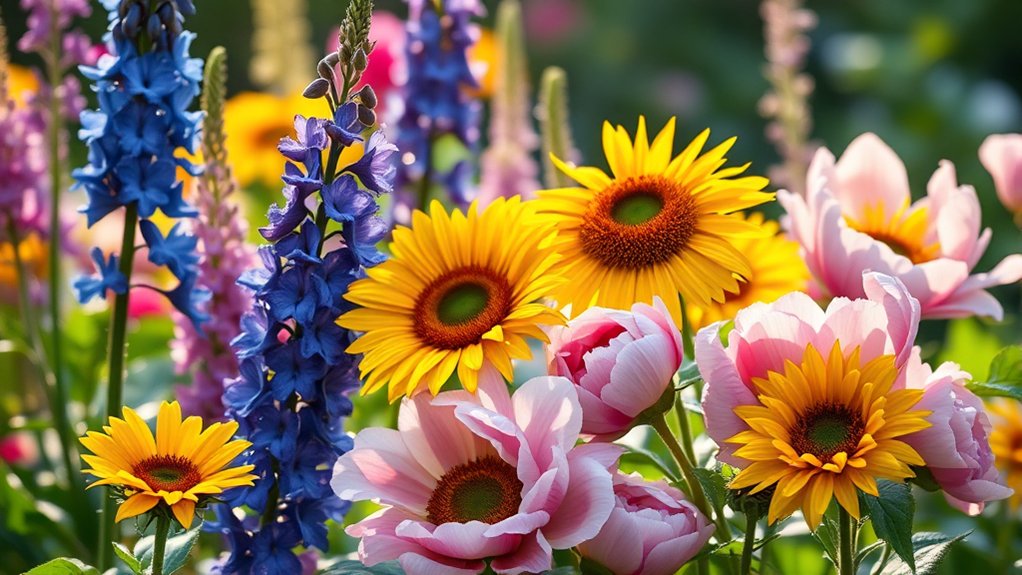
For a cutting garden, choose flowers that give you long stems, strong vase life, and repeat blooms. You can’t go wrong with roses, zinnias, dahlias, snapdragons, sunflowers, cosmos, and lisianthus.
Mix upright spikes, airy fillers, and bold focal blooms for balanced bouquets.
Add long-blooming choices like coneflower, salvia, yarrow, and coreopsis to keep stems coming. If you keep going, you’ll uncover how to choose, grow, and harvest them for the best results.
Key Takeaways
- Choose flowers with long stems, strong vase life, and continuous blooming, such as roses, zinnias, dahlias, snapdragons, and cosmos.
- Mix upright spikes, airy fillers, and bold focal blooms for balanced, polished bouquets.
- Select varieties that bloom in different seasons to ensure steady color and avoid empty gaps in the garden.
- Fast-growing annuals like zinnias, cosmos, sunflowers, and calendula give quick harvests and easy succession blooms.
- Cut stems in the morning, remove lower leaves, and change water often to keep arrangements fresh longer.
Best Flowers for Cutting Gardens

A great cutting garden gives you blooms you can snip often and enjoy indoors, so choose flowers that produce long stems, hold up well in vases, and keep blooming through the season. Roses, zinnias, dahlias, snapdragons, sunflowers, cosmos, and lisianthus can anchor your beds with color and texture.
You’ll get the best results when you mix upright spikes, airy fillers, and bold focal blooms because that balance makes every bouquet look polished. Use flower arrangement tips like cutting stems early in the morning, stripping lower leaves, and placing flowers in clean water right away.
With smart seasonal flower selection, you can stagger bloom times and keep fresh material coming from spring through fall. Add a few fragrant varieties, and you’ll enjoy armfuls of stems for kitchen jars, gifts, and table displays without much fuss.
How to Choose Cutting Garden Flowers
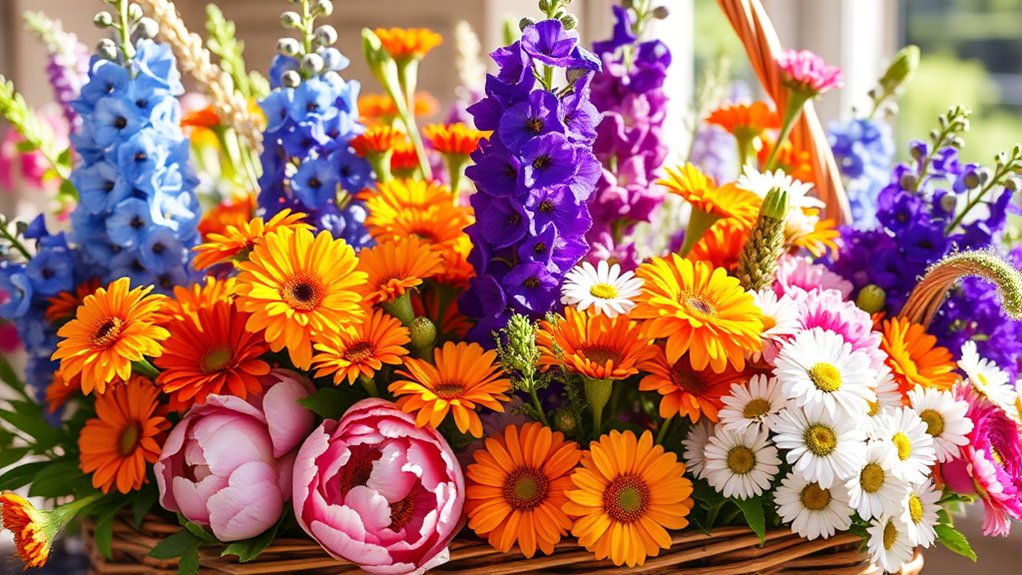
When you choose cutting garden flowers, start by thinking about bloom season timing. That way, you’ll have color when you want it. It’s a good idea to pick varieties with strong stems too, since they hold up well in arrangements. Then, mix colors and textures to create bouquets that feel full and balanced.
Bloom Season Timing
To keep your cutting garden producing flowers from spring through fall, choose varieties with staggered bloom times instead of relying on one short flush of color. You’ll get better harvests when you mix early, midseason, and late bloomers.
Track each plant’s bloom duration so you can plan for steady color and fewer empty weeks. Seasonal varieties help you match your garden to local weather patterns and daylight shifts.
- Start with spring bulbs and cool-weather annuals.
- Add summer performers that rebloom after cutting.
- Include late-season flowers for autumn bouquets.
- Stagger sowing dates to extend harvests.
With this approach, you’ll cut fresh stems longer, fill arrangements more often, and keep your garden looking lively across the whole growing season.
Stem Strength Matters
Strong stems make all the difference in a cutting garden because they help flowers stay upright in the vase and last longer after harvest. When you choose varieties, look for stem durability so blooms don’t flop, bend, or snap during cutting and arranging.
You’ll also want strong flower support from the plant itself, since sturdy growth often means easier harvesting and less waste. Test stems by gently pressing them; they should feel firm, not hollow or weak.
If a plant needs staking just to stand in the garden, it may not be the best choice for cutting. Prioritize stems that hold blooms above foliage and can carry flowers cleanly from bed to vase without drooping, so your arrangements look fresh and polished longer.
Color And Texture
Color and texture shape how your cutting garden looks in a vase, so choose flowers that give you both contrast and balance. You’ll create richer bouquets when you mix bold blooms with airy fillers and varied foliage. Think about how color combinations shift your arrangement’s mood, from bright and cheerful to soft and romantic.
- Pair warm and cool tones for energy.
- Use one dominant color with accents.
- Add feathery stems for texture contrasts.
- Include smooth petals beside spiky forms.
When you plan for variety, every stem earns its place. A few carefully chosen flowers can make your arrangements feel full, polished, and alive without overwhelming the design.
Classic Cut Flowers for Bouquets

When you’re looking for bouquets that really last, classic cut flowers are the way to go. They give you blooms that stay fresh and beautiful for a long time.
You’ll naturally reach for reliable favorites like roses, zinnias, and sunflowers. These staples help keep your arrangements looking full and vibrant.
With these go-to flowers, it’s easy to put together bouquets that always look polished and just right.
Long-Lasting Blooms
For bouquets that stay fresh and beautiful for days, you can’t go wrong with classic long-lasting blooms like roses, carnations, chrysanthemums, alstroemeria, and lilies. You’ll get the best results when you harvest them in cool morning hours and place stems in clean water right away.
Choose drought resistant varieties for a tougher cutting garden, and mix in seasonal favorites to keep your arrangements feeling fresh.
- Roses add timeless romance and strong vase life.
- Carnations offer ruffled texture and steady color.
- Chrysanthemums bring fullness and hold up well.
- Alstroemeria and lilies extend elegance indoors.
With regular deadheading and sharp pruners, you can keep blooms coming and your bouquets looking polished longer.
Reliable Bouquet Staples
Reliable bouquet staples are the dependable flowers you’ll reach for again and again because they look good, last well, and play nicely with almost any arrangement. You can build a polished bouquet with roses, zinnias, and snapdragons, then adjust shape and texture with simple flower arrangement techniques.
| Flower | Why you’ll use it |
|---|---|
| Roses | Classic form and fragrance |
| Zinnias | Bright color and sturdy stems |
| Snapdragons | Vertical lines and long vase life |
Choose blooms through smart seasonal flower selection so your cutting garden always supplies fresh options. Mix one focal flower, one filler, and one line flower, and you’ll create balanced bunches fast. With these classics, you’ll spend less time guessing and more time gathering bouquets that feel elegant, cheerful, and effortlessly complete.
Long-Blooming Flowers for More Stems
If you want a cutting garden that keeps producing, choose flowers that bloom for weeks instead of days. You’ll get more stems when you favor long-blooming perennials and tough annuals that rebound after each cut.
Look for drought tolerant varieties that shrug off dry spells and keep sending up fresh flowers. Many of these also count as pollinator friendly blooms, so you’re feeding bees while filling your vases.
Choose drought tolerant blooms that keep flowering and invite pollinators to your garden.
- Deadhead often to trigger new buds.
- Cut stems in the morning for longest vase life.
- Feed lightly to sustain steady flowering.
- Harvest only one-third of the plant at a time.
Good choices include coneflower, salvia, yarrow, and coreopsis. They flower for weeks, hold up in arrangements, and reward you with repeat harvests.
If you space them well and keep cutting, you’ll enjoy a steady stream of color without replanting every season.
Easy Annuals for Cutting Gardens
Easy annuals are great because they grow quickly and fill your cutting garden in no time. Plus, you’ll get lots of long-lasting stems that stay fresh in bouquets and arrangements. Just give them some simple care—regular watering, plenty of sunlight, and a little deadheading here and there—and they’ll keep producing beautiful blooms for you.
Fast-Growing Bloomers
When you want quick color in a cutting garden, fast-growing annuals deliver blooms before the season is halfway over. You can sow them directly and enjoy a quick harvest of stems for bouquets.
These fast bloomers fill gaps, boost your beds, and keep you cutting often without waiting months for results.
- Zinnias: sow after frost, and you’ll get bright, repeat blooms.
- Cosmos: plant once, then watch airy flowers rise fast.
- Sunflowers: choose branching types for multiple cuts.
- Calendula: harvest early and often for cheerful, usable blooms.
Give them sun, regular water, and light feeding, and they’ll keep producing. Because they grow fast, you can succession sow for steady color all season.
Long-Lasting Stems
For bouquets that last, choose annuals with sturdy stems and flowers that hold up well after cutting. You’ll get more vase life from flower varieties like zinnias, celosia, and sunflowers because they keep their structure after harvest. Their strong stems let you arrange them without drooping, and their blooms stay fresh-looking longer.
| Flower variety | Why it lasts |
|---|---|
| Zinnia | Firm stem, full bloom |
| Celosia | Tough texture, bright color |
| Sunflower | Heavy head, strong support |
When you pick these annuals, cut straight stems and place them quickly in water. Good stem care starts the moment you bring them inside, so you can enjoy fuller, longer-lasting bouquets with less fuss.
Simple Care Tips
Once you’ve picked annuals with sturdy stems, keeping them fresh is mostly about simple, consistent care. Water deeply at the base so roots stay strong, and mulch to hold moisture between cuts. Deadhead often; you’ll push more blooms and better stems for your next flower arrangement.
Feed lightly every few weeks, but don’t overdo nitrogen or you’ll get lush leaves and fewer flowers. Good soil preparation before planting helps drainage and gives roots room to establish.
- Harvest in the cool morning.
- Use clean, sharp snips.
- Strip lower leaves fast.
- Recut stems before placing them in water.
Perennials That Make Great Cut Flowers
Perennials can be the backbone of a productive cutting garden because they return year after year and supply stems you can harvest with less replanting. You’ll get reliable blooms from perennial varieties like peonies, coneflowers, garden phlox, yarrow, and shasta daisies, each bringing strong stems and long vase life.
Choose plants that suit your climate and sun exposure, then give them room so they don’t compete for nutrients. When you cut, use sharp, clean snips and follow smart cutting techniques: harvest early in the morning, take stems when buds are just opening, and cut above a leaf node to encourage regrowth.
You can also deadhead spent flowers to keep plants producing. Water deeply during dry spells, mulch to steady soil moisture, and divide crowded clumps every few years. With the right care, your perennial bed will keep delivering sturdy, beautiful stems for bouquets season after season.
Best Filler Flowers for Bouquets
Filler flowers add volume, texture, and movement to bouquets, helping your focal blooms feel full and balanced. You can rely on reliable filler flower types like baby’s breath, waxflower, and yarrow to bridge colors and soften gaps without stealing attention.
Choose seasonal fillers so your arrangements stay fresh and affordable all year. In spring, you might cut feverfew or larkspur; in summer, try statice or bells of Ireland; in fall, add goldenrod or ammi. These stems also help you build shape fast, whether you’re making hand-tied bunches or vase designs.
- Baby’s breath for airy cloud-like texture
- Waxflower for tiny blooms and lasting structure
- Yarrow for flat-topped contrast and color
- Statice for strong color and long vase life
Mix tall, delicate stems with compact sprays, and you’ll create bouquets that look polished, layered, and lively every time.
Fragrant Flowers for Indoor Arrangements
Fragrance can make an indoor arrangement feel as welcoming as it looks, so it’s worth choosing blooms that perfume a room without overwhelming it. You can build that balance with scented varieties like roses, lilies, stock, sweet peas, and hyacinths.
Their indoor fragrances add warmth to entryways, dining tables, and bedside shelves, especially when you place just a few stems in a small vase. Choose flowers at different stages of opening so you enjoy scent over several days.
Trim stems cleanly, remove any foliage below the waterline, and refresh the water often to keep the aroma crisp. If you’re sensitive to strong perfume, pair one intensely scented bloom with quieter flowers such as tulips or ranunculus.
That way, you control the intensity while still enjoying a rich, inviting atmosphere indoors.
Cut-and-Come-Again Flowers
Some of the best cutting-garden flowers reward you with repeated harvests, letting you snip stems again and again instead of using the plant up in one flush. You’ll get the most from zinnias, cosmos, snapdragons, and sweet peas when you use smart cutting techniques and keep plants actively growing.
Pick blooms early in the day, then trim just above a leaf node so the plant branches and sets more buds. Choose seasonal selections that match your climate, because fast, steady bloomers keep your vase full longer.
- Harvest often to encourage new flowers.
- Stagger sowing for nonstop color.
- Mix heights for easier picking.
- Watch for peak bloom, then cut.
With these choices, you can turn one planting into weeks of bouquets. Focus on healthy soil, adequate spacing, and regular deadheading so each stem performs like a repeat act.
How to Keep Cut Flowers Fresh Longer
To keep cut flowers fresh longer, start with clean tools, cool water, and a vase that’s been washed well. Cut stems at an angle, remove any leaves below the waterline, and place blooms in water right away.
You should recut stems every two days so they can drink more easily. Change the water often, and rinse the vase each time to slow bacteria growth.
Use flower food if you have it, or mix a small amount of sugar and vinegar as a simple backup. Keep arrangements out of direct sun, heat, and ripening fruit since all three shorten vase life.
These flower preservation techniques work best when you pair them with smart hydration methods, like topping off the water before it drops too low. If petals wilt, trim stems again and remove fading blooms so the rest can last longer.
Frequently Asked Questions
Which Cutting Flowers Attract the Most Pollinators?
Sunflowers, zinnias, cosmos, coneflowers, and dahlias attract the most pollinators because you give them easy access to nectar and pollen. You’ll see bees, butterflies, and hoverflies especially drawn to bright flower colors like yellow, purple, and orange.
Match blooms to pollinator preferences by choosing open, single flowers instead of doubles. Keep your cutting patch blooming in waves, and you’ll feed pollinators while filling your vase all season long.
Can I Grow Cut Flowers in Partial Shade?
Yes, you can grow cut flowers in partial shade, and you’ll still get good blooms if you choose shade-tolerant varieties. You should focus on strong soil preparation by adding compost, loosening the soil, and improving drainage.
Then pick flowers that handle less sun, like astilbe, foxglove, and nicotiana. You’ll need to water consistently and deadhead often to keep plants productive and your arrangements fresh throughout the season.
When Is the Best Time to Harvest Blooms?
You’ll get the best vase life when you harvest blooms in the cool morning, just after dew dries. Pick seasonal blooms at the right stage: buds that are partly open for roses, fully open for zinnias and cosmos.
Use sharp tools, cut stems at an angle, and place them in water right away. Good harvest techniques help flowers last longer and keep your cutting garden producing strong stems all season.
How Do I Dry Flowers for Long-Term Arrangements?
To dry flowers for long-term arrangements, you should hang small bunches upside down in a dark, dry, airy space. You can also press blooms between absorbent paper or use silica gel for faster results. These flower drying techniques help preserve shape.
Keeping them out of sunlight supports preserving flower colors. Check them often and remove any moisture or mold. Once fully dry, you can arrange them in lasting displays.
Which Flowers Are Safe for Pets?
You can choose pet-friendly blooms like roses, sunflowers, snapdragons, orchids, and African violets for your home. You’ll still want toxic flower awareness, because lilies, tulips, daffodils, oleander, and sago palm can harm pets if eaten.
Keep bouquets out of reach, and check each stem before you bring it inside. When you pick safer flowers, you can enjoy fresh arrangements without worrying as much about curious cats or dogs.
Conclusion
With the right mix of blooms, you can keep your cutting garden supplying bouquets all season long. Choose sturdy classics, long-blooming favorites, and easy annuals that deliver repeat stems.
Did you know the global cut flowers market is projected to keep growing as more people bring fresh blooms indoors? That’s no surprise when a simple vase can brighten your whole home.
Pick, cut, and enjoy. You’ll have beautiful arrangements before you know it, making your cutting garden the perfect source for fresh, vibrant flowers.