How to Make Bird Food in 5 Easy Steps
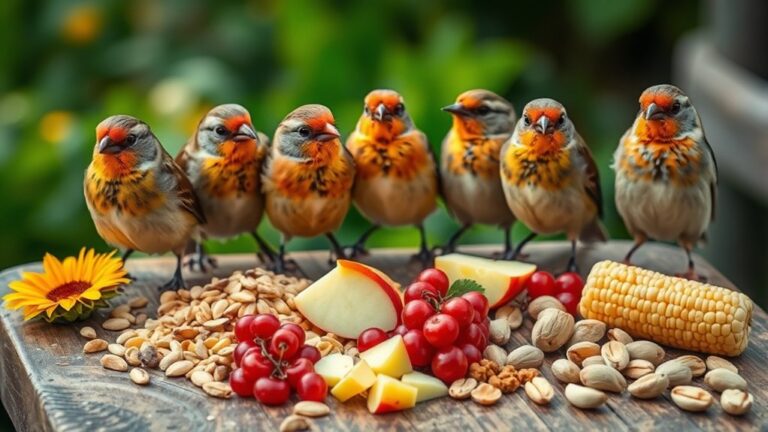
If you’ve ever wanted to attract more beautiful birds to your yard but struggled to find the right food, you’re not alone. Many people want to feed birds naturally but aren’t sure how to prepare the best mix that keeps them healthy and coming back. Finding the perfect bird food can be tricky, but with a little guidance, it’s easier than you think.
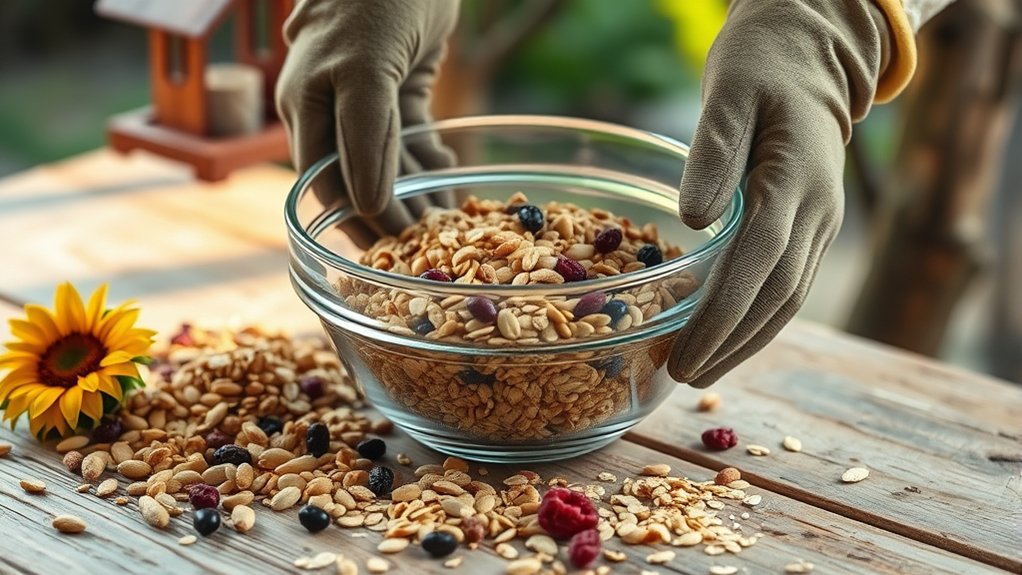
Start by gathering high-quality seeds like sunflower, millet, and cracked corn, plus natural extras like dried fruits and nuts. Clean your workspace, then mix ingredients gently, avoiding spoiled seeds.
Shape the mixture into small balls or molds for easy feeding, and store in airtight containers in a cool, dry place. Choose feeders that match your seed types and position them safely near shrubs or trees.
Keep your food fresh by storing properly and checking regularly. There’s more to learn about feeding birds right.
Key Takeaways
- Gather high-quality seeds like sunflower, millet, and cracked corn. Add dried fruits and nuts for variety.
- Clean your workspace and mix fresh, pesticide-free ingredients that suit local bird species carefully.
- Shape the mixture into small balls or molds. Then store them in airtight containers labeled with the date.
- Choose appropriate feeders like tube or platform types. Place them near natural cover to keep birds safe.
- Keep bird food fresh by storing it in cool, dry places. Check regularly for mold and use small batches.
Gather Ingredients for Homemade Bird Food
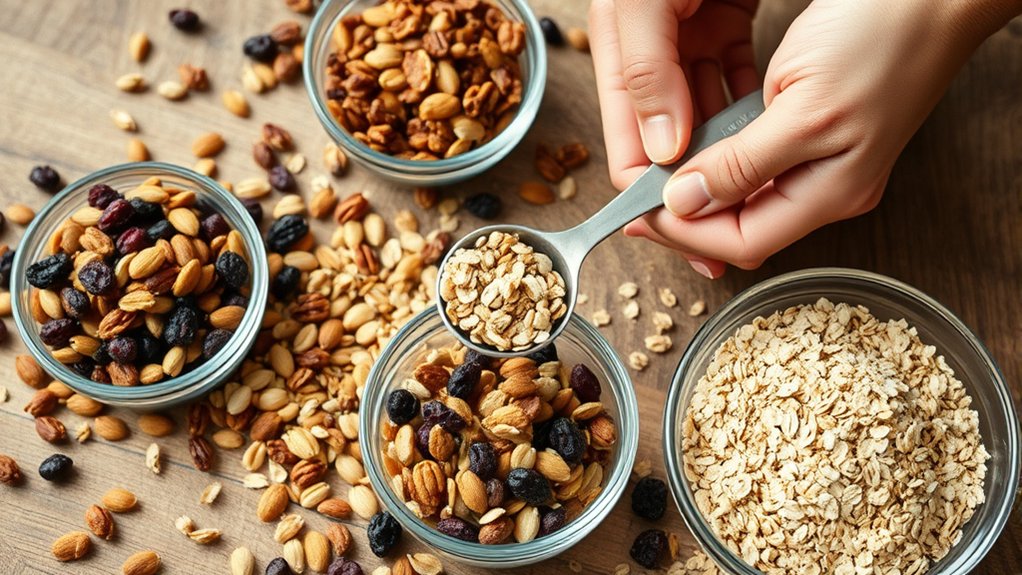
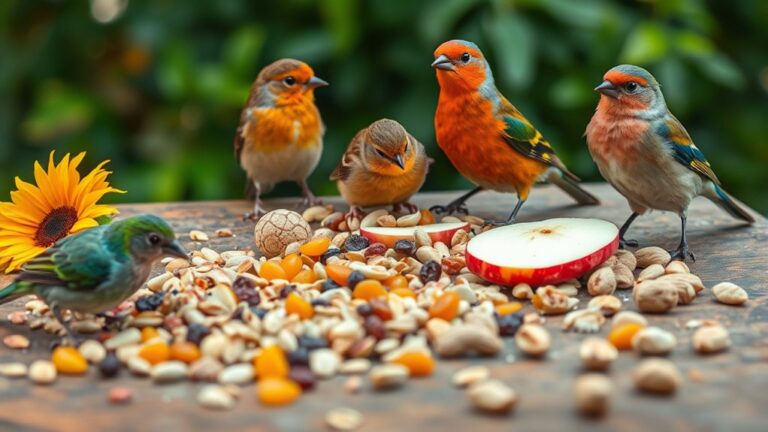
Before you begin making bird food, gather all the ingredients you’ll need to attract a variety of birds. Start by choosing high-quality bird seed, as it’s the foundation of your mix. Different birds prefer different seeds, so consider a blend that includes sunflower seeds, millet, and cracked corn.
For ingredient sourcing, check local garden centers, pet stores, or online suppliers to find fresh, pesticide-free seeds. You can also add natural extras like dried fruits, nuts, and oats to diversify the mix and appeal to more species.
When sourcing ingredients, prioritize those without additives or artificial flavors to guarantee the birds’ health. Keep in mind that fresh ingredients will help you create a nutritious and attractive bird food blend.
Prepare and Mix Bird Food Safely to Protect Birds
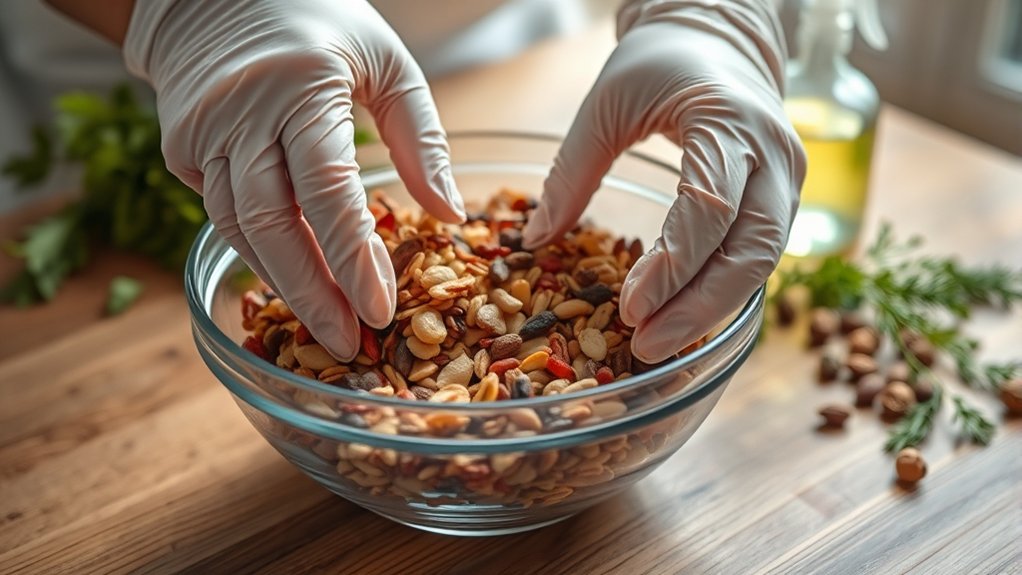
Once you’ve gathered fresh, high-quality ingredients, focus on preparing and mixing the bird food safely to keep the birds healthy. Clean your workspace and utensils thoroughly to avoid contamination.
Choose ingredients that suit the bird species common in your bird habitat, as different birds have unique dietary needs. Avoid using spoiled or moldy seeds since they can harm birds.
Mix ingredients gently but thoroughly to ensure even distribution of nutrients. Wash your hands before and after handling food to prevent transferring bacteria.
Store any unused ingredients in airtight containers away from moisture and pests.
| Safety Step | Why It Matters |
|---|---|
| Clean utensils | Prevents mold and bacteria |
| Select species-appropriate seeds | Supports local bird species’ health |
| Avoid spoiled ingredients | Protects birds from illness |
| Wash hands | Reduces contamination risk |
Shape and Store Bird Food for Easy Feeding
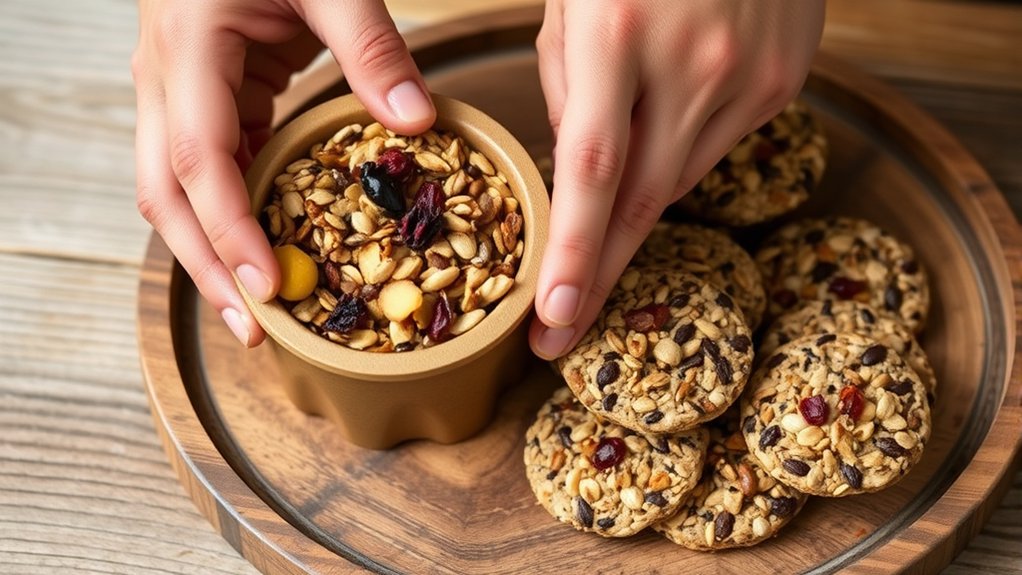
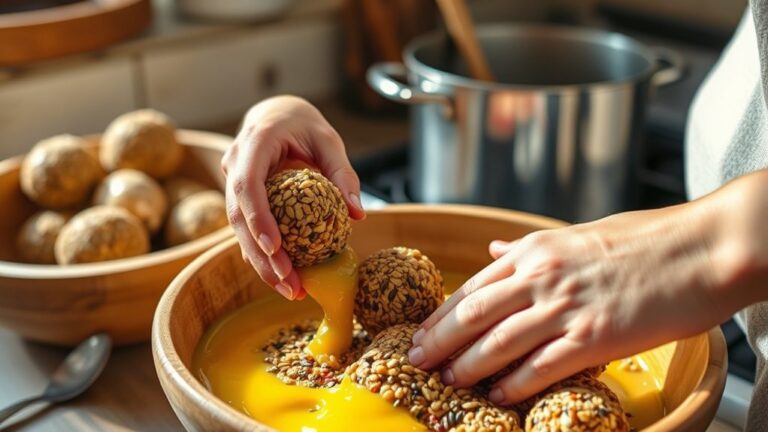
Although mixing the ingredients well is essential, shaping and storing your bird food properly makes feeding easier and keeps the food fresh longer. To improve bird food presentation, shape the mixture into small balls or press it into molds for uniform pieces. This makes it simple to handle and share with your feathered friends.
Next, choose airtight storage containers to maintain freshness and prevent moisture from spoiling the food. Label your containers with the date to track how long the food has been stored. Keep the containers in a cool, dry place to extend shelf life.
Remember, thoughtful bird food presentation and smart storage help you enjoy feeding birds more often. Consider these tips to make your bird food inviting and long-lasting:
- Shape food into neat, bite-sized portions for easy feeding
- Use airtight storage containers to lock in freshness
- Label containers with preparation dates
- Store food in a cool, dry spot to avoid mold and spoilage
Choose Bird Feeders Ideal for Homemade Bird Food
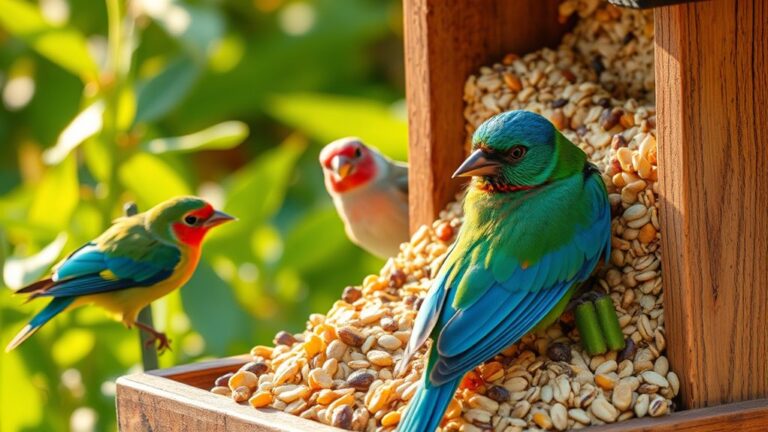
Selecting the right bird feeder can make all the difference when offering your homemade bird food. You’ll want to pick feeders that suit the type of bird seed varieties you’ve prepared. For example, tube feeders work great for small seeds like millet, while hopper feeders handle mixed seeds and homemade seed cakes well.
Choosing feeders that match your homemade bird seed ensures more birds enjoy your food offerings.
If your homemade food includes larger chunks or suet, platform feeders provide easy access. Feeder placement also plays a key role. Position feeders where birds feel safe, like near shrubs or trees, but away from predators.
Make sure feeders are visible to attract more birds, yet shielded from harsh weather. Keep feeders at different heights to cater to various bird species. By matching your feeder style to your homemade bird food and placing it thoughtfully, you’ll create a welcoming spot that encourages birds to visit often.
This simple step guarantees your effort in making bird food truly pays off.
Keep Your Bird Food Fresh and Nutritious
Matching your feeders to your homemade bird food sets the stage for attracting feathered friends, but keeping that food fresh guarantees they keep coming back. Proper bird food storage is essential for nutrition preservation, ensuring your birds get the best from every bite.
Store your homemade blends in airtight containers to lock out moisture and pests. Keep them in a cool, dry place away from direct sunlight to prevent spoilage and nutrient loss. Regularly check for signs of mold or rancidity and discard any compromised batches immediately.
To keep your bird food fresh and inviting:
Use containers with tight seals to maintain freshness.
Store food in small batches for quicker turnover.
Avoid plastic bags that can trap moisture.
Label containers with preparation dates to track freshness.
Frequently Asked Questions
What Types of Birds Will Eat Homemade Bird Food?
You’ll attract a variety of birds with homemade bird food. Seed mixtures are perfect for finches, sparrows, and chickadees who love different seeds.
Nectar recipes will draw hummingbirds and orioles, as they crave sweet liquids. By offering both seed mixtures and nectar recipes, you’ll create a buffet that appeals to many species.
Can Homemade Bird Food Attract Unwanted Animals?
You might be surprised, but yes, homemade bird food can attract unwanted animals. When you put out tasty treats, wildlife competition heats up, drawing in squirrels, raccoons, or even rodents.
These pests often come for more than just birdseed, causing trouble in your yard. To avoid pest attraction, you need to choose ingredients carefully and use feeders designed to deter larger critters, keeping your feathered friends safe and happy.
How Often Should I Clean My Bird Feeders?
You should clean your bird feeders at least once every two weeks to keep them safe and inviting. Regular feeder maintenance helps prevent mold, bacteria, and old food buildup that can harm birds.
If you notice damp or clumped seed, clean it immediately. Consistent cleaning also plays a key role in pest prevention by reducing leftover food that attracts unwanted animals like squirrels or rodents.
Staying on top of this keeps your feeder healthy and pest-free.
Is It Safe to Feed Birds Year-Round?
You can absolutely feed birds year-round, but you’ve got to read between the lines with seasonal feeding considerations. In colder months, birds need high-energy foods like suet and seeds, while warmer seasons call for fruits and insects.
Paying attention to bird dietary preferences helps you provide the right nutrition all year. Just keep feeders clean and adjust offerings based on the season, ensuring you’re truly helping your feathered friends thrive.
What Are Signs of Spoiled Bird Food?
You’ll know bird food is spoiled if you spot seed mold, which looks fuzzy or powdery and often has a musty smell. If your bird food’s past its shelf life, it’s more likely to grow mold or attract pests.
Don’t feed birds anything that looks discolored, clumpy, or smells off. Always check your bird seed regularly and store it in a cool, dry place to keep it fresh and safe for your feathered friends.
Conclusion
By making your own bird food, not only do you guarantee fresh, nutritious meals for your feathered friends, but you also get to enjoy the simple joy of feeding them up close.
As you mix and shape the ingredients, you might find yourself feeling more connected to nature than ever before. So, grab those ingredients and start creating.
Your backyard birds and your soul will thank you for it when you make bird food yourself!