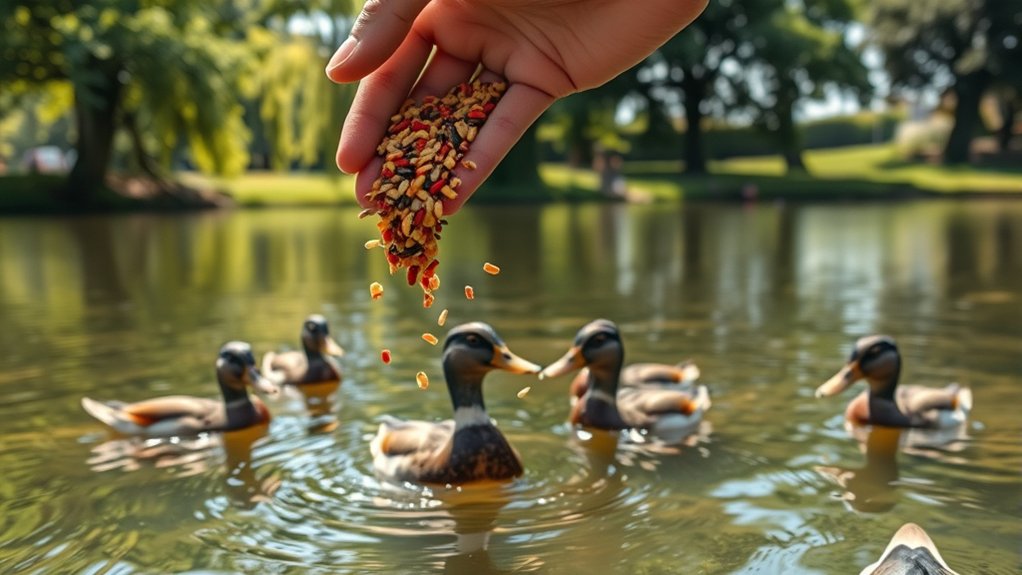
What Do I Feed Ducks: 7 Safe Foods to Try
Feeding ducks can feel tricky—you want to give them something healthy but aren’t sure what’s safe or nutritious. You’re not alone; many people struggle with this because it’s easy to fall into the habit of offering bread or snacks that actually harm ducks and their environment.
If you’re looking for better options, we’ve got you covered with some safe and tasty foods that ducks will love.
You can feed ducks safe foods like chopped leafy greens, cooked peas, and carrots for nutrients, plus protein-rich insects like mealworms or small fish for growth.
Offer grains such as cracked corn, oats, or soaked rice, and fruits like apples and berries in moderation.
Avoid bread and processed snacks to keep ducks healthy and ecosystems clean.
Serve food on the ground or shallow water, and limit feeding to once or twice weekly to support natural habits.
There’s much more to help you feed ducks responsibly.
Key Takeaways
- Feed ducks high-protein insects like mealworms and legumes such as peas or lentils for balanced nutrition.
- Offer safe grains and seeds like cracked corn, oats, and unsalted sunflower seeds in small portions.
- Provide chopped vegetables such as kale, spinach, and peas without seasoning or oils.
- Give fruits like apple pieces, berries, and grapes sparingly, about once or twice a week.
- Avoid feeding bread, processed foods, or flavored seeds to protect duck health and the environment.
Why You Should Skip Bread When Feeding Ducks
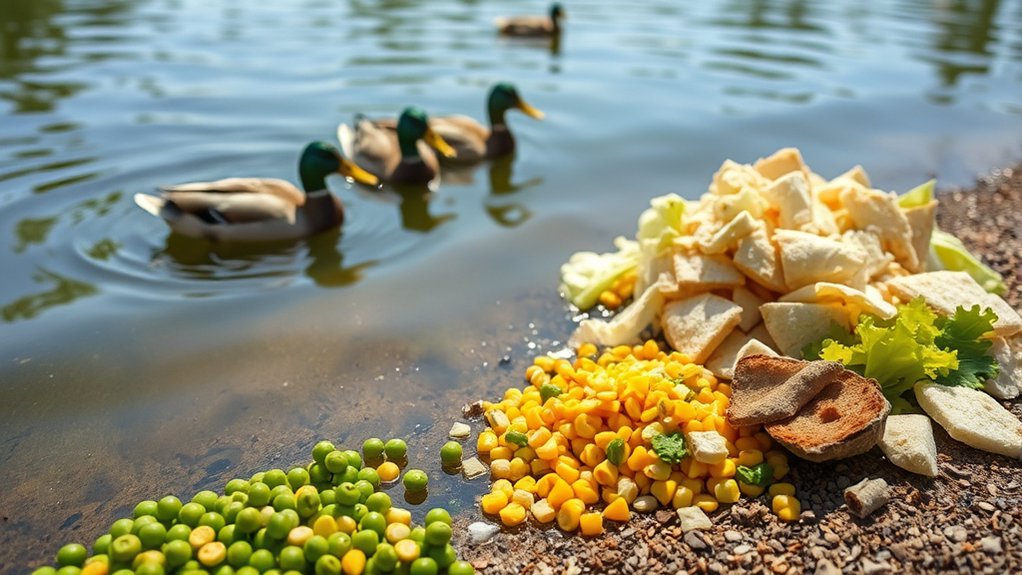
Although feeding ducks bread has been a common practice for years, you should skip it because it offers little nutritional value and can harm their health. Bread dangers include malnutrition, as it fills ducks up without providing essential nutrients.
Over time, this can lead to weakened immune systems and stunted growth. You might think feeding bread frequently is harmless, but feeding frequency matters. Regularly giving bread can cause serious problems like “angel wing,” a deformity affecting their flight.
Additionally, leftover bread often pollutes waterways, encouraging algae growth that damages duck habitats. When you feed ducks bread, you’re unintentionally contributing to environmental harm.
Instead of sticking to bread, limit feeding frequency and choose healthier alternatives to support their natural diet. By avoiding bread and controlling how often you feed, you help ducks stay healthy and maintain balanced ecosystems.
Safe Vegetables to Feed Ducks
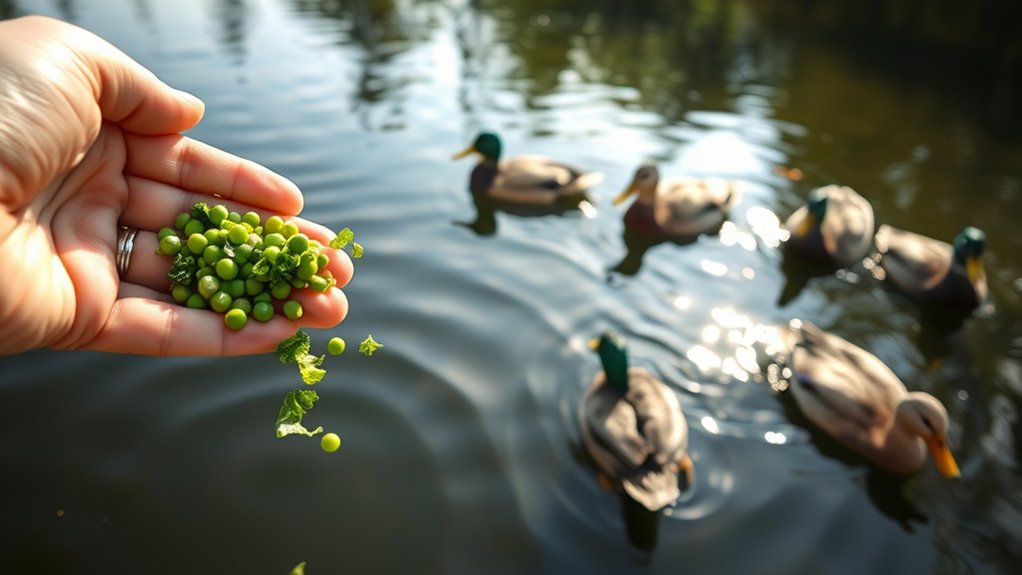
If you want to feed ducks something better than bread, vegetables are a great choice. Ducks enjoy a variety of nutrient rich greens, such as kale, lettuce, spinach, and peas. These veggies provide essential vitamins and minerals that support their health.
Before feeding, focus on proper vegetable preparation: chop leafy greens into small, manageable pieces to make eating easier for the ducks. Avoid seasoning or adding any oils or salts, as these can harm them.
You can also offer chopped cucumbers, zucchini, and carrots in moderation. Always introduce new vegetables gradually to see how the ducks respond.
Safe Grains and Seeds to Feed Ducks

When you want to provide ducks with energy and essential nutrients, offering safe grains and seeds is a smart choice. Ducks thrive on various grain varieties like cracked corn, oats, and barley, which supply carbohydrates and fiber for digestion. You can also offer rice, preferably cooked or soaked, to make it easier for them to eat.
In addition to grains, certain seed types are excellent for ducks. Sunflower seeds (unsalted and shelled) are rich in healthy fats and protein, while millet offers a small, easy-to-eat option packed with nutrients. Avoid salted or flavored seeds, as these can harm ducks.
When feeding, scatter grains and seeds on the ground or in shallow water to mimic natural foraging. Remember not to overfeed; a handful per duck per day is enough. By choosing the right grain varieties and seed types, you help ducks stay healthy and energized without disrupting their natural diet.
Safe Fruits to Feed Ducks
You can offer ducks a variety of safe fruits like berries, apples, and grapes to keep their diet balanced. These fruits provide essential vitamins and antioxidants that support their health. So, let’s take a closer look at which fruits are best and how they benefit ducks nutritionally.
Best Fruits For Ducks
Wondering which fruits you can safely share with ducks? When choosing the best fruits for ducks, consider those that naturally fit their duck habitat diet. Apples (without seeds), berries, grapes, and melons are excellent options.
These fruits are easy for ducks to eat and digest, making them perfect treats during your visits. Remember to cut larger fruits into small pieces to prevent choking.
Also, keep feeding frequency in mind. Offer fruits sparingly, about once or twice a week, to avoid disrupting their natural foraging habits. Overfeeding can harm ducks and their environment, so always feed in moderation.
Nutritional Benefits Of Fruits
Although fruits are treats for ducks rather than staples, they provide essential nutrients that support overall health. When you feed ducks safe fruits, you’re giving them valuable fruit antioxidants that help fight free radicals and improve their immune system. Plus, the vitamin content in fruits like vitamin C and A boosts their energy and promotes healthy feathers.
Here’s a quick guide to some safe fruits and their key benefits:
| Fruit | Nutritional Benefit |
|---|---|
| Apples | Rich in vitamin C |
| Blueberries | High in fruit antioxidants |
| Grapes | Good source of vitamins A & C |
| Melon | Hydrating with vitamins |
Safe Protein Foods Ducks Love
You can boost a duck’s diet with safe protein foods they love. For example, high-protein insects are a great choice because they’re easy for ducks to catch and digest.
Legumes are another great option. Ducks enjoy them, and they provide plenty of plant-based protein.
And don’t forget about fish-based protein sources. These offer essential nutrients that help keep ducks healthy and strong.
High-Protein Insect Options
Ducks thrive on a diet rich in protein, and high-protein insects provide an excellent natural source. When feeding ducks, consider insect diversity to guarantee they receive a range of nutrients.
Mealworms, crickets, and black soldier fly larvae are popular insect options that pack a protein punch. These insects not only offer protein supplementation but also contain essential vitamins and minerals that support ducks’ overall health.
You can find commercially available insect treats or encourage natural foraging by maintaining a healthy pond environment where insects flourish. Just remember to avoid insects collected from pesticide-treated areas to keep your ducks safe.
Legumes Ducks Enjoy
What makes legumes such a valuable addition to a duck’s diet? Legume varieties like peas, lentils, and chickpeas provide essential proteins and fiber that support healthy growth and digestion. When you include legumes, you meet vital duck dietary needs, especially their requirement for plant-based protein.
Ducks enjoy these legumes both cooked and sprouted, which improves nutrient absorption and makes them easier to digest. You can offer legumes as a supplement to their usual diet, ensuring they get balanced nutrition without relying on processed feeds. Just make sure to avoid salted or seasoned legumes.
Incorporating these safe protein foods helps maintain your ducks’ energy levels and overall wellbeing. By including legumes, you’re giving ducks a natural, nutritious boost that aligns perfectly with their dietary needs.
Fish-Based Protein Sources
How can fish-based proteins improve a duck’s diet? These proteins provide essential nutrients that support ducks’ growth and overall vitality. In aquatic ecosystems, fish serve as a natural part of a duck’s diet, offering amino acids that strengthen muscles and boost energy.
When you feed ducks fish-based protein sources like small fish or fishmeal, you help maintain their fish health balance, which is essential for their immune system. Plus, these proteins contribute to feather quality and reproductive health.
Including fish-based proteins in their diet mimics what ducks find in the wild, promoting natural feeding behaviors and better nutrition. Just make sure the fish you offer is safe, free from pollutants, and appropriate in size to avoid choking hazards.
This way, you support both duck health and the surrounding aquatic ecosystem.
How to Prepare and Serve Duck-Friendly Foods
Although feeding ducks can be a simple pleasure, preparing and serving their food properly guarantees their health and enjoyment. Understanding their natural feeding habits helps you offer foods that support a balanced duck diet. Always provide small, bite-sized pieces to match their natural foraging behavior. This prevents choking and waste.
Feeding ducks is a joy when their food is prepared in small, safe, bite-sized pieces.
Here’s how you can prepare and serve duck-friendly foods:
Chop or tear foods into manageable portions for easy eating and digestion.
Offer a variety of items like leafy greens, grains, and fish-based proteins to maintain duck diet balance.
Serve food in shallow water or on dry ground to mimic their natural feeding environment and encourage natural feeding habits.
Tips to Feed Ducks Safely Without Harming Them
Preparing and serving the right foods is just one part of feeding ducks responsibly. To protect their health and the bird habitat, you need to consider how often and where you feed them. Avoid feeding ducks daily; limit feeding frequency to once or twice a week to prevent dependency on humans and encourage natural foraging.
Always feed ducks in open, natural areas near water, avoiding spots where food can pollute the environment or attract pests. Use appropriate portions to prevent leftover food, which can harm water quality and disrupt local ecosystems.
Never feed ducks bread or processed foods, as these offer little nutrition and can cause health issues. Instead, stick to safe options like cracked corn or chopped vegetables. Finally, observe the ducks’ behavior and adjust your routine if you notice overcrowding or aggression, ensuring you support the bird habitat without causing harm.
Frequently Asked Questions
Can Feeding Ducks Affect Their Migration Patterns?
Yes, feeding ducks can cause migration disruption by altering their natural feeding habits. When you provide easy food sources, ducks might rely on them instead of foraging, which can reduce their instinct to migrate.
This change in feeding habits may lead to some ducks staying in areas longer than they should, potentially impacting their health and local ecosystems. So, it’s best to feed ducks responsibly and sparingly to avoid migration disruption.
How Often Should I Feed Ducks During the Year?
Don’t bite off more than you can chew regarding feeding frequency. Feed ducks sparingly throughout the year.
Seasonal feeding works best: offer food mainly in colder months when natural resources are scarce. Ease off in spring and summer to encourage their foraging.
Overfeeding can harm their health and disrupt natural behaviors. So, keep it occasional and mindful, ensuring you support them without creating dependency.
Are There Specific Times of Day Best for Feeding Ducks?
You’ll want to stick to a consistent feeding schedule for ducks, with ideal feeding times in the early morning and late afternoon. Ducks are most active during these periods, so they’re more likely to find and enjoy the food you offer.
Feeding them at these times helps regulate their natural behavior and prevents overfeeding, which can happen if you feed them throughout the day. Keep it regular to keep ducks healthy and happy.
Can Feeding Ducks Lead to Aggressive Behavior?
Yes, feeding ducks can lead to aggressive behavior. Studies show 70% of ducks become more competitive when humans feed them regularly. When you interfere with their natural diet and feeding habits, ducks may crowd or chase others for food.
To avoid this, don’t overfeed or give unhealthy snacks. Stick to natural foods to keep their feeding habits balanced. That way, you’ll help prevent aggression while supporting their health.
What Should I Do if I See Sick Ducks Near Feeding Areas?
If you see sick ducks near feeding areas, avoid feeding them to prevent disease spread. Keep your distance to minimize habitat disturbance and stop others from approaching.
Report the situation to local wildlife authorities so they can handle it properly. By doing this, you help protect healthy ducks and maintain a safe environment, supporting disease prevention and preserving the natural balance in the area.
Conclusion
Feeding ducks isn’t just tossing bread and walking away—it’s creating a mini buffet that turns them into happy, waddling food critics! Skip the bread; it’s like giving them junk food that could clog their tiny duck tummies.
Instead, offer crunchy veggies, juicy fruits, and tasty grains that make their feathers shimmer with joy. When you prepare their meals right, you’re not just feeding ducks—you’re throwing the ultimate pond party they’ll quack about for days!
Remember, choosing the right foods is key to keeping ducks healthy and happy when you feed ducks.