10 Best Foods to Feed a Mallard Duck
If you love feeding mallard ducks but worry about what foods are actually good for them, you’re not alone. Many people struggle with finding the right balance between tasty treats and nutritious options that keep these vibrant birds healthy and thriving.
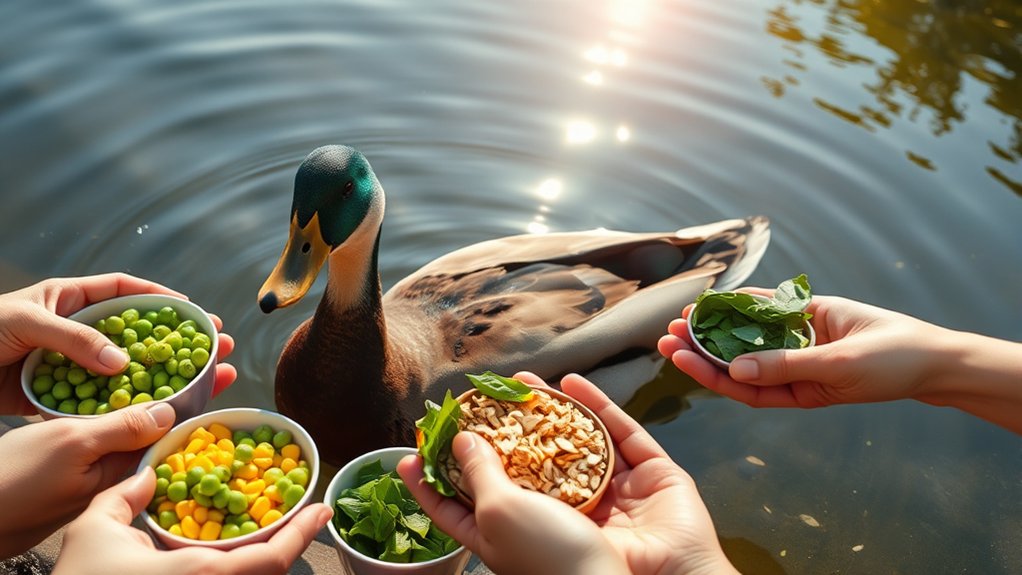
You can feed mallard ducks a mix of leafy greens like kale and spinach, along with grains such as cracked corn, oats, and millet for energy and fiber.
Peas and aquatic invertebrates offer protein to support their growth, while fruits like blueberries and apples boost their immunity.
Avoid bread and processed snacks to keep them healthy. Offering seasonal foods and feeding responsibly helps maintain the ecosystem.
Keep exploring to find the best ways to support mallards year-round.
Key Takeaways
- Leafy greens like kale, spinach, and lettuce provide essential vitamins A and C for mallard ducks’ immune health.
- Peas, corn, and oats offer protein, carbohydrates, and fiber to support energy and digestion.
- Aquatic insects, snails, and small crustaceans are natural protein sources crucial for balanced nutrition.
- Commercial waterfowl pellets ensure complete nutrition with added vitamins and minerals for healthy growth.
- Avoid bread and processed foods. Choose nutritious, natural options and feed small portions to prevent dependency.
Best Foods for Mallard Ducks: Vegetables, Grains, and More
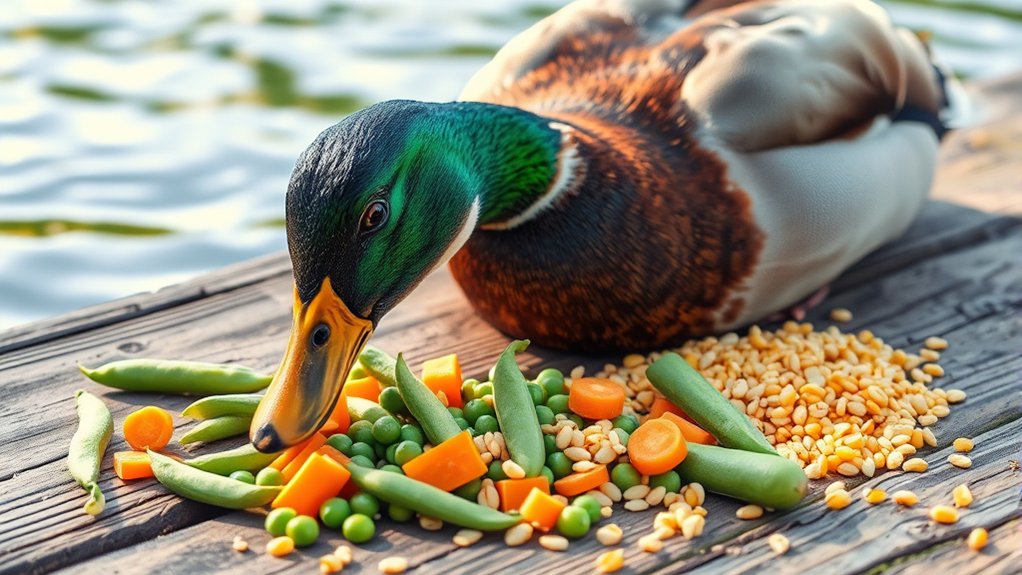
Although mallard ducks can eat a wide variety of foods, you should focus on providing nutritious options like vegetables and grains to keep them healthy. These foods supply essential nutrients that support their energy needs, especially during migratory patterns when they travel long distances.
Offering wholesome grains such as cracked corn or oats helps maintain their stamina, while leafy vegetables contribute vitamins and minerals crucial for their wellbeing.
Fresh Vegetables Mallard Ducks Love
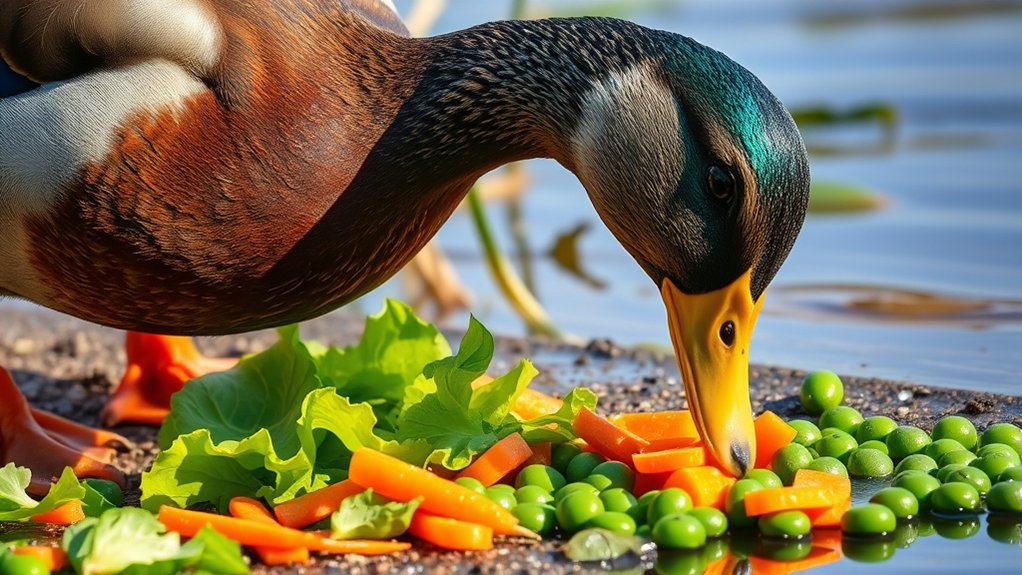
When you offer fresh vegetables to mallard ducks, you provide them with essential nutrients that boost their health and energy. Fresh veggies are especially important when feeding wild habitats where natural food sources might be limited. They also support duckling developmental stages by supplying vitamins necessary for growth.
Here are three fresh vegetables mallard ducks love:
- Leafy Greens – Kale, spinach, and lettuce are packed with vitamins A and C, aiding immune function.
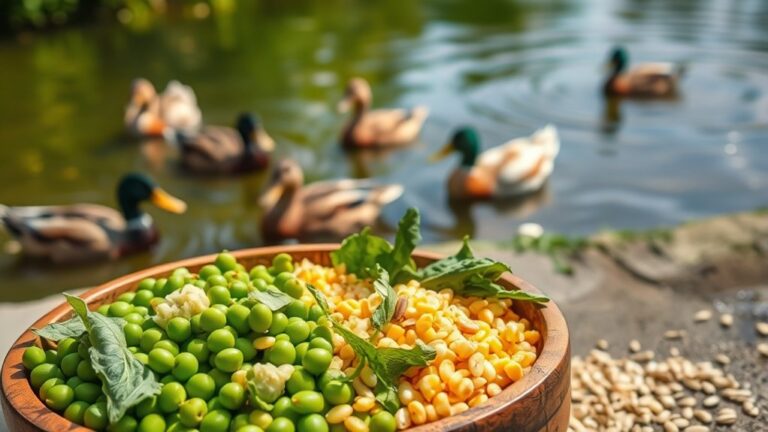
- Peas – Easy to digest and rich in protein, peas support muscle development in ducklings.
- Corn – Offers carbohydrates for energy, but feed in moderation to avoid over-reliance.
Make sure to chop vegetables into small pieces to help ducks eat easily, particularly young ducklings in the developmental stages. Avoid processed or seasoned vegetables, and always feed in moderation to maintain the balance of natural feeding wild habitats.
Nutritious Grains and Seeds for Mallard Ducks
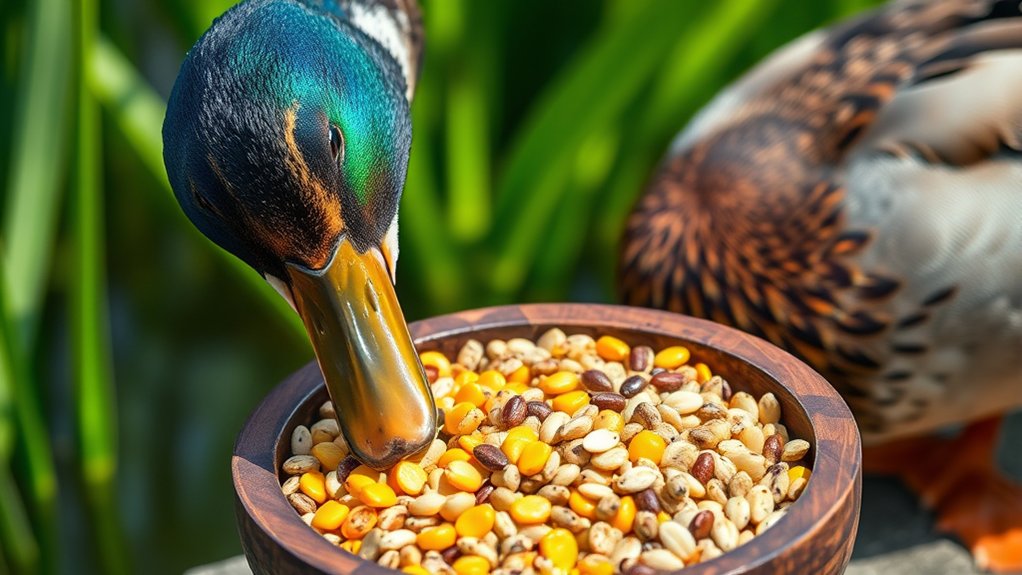
Fresh vegetables provide mallard ducks with essential nutrients, but adding grains and seeds to their diet brings variety and energy. When feeding grains and seeds, scatter small amounts on the ground. This encourages natural foraging, which supports their instincts. It also helps preserve their habitat by reducing waste and pollution.
Here’s a simple guide to nutritious grains and seeds you can offer:
| Grain/Seed | Benefits |
|---|---|
| Cracked corn | High energy, easy to digest |
| Oats | Rich in fiber, promotes digestion |
| Millet | Good source of protein |
| Sunflower seeds | Packed with healthy fats |
| Barley | Provides essential vitamins |
Fruits That Boost Mallard Duck Health
Because fruits offer natural sugars and essential vitamins, they make a great addition to a mallard duck’s diet. Including fruit antioxidants and vitamin-rich berries helps support their immune system and overall health. You can boost your mallard’s well-being by offering these fruits:
Fruits rich in antioxidants and vitamins naturally enhance a mallard duck’s immune health and vitality.
- Blueberries – Packed with fruit antioxidants and vitamins, blueberries encourage strong immunity.
- Strawberries – These vitamin-rich berries provide fiber and nutrients that aid digestion.
- Apples – Slice apples into small pieces to deliver natural sugars and vitamin C without seeds.
Always wash fruits thoroughly and cut them into manageable sizes to prevent choking. Avoid fruits with high acidity or seeds that may harm your duck. By regularly feeding these nutritious fruits, you’ll help your mallard thrive with a balanced, healthful diet.
Protein-Rich Foods to Support Mallard Growth
Alongside fruits, providing protein-rich foods plays a key role in supporting your mallard’s growth and development. Protein fuels muscle building and overall importance, so including sources like aquatic invertebrates, such as snails, insect larvae, and small crustaceans, can greatly boost their diet. These invertebrates are a natural, nutritious option that mallards instinctively seek in the wild.
You can supplement their intake with high-quality pellets formulated for waterfowl, ensuring balanced nutrition. Don’t forget calcium supplements, which are essential for strong bones and healthy eggshells if you have females. Crushed oyster shells or specialized calcium powders added to their feed work well.
Providing these protein-rich foods consistently supports your mallard’s immune system, feather growth, and energy levels, helping them thrive. Remember to introduce new foods gradually and observe your mallard’s response to maintain a healthy, balanced diet.
Safe Aquatic Plants for Mallard Ducks
While mallards naturally forage in ponds and wetlands, offering safe aquatic plants can enrich their diet and environment. You can enhance aquatic plant diversity in their habitat while supporting native vegetation preservation by selecting these safe options:
- Duckweed This tiny floating plant is highly nutritious and easy for mallards to consume. It’s rich in protein and vitamins, promoting healthy growth.
- Watercress Known for its peppery flavor, watercress provides essential nutrients and thrives in clean water, making it a great addition to a mallard’s diet.
- Wild Celery (Vallisneria) This submerged plant offers both shelter and food. It supports native vegetation preservation and provides mallards with beneficial fiber.
Healthy Snacks: Nuts and Legumes for Mallard Ducks
Offering mallards a variety of foods beyond aquatic plants helps keep their diet balanced and interesting. Healthy snacks like nuts and legumes provide essential nutrients, but you need to be cautious. When feeding nuts, make sure they’re unsalted, unseasoned, and chopped into small pieces to prevent choking.
Be mindful of nut allergy awareness, especially if you’re handling or feeding these snacks around other animals or people with allergies.
Legumes, such as peas and beans, can be nutritious, but you must avoid raw or dried varieties due to legume toxicity risks. Cooking legumes thoroughly neutralizes harmful compounds, making them safe for mallards.
Always introduce these foods in moderation to observe how the ducks respond and avoid digestive upset. By offering carefully prepared nuts and legumes, you can enrich your mallard’s diet without compromising their health.
Seasonal Foods for Mallards All Year
You’ll want to switch up what you feed mallards depending on the season because their nutritional needs change throughout the year. In spring, they love fresh foraging favorites. Then, when summer rolls around, it’s best to offer foods that are packed with energy. And once winter hits, giving them hearty options helps keep them healthy and strong.
Spring Foraging Favorites
As the weather warms and plants begin to sprout, mallards enthusiastically shift their diet to include fresh, tender greens and emerging aquatic insects. Whether you spot them in urban habitat ponds or along natural wetlands, understanding their spring foraging favorites helps you support their nutritional needs during migration.
Their migratory patterns bring them to diverse environments where food availability changes rapidly.
Here are three top spring foods to offer:
- Fresh water plants like duckweed and young shoots.
- Aquatic insects such as mayflies and caddisfly larvae.
- Sprouted seeds and grains for added energy.
Feeding these foods mimics what mallards naturally seek during spring, aiding their health and supporting their migratory journey.
Summer Nutritional Needs
When spring gives way to summer, mallards adjust their diet to meet the changing availability of food and their increased energy demands. In urban habitats, you’ll notice mallards eating more aquatic plants, insects, and small fish, which provide essential proteins for molting and breeding.
You can help by offering foods rich in nutrients like leafy greens and peas, supporting their energy needs. Be mindful of predatory threats, especially in areas where urban development limits natural cover. Feeding mallards near safe water bodies reduces their risk of attack from foxes or domestic animals.
Winter Feeding Options
Although mallards face limited food sources in winter, you can still support their nutrition by offering seasonal foods that meet their dietary needs. Understanding their feeding habits and migration patterns helps you provide the right options during colder months.
Mallards often reduce their activity and rely on available food near water sources.
Here are three winter feeding options for mallards:
- Oats and Barley: These grains provide essential carbohydrates and energy to endure cold weather.
- Chopped Vegetables: Carrots and peas offer vitamins and fiber, complementing their natural diet.
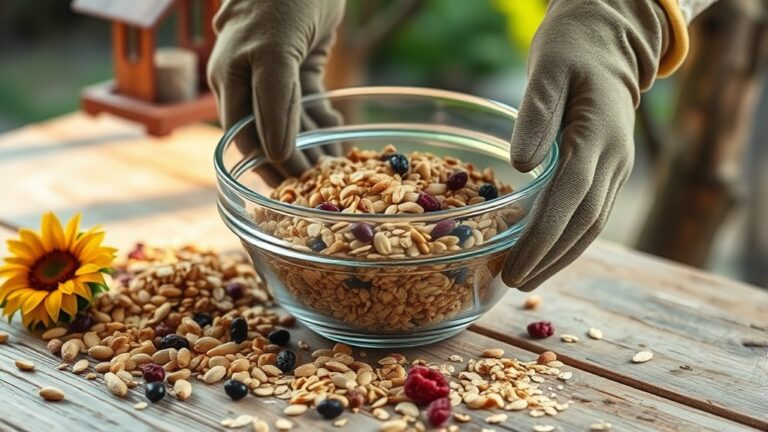
- Birdseed Mixes: High in seeds and nuts, these provide fats and protein essential for winter survival.
Foods to Avoid When Feeding Mallard Ducks
Even though feeding mallard ducks can be enjoyable, you should avoid giving them certain foods that can harm their health. Feeding wild predators often happens when you toss out bread or processed snacks. This attracts unwanted animals and upsets the local ecosystem. Also, introducing non-native species through contaminated food can disrupt natural habitats and harm native wildlife.
Here are some foods to avoid:
| Food to Avoid | Why Avoid It |
|---|---|
| Bread and crackers | Causes malnutrition and pollution |
| Processed junk food | Contains harmful additives |
| Non-local plants/seeds | Risk of introducing non-native species |
How to Feed Mallards Safely and Responsibly
To feed mallards safely and responsibly, you should offer foods that meet their nutritional needs without harming their environment. Sticking to proper feeding schedules helps prevent overfeeding, which can disrupt local ecosystems and the ducks’ natural foraging habits.
Feeding mallards responsibly means providing nutritious food while protecting their natural environment and routines.
You should also focus on habitat preservation by avoiding litter and ensuring leftover food doesn’t pollute waterways.
Here are three key tips for responsible feeding:
- Feed small portions at consistent times to avoid dependency and maintain healthy feeding schedules.
- Choose natural, nutritious foods like cracked corn, oats, or duck pellets instead of processed snacks.
- Always clean up leftover food and trash to protect the mallards’ habitat and prevent attracting pests.
Frequently Asked Questions
How Often Should I Feed Mallard Ducks in the Wild?
You should keep feeding frequency minimal and only feed mallard ducks occasionally to avoid dependency. Seasonal feeding works best. Offer food more often during colder months when natural resources are scarce.
In warmer seasons, they find plenty of food themselves, so reduce feeding. Always avoid overfeeding to maintain their natural foraging habits. Remember, feeding wild ducks too often can disrupt their health and the local ecosystem balance.
Can Mallard Ducks Eat Human Snacks Like Bread or Chips?
You might think feeding mallard ducks your leftover chips or bread is harmless, but their feeding habits don’t really suit human snacks. These treats can upset their digestion and lead to malnutrition.
Instead, you can offer snack alternatives like cracked corn, oats, or birdseed, which better match their natural diet. When you choose smarter snacks, you help keep ducks healthy and happy, making your feeding moments more rewarding for both of you.
What Is the Best Time of Day to Feed Mallard Ducks?
You’ll find the best time to feed mallard ducks is early morning or late afternoon, aligning with their natural feeding behavior. During these times, ducks are most active and ready to forage.
If you feed them when they’re less active, they might ignore the food. Keep their duck diet preferences in mind by offering nutritious options, making your feeding efforts more effective and enjoyable for both you and the ducks.
How Can I Tell if a Mallard Duck Is Malnourished?
Imagine a car running low on fuel; it sputters and loses power. You’ll notice similar signs if a mallard is suffering from malnutrition.
Watch for indicators like dull feathers, lethargy, or a thin body. Poor duck nutrition weakens their immune system and makes them vulnerable.
If you see these signs, the duck needs better food and care. You can help it bounce back by improving its diet and environment.
Are There Any Health Risks to Humans From Feeding Mallard Ducks?
Yes, feeding mallard ducks can pose health risks to you if you don’t follow proper feeding guidelines. Human contact with ducks and their droppings can spread diseases like salmonella or avian flu.
To protect yourself and support wildlife conservation, always wash your hands after feeding and avoid overcrowding areas where ducks gather. Stick to recommended foods and don’t overfeed to keep both you and the ducks safe and healthy.
Conclusion
Feeding mallard ducks the right foods keeps them healthy and happy, just like giving your body the fuel it needs. Imagine tossing fresh greens and crunchy grains to a waddling friend, watching them enthusiastically munch and quack with delight.
But remember, not all foods are safe. Some can harm these gentle creatures. So, stick to nutritious snacks and avoid harmful treats.
By doing this, you’ll be a kind, responsible feeder who helps mallards thrive in their natural world. Feeding mallard ducks the right foods makes all the difference in their health and happiness.