How to Set Up Bird Feeders in 7 Easy Steps
If you’ve ever struggled to attract birds to your backyard, you’re not alone. Many people want to enjoy the beauty of birds up close but find it tricky to set up feeders that actually work. The good news? With the right guidance, you can create a welcoming space that brings feathered friends right to your window.
To set up bird feeders in 7 easy steps, first pick a feeder that matches the birds you want, like tube feeders for finches or nectar feeders for hummingbirds. Hang it at least 5 feet high near shrubs for quick escapes, and choose quality seeds tailored to your local birds.
Secure the feeder firmly, keep it clean to prevent disease, and use squirrel-proof features to protect your seeds.
Follow these tips, and you’ll soon enjoy a lively, safe backyard for birds. Learn how to make the most of every step.
Key Takeaways
- Choose a feeder type that matches the preferred bird species you want to attract to your backyard.
- Hang the feeder at least 5 feet above ground near shrubs or trees for bird safety and quick escape routes.
- Select bird food that suits your targeted species and maintain consistent feeding schedules with fresh seed.
- Securely mount the feeder using sturdy hooks or poles in sheltered locations to protect from weather and tipping.
- Clean the feeder every two weeks with a bleach solution and use squirrel-proof accessories to prevent pests.
Pick the Right Bird Feeder for Your Backyard Birds

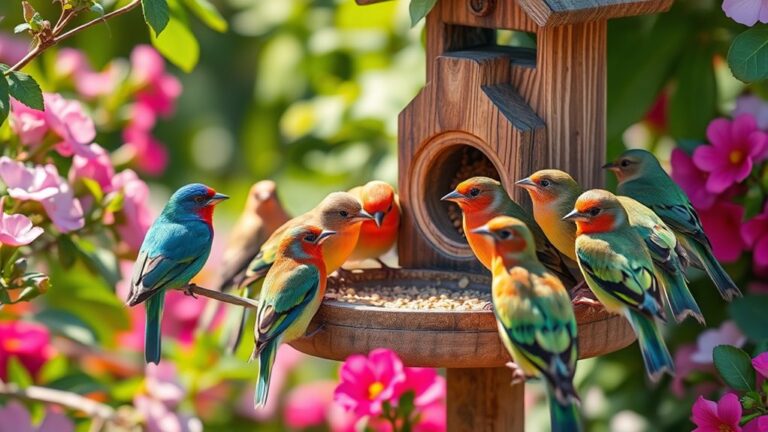
When you choose a bird feeder, consider the types of birds you want to attract and the space you have available. Different bird species have distinct feeding habits, so matching a feeder to those habits helps you welcome more visitors.
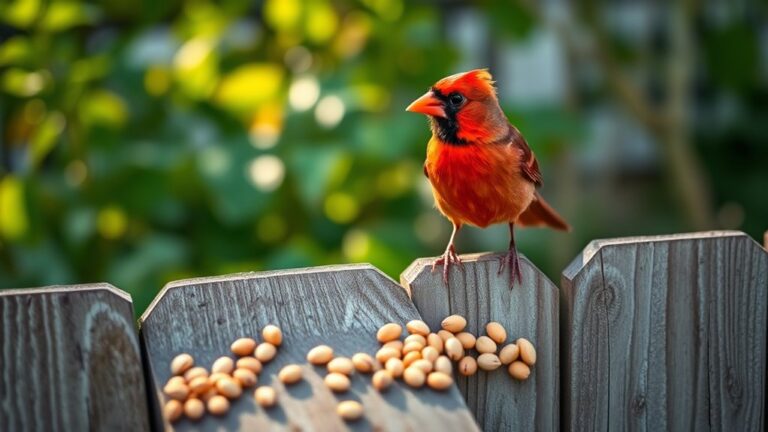
For example, tube feeders work well for small songbirds like finches that prefer to cling while they eat. If you want to attract larger birds such as cardinals or grosbeaks, platform feeders are better because they provide ample space for perching.
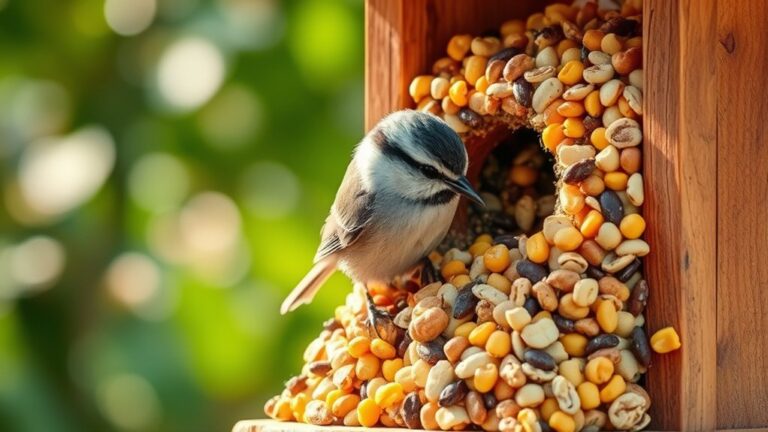
Suet feeders attract woodpeckers and nuthatches, which enjoy pecking at suet cakes. You can also use nectar feeders to draw hummingbirds, who feed on liquid sugar.
Choose the Best Spot to Hang Your Feeder
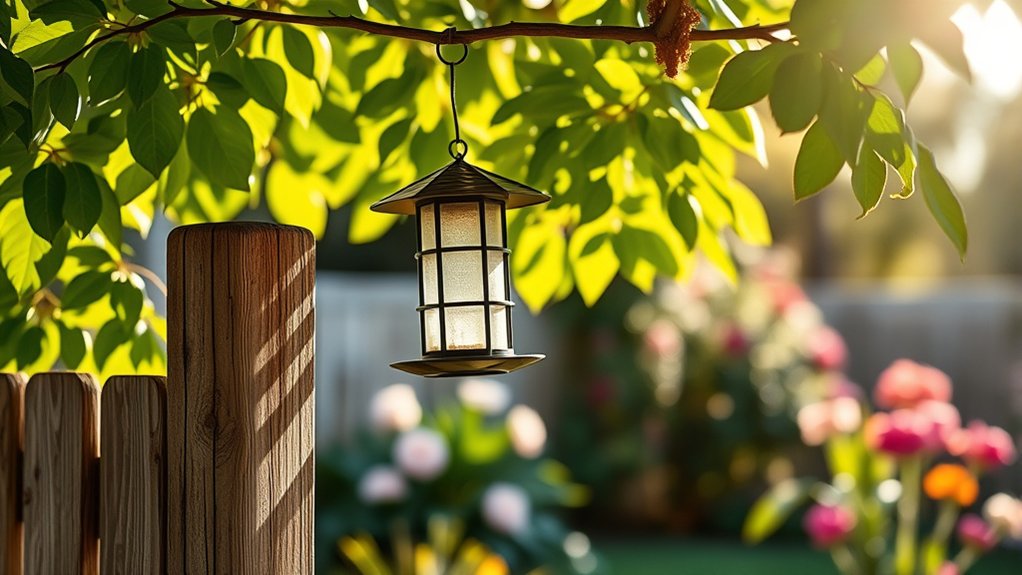
Although selecting the right feeder is important, choosing the best spot to hang it guarantees your feathered visitors feel safe and comfortable while feeding. You want to take into account the habits of local birds, especially during bird migration when they’re more vulnerable. Avoid high-traffic areas that increase predator threats. Pick a location that provides shelter and clear visibility for the birds.
Choosing the right feeder spot ensures birds feel safe, especially during vulnerable migration times.
Here are three tips to help you choose the perfect spot:
- Place feeders near shrubs or trees to offer quick escape routes but not too close to prevent predators from hiding.
- Hang feeders at least 5 feet off the ground to reduce access for cats and other ground predators.
- Make sure your feeder is visible from a window so you can enjoy watching birds and spot any predator activity early.
Select Bird Food for Your Bird Feeder

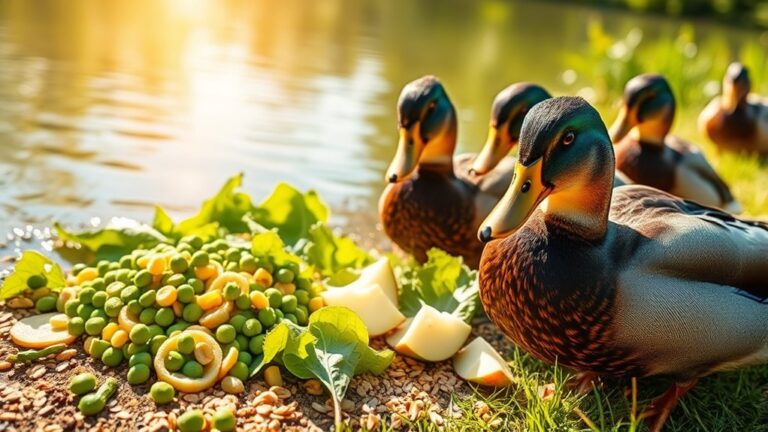
Since different bird species prefer various types of food, selecting the right bird seed is key to attracting your favorite feathered visitors. You’ll find many bird seed varieties, such as black oil sunflower seeds, nyjer seeds, millet, and safflower, each appealing to specific birds.
For example, finches love nyjer, while cardinals prefer sunflower seeds. Mixing seeds can attract a wider range of birds, but avoid fillers like cracked corn or wheat, which many birds ignore.
Consider your feeding schedules too. Offering food consistently at the same times helps birds rely on your feeder as a dependable source. Refill before the seed runs out to maintain their routine and minimize competition.
Also, clean out old seed regularly to prevent mold or pests. By selecting the right seed and sticking to feeding schedules, you’ll create a welcoming spot that keeps your feathered friends coming back.
Set Up Your Feeder So It’s Safe and Steady
To keep your bird feeder safe and steady, choose a location that offers protection from predators and harsh weather. Proper feeder placement is essential for bird safety and helps prevent damage or tipping. Pick a spot that’s sheltered, away from busy foot traffic, and not too close to windows to reduce collision risks.
Make sure your feeder is securely mounted or hung to avoid swaying or falling in wind or under the weight of visiting birds. Here are three quick tips for safe and steady setup:
- Use sturdy hooks, brackets, or poles designed for feeders
- Place the feeder at least 5 feet off the ground to deter predators
- Position feeders near shrubs or trees for quick bird shelter but far enough to prevent predators from hiding
Clean Your Bird Feeder to Prevent Disease
Regularly cleaning your bird feeder helps prevent the spread of disease among visiting birds and keeps them healthy. You should develop a consistent cleaning schedule, ideally washing your feeder every two weeks or more often if you notice buildup or mold.
Use a solution of one part bleach to nine parts water to disinfect the feeder, then rinse it thoroughly and let it dry before refilling. Different seed varieties can attract various bird species, but some, like sunflower seeds, can leave oily residues that encourage bacteria growth.
Be sure to clean all feeder parts, including trays and perches, to remove old seeds and droppings. Sticking to a regular cleaning routine not only protects birds but also improves the feeder’s longevity.
Protect Your Feeder From Squirrels and Backyard Pests
Although bird feeders attract beautiful wildlife, they can also draw unwanted visitors like squirrels and other backyard pests. To protect your feeder and guarantee the birds get their food, you’ll need to implement effective squirrel deterrents and pest control methods.
Start by choosing feeders designed to be squirrel-proof. These often have weight-sensitive mechanisms that close access when a heavier animal climbs on. You can also try these strategies:
- Install baffles above or below the feeder to block squirrels from climbing or jumping.
- Use squirrel-resistant seed mixes or add spicy pepper flakes to the seed, which birds tolerate but squirrels dislike.
- Place feeders away from trees or structures squirrels can use as launching points.
Seasonal Maintenance Tips to Keep Your Feeder Ready
Since bird feeders face changing weather and constant use, you’ll need to perform seasonal maintenance to keep them in good condition. Start by cleaning your feeder regularly to prevent mold and bacteria buildup, especially after wet weather.
Regular cleaning after wet weather helps prevent mold and bacteria, keeping your bird feeder safe and lasting longer.
Inspect your feeder for damage, replacing worn parts or upgrading to weather resistant feeders if needed. These feeders stand up better to rain, snow, and sun, extending their lifespan.
Seasonal seed swaps are essential to keep your birds interested and healthy. Switch seeds to match the birds’ changing dietary needs through the seasons. For example, offer high-fat seeds in winter and lighter mixes in spring.
Also, remove any old or moldy seed before adding fresh food to avoid health risks.
Frequently Asked Questions
How Do I Attract Rare or Migratory Bird Species to My Feeder?
To attract rare or migratory bird species, you need to focus on native species and habitat improvement. Plant native flowers, shrubs, and trees that provide natural food and shelter. Use feeders with seeds favored by the specific birds you want to attract.
Keep the area quiet and safe from predators. By improving the habitat and offering familiar food sources, you’ll create an inviting environment that encourages these special birds to visit your feeder.
What Are the Best Times of Day to Refill My Bird Feeder?
You should refill your bird feeder early in the morning or late afternoon when birds are most active. This timing guarantees fresh seeds attract more visitors.
Make sure your feeder placement offers easy access and protection from predators. Also, practice good seed storage by keeping extra seed in a cool, dry place to maintain freshness.
Proper timing and care will keep your feeder inviting and full, encouraging birds to return often.
Can I Use Homemade Bird Food Recipes in My Feeder?
Yes, you can use homemade recipes in your bird feeder, but you need to guarantee they provide nutritional balance. Birds require a mix of seeds, grains, and sometimes dried fruits or nuts to stay healthy.
When making your own bird food, avoid ingredients that are salty, sugary, or moldy. By carefully selecting ingredients, you’ll offer a tasty and nutritious meal that keeps birds coming back to your feeder happily.
How Do Weather Conditions Affect Bird Feeding Habits?
Weather conditions can totally flip bird feeding habits on their heads! When severe weather hits, birds either bulk up or jet off during seasonal migration to survive. You’ll notice they adapt their feeding patterns to the cold, rain, or heat. Sometimes they eat more to fuel their energy or seek shelter to avoid harsh conditions. Your feeders need to match these weather adaptations, offering reliable food when nature’s less forgiving.
What Are Signs That Birds Are Stressed or Unhealthy at My Feeder?
You’ll notice bird health issues through stress signals like fluffed-up feathers, lethargy, or unusual aggression at your feeder. If birds avoid feeding or show labored breathing, that’s a red flag.
Keep an eye out for visible injuries or parasites, too. These signs mean the birds might be stressed or unhealthy, so it’s essential to clean feeders regularly and offer fresh food to support their well-being.
Conclusion
Setting up your bird feeder is simple and rewarding. Imagine Sarah, who hung her feeder near a window and chose sunflower seeds. Within days, she enjoyed watching vibrant finches and cardinals visit daily.
By following these steps, like picking the right feeder, placing it well, feeding the right birds, and keeping it clean, you’ll create a safe haven for birds right in your backyard. Soon, you’ll have a lively, feathered neighborhood to enjoy with your bird feeders!